- Language courses
- English, Chinese
- Bachelor's Degree
- English, Chinese
- Master's Degree
- English, Chinese
- Doctoral (PhD) Programmes
- English, Chinese
- Accommodation from 75 ¥/day
SISU · 上海外国语大学
Shanghai International Studies University accepts international students on programmes in the following fields: business. Choose the level and programme that suit your goals.
A short language programme during the winter holidays: intensive Chinese classes and a cultural programme. Suitable for refreshing your language or visiting a Chinese university for the first time.
self-funded · language programme
Cost: 2 200 ¥ for 1 week
self-funded · language programme
Cost: 3 000 ¥ for 1 week
self-funded · language programme
Cost: 3 700 ¥ for 4 weeks
A short language programme during the summer holidays: Chinese classes and getting to know the campus and the city. A convenient way to try studying in China before applying for a main programme.
self-funded · language programme · Intake 1
Cost: 3 000 ¥ for 2 weeks
self-funded · language programme · Intake 1
Cost: 3 700 ¥ for 3 weeks
self-funded · language programme · Intake 1
Cost: 4 500 ¥ for 4 weeks
self-funded · language programme · Intake 1
Cost: 5 200 ¥ for 5 weeks
self-funded · language programme · Intake 1
Cost: 6 000 ¥ for 6 weeks
self-funded · language programme · Intake 1
Cost: 6 500 ¥ for 7 weeks
self-funded · language programme · Intake 1
Cost: 7 000 ¥ for 8 weeks
self-funded · language programme · Intake 2
Cost: 3 000 ¥ for 2 weeks
self-funded · language programme · Intake 2
Cost: 3 700 ¥ for 3 weeks
self-funded · language programme · Intake 2
Cost: 4 500 ¥ for 4 weeks
self-funded · language programme · Intake 2
Cost: 5 200 ¥ for 5 weeks
self-funded · language programme · Intake 2
Cost: 6 000 ¥ for 6 weeks
self-funded · language programme · Intake 3
Cost: 3 000 ¥ for 2 weeks
self-funded · language programme · Intake 3
Cost: 3 700 ¥ for 3 weeks
self-funded · language programme · Intake 3
Cost: 4 500 ¥ for 4 weeks
Chinese language study at the university — from a few weeks to a year or longer. Suitable for those starting from scratch or preparing for the HSK before entering a main programme.
self-funded · language programme
Cost: 20 000 ¥/year
Chinese at an accelerated pace: more classroom hours per week and a packed curriculum. For those who need results in a short time.
self-funded · language programme
Cost: 34 000 ¥/year
The first level of higher education: usually four years of study, specialised subjects, internships and a graduation thesis. It opens the way to working in your field and to a master's degree.
scholarship-funded · Hongkou campus
Cost: 22 000–24 800 ¥/year
scholarship-funded · Songjiang campus
Cost: up to 24 800 ¥/year
Advanced study after a bachelor's degree: research, applied projects and internships. It helps you become an expert in your chosen field and broaden your career opportunities.
scholarship-funded
Cost: up to 94 000 ¥/year
self-funded
Cost: 26 000–94 000 ¥/year
Shanghai International Studies University is located in Shanghai. Nihao Study consultants keep track of the deadlines and admission requirements of this university, and you can always check the most accurate and up-to-date information on its official website. In university rankings, it is ranked 70 in China and 784 worldwide.
Come for a face-to-face meeting: together we will go through the requirements, deadlines, documents and study options that suit you.

At the meeting we will look at your situation, tell you which documents to prepare and by when, talk about possible programmes and help you decide on the next step.
Shanghai International Studies University (SISU, 上海外国语大学) is one of China's leading language universities, located in Shanghai, the country's largest city. Russian-speaking applicants also know it by a name meaning 'Shanghai University of International Studies'; inside the university, Russian-speaking students use an abbreviation of its Russian name, while Chinese people usually call it 上外 (Shàngwài) for short. In rankings it appears under the official abbreviation SISU.
The university was founded in December 1949: on the initiative of Chen Yi, then mayor of Shanghai, a Russian-language school was opened to train interpreters and diplomats working on relations with the USSR. Today SISU takes part in the national Project 211 and the Double First Class programme, teaches 54 world languages, and its Graduate Institute of Interpretation and Translation holds the highest AIIC category, which is why SISU is counted among Asia's strongest universities for translation and interpreting.
In this overview Nihao Study has gathered what will be useful to a 2026 applicant: rankings, programmes in English and Chinese, HSK requirements, scholarships, dormitories on the two campuses, a step-by-step application procedure and a table to help you tell SISU apart from similarly named universities in Sichuan and Xi'an.
| Item | Value | What it means |
|---|---|---|
| Year founded | 1949 | One of the first universities in the PRC to train diplomats and translators |
| University status | since 1994 | Former name: Shanghai Foreign Language Institute |
| Campuses | 2: Hongkou and Songjiang | Total area: 74.7 hectares |
| Students | about 12,400 | Bachelor's and master's, 2021 data |
| International students | about 4,000 a year | One of the largest intakes among China's language universities |
| Schools and institutes | 17 | Besides languages: law, business, journalism and more |
| Languages taught | 54, of which 39 are modern | Ahead of other Shanghai universities in the number of languages |
| Partner universities | over 440 in 62 countries | Exchanges, dual degrees and internships |
The university opened in December 1949 as the Shanghai Russian School. The Russian language school was initiated by Chen Yi, then mayor of Shanghai; it trained translators and diplomats to work with the Soviet Union. That is why the School of Russian and Eurasian Studies still operates at SISU as a separate unit, and the university remains one of China's main centres for training Russian specialists.
In 1952 the school was renamed the Shanghai Russian Institute. In 1956 its programme expanded beyond Russian alone, and it was renamed Shanghai Foreign Language Institute. It kept this name for almost 40 years, and in 1963 it was designated a national key university. In 1994 the institute was upgraded to a university and received its current name — Shanghai International Studies University.
In 1996 SISU passed the review by the PRC Ministry of Education and was included in Project 211, a national programme funding around a hundred of the country's leading universities. In September 2017 SISU joined the first round of Double First Class, with the discipline of foreign languages and literature counting towards it. The university's motto, 格高志远 学贯中外, can be rendered as “noble character and lofty aspirations, knowledge uniting China and the world”. It captures the university's mission well: to produce not only linguists but also experts with language skills in international relations, law, economics and media.
SISU specialises in languages and social sciences. As a result, it ranks modestly in general global rankings, but in subject, language and national lists it is among China's leaders.
| Ranking | Position and year | What this means |
|---|---|---|
| QS World University Rankings | 1401+, 2027 | The overall ranking does not reflect the language specialisation |
| QS by Subject, Linguistics | 101–150, 2026 | A strong position compared with other Chinese universities |
| QS by Subject, Modern Languages | 201–250, 2026 | Translation and philology programmes count towards it |
| ShanghaiRanking, Education subject | 401–500, 2025 | This is SISU's only subject in the global ARWU |
| EduRank | 2221st in the world, 163rd in China, 2026 | International relations: 304th in the world |
| Best Chinese Universities Ranking | 2nd for language specialisation, 2026 | 1st among language universities in East China |
According to the university, in the PRC Ministry of Education's discipline evaluation, SISU's foreign languages and literature was rated A+, and the university shares first place in the country in this field. Unlike QS and ARWU, the CWUR 2026 ranking does not list SISU separately. The CWUR methodology is designed for comprehensive research universities and does not suit highly specialised language universities, so the absence of a position does not mean the university is weak.
Yes, it is: the PRC Ministry of Education officially includes SISU in both Project 211 and the Double First Class programme. This sets it apart from universities with similar names — neither Sichuan International Studies University nor Xi'an International Studies University is included in these programmes (details in the table below).
The Graduate Institute of Interpretation and Translation (GIIT) was established at SISU in 2003, and in 2005 AIIC, the International Association of Conference Interpreters, gave it its highest rating. This placed the institute among the 15 best conference interpreting schools in the world, where it remains the only university from Asia. GIIT's programmes — Conference Interpretation, Master of Interpreting and Master of Translation — train interpreters and translators; the institute also offers master's and doctoral programmes in translation studies. SISU is also a member of the Conférence Internationale Permanente d'Instituts Universitaires de Traducteurs et Interprètes (CIUTI), which confirms that its translator training meets international standards.
SISU teaches 54 languages: 39 modern and 15 classical and constructed languages, including Latin, Ancient Greek and Sanskrit. The campus has a Museum of World Languages, the first museum of its kind in China. Such breadth is rare even among specialist language universities: it allows the university to combine training translators in rare languages with large-scale programmes in English, Chinese for international students and European languages.
Over 90 per cent of SISU's teachers have worked abroad, and there are more than 340 foreign teachers on staff. The university's alumni include China Daily editor-in-chief Zhou Shuchun and two Chinese ambassadors: Li Jinjun (North Korea) and Zhang Hanhui (Russia). This is a natural result of the university's historical mission: to train specialists who can not only translate but also negotiate and represent China on the international stage.
The university comprises 17 schools and institutes, and almost half of them are schools devoted to specific languages.
The following operate as independent units rather than departments of a single faculty: the schools of Russian and Eurasian Studies, English, Japanese, French and Francophone Studies, and German, as well as the School of European and Latin American Studies and the School of Asian and African Studies. International students learning Chinese have a separate School of Chinese Studies and Exchange.
Besides the language schools, SISU has a School of Education, a School of Journalism and Communication, a School of Business and Management, a School of Economics and Finance, a School of Law, and a School of International Relations and Public Affairs. This group delivers majors such as international economics and trade, business administration, diplomacy and journalism, which complement the language programmes. The university runs 29 national key-level degree programmes; it has 3 national key disciplines and 6 Shanghai priority disciplines. There are 33 master's and 12 doctoral programmes, including translation studies, international relations, diplomacy and applied linguistics.
| Housing option | Campus |
|---|---|
| Double room in the international dormitory | Songjiang |
| Single room in the international dormitory | Songjiang |
| Guest house with nightly rates | Hongkou |
The Hongkou campus address is 550 Dalian Road (W), Shanghai 200083, and the Songjiang campus is at 1550 Wenxiang Road, Shanghai 201620. In Hongkou, international students are housed in two buildings — on Wenhui Road and on Tiyuhui Road (E) — while Songjiang recently gained a new building near the main entrance. Every room has air conditioning and a private bathroom; each floor has a shared kitchen with a fridge and a washing machine.
It is best to book a dormitory place 2–3 months before arrival; a deposit is paid when booking, accepted in cash in Chinese currency. If no places are available, you can rent accommodation in Shanghai near the campuses. This is noticeably more expensive than the university dormitory, but it suits students with families and those who value privacy.
SISU is officially a Project 211 university and appears in the public lists of universities accepting Chinese Government Scholarship recipients; its agency number is 10271. Check quotas and categories for the relevant year before applying.
Some of SISU's bachelor's and master's programmes are in principle open to scholarship students. Coverage may be partial or full, depending on the committee's decision.
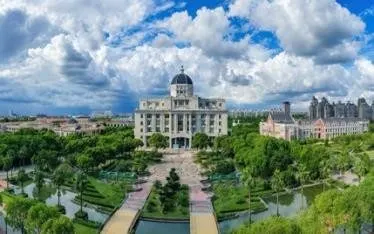
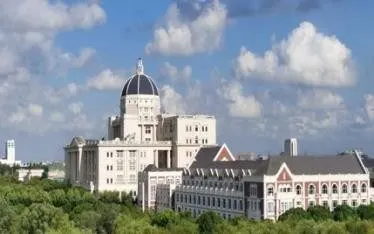
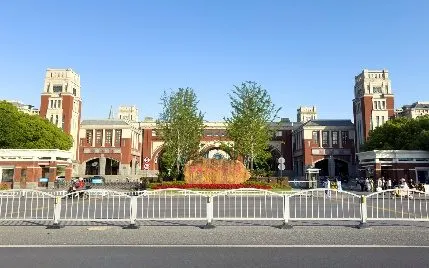
SISU's library holds 1.3 million printed volumes and 1.74 million electronic documents. The university has more than 100 research institutes and centres, which publish 21 peer-reviewed academic journals. The Songjiang campus is interesting in its own right: the school buildings are designed in the architectural styles of the countries whose languages are studied there. For example, the School of Asian and African Studies has Islamic motifs, the School of English Studies a Victorian façade and the School of Japanese Studies Japanese elements.
For sport there is a 50-metre swimming pool and baseball fields, and the university's Go team regularly wins student tournaments. During the semester a regular shuttle bus runs between the Hongkou and Songjiang campuses. From the Hongkou campus you can walk to Metro Line 3 stations Chifeng Road or Hongkou Football Stadium, while Line 9 serves Songjiang, running to Songjiang University Town station.
| University (Chinese name) | Type | Main focus |
|---|---|---|
| Shanghai International Studies University, SISU, 上海外国语大学 | National university in Shanghai, part of Project 211 and Double First-Class | Translation, international relations, diplomacy, business |
| Sichuan International Studies University, 四川外国语大学 | Provincial university in Chongqing, not part of 211 | Languages in south-west China; its abbreviation is also SISU |
| Xi'an International Studies University, XISU, 西安外国语大学 | Provincial university in Xi'an, a member of the G8 group of language universities, not part of 211 | Languages in north-west China; abbreviated XISU |
The main catch lies in the abbreviation itself: SISU officially belongs to two universities — Shanghai International Studies University and Sichuan International Studies University. So in letters and applications, state the city or give the full English name — Shanghai International Studies University. Xi'an's XISU is harder to confuse by abbreviation but easier by the meaning of its name. Unlike Shanghai's SISU, neither the Sichuan nor the Xi'an university is part of Project 211 or Double First-Class.
Video footage of SISU helps you picture the campuses, dormitories and teaching buildings in advance. When watching, compare the Hongkou and Songjiang campuses, and pay attention to the layout of rooms in the international dormitory, the route from the metro to the teaching buildings and what lies around both campuses. This makes it easier to decide whether a university with a strong focus on languages and diplomacy suits you — especially when comparing SISU with other humanities universities in Shanghai.
The standard Russian form means ‘Shanghai University of Foreign Languages’; most reference works use it. Until 1994 the university was officially called the Shanghai Institute of Foreign Languages, and that name can still be seen in articles and documents from earlier years. A Russian version meaning ‘Shanghai University of International Studies’ is a calque of the English ‘International Studies University’; it occurs, although it can hardly be called accurate. Shanghai International Studies University is the official international name and SISU is the official abbreviation; it coincides with the abbreviation of Sichuan International Studies University, so add the full name and city in your admission documents. There is also a colloquial Russian abbreviation, while 上外 (Shàngwài) is the Chinese student abbreviation. The original Chinese name with pinyin is 上海外国语大学, Shànghǎi Wàiguóyǔ Dàxué.
It is short for Shanghai International Studies University, a public Project 211 university in Shanghai: it was founded in 1949, and its focus is international relations, law, business, translation and foreign languages.
Yes: a number of master's programmes, for example in international relations, are taught in English and do not require the HSK. However, most bachelor's programmes are taught in Chinese, and overall the university remains primarily a Chinese-speaking environment.
Programmes taught in Chinese require an HSK certificate confirming your level; the required threshold is determined by the major and the level of study, whether bachelor's or master's. Check the exact minimum for your programme before applying; the schedule of upcoming sessions is in the HSK calendar.
Yes. SISU has been part of Double First Class since the first wave (September 2017), with foreign languages and literatures as its designated discipline; in addition, the university remains part of Project 211. Universities with similar names, Sichuan International Studies University and Xi'an International Studies University, are not part of this programme.
It depends on the campus and the room type: the international dormitory on the Songjiang campus has double and single rooms. Check current prices on the university's official website.
SISU is a Project 211 university, and it is on the public lists of Chinese Government Scholarship host institutions under agency number 10271. Before submitting your documents, be sure to confirm the category, quota and intake year.
SISU is a specialist language university, and it teaches Chinese to international students of every level, from short courses to year-long programmes. Choose your exam venue through the official Chinese Test system.
Hongkou campus: 550 Dalian Road (W), Shanghai 200083; Chifeng Road station on metro line 3 is nearby. Songjiang campus: 1550 Wenxiang Road, Shanghai 201620; it is served by metro line 9, and the nearest station is Songjiang University Town.
All three universities focus on foreign languages and have similar English names, but only the Shanghai SISU is part of Project 211 and Double First-Class. The Sichuan SISU is located in Chongqing and focuses on languages of south-west China, while XISU is based in Xi'an and belongs to the G8 group of language universities of the North-West. A detailed comparison is in the table above.
The package usually includes a secondary school certificate with a notarised translation, a transcript of grades, a passport, a motivation letter, medical certificates and photographs. It is worth checking the full list for your specific SISU programme before applying.
Shanghai (上海) is the largest city in China and one of the world's financial centres. Students from more than 150 countries study here. The Bund with its futuristic views, the skyscrapers of Pudong and the old French Concession together create a special atmosphere for student life.
By enrolling in Shanghai, students gain access to strong universities and thousands of international companies offering internships. The city has 16 metro lines, the campuses are equipped to modern standards, and student life is active. For parents, it matters that healthcare here is of a high standard, there are international schools and hospitals and direct international flights, the city is safe, and every major university has a support service for international students.
You work with Nihao Study specialists. They will help you put together a portfolio and a set of documents, draw up a study plan and choose a university or college and a specialty that genuinely interest you.
We take care of every stage of admission, from choosing to enrolment
We will gather, prepare, certify and send your documents to the institution
We will show the admissions committee your strengths
We run training sessions and courses so you can prepare with more confidence
We will help you settle in at the start of your studies and keep moving forward
Nihao Study specialists select universities and colleges that match the applicant's goals and means. We make sure the teachers are practitioners and that the knowledge will be useful in your profession.
We examine curricula, talk to students and teachers and look at which specialties employers need, and use this information to select options for the applicant.
Advisers guide the applicant from the first consultation to enrolment, help build a plan and spot mistakes in time that could get in the way.
The cost of our support depends on the programme and the partner university; you'll get an exact quote after a free consultation.
Get a quoteA free 15-minute consultation: together we will choose a university or college and a programme that suit your goals and budget.
Apply with peace of mind: we handle the documents, deadlines and correspondence with admissions committees, and you save time and energy.
Don't want to wait for a call? Message us in the chat.
Message us in chat 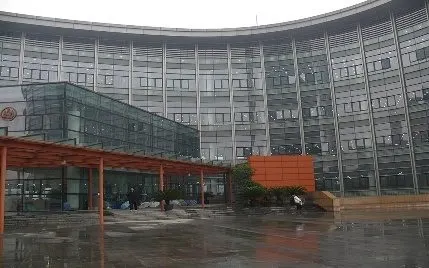
University · Shanghai