- Language courses
- English, Chinese
- Bachelor's Degree
- English, Chinese
- Master's Degree
- English, Chinese
- Doctoral (PhD) Programmes
- English, Chinese
- Accommodation from 75 ¥/day
ECNU · 华东师范大学
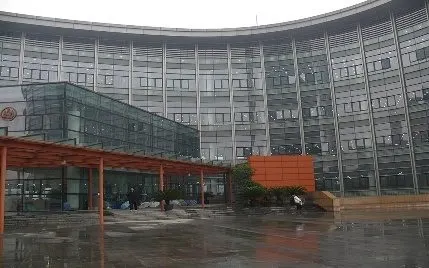
East China Normal University accepts international students on programmes in the following fields: business, engineering, education, law, humanities, natural sciences. Choose the level and programme that suit your goals.
Chinese language study at the university — from a few weeks to a year or longer. Suitable for those starting from scratch or preparing for the HSK before entering a main programme.
self-funded · language programme
The first level of higher education: usually four years of study, specialised subjects, internships and a graduation thesis. It opens the way to working in your field and to a master's degree.
self-funded
Advanced study after a bachelor's degree: research, applied projects and internships. It helps you become an expert in your chosen field and broaden your career opportunities.
self-funded
East China Normal University is located in Shanghai. Nihao Study consultants keep track of the deadlines and admission requirements of this university, and you can always check the most accurate and up-to-date information on its official website. In university rankings, it is ranked 32 in China and 603 worldwide.
Come for a face-to-face meeting: together we will go through the requirements, deadlines, documents and study options that suit you.

At the meeting we will look at your situation, tell you which documents to prepare and by when, talk about possible programmes and help you decide on the next step.
East China Normal University (ECNU, 华东师范大学, pinyin Huádōng Shīfàn Dàxué) is a public research university in Shanghai, known in Russian as the East China Pedagogical University. The university's own Russian-language website uses a slightly different capitalisation of the same name; searches also turn up the calque 'Pedagogical University of East China' and a spelling without the hyphen, which is incorrect. In China the name is shortened to 华东师大 or 华师大, and the university's own regulations establish the English name East China Normal University and the abbreviation ECNU.
The word Normal in the English name does not mean 'ordinary': historically, it was used to denote teacher-training universities. Today ECNU is not limited to training teachers and offers programmes in the natural sciences, humanities, social sciences, management and computing. The university is part of Project 211 and Project 985 and holds Double First-Class status; in the second round of 双一流, three of its disciplines were included in the programme: education, ecology and statistics.
Below is what a 2026 applicant will find useful: statuses and rankings, programmes, HSK and CSCA requirements, scholarships, dormitories and campuses. Final admission deadlines and conditions are always confirmed by the university itself, and you can choose a programme and plan your admission during a consultation with Nihao Study.
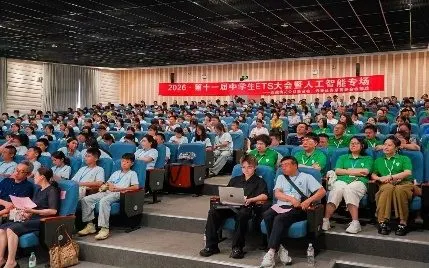
| Indicator | Value |
|---|---|
| Year founded | October 1951 |
| Campuses | two: Putuo and Minhang |
| Area | more than 207 hectares |
| Academic structure | four faculties and 33 full-time schools |
| Students | more than 35,000 |
| International students | more than 6,000 |
| Staff and teachers | more than 4,400 |
| Putuo campus address | 3663 North Zhongshan Road, Shanghai, 200062 |
| Minhang campus address | 500 Dongchuan Road, Shanghai, 200241 |
Figures from different ranking and reference sources vary because they use different counting methods. Numbers and structure in the table are taken from the current Facts & Figures section of the ECNU website. It also mentions 19 members of the Chinese Academy of Engineering and the Chinese Academy of Sciences, and more than 100 international experts in long-term positions.
ECNU was founded in Shanghai in October 1951. It was created mainly from two institutions: Great China University (founded 1924) and Kwang Hua University (founded 1925). ECNU describes itself as the first socialist normal university established after the founding of the People's Republic of China. So its focus on teacher education is not later branding: it goes back to the university's very foundation and mission.
In 1959 ECNU was included in the list of 16 national key universities, and in 1986 it opened a graduate school as a separate academic unit. Two more dates matter when checking its status: Project 211 in 1996 and Project 985 in 2006. In 2017 the university joined the national programme to build world-class universities.
Over time the university moved from its teacher-education core to the model of a comprehensive research university. Its official motto translates as: seek truth, foster originality, live up to the name of teacher. The current strategy rests on five lines: Education+, Ecology+, Health+, AI+ and Internationalization+. So applicants need not limit themselves to education: ECNU is also strong in statistics and ecology, psychology and computer science, economics and international relations.
Membership of Project 211 and Project 985 is confirmed: according to ECNU's official timeline, it joined the first project in 1996 and the second in 2006. Neither project is run as a competition any more, but they are still used to judge the standing and funding of Chinese universities.
Double First-Class status is also confirmed: ECNU has been in the programme since 2017, and in the second round its world-class disciplines were named as education, ecology and statistics. Saying that ECNU is part of 双一流 is correct, but claiming that every one of its majors is in the programme is an exaggeration.
These labels help narrow down options, but they do not replace checking a specific programme. A future analyst needs statistics and programming, a future teacher needs education and teaching practice, an ecologist needs a lab and a research topic. Your application names a specific school and programme, not the general label 985.
| Ranking | Rank and edition |
|---|---|
| QS World University Rankings | 433rd, 2026 edition |
| Times Higher Education | band 251–300, 2026 edition |
| THE Education Studies | 46th, 2026 subject edition |
| THE Asia | 61st, 2026 edition |
| ARWU | band 201–300, 2025 edition |
| CWUR | 312th out of 21,462, 2025 edition |
| EduRank | 559th worldwide, 34th in China; 2026 update |
Each ranking answers its own question. QS and THE combine reputation, international outlook and research indicators, while ARWU relies more on publications. According to CWUR, ECNU is in the top 1.5 per cent of its sample, but that ranking does not give the university a separate position for education. EduRank is calculated using its own bibliometric model and is not official university statistics.
The key point for applicants: in Education Studies the result is noticeably higher than the overall position. In addition, in the THE 2026 subject tables, ECNU's computer science, engineering and life sciences fall in the 176–200 band. ESI is also worth checking by individual discipline: according to ECNU's published overview for the 2026 intake, chemistry and environment and ecology are in the top one per mille of their ESI fields.
The university was originally conceived as a teacher-training institution and remains one of China's key centres for teacher education. Education is on the list of Double First-Class disciplines, and in the THE 2026 subject ranking for Education Studies the university is 46th. This environment suits those interested in education policy, school leadership, curriculum studies, the psychology of learning or digital education.
The second area brings together ecology, geography and the urban environment. ECNU has state key laboratories for precision spectroscopy and for estuarine and coastal research. Ecology is part of the current Double First-Class round, and the Ecology+ strategy links research to biodiversity, carbon neutrality and the sustainable development of the Yangtze River Delta.
ECNU's third discipline in the current Double First-Class round is statistics. Around it, computer science, software engineering, data science and AI+ are developing. Russian-speaking applicants may be interested in the Centre for Russian Studies: it was founded in 1999, and China's Ministry of Education has designated it a key research base for the humanities. In 2026 the university also reported that it cooperates with more than 30 Russian universities.
According to its official structure, ECNU has four faculties and 33 full-time schools. Fields include psychology, statistics, chemistry, life science, Earth and brain sciences, information technology, data science and engineering, education, humanities and social sciences, law, economics and management, foreign languages, music, fine arts and sport.
The 2026 international bachelor's catalogue includes business Chinese, Chinese language and culture, international business in English and Chinese, teaching Chinese as a foreign language, as well as computer science, software engineering, accounting, business administration, economics and finance. A separate section of the catalogue covers Russian and other foreign languages, journalism and communication programmes.
Not every school admits international students, not at every level, and by no means every programme is taught in English. The words School and College on the ECNU website refer to a unit within the university, not a separate college. Before applying, check the programme, campus and language of instruction, the HSK and CSCA requirements, and the scholarships available.
| Level | Format and duration |
|---|---|
| Bachelor's Degree | usually four years; classes start in September |
| Standard Chinese | from one semester, 20 class hours per week |
| Intensive Chinese | from one semester, 29 class hours per week |
Requirements for Chinese-taught bachelor's programmes vary by school. For English language, International Chinese Studies and design programmes taught in Chinese, HSK 4 with 180 or above is enough. Most other programmes need HSK 5 with 180 or above, and the School of Communication requires HSK 6 with 180 or above. Applicants from non-English-speaking countries enter English-taught bachelor's programmes with IELTS 6.0 or above, TOEFL 85 or above, or a Cambridge English certificate at B2 or higher.
In the 2026 intake, all bachelor's applicants needed a China Scholastic Competency Assessment (CSCA) result. ECNU did not set a minimum overall score for this cycle: the result counts towards a holistic assessment, and the subjects depend on the major. It is a separate exam, and HSK does not replace it.
Chinese-taught master's programmes: humanities and economics need HSK 5 with 210 or above or HSK 6 with 180 or above; natural sciences, arts and sport need HSK 5 with 180 or above. For English-taught programmes, IELTS 6.0 or above, TOEFL 80 or above, or Cambridge C1 Advanced with a score of 169 or above are accepted.
ECNU's fees vary by level, field and language of study, and some programmes, such as AEBS, the MBA and joint programmes, have their own terms. The application fee is non-refundable once paid. Check current costs on the official website ecnu.edu.cn or on the invoice issued by the university.
Besides the standard and intensive courses, ECNU offers short-term formats, business Chinese and the Global China Program. The standard course has 20 class hours per week, the intensive course 29.
ECNU's International College of Chinese Studies is one of the largest HSK test centres in the country. The 2026 admission requirements are specifically for HSK, and a BCT certificate does not automatically replace it.
Exam dates change, so it is best to plan your attempts in advance and check the specific session in the system of the centre where you will sit the exam. The certificate must still be valid on the date you apply.
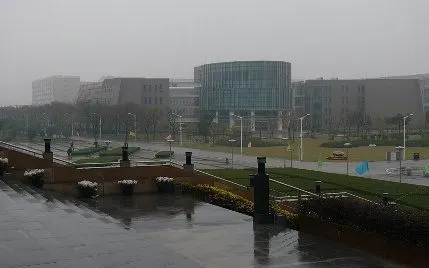
The university covers more than 207 hectares and is split into two campuses, Putuo and Minhang. Putuo is on North Zhongshan Road: here historic buildings sit alongside easy access to central Shanghai. Minhang, on Dongchuan Road, is more spacious and modern and houses many of the science and technology schools.
Both campuses have libraries with print and electronic collections. According to the university, students have access to more than 110 clubs, sports facilities and buses between campuses. The student card works in all campus canteens; Liwa Dining Hall has separate Western and halal food options.
| Option | Conditions |
|---|---|
| Putuo, economy double | daily rate per bed, shared bathroom |
| Putuo, standard double | daily rate per bed, private bathroom |
| International Exchange Service Center | daily rate per bed |
| Housing near Putuo, double | monthly rate per bed |
| Housing near Putuo, single | monthly rate per room |
| Minhang, single | daily rate per room |
Rates apply to stays of at least one semester. Only officially admitted students who have already paid tuition or received a confirmed fee waiver can book a place; places are allocated on a first-come, first-served basis. Dorm No.1 has air conditioning, internet, a shared kitchen and a laundry, and each room is furnished with two beds, two wardrobes and two desks.
If you stay for more than six months, the university requires you to take out comprehensive medical insurance. Check the room type, campus, deposit amount, refund rules and which utilities are included before booking.
International students can apply for the Chinese Government Scholarship (CSC), the Shanghai Government Scholarship, the International Chinese Language Teachers Scholarship and the university's Excellent Freshmen Scholarship. Which of these are available depends on the level of study, language and programme.
How many applicants receive a scholarship depends on the competition in a given intake. It makes sense to apply early, consider several sources of funding at once and plan a self-funded option in advance.
| University | Status | Profile |
|---|---|---|
| East China Normal University, ECNU, 华东师范大学 | 985, 211, Double First-Class | education, ecology, statistics |
| East China University of Science and Technology, ECUST | 211, Double First-Class | chemistry, engineering and technology |
| Shanghai Normal University, SHNU | municipal university | education, natural sciences and humanities |
| East China University of Political Science and Law, ECUPL | independent university | law, public administration |
The key identifiers of the right university are 华东师范大学 and ECNU. ECUST's name contains Science and Technology, SHNU starts with the word Shanghai, and ECUPL's name includes Political Science and Law. A similar translation does not mean that one university is a branch of another or that admission is shared. Check the Chinese characters of the name on the invoice and visa documents every time.
ECNU has a Department of Russian Language and a Centre for Russian Studies. According to the department, the university cooperates with Russian and Belarusian universities, including Lomonosov Moscow State University and Moscow State Pedagogical University. Partners under 2025 agreements on joint training include MGIMO University and Far Eastern Federal University. In addition, the Russia and Eurasia Studies programme has announced plans for dual master's degree tracks.
In June 2026 an ECNU delegation visited Herzen State Pedagogical University of Russia and Saint Petersburg State University. With Saint Petersburg State University the two sides renewed two documents: a framework agreement and a student exchange agreement. So cooperation is active, but the language of instruction for a specific programme is given in the catalogue.
The main Russian form on the Russian version of this page corresponds to 'East China Pedagogical University'; the university's own Russian-language website writes it with a capital letter in 'Chinese'. The variant without a hyphen is a spelling mistake, and 'Pedagogical University of East China' is an understandable calque but not the main name. The official international name is East China Normal University, and the official abbreviation is ECNU. In Chinese, the university is called 华东师范大学 (Huádōng Shīfàn Dàxué), abbreviated as 华东师大 or 华师大.
ECNU is short for East China Normal University. It is a public research university in Shanghai, and the word Normal points to its historical teacher-training profile.
Yes, all three statuses are confirmed. The university joined Project 211 in 1996, Project 985 in 2006 and Double First-Class in 2017. In the second round of 双一流, the university is recognised for education, ecology and statistics.
For 2026 bachelor's admission, HSK 4 with at least 180 was enough for a number of language and design programmes, most Chinese-taught programmes required HSK 5 with at least 180, and the School of Communication required HSK 6 with at least 180. It is worth rechecking the requirements for the next cycle.
There are English-taught programmes at both bachelor's and postgraduate levels. Bachelor's programmes accept IELTS 6.0 or higher, TOEFL 85 or higher, or Cambridge English at B2 or above. The 2026 international admissions catalogue does not list a single confirmed full-degree programme taught in Russian.
The fee depends on the level, field and language of study; special and joint programmes have higher rates. Current amounts are published on the official website ecnu.edu.cn, and the final figure is set by the university's invoice.
The rate depends on the campus, room type and payment format — daily or monthly. The university publishes current terms, and it is worth checking them before booking.
You can apply for the competition. According to the university, CSC Type B at master's and doctoral level provides a tuition fee waiver, on-campus accommodation, insurance and a monthly payment. Selection is competitive.
Yes: in the 2026 cycle, a CSCA result was a compulsory part of the application package. No minimum overall threshold was set for that cycle, and the list of subjects depended on the programme.
Yes. ECNU's International Chinese Language Education College is officially one of the largest HSK centres in China. Check the date, exam format and seat availability when registering.
Putuo — 3663 North Zhongshan Road, postcode 200062; Minhang — 500 Dongchuan Road, postcode 200241. Where you will study and register is stated in your admission letter.
Shanghai (上海) is the largest city in China and one of the world's financial centres. Students from more than 150 countries study here. The Bund with its futuristic views, the skyscrapers of Pudong and the old French Concession together create a special atmosphere for student life.
By enrolling in Shanghai, students gain access to strong universities and thousands of international companies offering internships. The city has 16 metro lines, the campuses are equipped to modern standards, and student life is active. For parents, it matters that healthcare here is of a high standard, there are international schools and hospitals and direct international flights, the city is safe, and every major university has a support service for international students.
You work with Nihao Study specialists. They will help you put together a portfolio and a set of documents, draw up a study plan and choose a university or college and a specialty that genuinely interest you.
We take care of every stage of admission, from choosing to enrolment
We will gather, prepare, certify and send your documents to the institution
We will show the admissions committee your strengths
We run training sessions and courses so you can prepare with more confidence
We will help you settle in at the start of your studies and keep moving forward
Nihao Study specialists select universities and colleges that match the applicant's goals and means. We make sure the teachers are practitioners and that the knowledge will be useful in your profession.
We examine curricula, talk to students and teachers and look at which specialties employers need, and use this information to select options for the applicant.
Advisers guide the applicant from the first consultation to enrolment, help build a plan and spot mistakes in time that could get in the way.
The cost of our support depends on the programme and the partner university; you'll get an exact quote after a free consultation.
Get a quoteA free 15-minute consultation: together we will choose a university or college and a programme that suit your goals and budget.
Apply with peace of mind: we handle the documents, deadlines and correspondence with admissions committees, and you save time and energy.
Don't want to wait for a call? Message us in the chat.
Message us in chat 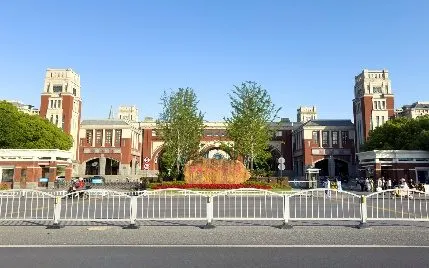
University · Shanghai