- Language courses
- English, Chinese
- Bachelor's Degree
- English, Chinese
- Master's Degree
- English, Chinese
- Doctoral (PhD) Programmes
- English, Chinese
- Accommodation from 2 000 ¥/year
清华大学
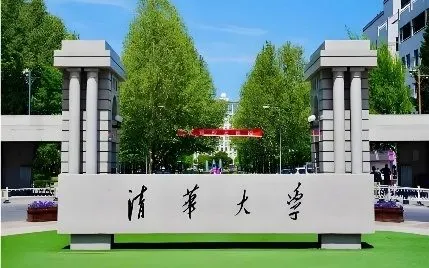
Tsinghua University accepts international students on programmes in the following fields: engineering, natural sciences, it, economics, business. Choose the level and programme that suit your goals.
Chinese language study at the university — from a few weeks to a year or longer. Suitable for those starting from scratch or preparing for the HSK before entering a main programme.
self-funded · language programme
The first level of higher education: usually four years of study, specialised subjects, internships and a graduation thesis. It opens the way to working in your field and to a master's degree.
self-funded
Advanced study after a bachelor's degree: research, applied projects and internships. It helps you become an expert in your chosen field and broaden your career opportunities.
self-funded
Tsinghua University is located in Beijing. Nihao Study consultants keep track of the deadlines and admission requirements of this university, and you can always check the most accurate and up-to-date information on its official website. In university rankings, it is ranked 1 in China and 49 worldwide.
Come for a face-to-face meeting: together we will go through the requirements, deadlines, documents and study options that suit you.

At the meeting we will look at your situation, tell you which documents to prepare and by when, talk about possible programmes and help you decide on the next step.
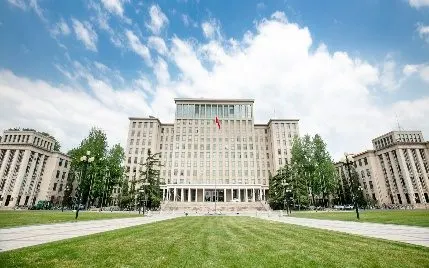
Tsinghua University (THU, 清华大学, Qīnghuá Dàxué) is a public research university in Haidian District, in the north-west of Beijing. Russian-language sources render the name in several ways, including a calque of the English spelling. Chinese students shorten the name to 清华 in conversation, and rankings most often use THU.
In terms of status, Tsinghua belongs to the top tier of Chinese higher education. The university took part in the national Project 211 and Project 985, is a member of the C9 League and is now included in the Double First-Class (双一流) initiative. THU and Peking University together form the leading pair of Chinese universities: both sit near the top of national and world rankings, with Tsinghua standing out particularly in engineering, technology and the natural sciences.
Below is information for 2026 applicants: statistics, history, rankings, programmes, HSK requirements, scholarships, dormitories, and an explanation of which institutions are easily confused with Tsinghua.

| Item | Data |
|---|---|
| Founded | 1911 |
| Structure | 33 schools and 54 departments |
| Total students | 63 132 |
| Bachelor's Degree | 16,526, including 784 international students |
| Master's and doctoral students | 21,752, including 1,397 international students |
| Doctoral (PhD) Programmes | 24,854, including 450 international students |
| Teaching and other staff | 17 382 |
| Campus area | 483.43 ha |
The main campus is in Haidian, on the site of former Qing dynasty imperial gardens. The postal address given for international bachelor's admission is: Tsinghua University, Haidian District, Beijing, 100084, China.
The institution opened in 1911 as Tsing Hua Imperial College, and in 1912 it was renamed Tsing Hua College. A university division was added in 1925, and in 1928 it became National Tsing Hua University. Originally the school prepared students for study in the USA, which is why the campus architecture and its early academic culture combined Chinese and Western features.
When war broke out in 1937, Tsinghua joined Peking University and Nankai University to form a temporary alliance, later named National South-West Associated University, which operated in Kunming. The university returned to its Beijing campus in 1946. After the 1952 higher education reform, Tsinghua became a polytechnic centre, but with China's opening-up it gradually restored the natural sciences, humanities, economics, management, law, medicine and the arts.
The official description calls today's THU a world-leading comprehensive university. The university's motto is usually translated as "Self-Discipline and Social Commitment", and the principle Actions Speak Louder Than Words underlines the practical nature of its teaching. Tsinghua officially published its Double First-Class development plan in 2017.
Each ranking measures something different. QS gives more weight to reputation and international profile, THE combines teaching, research and citations, ARWU focuses on research output, and CWUR and EduRank use their own bibliometric models. ESI is useful as an indicator of citations by discipline, but it does not assess the quality of admissions. So it makes sense to look at several systems at once.
| Ranking | Position | Edition and source |
|---|---|---|
| U.S. News Best Global Universities | 6th worldwide | U.S. News 2026/27 |
| QS World University Rankings | 14th | QS 2027 |
| Times Higher Education | 12th | THE 2026 |
| Academic Ranking of World Universities | 18th; 1st in China | ARWU 2025 |
| CWUR | 37th worldwide; 1st in China | CWUR 2025 |
| EduRank | 60th worldwide; 1st in China | EduRank 2026 |
A high overall position does not mean that all faculties are equally strong. In the THE 2026 subject rankings the picture is as follows: 3rd for business and economics, 5th for education, 10th for physical sciences, 12th for computer science, 13th for engineering and life sciences. These figures support THU's reputation as one of China's two leading universities, but leave room for a considered choice of major.
Tsinghua is worth considering for those with a strong academic background who are ready for a heavy workload and clearly understand why they want this particular programme. For engineering applicants, mathematics, physics, programming or a project portfolio matter. In social sciences, economics, law, architecture and the arts, subject-specific achievements, motivation and the ability to work in a bilingual or fully English-speaking environment are just as important. The international admissions committee looks at the application as a whole, not at the result of a single exam.
A big name is no substitute for checking the content. First compare the required courses, the language of each track, a possible supervisor, the final qualification and the full cost. Then take a realistic look at your language level, document preparation timelines and a back-up plan. If your goal is only language practice, a one-semester Chinese course may be more sensible than a difficult degree application. And if you need a niche English-taught graduate programme, compare THU with other C9 universities by laboratory and research topic, not just by overall position.
Beijing itself is a separate factor. Haidian gives access to a rich university and technology environment, but off-campus housing can noticeably increase costs. A dormitory place is booked separately from admission, so a financial cushion and early booking are part of your admission strategy, not a minor detail to deal with later once you already have an offer.
Historically, Tsinghua grew up as an engineering centre. In U.S. News 2025/26, 22 THU subjects are in the top ten, and the university ranks first in materials science, environmental engineering, chemistry, chemical engineering, energy, computer science, engineering and artificial intelligence. In the EduRank 2026 model, THU's engineering research is separately ranked 5th in the world.
The College of AI opened in April 2024, headed by Turing Award winner Andrew Yao. The college works on security, computing architectures, fundamental algorithms, multimodal perception and embodied AI, as well as interdisciplinary applications. For applicants this means access to a strong environment, but it does not guarantee admission to this particular college: everything depends on the chosen programme and internal allocation.
The Institute for Carbon Neutrality comprises 8 research centres. Their topics include climate governance, industrial decarbonisation, buildings, transport, new power systems and low-carbon energy. Thanks to the close links between architecture, civil engineering, energy and environment, THU is well suited to projects at the intersection of engineering and sustainable development.
The range of fields is broad: computer science, electronic engineering, electrical engineering, integrated circuits, mechanical engineering, energy, architecture and civil engineering, materials, mathematics, physics, chemistry, earth sciences, medicine and public health, as well as economics, management, law, humanities and social sciences, journalism, art and design.
International bachelor's applicants can choose from 93 main majors plus 45 additional tracks, all grouped into 12 disciplinary categories. As a rule, students are first admitted to a broad field or a residential college and only then choose a major according to the rules of their track. Note that a school's name in the catalogue may not match the programme name on the application form.
For the 2026 master's and doctoral intake, 53 units accept international students. A master's usually lasts 2 to 3 years, a doctorate 3 to 4 years, and a direct doctorate after a bachelor's 4 to 5 years. More than 30 graduate programmes are offered entirely in English.
| Level | Format | What to check |
|---|---|---|
| Bachelor's Degree | 4 years in most cases; 5 years for architecture and sculpture; 8 years for clinical medicine | Chinese and English in most programmes |
| Bachelor's in English | Global Talents in Science and Engineering; Urban Regeneration and Design; Politics, Economics and Sociology; the THU–CUHK joint programme in economics | No Chinese language certificate required for these |
| Master's Degree | Usually 2 to 3 years | Chinese-taught, bilingual and English-taught programmes |
| Doctoral (PhD) Programmes | Usually 3 to 4 years | Language and research proposal requirements are set by the department |
| Chinese Language | 1 semester, about 18 weeks | A certificate and transcript are issued if the rules are followed |
A notable innovation in English-taught bachelor's study is Zijing College, presented as Tsinghua's first residential college where all programmes are taught in English. Its engineering track combines information technology, mechanical engineering, civil engineering and design. International links are also expanding. In 2026 Tsinghua signed a memorandum with Saint Petersburg State University on establishing a China-Russia Institute of Innovation, which will focus on research, training and technology transfer.
International students are housed in the Asian Youth Exchange Center, Building 6 and Zijing Apartment Buildings 19, 20, 21, 22 and 23. There are single and double rooms, as well as AB rooms with separate bedrooms and a shared bathroom.
| Room type | Conditions |
|---|---|
| Twin room | Bed, desk, wardrobe and bedding |
| Single or AB room | The number of such rooms is limited |
| Triple room for the graduate intake | Provided for under the 2026 international master's and doctoral rules |
Booking is done online, and since places are few, in practice those who apply earlier have the advantage. Those who do not get a place find off-campus housing themselves. The buildings have shared spaces for study and other activities, small sports areas and shared kitchens; the international centre publishes the schedule for hot water and seasonal air conditioning.
Find out which application category suits you, what deadlines the embassy and the university have set, and whether the university is on the CSC scholarship partner list. Competition for scholarships is high, and some of them cannot be combined.
Historic gardens, red-brick buildings, modern laboratories and a residential quarter sit side by side on campus. The library system holds 6.25 million physical items and 222,500 traditional Chinese books, plus 992 databases. During term the main reading rooms are usually open every day from 8:00 to 22:00.
Sports facilities cover more than 220,000 square metres and are divided into the east, west, north and Zijing zones. The Tsinghua University Art Museum has an area of about 30,000 square metres, and its collection numbers more than 13,000 items. None of this replaces study, but it makes life on a large enclosed campus more varied.
For everyday travel, bikes and the metro come in handy. Visitor entry procedures and access to particular facilities are worth checking in advance, before your visit.
Competition at THU is tough. A good HSK score on its own will not make up for a weak transcript, unconvincing motivation or a poor fit with the chosen programme.
| University | Location | How it differs |
|---|---|---|
| Tsinghua University, THU, 清华大学 | Beijing, Haidian District | The university this page is about; a strong engineering and technology profile |
| Peking University, PKU, 北京大学 | Beijing, Haidian District | Another leading Chinese university; it has its own admissions office |
| National Tsing Hua University, NTHU, 國立清華大學 | Hsinchu, Taiwan | A separate university; re-established in Hsinchu in 1956 |
If you search in English, be careful: without the word National, Tsinghua University usually means THU in Beijing, whereas National Tsing Hua University and the abbreviation NTHU refer to the institution in Hsinchu. Peking University is not a branch of Tsinghua, although the two universities are neighbours and are constantly compared.
The standard Russian form, which refers specifically to the Beijing university, is a direct rendering of "Tsinghua University"; a variant with the words reversed sounds less standard, and a spelling based on the old Latin transcription is a calque. The official international name is Tsinghua University, and THU is used in rankings and correspondence. 清华 (Qīnghuá) is the short Chinese form, and 清华大学 (Qīnghuá Dàxué) is the full Chinese name.
THU stands for Tsinghua University. The abbreviation appears in the names of international offices, on ranking pages and in the addresses of university services; it is not a separate school within Tsinghua.
Yes. The university took part in Projects 985 and 211, is a member of the C9 and is included in the current Double First-Class system. Note that 985 and 211 are historical government programmes, while 双一流 (Double First-Class) is a current development initiative.
Chinese-English programmes require HSK 5 with a score above 60 points in each section. With HSK 4 at the same threshold, conditional admission is possible, but you will have to show HSK 5 during the first academic year. Check exam dates in the official HSK calendar.
Yes, but only on programmes where this is explicitly stated. At bachelor's level in 2026 there are 4 such tracks, and the graduate catalogue has more than 30 English-taught programmes. In other fields teaching is in Chinese or in both languages.
The rate depends on the room type. Current accommodation terms are published on the university's official website; check them before booking.
You can take part in the competition. A full Chinese Government Scholarship usually covers tuition, accommodation or a housing allowance, a monthly stipend and insurance. Bear in mind that some types of funding cannot be combined.
Current HSK centres can be found through Chinese Test Service. Unless there is a specific announcement, do not assume that the language courses on campus automatically serve as an open HSK or BCT test centre.
The main campus is in Haidian District, in north-west Beijing, on the site of former imperial gardens. The large grounds have several gates, so it is best to check the right entrance, visiting rules and route from the metro before you go.
The standard package: passport, transcript, school-leaving certificate, a language certificate for the chosen track, proof of academic results, personal statement, plus any additional materials the programme requires. Applicants must hold foreign citizenship and a certificate of complete secondary education. Check the requirements for translations and legalisation against the instructions for the current intake.
Beijing (北京) is the capital of China and a major centre of education: the city has more than 90 universities, among them Peking University and Tsinghua University, which rank in the country's top 2. Here you can see the Forbidden City and the Great Wall of China, as well as the modern tech district of Zhongguancun, known as China's Silicon Valley.
Studying in Beijing goes hand in hand with good career prospects: the city hosts the headquarters of major companies and research centres, getting around is easy (the metro has 22 lines), and cultural life is very rich. Parents should know that the capital's infrastructure is highly developed, there are international clinics with Russian-speaking staff, many direct flights leave the city, and students are supported by a well-established system: dormitories are located right on the guarded university campuses.
You work with Nihao Study specialists. They will help you put together a portfolio and a set of documents, draw up a study plan and choose a university or college and a specialty that genuinely interest you.
We take care of every stage of admission, from choosing to enrolment
We will gather, prepare, certify and send your documents to the institution
We will show the admissions committee your strengths
We run training sessions and courses so you can prepare with more confidence
We will help you settle in at the start of your studies and keep moving forward
Nihao Study specialists select universities and colleges that match the applicant's goals and means. We make sure the teachers are practitioners and that the knowledge will be useful in your profession.
We examine curricula, talk to students and teachers and look at which specialties employers need, and use this information to select options for the applicant.
Advisers guide the applicant from the first consultation to enrolment, help build a plan and spot mistakes in time that could get in the way.
The cost of our support depends on the programme and the partner university; you'll get an exact quote after a free consultation.
Get a quoteA free 15-minute consultation: together we will choose a university or college and a programme that suit your goals and budget.
Apply with peace of mind: we handle the documents, deadlines and correspondence with admissions committees, and you save time and energy.
Don't want to wait for a call? Message us in the chat.
Message us in chat