- Language courses
- English, Chinese
- Bachelor's Degree
- English, Chinese
- Master's Degree
- English, Chinese
- Doctoral (PhD) Programmes
- English, Chinese
- Accommodation from 2 000 ¥/year
BFSU · 北京外国语大学
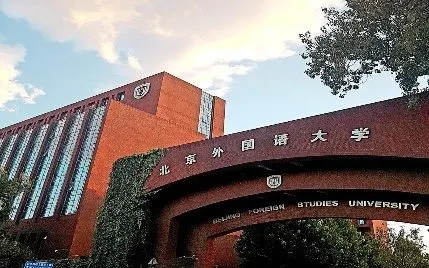
Beijing Foreign Studies University accepts international students on programmes in the following fields: business, engineering, humanities, natural sciences. Choose the level and programme that suit your goals.
A short language programme during the summer holidays: Chinese classes and getting to know the campus and the city. A convenient way to try studying in China before applying for a main programme.
Check upcoming application deadlines for this level with your Nihao Study adviser.
All programmes at this level →Chinese language study at the university — from a few weeks to a year or longer. Suitable for those starting from scratch or preparing for the HSK before entering a main programme.
self-funded · language programme
Cost: 24 000 ¥/year
Foundation programme: language and core subjects before a bachelor's degree. It helps you strengthen your knowledge and get used to studying in China before the main programme begins.
self-funded · language programme
Cost: 24 000–40 000 ¥/year
The first level of higher education: usually four years of study, specialised subjects, internships and a graduation thesis. It opens the way to working in your field and to a master's degree.
scholarship-funded
Cost: 26 000–39 900 ¥/year
Advanced study after a bachelor's degree: research, applied projects and internships. It helps you become an expert in your chosen field and broaden your career opportunities.
scholarship-funded
Cost: up to 64 000 ¥/year
self-funded
Cost: 30 000–64 000 ¥/year
Beijing Foreign Studies University is located in Beijing. Nihao Study consultants keep track of the deadlines and admission requirements of this university, and you can always check the most accurate and up-to-date information on its official website. In university rankings, it is ranked 51 in China and 751 worldwide.
Come for a face-to-face meeting: together we will go through the requirements, deadlines, documents and study options that suit you.

At the meeting we will look at your situation, tell you which documents to prepare and by when, talk about possible programmes and help you decide on the next step.
Beijing Foreign Studies University (BFSU, 北京外国语大学, pinyin Běijīng Wàiguóyǔ Dàxué) is a public university in Beijing's Haidian District under the Ministry of Education of the PRC. The university uses a standard Russian name on its official Russian-language website, while Chinese students shorten its name to 北外 (Běiwài). Other variants can be found online, but in application documents it is safer to reproduce the official English and Chinese names.
BFSU takes part in Project 211 and the national Double First-Class initiative. Calling it a full Project 985 university would be inaccurate: officially, it is a Project 985 Innovation Platform – a platform for innovative disciplines within Project 985. Its reputation as a leading language university is backed by concrete facts: 101 foreign languages are taught here, its foreign languages and literature discipline received an A+ rating from the Ministry of Education, and in the ShanghaiRanking (2026 edition) BFSU is ranked 1st among China's language universities.
Below you will find what 2026 applicants need to know: key figures, statuses and rankings, faculties, programmes, HSK and CSCA requirements, dormitories, scholarships and how BFSU differs from similar universities in Beijing. For questions about admission, you can book a Nihao Study consultation.
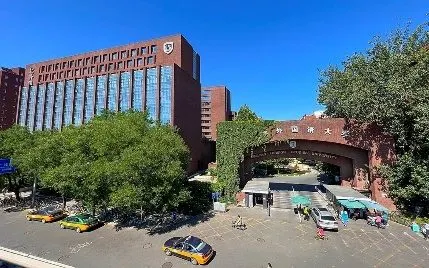
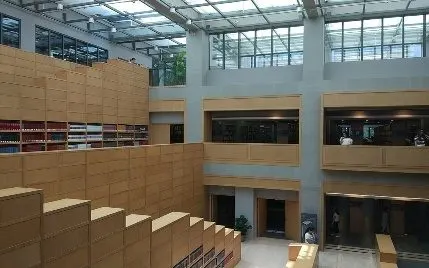
The table below summarises the key facts about the university and its admission of international students.
| Item | Value | What this means in practice |
|---|---|---|
| Year founded | 1941 | The longest-standing tradition of foreign-language training in the PRC's education system |
| Languages | 101 foreign languages | A wide choice of less commonly taught languages of Europe, Asia and Africa |
| Bachelor's Degree | 122 programmes, 46 of which are offered only at BFSU | The university's profile has long outgrown that of a classic languages institute |
| Students | More than 5,700 bachelor's students; 4,300 master's and doctoral students; about 1,200 international students | An international environment on a campus of moderate size by Chinese standards |
| Teaching staff | Over 1,200 Chinese staff; about 200 foreign teachers representing 57 countries and regions | Language practice takes place in a multinational environment |
| International links | Over 300 partner universities and organisations in 80 countries and regions | Exchanges and joint academic projects are available |
| Research base | 54 centres at national, provincial and ministerial level | Strengths: area studies, translation and language policy |
| Address | East Campus: No. 2 Xisanhuan North Road, Haidian, Beijing, 100089 | The international student admissions office is located in Haidian District |
BFSU traces its history back to 1941, when a Russian language class opened in Yan'an within the third branch of the Chinese People's Anti-Japanese Military and Political College. It was later reorganised into the Foreign Languages School of the Central Military Commission. The university describes it as the first foreign languages school founded by the Communist Party of China.
After the founding of the PRC, the institution was placed under the Ministry of Foreign Affairs. In 1954 it was named Beijing Foreign Languages Institute, and in 1959 it merged with Beijing Russian Institute. For those choosing Russian studies this is an important detail: Russian was the university's first subject, not a later addition. The School of Russian Studies presents itself as the oldest academic unit of the university.
Since 1980 the institute has once again been directly under the Ministry of Education, and it has carried its current name, Beijing Foreign Studies University, since 1994. The language school has grown into a multidisciplinary university entitled to award degrees in foreign languages and literature, area studies, translation, education, management, Chinese language and a number of other disciplines. So today BFSU produces more than translators: it also trains journalists, diplomats, lawyers, international business professionals and regional specialists.
The profile of a languages university does not show up well in overall world rankings. It therefore makes more sense to compare BFSU's overall position with its subject results, and not to confuse government statuses awarded historically with annual rankings.
| Ranking or system | Position | How to read it |
|---|---|---|
| ShanghaiRanking, language universities in China | 1st, 2026 edition | Directly shows BFSU's leadership in its category within China |
| QS World University Rankings | 1201–1400 band, 2027 edition | Reflects overall research level, not the language specialism |
| QS Linguistics | 18th, 2025 subject edition | One of BFSU's highest international positions |
| QS English Language and Literature | 98th, 2025 subject edition | A good result in English language and literature |
| QS Modern Languages | 151–200 band, 2025 edition | Points to the broad range of modern languages taught |
| ShanghaiRanking Education | 401–500 band, 2025 edition | The only BFSU subject in the current GRAS listing |
| EduRank | World: 2168th; China: 161st; 2026 edition | A bibliometric assessment that depends on the number of publications |
BFSU's priority discipline in the current Double First-Class initiative is foreign languages and literature. According to the university's official wording, this field received an A+ in the Ministry of Education's discipline assessment and ranked first in the country. Its participation in Project 211 and in the Project 985 innovation platform for disciplines is stated in BFSU's admission rules for international students.
BFSU has no numerical position in Times Higher Education, and it does not appear as a separate entry in the 2025 CWUR Global 2000 list. So positions in THE, CWUR and U.S. News are not given on this page, and the results of Beijing International Studies University, a university with a similar name, are not attributed to BFSU.
The list of 101 foreign languages includes the official languages of all 183 countries with which China has diplomatic relations. What matters is not just the length of the list but that it includes whole groups of less widely spoken languages of Europe, Asia and Africa. For students, this means access to teachers, textbooks and area studies centres that would be hard to bring together at an ordinary comprehensive university.
The university is authorised to award doctorates in foreign languages and translation studies. The master's catalogue includes specialisations in translation, interpreting and trilingual interpreting. The trilingual interpreting programme combines Chinese and English with a third language, such as Russian, French, German, Japanese, Spanish or Arabic.
The university develops area studies, international relations, diplomacy, journalism and law. The Ministry of Education has registered 37 country and regional studies centres at BFSU; there are also specialist centres on Japan, the UK, Canada and Central and Eastern Europe. The university reports that its graduates include more than 3,000 counsellors and over 500 ambassadors, hence its unofficial nickname, "the cradle of diplomats".
This reputation shows that language education here is tied to politics, history, law and regional analysis. International students should look at the School of International Relations and Diplomacy and the School of International Organizations, but the language of instruction for each programme needs to be checked in the catalogue.
BFSU has an Artificial Intelligence and Human Languages laboratory, and a Language Intelligence major is developing where linguistics meets computer science. For international students, this programme is listed in the 2026 bachelor's catalogue as Chinese-taught. Such a combination of linguistics, data work and computing is uncommon.
The second applied area is concentrated in the International Business School. Marketing, finance, e-commerce, international business and international trade are taught here in English. In these programmes, language serves as a working tool of the profession rather than a philology subject in its own right.
The university includes language schools for English, Arabic, German, Russian, French, Spanish and Portuguese, as well as Asian, African and European languages. There are also schools of law, history, journalism, business, education, information technology, translation, Chinese language and literature, international organisations and international relations. The words School and College in their names denote internal units of BFSU, not independent colleges.
International applicants should not confuse the university's full catalogue with actual admissions: departments accept international students only for the degrees and languages of instruction open in the current year. In the 2026 bachelor's catalogue, the available fields include diplomacy, journalism, translation, Chinese language, computer science and business, and among languages, Arabic, Zulu, Italian, German, Russian and Swahili. Master's students can choose business, education, global communication, international relations and international law, as well as many translation and interpreting specialisations.
| Level | Language and duration | Conditions |
|---|---|---|
| Bachelor's Degree | Chinese or English, normally 4 years | The catalogue provides for spring and autumn intakes, but most language majors admit students in the autumn |
| Master's Degree | Chinese, English or a combination of languages, usually 2 or 3 years | The school sets the HSK and IELTS levels and prior education requirements |
| Doctoral (PhD) Programmes | Research programmes, usually 4 years | A master's diploma, research proposal and proof of language level are required |
| Language courses | Chinese language; one semester or one academic year | Based on a placement test, students are assigned to 9 levels, from beginner to advanced |
| Visiting student | Chinese language or subject courses | Non-degree students pay tuition separately for each semester |
In 2026, English-taught bachelor's programmes in business admitted students in spring and autumn, while English language and literature and diplomatic translation admitted in the autumn. There are more Chinese-taught programmes, but from the 2026 intake the academic component of the CSCA is compulsory for applicants. The subjects depend on the major; most often they are mathematics and Chinese (in a humanities or science version).
BFSU has no degree programmes taught in Russian. Russian is studied here as a major and is also used in some translation language combinations. The choice in English is noticeably wider in business and in some international relations programmes.
The School of Chinese Language and Literature teaches international students from beginner to advanced level; besides the general course, there are business Chinese, writing, reading and culture modules. It is best to check the terms of the new intake in advance: short-term and special programmes have their own fees.
The guideline for the Beijing Government Scholarship is at least HSK 4 for Chinese-taught degree programmes and HSK 3 for foundation and visiting programmes. Some majors require more: for example, the Chinese–foreign translation programme at the School of Chinese Language and Literature requires HSK 5 with a score of at least 180, while the school's regular Chinese bachelor's programme requires HSK 4 with at least 180.
BFSU's current prospectus lists HSK, IELTS and TOEFL; the university does not name BCT as a general substitute for HSK. BFSU has historically been an HSK test centre, but the dates of a specific session and whether external candidates can register should be checked in the official registration system, and the venue itself with the test centre.
BFSU's fees may change from one intake to the next, so check the current tuition fee on the university's official website. On top of tuition, your budget needs to cover the visa, medical examination, compulsory insurance, dormitory, meals and transport. Check the payment details for any payment against your BFSU personal account, not against third-party publications.
International students book places in several buildings on the East and West campuses. Accommodation is usually paid for the whole semester in advance.
| Room type | Conditions |
|---|---|
| Single, White Building | Shared bathroom |
| Single, White Building | Private bathroom |
| Single, East Campus International Dorm | Private bathroom |
| Single, Domestic Mansion | Private bathroom |
| Double | Depend on the building and bathroom type |
Places are booked through an online system, and the room category available depends on what is still free. An international student living off campus must register their new address at the local police station within 24 hours of moving in. An off-campus housing allowance is provided only under some scholarships and is not available to all self-funded students.
The monthly stipend under a full scholarship and the housing allowance for living off campus differ for master's and doctoral students. Scholarships are awarded competitively and do not work as an automatic discount. Scholarship applications often close earlier than regular self-funded admissions.
The East and West campuses are separated by Xisanhuan North Road in Haidian District. This is an urban university quarter, not an isolated, closed site on the outskirts. Nearby are the business and academic districts of western Beijing: getting around is convenient, but renting accommodation outside the dormitories can be expensive.
BFSU's library covers 23,000 square metres, has more than 2,200 reading seats and 18 research rooms. Its collection includes over 1.6 million printed books and about 1.41 million e-books, as well as materials in 107 languages. Language students will find the multilingual collections, old foreign editions, Chinese translations of foreign literature and digital databases especially useful.
The campus is home to the World Language Museum, the BFSU History Museum and the university's historical archive. The Physical Education Department runs more than 20 sports courses, from swimming and Olympic sports to traditional and recreational activities. Compact teaching buildings, book spaces, a sports complex and dormitories sit side by side on campus.
The 2026 deadlines do not carry over automatically to the next cycle: BFSU updates its catalogue, CSCA subjects and minimum language level before each intake.
Master's applicants need a bachelor's diploma, doctoral applicants a master's diploma. The 2026/27 CSC application package included a passport, translated diploma and transcript, language certificates, a medical form, a certificate of no criminal record, 2 letters of recommendation, a CV of more than 800 words and a research proposal. The proposal had to be at least 1,500 words for a master's and at least 3,000 words for a doctorate. Requirements may differ for self-funded admission and at individual schools.
| University | Status | Main specialism |
|---|---|---|
| Beijing Foreign Studies University, BFSU, 北京外国语大学 | 211 university, Double First-Class | Diplomacy, area studies, translation, foreign languages |
| Beijing International Studies University, BISU, 北京第二外国语学院 | Beijing municipal university | International business, tourism and hospitality, languages |
| Beijing Language and Culture University, BLCU, 北京语言大学 | Ministry of Education university | Teaching Chinese to international students, linguistics, communication |
| Peking University, PKU, 北京大学 | Comprehensive research university | A wide range of humanities, natural sciences and engineering |
BFSU is especially easy to confuse with BISU: in translation both can come out as "Beijing languages university", but they are different universities with different websites. To be sure you have BFSU, check the CSC agency code 10030, the abbreviation and the Chinese name 北京外国语大学.
BFSU's official Russian-language website uses the form meaning "Beijing University of Foreign Languages". Two misspelt variants of it are simply typos. The translation meaning "Beijing University of Foreign Studies" is a different rendering found on Russian Wikipedia, while one meaning "University of Foreign Languages of Beijing" is an understandable but inverted calque and is not an official name. The university's international name is Beijing Foreign Studies University, and its English abbreviation is BFSU. In Chinese, the full name is written 北京外国语大学 (Běijīng Wàiguóyǔ Dàxué), and the short form is 北外 (Běiwài).
Yes. BFSU is part of Project 211, the Double First-Class initiative and the Project 985 platform for innovative disciplines. However, the Project 985 platform is not the same as full Project 985 university status.
Bachelor's programmes in business, English philology, diplomatic translation and some master's programmes are taught in English. Russian is a major and a working language in some translation language combinations, but the university has no full range of degree programmes taught in Russian.
The basic threshold for Chinese-taught degree programmes is HSK 4. At the School of Chinese Language and Literature, the Chinese–foreign translation programme requires HSK 5 with at least 180 points. It is best to check the exact requirement for your chosen major before applying.
The total depends on the chosen programme, and accommodation on the building and room type. Rates change from intake to intake, so check the current terms on BFSU's official website.
Yes, BFSU takes part in the Chinese Government Scholarship and accepts applications under this programme. A full scholarship can cover tuition, accommodation, a stipend and insurance, but it is awarded on a competitive basis. The agency code for the university programme is 10030.
BFSU used to be on the official list of HSK test venues; look for a current session through the registration system. The admission rules name the HSK and do not treat the BCT as a universal substitute. Check exam dates in the official HSK schedule.
The East Campus address is No. 2 Xisanhuan North Road, Haidian District, Beijing, 100089. The West Campus is just across the road, so the university grounds are compact and fit into the Haidian district.
BFSU is a Project 211 and Double First-Class university with a strong profile in foreign languages, translation and area studies. BISU is a separate municipal university with a notable specialisation in tourism. BLCU is best known for teaching Chinese to international students. Before applying, double-check the Chinese name and web domain of your chosen university.
You will need a school leaving certificate with transcript, an official CSCA report, a language certificate, a passport, a personal statement, pledge forms and any additional materials requested by the school. Documents that are not in Chinese or English must be accompanied by a certified translation.
Yes. The Chinese language school's courses have 9 levels, from beginner to advanced, and you can study for a semester or a full academic year. Moving on to a bachelor's programme after the courses requires a separate application.
Beijing (北京) is the capital of China and a major centre of education: the city has more than 90 universities, among them Peking University and Tsinghua University, which rank in the country's top 2. Here you can see the Forbidden City and the Great Wall of China, as well as the modern tech district of Zhongguancun, known as China's Silicon Valley.
Studying in Beijing goes hand in hand with good career prospects: the city hosts the headquarters of major companies and research centres, getting around is easy (the metro has 22 lines), and cultural life is very rich. Parents should know that the capital's infrastructure is highly developed, there are international clinics with Russian-speaking staff, many direct flights leave the city, and students are supported by a well-established system: dormitories are located right on the guarded university campuses.
You work with Nihao Study specialists. They will help you put together a portfolio and a set of documents, draw up a study plan and choose a university or college and a specialty that genuinely interest you.
We take care of every stage of admission, from choosing to enrolment
We will gather, prepare, certify and send your documents to the institution
We will show the admissions committee your strengths
We run training sessions and courses so you can prepare with more confidence
We will help you settle in at the start of your studies and keep moving forward
Nihao Study specialists select universities and colleges that match the applicant's goals and means. We make sure the teachers are practitioners and that the knowledge will be useful in your profession.
We examine curricula, talk to students and teachers and look at which specialties employers need, and use this information to select options for the applicant.
Advisers guide the applicant from the first consultation to enrolment, help build a plan and spot mistakes in time that could get in the way.
The cost of our support depends on the programme and the partner university; you'll get an exact quote after a free consultation.
Get a quoteA free 15-minute consultation: together we will choose a university or college and a programme that suit your goals and budget.
Apply with peace of mind: we handle the documents, deadlines and correspondence with admissions committees, and you save time and energy.
Don't want to wait for a call? Message us in the chat.
Message us in chat