- Language courses
- English, Chinese
- Bachelor's Degree
- English, Chinese
- Master's Degree
- English, Chinese
- Doctoral (PhD) Programmes
- English, Chinese
- Tuition from 24 000 ¥/year
- Accommodation from 40 ¥/day
BUAA · 北京航空航天大学
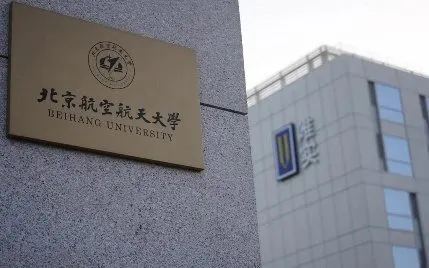
Beihang University accepts international students on programmes in the following fields: business, engineering, economics, it. Choose the level and programme that suit your goals.
Chinese language study at the university — from a few weeks to a year or longer. Suitable for those starting from scratch or preparing for the HSK before entering a main programme.
self-funded · language programme
The first level of higher education: usually four years of study, specialised subjects, internships and a graduation thesis. It opens the way to working in your field and to a master's degree.
self-funded
Advanced study after a bachelor's degree: research, applied projects and internships. It helps you become an expert in your chosen field and broaden your career opportunities.
self-funded
Beihang University is located in Beijing. Nihao Study consultants keep track of the deadlines and admission requirements of this university, and you can always check the most accurate and up-to-date information on its official website. In university rankings, it is ranked 15 in China and 462 worldwide.
Come for a face-to-face meeting: together we will go through the requirements, deadlines, documents and study options that suit you.

At the meeting we will look at your situation, tell you which documents to prepare and by when, talk about possible programmes and help you decide on the next step.
Beihang University (BUAA, 北京航空航天大学, pinyin Běijīng Hángkōng Hángtiān Dàxué) is a public research university in Beijing, usually referred to in Russian simply as Beihang University. The university's former international name was Beijing University of Aeronautics and Astronautics, which is where the abbreviation BUAA comes from. Russian-language sources also use several other variants of the name. In China itself the short name 北航 – Beihang – is commonly used.
BUAA is part of Projects 211 and 985 and also takes part in the national Double First-Class initiative (双一流). Its reputation as a leading aerospace university is backed by facts: Beihang was founded as the PRC's first higher education institution specialising in aviation and space, and in the ShanghaiRanking subject rankings for 2025 its aerospace engineering took first place. At the same time, today's Beihang is a research university with a broad range of fields, not a narrowly specialised aviation institute.
| Item | Value |
|---|---|
| Founded | 25 October 1952 |
| National projects | Projects 211, 985, Double First-Class |
| Number of students | more than 43,000 students |
| Staff | more than 6,300 academic and other staff |
| Academicians | 30 members of the Chinese Academy of Sciences and the Chinese Academy of Engineering |
| International students | over 2,000 students from more than 140 countries |
| Campuses | Beijing: Xueyuan Road and Shahe; Hangzhou: international campus |
| Main campus address | No. 37 Xueyuan Road, Haidian District, Beijing 100191 |
The figures on scale come from the general statistics the university updated in June 2026; where they differ from older directories and aggregators, rely on these. International students should also consider which site they will study at. Campus areas: Xueyuan Road 98.4 hectares, Shahe 97.2 hectares, Hangzhou 66.73 hectares.
It all began in 1951, when, as part of higher education reform, the aviation departments of several Chinese universities started to be brought together. In May 1952 the Ministry of Education drew up plans for a specialist aviation university, and on 25 October the Beijing Institute of Aeronautics was formally opened. The university regards it as the first aerospace university founded in the new China.
Applied engineering work began here very early. According to the university, its teams built China's first light passenger aircraft, its first unmanned aerial vehicle and Asia's first meteorological rocket. The School of Aeronautic Science gives precise dates: Beijing 1, Beijing 2 and Beijing 5 date from 1958.
The institute was renamed Beijing University of Aeronautics and Astronautics in April 1988, and in 2002 it began using a shorter international brand, Beihang University. That is why two English names appear in documents: the current Beihang University and the former Beijing University of Aeronautics and Astronautics.
World rankings assess universities by different criteria, so no single position in any one table should be treated as a universal measure of quality. In BUAA's case, the overall rankings and the subject results differ noticeably: its aerospace standing is higher than the university's overall international profile.
| Ranking | Position and year | What it shows |
|---|---|---|
| ARWU | worldwide: 101–150 band, 2025 | academic performance |
| ShanghaiRanking GRAS | 1st in Aerospace Engineering, 2025 | the main confirmation of the university's subject profile |
| THE | worldwide: 251–300 band, 2026 | overall assessment as a research university |
| QS | 388th worldwide, 2026 | global reputation and QS methodology indicators |
| CWUR | 198th worldwide, 29th in China, 2026 | CWUR model: research and career outcomes |
| EduRank | 435th worldwide, 26th in China, 2026 | bibliometrics-based aggregator |
| U.S. News | 251st, 2025 and 2026 editions | comparison of the world's research universities |
Another source is ESI. In March 2024 BUAA reported that 11 of its disciplines were included in ESI; engineering was in the top 0.01 per cent, while chemistry, computer science, materials science and engineering were in the top 0.1 per cent. This is not a position in an overall ranking but a measure of how often research in individual fields is cited.
The School of Aeronautic Science covers aircraft design, aerodynamics, structures and strength, flight dynamics and life-support systems. The School of Energy and Power Engineering trains doctoral students in two fields: power engineering and engineering thermophysics, and aeronautical and astronautical science. So BUAA's profile is much broader than just training pilots.
Bachelor's programmes include robotics and automation, microelectronics, computer science, communications, virtual reality, reliability and safety, and intelligent transport systems. In the 2026 EduRank ranking BUAA was second in the world for Reliability and Quality Engineering and fifth for Automation and Control Engineering. This is an independent bibliometric assessment, but it matches how the curricula are structured.
At BUAA, materials science covers composites, additive manufacturing and materials processing. The university reports that this discipline was selected for Double First-Class twice, in 2017 and in 2022, and that it is in the ESI top 0.1 per cent. The School of Computer Science develops Computer Science and Technology and Software Engineering; both disciplines were also among the Double First-Class selections.
It follows that BUAA's aerospace specialism does not confine applicants to a single industry. Designing a satellite or an aircraft takes programming, materials science, automatic control, communications, power engineering, modelling and reliability testing. That makes BUAA particularly suitable for those who plan to work across several engineering fields at once. Those interested only in business, the humanities or conventional medicine would do better to compare BUAA's curricula with programmes at more specialised Beijing universities. In any case, the university's position in world rankings does not on its own remove the need to check the specific school, the language of instruction, the laboratories and whether a supervisor can take the student on.
The academic environment also depends on the language of instruction. Chinese-taught programmes offer a wider choice in the main bachelor's catalogue but require a good command of the language. English-taught programmes make the first steps easier, but Chinese will still come in handy in daily life, on internships and when working with some equipment. It makes sense to compare not just the name of the major but also the list of compulsory subjects, the campus, the language used in the laboratory and the conditions for transferring from one programme to another.
The university teaches across ten broad areas of knowledge. They include the natural sciences and engineering, economics, law, management, education, the humanities, medicine and interdisciplinary studies. When choosing a programme, it is easier to go by academic clusters than by the names of the schools.
International master's students are not limited to aerospace subjects. The 2026 intake included English-taught programmes in cybersecurity, software engineering, computer science, materials, communications, control, management and a number of other fields. There is also a joint master's programme in aero-engines with the Moscow Aviation Institute.
| Level | Language and duration | Main requirement |
|---|---|---|
| Bachelor's Degree | Chinese or English, 4 years | school leaving certificate, language certificate, aged 18 to 22 |
| Master's Degree | Chinese or English; 2 to 3 years | bachelor's diploma; usually a letter from a supervisor is required |
| Doctoral (PhD) Programmes | Chinese or English, 4 years | master's diploma, research proposal |
| Chinese language courses | one semester or one academic year | participants aged 18 to 55 |
Applicants to Chinese-taught bachelor's programmes need HSK 5 with a score of at least 180, and the certificate must be no more than two years old. English-taught programmes accept TOEFL 90 or IELTS 6 and above; this applies to applicants whose native language is not English and whose school cannot confirm that teaching was entirely in English.
The 2026 intake introduced a new mandatory requirement for international bachelor's applicants: a CSCA result. The transcript had to be uploaded by 30 May 2026, and the last day for applications was 30 June 2026. Deadlines and the list of exams may change in future years, so check them again.
On the language courses in Beijing, participants are placed in groups by level, from beginner to advanced. There are 20 academic hours a week, and a group needs at least five people to run. The courses are not an academic programme and do not give an automatic right to enrol in a bachelor's degree.
BUAA sets its fees separately for each intake, so check the current application, tuition, language course and medical insurance fees on the university's official website. On top of tuition, your budget should allow for the visa, meals, transport, study materials and personal expenses.
| Campus | Accommodation | What to check |
|---|---|---|
| Beijing campuses | double room | rooms must be booked in advance; utilities are paid separately |
| Hangzhou campus | double room | final arrangements depend on allocation at registration |
| Shahe | Dormitory No. 11 with a service centre, study rooms and seminar rooms | nearby: canteen, laundry, gym and parcel pick-up point |
The university reminds students that dormitory places must be booked in advance and that utility bills are not included in the rate. Which campus you live on also depends on your programme, so do not choose an address based on a photo alone.
Several options are open to bachelor's students: the Chinese Government Scholarship Bilateral Program Type A, the Outstanding Talents Scholarship BUAA, the Beijing Government Scholarship, a university partner scholarship and an internal scholarship for self-funded students. At bachelor's level, Type A is intended for Chinese-taught programmes; some internal competitions cover 20 to 100 per cent of tuition.
The main full scholarship for master's and doctoral students is the Chinese Government Scholarship High-level Postgraduate Program. In 2026 it ran as CSC Type B under institution code 10006; applications were submitted to both the CSC system and the BUAA system. The scholarship fully covered tuition, dormitory accommodation or a housing allowance and insurance, and also included a monthly stipend.
The monthly stipend differed for master's and doctoral students; those living off campus received a housing allowance. The scholarship did not pay for international flights. Bear in mind that it is a competition, not a guaranteed benefit.
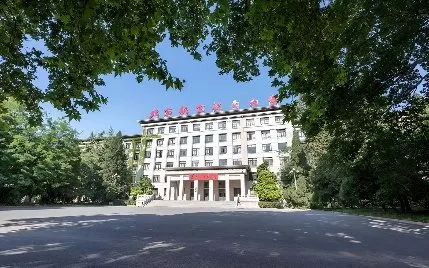
The Xueyuan Road campus is in Haidian District, not far from the Zhongguancun technology hub. The university's main address is 37 Xueyuan Road, postcode 100191. The Shahe campus is at 9 South 3rd Street, Shahe Higher Education Park, Changping District. The easiest way to reach Xueyuan Road is by metro: take Line 10 to Xitucheng station and walk from there.
The campus's cultural venues are also linked to its profile. The new Beijing Air and Space Museum in Shahe covers 16,800 square metres; 14 exhibits are displayed outdoors, and the aviation, space and engine halls hold more than 83 items. The BUAA History Museum tells the story of the university through more than 1,500 photographs and 300 objects.
There are libraries both in Shahe and on Xueyuan Road. The new building in Shahe seats over 3,500 readers, and its planned collection is 2.48–3.07 million books. On the sports side there are more than 50 courses, 35 standing teams and 33 student sports clubs.
| University and Chinese name | Status | Main specialism |
|---|---|---|
| Beihang University (BUAA), 北京航空航天大学 | national research university; 985, 211, Double First-Class | aviation and space, control, computing and engineering systems |
| Beijing Institute of Technology (BIT), 北京理工大学 | national research university | electronics, mechanical engineering, materials, weaponry, information technology |
| Beijing Technology and Business University (BTBU), 北京工商大学 | comprehensive university under the Beijing municipal government | business and economics, food technology, applied sciences |
The names are easy to mix up because of the shared words Beijing, University and Technology, and because of BUAA's former English name. To avoid mistakes, go by the Chinese name 北京航空航天大学, its short form 北航 and the current English name, Beihang University.
On our website, the main Russian form is the one meaning "Beihang University". Two other Russian variants are different transliterations that often appear in searches. The translation meaning "Beijing University of Aeronautics and Astronautics" renders the former English name, Beijing University of Aeronautics and Astronautics, and BUAA is the established abbreviation of it. The current official international name is Beihang University. In China the university is called 北航 (Beihang) for short; the full name 北京航空航天大学 is read Běijīng Hángkōng Hángtiān Dàxué.
It is short for the university's former name, Beijing University of Aeronautics and Astronautics. The Beihang University brand has been used since 2002, but the old abbreviation still appears in publications, addresses and search queries.
Yes, the university confirms all three statuses. BUAA is a selective research university that particularly stands out in engineering and aerospace disciplines.
Yes, at all three levels — bachelor's, master's and doctoral. For bachelor's applicants without proof of previous education in English, the official threshold is TOEFL 90 or higher or IELTS 6 or higher.
In the 2026 intake, direct admission to Chinese-taught programmes required HSK 5 with at least 180 points.
Tuition depends on the level and language of the programme, and the dormitory fee on the campus; utilities are paid separately. The university publishes current rates on its official website.
You can compete for a scholarship. For master's and doctoral students, a full CSC scholarship covers tuition, insurance, accommodation or a housing allowance, and includes a monthly stipend. International flights are not covered.
On its page, BUAA's international school mentions Chinese language courses and states that an HSK certificate is required for admission. Whether the university currently operates as a test venue should be checked in the Chinese Testing International system before registering. Having language courses does not mean the university has a test centre.
The main campus address is No. 37 Xueyuan Road, Haidian District, Beijing 100191. The easiest way is to take metro Line 10 to Xitucheng station and then walk to Xueyuan Road.
BUAA's profile is aviation, space and related engineering systems. BIT has a different history and a defence-technology focus, while BTBU emphasises economics, business and applied technology. Go by the university's Chinese name and abbreviation — the words Beijing and Technology alone are not enough to tell them apart.
As a rule, you need a passport, a school leaving certificate and school transcript, a language certificate, medical examination results, a financial guarantee, a birth certificate, a police clearance certificate, information on your parents' citizenship and a declaration that the information provided is accurate. If the CSCA is required in the current intake, its result is added to the set as well.
Beijing (北京) is the capital of China and a major centre of education: the city has more than 90 universities, among them Peking University and Tsinghua University, which rank in the country's top 2. Here you can see the Forbidden City and the Great Wall of China, as well as the modern tech district of Zhongguancun, known as China's Silicon Valley.
Studying in Beijing goes hand in hand with good career prospects: the city hosts the headquarters of major companies and research centres, getting around is easy (the metro has 22 lines), and cultural life is very rich. Parents should know that the capital's infrastructure is highly developed, there are international clinics with Russian-speaking staff, many direct flights leave the city, and students are supported by a well-established system: dormitories are located right on the guarded university campuses.
You work with Nihao Study specialists. They will help you put together a portfolio and a set of documents, draw up a study plan and choose a university or college and a specialty that genuinely interest you.
We take care of every stage of admission, from choosing to enrolment
We will gather, prepare, certify and send your documents to the institution
We will show the admissions committee your strengths
We run training sessions and courses so you can prepare with more confidence
We will help you settle in at the start of your studies and keep moving forward
Nihao Study specialists select universities and colleges that match the applicant's goals and means. We make sure the teachers are practitioners and that the knowledge will be useful in your profession.
We examine curricula, talk to students and teachers and look at which specialties employers need, and use this information to select options for the applicant.
Advisers guide the applicant from the first consultation to enrolment, help build a plan and spot mistakes in time that could get in the way.
The cost of our support depends on the programme and the partner university; you'll get an exact quote after a free consultation.
Get a quoteA free 15-minute consultation: together we will choose a university or college and a programme that suit your goals and budget.
Apply with peace of mind: we handle the documents, deadlines and correspondence with admissions committees, and you save time and energy.
Don't want to wait for a call? Message us in the chat.
Message us in chat