- Language courses
- English, Chinese
- Bachelor's Degree
- English, Chinese
- Master's Degree
- English, Chinese
- Doctoral (PhD) Programmes
- English, Chinese
- Accommodation from 2 000 ¥/year
北京信息科技大学
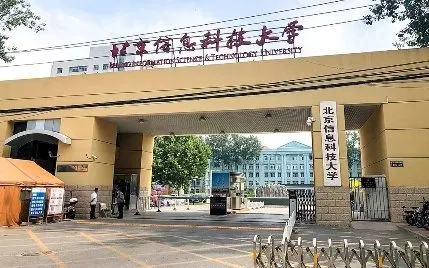
Beijing Information Science and Technology University accepts international students on programmes in the following fields: business, engineering, medicine, education, economics. Choose the level and programme that suit your goals.
Chinese language study at the university — from a few weeks to a year or longer. Suitable for those starting from scratch or preparing for the HSK before entering a main programme.
self-funded · language programme
The first level of higher education: usually four years of study, specialised subjects, internships and a graduation thesis. It opens the way to working in your field and to a master's degree.
self-funded
Advanced study after a bachelor's degree: research, applied projects and internships. It helps you become an expert in your chosen field and broaden your career opportunities.
self-funded
Beijing Information Science and Technology University is located in Beijing. Nihao Study consultants keep track of the deadlines and admission requirements of this university, and you can always check the most accurate and up-to-date information on its official website. In university rankings, it is ranked 260 in China and 2372 worldwide.
Come for a face-to-face meeting: together we will go through the requirements, deadlines, documents and study options that suit you.

At the meeting we will look at your situation, tell you which documents to prepare and by when, talk about possible programmes and help you decide on the next step.
Beijing Information Science and Technology University (BISTU, 北京信息科技大学, Běijīng Xìnxī Kējì Dàxué) is a public comprehensive university in Beijing. It is under municipal administration, and its main focus is information technology. Russian-speaking applicants also refer to it by several other translations of its name. In China, students use the abbreviations 信息科大 (Xìnxī Kēdà) and 北信 (Běixìn). The abbreviation BISTU is used in international rankings.
As a university, BISTU is relatively young: it took its present form in 2008, when two Beijing institutes merged. Its roots, however, go back further – to an educational institution founded in 1937. Today more than 11 thousand undergraduates, over three thousand master's students and around 137 international students study on its five campuses in the north of Beijing.
| Item | Data |
|---|---|
| Founded: historical roots / present-day BISTU | 1937; merger in 2008 |
| Status | public university under the Beijing municipal government |
| Bachelor's students | 11 019 |
| Master's students | 3 091 |
| Doctoral students | 58 |
| International students | about 137 |
| Full-time teaching staff | 1,061; 73% hold a doctorate |
| Campuses | 5; 810,000 sq m in total |
| Bachelor's programmes | 45, including 14 national first-class programmes |
| Ranking in China (EduRank, 2026) | 352nd |
It did not start with computer science at all. The university traces its origins to the Beijing Higher School of Commerce and Business, founded in 1937. In 1958 it became the basis for the Beijing Institute of Mechanical Engineering; in 1990 this was renamed the Beijing Institute of Machinery Industry and reported to the then Ministry of Machine-Building and Electronics Industry. The other branch of its history begins in 1978 with the Second Branch School of Peking University. In 1985 it was reorganised as the Beijing Institute of Information Engineering, and in 1997 the Beijing Institute of Information Technology was established on that basis.
The turning point came in 2008, when the machinery and information technology institutes officially merged into a single university, Beijing Information Science and Technology University. It has trained bachelor's students since 1958 and master's students since 1981. Its first postdoctoral research station opened in 2018, and the university only gained the right to award its own doctorates in 2021. The BISTU motto is 勤以为学,信以立身, roughly a call for diligence in study and integrity in life. The university president is Wang Yongsheng (王永生).
Applicants should note from the outset that BISTU is in neither Project 211 nor Double First-Class. It is a Beijing municipal university that presents itself as an applied university with a strong IT focus. Do not expect world top-100 positions, but in subject rankings for computer science and engineering it performs respectably for a university of its type.
| Ranking (year) | Position |
|---|---|
| EduRank, overall (2026) | 352nd in China, 1446th in Asia, 4277th worldwide |
| EduRank, computer science (2026) | 173rd in China, 1338th worldwide |
| EduRank, engineering (2026) | 257th in China, 1678th worldwide |
| U.S. News Best Global | 1967th worldwide |
| UniversityGuru, aggregate | about 260th in China, 2372nd worldwide |
In the overall EduRank 2026 table, BISTU is 352nd out of almost a thousand Chinese universities and 4277th worldwide; the university has more than 12 thousand publications in the citation database. In individual subjects the picture is noticeably better: 173rd in China for computer science, 257th for engineering and 214th for mathematics. In the U.S. News Best Global Universities ranking it is in 1967th place. ShanghaiRanking's 2023 data place six BISTU disciplines in the top 50% in China.
The priority is clear from the name itself: the university's disciplines are built around the concepts of "Information Plus" and "Intelligence Plus". The backbone of the university is its schools of information and communication engineering and computer science; in computer science BISTU is among the top 173 universities in the country. If you are interested in IT, telecommunications or data processing, this university is a choice that fits your field rather than a random one.
One of the university's hallmarks is the School of Instrument Science and Opto-Electronics Engineering. In 2023 a mobile postdoctoral station in instrument science opened, and it was in this field that BISTU obtained the right to award a first-level doctoral degree. Such depth in a narrow engineering field is rare for a municipal university.
The national index of student robotics competitions rates BISTU A+, and the university has stayed in the top 2% for many years. For six years in a row BISTU won bronze in the final of the national Internet+ innovation and entrepreneurship competition. For graduate starting salaries, BISTU is in the top 40 out of more than three thousand Chinese universities.
BISTU's academic structure comprises 14 units, most of them linked in one way or another to engineering and computing. According to public sources, the technical units include the schools of automation, instrument science and opto-electronics engineering, mechanical and electrical engineering, computer science and technology, and information and communication engineering. Besides these, the university has humanities and management units, notably the schools of science, foreign languages, information management, and economics and management.
In numbers, that comes to 45 bachelor's programmes: 14 of them are recognised as national first-class programmes, and another 4 are among the national featured programmes. The university also has one doctoral and 13 master's first-level disciplines, as well as 7 professional master's programmes. Nine programmes are accredited by the China Engineering Education Accreditation Association, which matters for recognition of an engineering degree.
International students live in a dormitory on the campus itself. The hotel-style rooms have furniture, a TV, a fridge, air conditioning, a shower and a bathroom; a shared kitchen and washing machines are on each floor. The price depends on the room type, and during the holidays a daily rate applies.
Check current rates per semester and for the holiday period on the university's official website bistu.edu.cn.
The main opportunity for BISTU's international students is the Beijing Government Scholarship, which covers tuition. For some categories of master's and doctoral students the support is higher and depends on the field of study.
Besides the city programme, there is the national Chinese Government Scholarship (CSC); the full version covers tuition, accommodation and a monthly living allowance. However, the range of universities that accept CSC scholars is limited: check a particular university's participation in the official list rather than taking it for granted. It is best to study the CSC application procedure and deadlines well in advance.
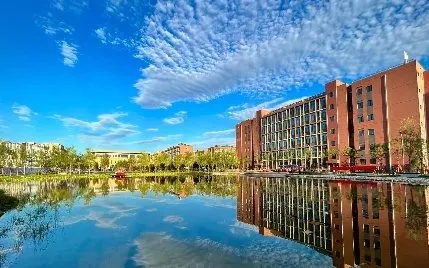
The university has five campuses, all in northern Beijing: Shahe, Xiaoying, Jianxiangqiao, Jintailu and Jiuxianqiao, with a total area of 810,000 square metres. The main site is now the new Shahe campus in Changping District in the north-west of the capital, next to the Shahe university park. It has teaching buildings, dormitories, a library, a stadium, a sports complex and canteens.
For your career, being in Beijing opens up many opportunities: the capital is home to the headquarters of tech companies, the Zhongguancun district, known as China's Silicon Valley, and more than 90 universities. BISTU also has about 40 partner universities abroad, in Japan, Korea, the USA, Canada, the UK and Australia, through which students can go on exchanges or internships.
International applicants go through six stages.
There are seven such forms in total. In Russian, the standard name is the one meaning "Beijing University of Science and Information Technology" — it is used in documents and reference cards. Variants such as one that transliterates "Beijing" instead of using the usual Russian name for the city, or a translation meaning "Beijing University of Information Sciences and Technology" are common but are typos and non-standard forms. A translation meaning "Beijing Information Science and Technology University" is an inaccurate calque from English that has nevertheless taken hold. BISTU is the abbreviation used in rankings and correspondence; the full official English name is Beijing Information Science and Technology University. Chinese students say 信息科大 (Xìnxī Kēdà) or 北信 (Běixìn), and the original Chinese name is 北京信息科技大学 (pinyin Běijīng Xìnxī Kējì Dàxué).
It is the short name of Beijing Information Science and Technology University — a public multidisciplinary university in Beijing, administered by the city and specialising in information technology.
Programmes for international students are taught mainly in Chinese. If you do not yet know the language, you will have to start with Chinese language courses and HSK preparation. The choice of English-taught programmes is small, so check the current list with the university.
Most Chinese-taught bachelor's programmes require HSK 4 or higher; each programme sets its own specific requirements. It is worth checking exam session dates in advance.
No, the university is not part of either programme. BISTU is administered by the City of Beijing and is developing as an applied university with a focus on IT. If 211 status matters to you, consider the nearby USTB (北京科技大学).
The price depends on the room type — single or double — and a daily rate applies during the holidays. The university publishes current terms on its official website bistu.edu.cn.
Yes. For BISTU, the main option is the Beijing Government Scholarship, which covers tuition. There is also the national CSC scholarship, but the list of universities that accept it is limited, and the university's participation should be checked separately against the official list.
BISTU's five campuses are in northern Beijing. The main one, Shahe, is in Changping District, near the Shahe university park. Beijing has an extensive metro network, so getting between the campuses and the city is easy.
BISTU (北京信息科技大学) is a city-administered university without 211 status. USTB (北京科技大学) is part of Project 211 and Double First-Class, specialises in metallurgy and materials science, and ranks higher. Beijing Information Technology College (北京信息职业技术学院) is not a university at all: it is a college whose graduates receive a 专科 diploma.
Usually you need an international passport, a school leaving certificate with its supplement, a medical certificate, a police clearance certificate and a motivation letter, plus an HSK certificate for Chinese-taught programmes.
Beijing (北京) is the capital of China and a major centre of education: the city has more than 90 universities, among them Peking University and Tsinghua University, which rank in the country's top 2. Here you can see the Forbidden City and the Great Wall of China, as well as the modern tech district of Zhongguancun, known as China's Silicon Valley.
Studying in Beijing goes hand in hand with good career prospects: the city hosts the headquarters of major companies and research centres, getting around is easy (the metro has 22 lines), and cultural life is very rich. Parents should know that the capital's infrastructure is highly developed, there are international clinics with Russian-speaking staff, many direct flights leave the city, and students are supported by a well-established system: dormitories are located right on the guarded university campuses.
You work with Nihao Study specialists. They will help you put together a portfolio and a set of documents, draw up a study plan and choose a university or college and a specialty that genuinely interest you.
We take care of every stage of admission, from choosing to enrolment
We will gather, prepare, certify and send your documents to the institution
We will show the admissions committee your strengths
We run training sessions and courses so you can prepare with more confidence
We will help you settle in at the start of your studies and keep moving forward
Nihao Study specialists select universities and colleges that match the applicant's goals and means. We make sure the teachers are practitioners and that the knowledge will be useful in your profession.
We examine curricula, talk to students and teachers and look at which specialties employers need, and use this information to select options for the applicant.
Advisers guide the applicant from the first consultation to enrolment, help build a plan and spot mistakes in time that could get in the way.
The cost of our support depends on the programme and the partner university; you'll get an exact quote after a free consultation.
Get a quoteA free 15-minute consultation: together we will choose a university or college and a programme that suit your goals and budget.
Apply with peace of mind: we handle the documents, deadlines and correspondence with admissions committees, and you save time and energy.
Don't want to wait for a call? Message us in the chat.
Message us in chat