- Language courses
- English, Chinese
- Bachelor's Degree
- English, Chinese
- Master's Degree
- English, Chinese
- Doctoral (PhD) Programmes
- English, Chinese
- Accommodation from 75 ¥/day
FDU · 复旦大学
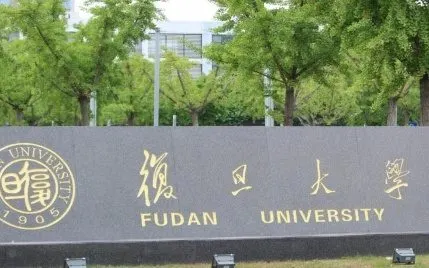
Fudan University accepts international students on programmes in the following fields: business, engineering, medicine, education, economics, humanities. Choose the level and programme that suit your goals.
Chinese language study at the university — from a few weeks to a year or longer. Suitable for those starting from scratch or preparing for the HSK before entering a main programme.
self-funded · language programme
The first level of higher education: usually four years of study, specialised subjects, internships and a graduation thesis. It opens the way to working in your field and to a master's degree.
self-funded
Advanced study after a bachelor's degree: research, applied projects and internships. It helps you become an expert in your chosen field and broaden your career opportunities.
self-funded
Fudan University is located in Shanghai. Nihao Study consultants keep track of the deadlines and admission requirements of this university, and you can always check the most accurate and up-to-date information on its official website. In university rankings, it is ranked 6 in China and 129 worldwide.
Come for a face-to-face meeting: together we will go through the requirements, deadlines, documents and study options that suit you.

At the meeting we will look at your situation, tell you which documents to prepare and by when, talk about possible programmes and help you decide on the next step.
Fudan University (abbreviated FDU, in Chinese 复旦大学, Fùdàn Dàxué) is a university in Shanghai. Russian renderings of its name vary: 'Fudan', 'Fudan University' and 'University of Fudan'. The standard Russian form is the one adopted on the Shanghai government's Russian-language portal. The Chinese themselves usually call it simply 复旦, and members of the university community are known as 复旦人.
FDU is a comprehensive public research university. It reports directly to the Ministry of Education of the PRC and is jointly supported by the ministry and the Shanghai authorities. The university is a member of the C9 League and the current Double First-Class programme, and it also took part in the historical national projects 211 and 985.
Next come key figures, history, rankings, strong schools, programmes for international students, dormitories, scholarships and the admission procedure. If you still have questions, you can discuss them with a Nihao Study consultant.
The figures below come from the university's own data and are current as of May 2026.
| Indicator | Value | Notes |
|---|---|---|
| Year founded | 1905 | One of the country's oldest modern universities |
| Campuses | 4 | Handan, Jiangwan, Fenglin and Zhangjiang |
| Schools and departments | 41 | Cover fields from philosophy and economics to medicine and artificial intelligence |
| Bachelor's majors | 87 | Chinese programmes and a number of international tracks |
| Students | 16,101 bachelor's students; 37,975 master's and doctoral students | Master's and doctoral figures include full-time and part-time students from mainland China, Hong Kong, Macao and Taiwan |
| International students | 2,190 on degree programmes | Excluding short-term exchanges and language courses |
| Teaching and research staff | 3711 | Including 47 members of the two national academies (counting part-time and retired members) |
| Affiliated hospitals | 17 | Shanghai Medical College's extensive clinical base |
| International partners | 427 institutions from 59 countries and regions | Joint projects, research and exchanges |
On 14 September 1905, Fudan Public School (复旦公学) opened in the Wusong area. Its founder, Ma Xiangbo, envisioned a higher school run by the Chinese themselves. He took the name from the line 日月光华,旦复旦兮, which speaks of the return of the morning light. The institution has been called Fudan University since 1917.
In 1920 the university moved to its own grounds in Jiangwan. During the war it operated in Beibei (Chongqing); it gained national status in 1942 and returned to Shanghai in 1946. After the nationwide reorganisation of higher education in 1952, Fudan strengthened its foundation in the humanities and natural sciences. In 1959 it was included in the list of 16 national key universities.
The current scale of its medical provision dates from 27 April 2000, when Fudan University and Shanghai Medical University merged. So Shanghai Medical College is part of FDU, not a separate university with a similar name. The university celebrated its 120th anniversary in 2025.
Each ranking has its own methodology. In QS, reputation and international mix carry a lot of weight; THE combines teaching, research and citation indicators; ARWU relies mainly on research output; and CWUR and EduRank use their own bibliometric models. So it makes sense to look at several systems at once.
| Ranking | Position | Graduates |
|---|---|---|
| QS World University Rankings | 26th worldwide | 2027 (published in 2026) |
| Times Higher Education WUR | 36th worldwide | 2026 |
| THE Asia University Rankings | 7th in Asia | 2026 |
| CWUR | 6th in China, 9th in Asia, 66th worldwide | 2026 |
| ARWU | 41st worldwide | 2025, the latest edition to date |
| EduRank | 189th worldwide, 7th in China | 2026 |
In THE 2026, individual fields stand out: 22nd for physical sciences, 25th for business and economics, 34th for medicine and health, 36th for engineering, 37th for life sciences and 46th for computer science. In ESI, twelve of the university's fields are in the top 0.1 per cent, including neuroscience, physics, engineering, biology, materials, chemistry, pharmacology and clinical medicine.
The C9 League is an alliance of nine leading Chinese research universities founded in 2009, and Fudan is a member. 211 and 985 are earlier national programmes; the Double First-Class system was later built on their basis. In its second round, Fudan has 20 disciplines: this is the figure to go by, not the outdated 27 from a 2019 English-language profile.
FDU's medical side is built on 17 affiliated hospitals and Shanghai Medical College. From this area, the Double First-Class list includes pharmacy, public health, clinical and basic medicine, and integrative medicine combining Chinese and Western traditions. International students can choose Chinese-taught medical majors or the six-year English-taught MBBS programme.
Fudan has schools of integrated circuits and microelectronics, data science, computer science, life sciences, chemistry, physics and mathematics. This range makes FDU a good fit for those who want to combine a solid grounding in the sciences with robotics, semiconductors, big data, artificial intelligence or biomedical engineering.
The humanities and social sciences cluster comprises the School of Journalism, the School of International Relations and Public Affairs, the Law School, the International School of Finance, the School of Management and the School of Economics. Shanghai is a particularly good setting for these fields: finance, international business, media and public administration are concentrated here, and there are opportunities for internships with companies.
The table brings together the confirmed admission conditions for 2026.
| Level | Sample programmes | Language and duration |
|---|---|---|
| Foundation programme | Chinese-taught track: Chinese and academic Chinese, mathematics, subject courses | in Chinese, 1 to 2 years |
| Foundation programme | Mathematics, China Studies, Fudan modules, electives | in English, 1 year |
| Chinese-taught bachelor's programmes | Majors in the humanities, social sciences, natural sciences, engineering and medicine | usually 4 years |
| English-taught bachelor's programmes | Economics, fintech, data science, IOGG, MBBS | 4 to 6 years |
| Master's and doctoral programmes | An extensive range of programmes in Chinese and English | duration depends on the field |
| Chinese language courses | 10 levels, about 18 class hours per week | a semester or an academic year |
The Chinese-taught foundation programme is divided into streams A, B and C according to starting level. The curriculum includes Chinese, academic Chinese and mathematics; those aiming for natural sciences and medicine also take chemistry and physics. The English-taught foundation programme requires TOEFL 90, IELTS 6.5, Duolingo 110 or PTE 61; an exemption from the certificate is possible for those who previously studied entirely in English.
Completing the foundation programme does not mean automatic entry to a bachelor's degree: the university separately considers the CSCA result and holds an admission interview.
According to the Chinese version of the 2026 admission guide, a CSCA result is mandatory. An HSK certificate (level 5 with at least 210, or level 6 with at least 180) can be attached, but the requirements explicitly mark it as optional: Chinese proficiency is also tested at the interview. For graduate programs the requirements are stricter and vary by field: for natural sciences, engineering and medicine, HSK 5 with at least 210 or HSK 6 with at least 180; for humanities and social sciences, HSK 5 with at least 240 or HSK 6 with at least 180.
The main international residential complex on the Handan campus is at 57 Wudong Road. The main building has single and double rooms, the additional buildings have single rooms, and you can also stay at the Asian Youth Center. In the main building each room has its own bathroom; in the additional buildings rooms are grouped into flats with a shared living room and bathroom facilities. Bedding is not provided.
Check current accommodation costs for each building and room type on the university's official website.
For new international students arriving in autumn 2026, booking opens in early August and check-in starts on 28 August. If no rooms are left, a waiting list applies.
For graduate programs you can apply for the Chinese Government Scholarship under the High Level Graduate and Silk Road schemes. The full package waives tuition and provides a dormitory place or housing subsidy, medical insurance and a monthly allowance, which differs for master's and doctoral students. Fudan operates under the CSC Type B scheme, agency number 10246.
Master's and doctoral students can also apply for the Shanghai Government Scholarship: it likewise covers tuition, insurance and accommodation (dormitory or subsidy) and includes monthly payments. In addition, strong candidates may receive the Fudan University International Students' Scholarship, which is awarded on the basis of academic results and admission evaluation.
The main campus is Handan Campus: 220 Handan Road, Yangpu District, Shanghai 200433. It houses the International Students Office and the international dormitory, and a large share of bachelor's programmes, as well as humanities and social sciences, are taught here. Addresses of the other campuses: Jiangwan, 2005 Songhu Road; Fenglin, 138 Yixueyuan Road; Zhangjiang, 825 Zhangheng Road.
Each campus has its own specialisation: Handan for bachelor's programmes and the humanities and social sciences, Fenglin for medicine, Jiangwan for natural and applied sciences, and Zhangjiang for advanced technology and innovation infrastructure. University shuttle routes run between campuses, but it is best to find out in advance exactly where your programme will be taught.
The campuses have digital services, Wi-Fi and a campus card, as well as libraries, museums, gyms and student clubs. Next to Handan is Wujiaochang, a major hub in northern Shanghai.
Start with the programme level and language of instruction. A Chinese-taught bachelor's degree costs noticeably less than an English-taught one, but you will study alongside Chinese students, sit the CSCA subject exam and prove your language skills at the interview. English-taught economics, fintech, data science, IOGG and MBBS partly remove the language barrier in class, but cost considerably more. So compare not only how prestigious the name sounds, but also the total budget for the whole course: four or six years.
The second question is preparation. The Chinese-taught pre-university programme is for those who need to build academic Chinese while also brushing up on chemistry, physics or maths. The stream is set by your starting level, and the preparation itself lasts one to two years. The English-taught option takes one academic year and helps you settle into the Fudan system, but the CSCA and the admission interview still apply. It is a preparation route that does not guarantee a place on a bachelor's programme.
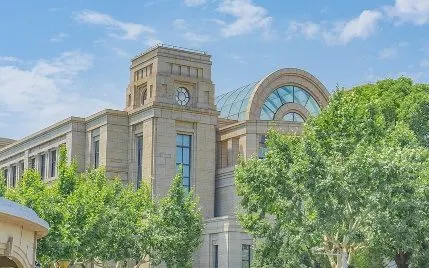
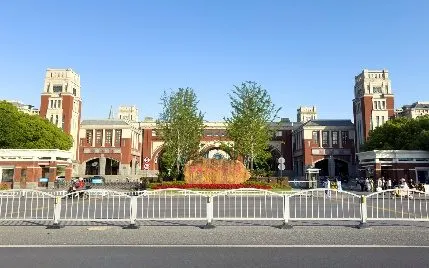
The third question is the campus and day-to-day living. Medical programmes may be based at Fenglin, natural sciences and applied research at Jiangwan, and technology projects at Zhangjiang, while the International Students Office and the main international dormitory are in Handan. Before you apply, find out which school and campus you will study at, how classes are delivered and how accommodation is booked. Then you can realistically judge commuting time, living costs and the chance of ending up on a waiting list, rather than relying on a photo of the main building.
And finally: the conditions of one admission cycle cannot simply be carried over to the next. The January and March deadlines, 2026 prices, the list of exams and the scholarship application windows apply only to a specific intake. Be especially careful with medical and English-taught programmes — their fees and document packages differ the most.
There is no university with exactly the same name as Fudan. The usual mistakes are different: people confuse Shanghai's various strong universities with one another, or treat the former Shanghai Medical University as a separate institution, even though it has been part of FDU since 2000.
| University | Status | Strong fields |
|---|---|---|
| Fudan University, FDU, 复旦大学 | C9, Double First-Class | Medicine, fundamental sciences, economics, social sciences, microelectronics |
| Shanghai Jiao Tong University, SJTU, 上海交通大学 | C9, Double First-Class | Management, medicine, technology, engineering |
| Tongji University, 同济大学 | Double First-Class | Architecture and civil engineering, engineering, transport |
| East China Normal University, ECNU, 华东师范大学 | Double First-Class | Education, psychology, humanities and natural sciences |
1. The standard Russian form, meaning 'Fudan University' and spelt with a soft sign, is the one used by the Shanghai government portal. 2. A form meaning 'University of Fudan' is often typed into search engines. 3. A spelling without the soft sign also occurs, but it is not used as the main form here. 4. Fudan University is the official international name. 5. FDU is the English abbreviation. 6. 复旦 is the short Chinese name. 7. 复旦大学 (Fùdàn Dàxué) is the full Chinese name.
It is the official abbreviation of Fudan University, a comprehensive public research university in Shanghai whose history dates back to 1905.
Yes. In 2026 the English-taught bachelor's programmes are economics, fintech, data science, MBBS, and international organisations and global governance. Check the cost of English-taught programmes on the university's official website. Fudan has no programmes taught in Russian.
No. The university allows you to attach a certificate (HSK 5 with at least 210 points or HSK 6 with at least 180), but does not require one. A CSCA result is compulsory, and your level of Chinese is also tested at the interview. Graduate programmes have different requirements.
Yes. Fudan is a member of the C9 and of the current, second round of Double First-Class, in which 20 of its disciplines are included. Projects 211 and 985 are earlier government projects from which the current system grew.
For graduate programmes, yes: the full Chinese Government Scholarship pays for tuition, insurance and accommodation (a dormitory place or a housing allowance), and also provides a monthly stipend, the amount of which differs for master's and doctoral students.
Yes. The long-term ICES programme has 10 levels, with classes of about 18 hours a week. Check the cost of a semester and an academic year on the university's official website.
The address of the main campus, Handan Campus, is 220 Handan Road, Yangpu District, Shanghai 200433. The international residential complex is next to it, at 57 Wudong Road.
For the 2026 intake you will need a passport, a school certificate (or a letter confirming that you are due to graduate), a full transcript of grades, a CSCA result, a financial guarantee, a police clearance certificate and, for some categories based on citizenship or age, additional documents.
No. If no rooms are left, the student is put on a waiting list, and the university states this explicitly. In autumn 2026 new international students booked accommodation separately, and move-in began on 28 August.
Shanghai (上海) is the largest city in China and one of the world's financial centres. Students from more than 150 countries study here. The Bund with its futuristic views, the skyscrapers of Pudong and the old French Concession together create a special atmosphere for student life.
By enrolling in Shanghai, students gain access to strong universities and thousands of international companies offering internships. The city has 16 metro lines, the campuses are equipped to modern standards, and student life is active. For parents, it matters that healthcare here is of a high standard, there are international schools and hospitals and direct international flights, the city is safe, and every major university has a support service for international students.
You work with Nihao Study specialists. They will help you put together a portfolio and a set of documents, draw up a study plan and choose a university or college and a specialty that genuinely interest you.
We take care of every stage of admission, from choosing to enrolment
We will gather, prepare, certify and send your documents to the institution
We will show the admissions committee your strengths
We run training sessions and courses so you can prepare with more confidence
We will help you settle in at the start of your studies and keep moving forward
Nihao Study specialists select universities and colleges that match the applicant's goals and means. We make sure the teachers are practitioners and that the knowledge will be useful in your profession.
We examine curricula, talk to students and teachers and look at which specialties employers need, and use this information to select options for the applicant.
Advisers guide the applicant from the first consultation to enrolment, help build a plan and spot mistakes in time that could get in the way.
The cost of our support depends on the programme and the partner university; you'll get an exact quote after a free consultation.
Get a quoteA free 15-minute consultation: together we will choose a university or college and a programme that suit your goals and budget.
Apply with peace of mind: we handle the documents, deadlines and correspondence with admissions committees, and you save time and energy.
Don't want to wait for a call? Message us in the chat.
Message us in chat 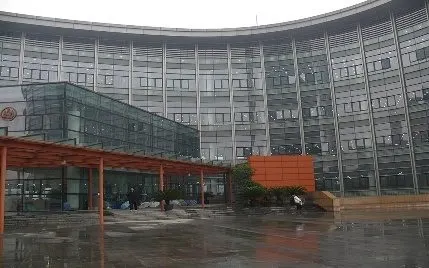
University · Shanghai