- Language courses
- English, Chinese
- Bachelor's Degree
- English, Chinese
- Master's Degree
- English, Chinese
- Accommodation from 800 ¥/year
DHU · 东华大学
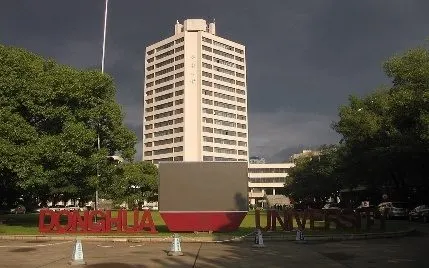
Donghua University accepts international students on programmes in the following fields: business, engineering, education, arts, humanities, natural sciences. Choose the level and programme that suit your goals.
Chinese language study at the university — from a few weeks to a year or longer. Suitable for those starting from scratch or preparing for the HSK before entering a main programme.
self-funded · language programme
The first level of higher education: usually four years of study, specialised subjects, internships and a graduation thesis. It opens the way to working in your field and to a master's degree.
self-funded
Advanced study after a bachelor's degree: research, applied projects and internships. It helps you become an expert in your chosen field and broaden your career opportunities.
self-funded
Donghua University is located in Shanghai. Nihao Study consultants keep track of the deadlines and admission requirements of this university, and you can always check the most accurate and up-to-date information on its official website. In university rankings, it is ranked 48 in China and 525 worldwide.
Come for a face-to-face meeting: together we will go through the requirements, deadlines, documents and study options that suit you.

At the meeting we will look at your situation, tell you which documents to prepare and by when, talk about possible programmes and help you decide on the next step.
Donghua University (DHU, 东华大学, pinyin Dōnghuá Dàxué) is a public research university in Shanghai under the Ministry of Education of the PRC. Russian renderings of its name vary, with several spellings of 'Donghua University' in circulation; our Russian pages use one standard form. International correspondence has settled on Donghua University and the abbreviation DHU, while Chinese students simply say 东华.
DHU is part of Project 211 and the national Double First-Class (双一流) programme. What matters is exactly what was included: in the second round, Textile Science and Engineering and Materials Science and Engineering were designated world-class disciplines. Hence Donghua's strong standing in textiles and fibres, functional materials, and fashion and design; at the same time, the university is also developing engineering, chemistry, computer science, economics and management.
This page brings together what matters to a 2026 applicant: statuses and rankings, programmes, language requirements, dormitories, the HSK and BCT exams, scholarships and a step-by-step application procedure. You can choose a programme and discuss your admission plan during a consultation with Nihao Study.
Information on DHU is as of November 2025; the dates of rankings and admissions are given separately in the sections below.
| Indicator | Value | Notes |
|---|---|---|
| Year the university was founded | 1951 | origins in a school opened in 1912 |
| Status | Ministry of Education, 211, Double First-Class | public university |
| Campuses | Songjiang, Yan'an Road, Xinhua Road, 3 in total | Shanghai |
| Area | around 2,000 mu; building area of more than 860,000 square metres | 2025 profile data |
| Students | more than 15,000 undergraduates, 9,700 master's students, 2,300 doctoral students | degree programmes |
| International students | more than 500 degree students | 2025 profile |
| Academic structure | 17 schools and departments, 61 bachelor's majors | 2025 profile |
| Postgraduate study | first-level disciplines: 14 doctoral and 28 master's | plus professional degrees |
| Staff | more than 2,200, almost 1,500 of them teaching staff | 2025 profile |
| Songjiang Campus address | 2999 North Renmin Road, Shanghai, 201620 | large university campus |
| Yan'an Road Campus address | 1882 West Yan'an Road, Shanghai, 200051 | international centre and dormitories |
DHU's size on its own says little. For undergraduates, it means a wide choice of subjects and well-developed student facilities. For master's and doctoral students, something else matters more: whether there is a suitable laboratory, research group and supervisor. The words College and School in the names of DHU's units denote structural units of the university, not independent colleges.
According to the official history, DHU's roots go back to 1912, when the entrepreneur Zhang Jian opened a school of dyeing and weaving. As a university it was founded in 1951 as the East China Institute of Textile Science and Technology; DHU itself describes it as the first textile university established in New China.
The institute became a national key university in 1960. In 1981 it was in the first group of Chinese universities granted the right to award bachelor's, master's and doctoral degrees. The name China Textile University was adopted in 1985, and the current name, Donghua University, in 1999.
Its 211 status relates to an intermediate date, 1998, when the university was included in the national priority development programme. DHU then made it into both rounds of Double First-Class, in 2017 and 2022. The new name did not abandon the university's profile but broadened it: from classical textile technology the university has moved into materials, biomedical fibres and smart textiles, as well as fashion, energy and digital manufacturing.
| Ranking | Position | Edition |
|---|---|---|
| THE World University Rankings | 401 to 500 band | 2026 |
| THE Asia University Rankings | 110th place | 2026 |
| ARWU | 401 to 500 band | 2025 |
| QS World University Rankings | 801 to 850 band | 2026 |
| QS World University Rankings | band 851 to 900 | 2027 |
| CWUR Global 2000 | 522nd place, 84th in China | 2025 |
| EduRank | 969th in the world, 67th in China | 2026 |
| U.S. News | in the global top 500 band | according to DHU data for 2025 |
The differences between rankings are explainable. THE, QS, ARWU, CWUR and EduRank combine publications, citations, reputation surveys, international outlook and alumni achievements in different ways. EduRank, for example, counted 42,778 publications and 921,015 citations in its database as of March 2026. These are indicators of research activity; the curriculum and teaching staff still need to be checked separately.
Project 211 is a historical sign that a university was considered a national priority. It helps distinguish DHU from regional institutes with similar English names, but it does not guarantee the same high standard across all majors. A more precise guide is the Double First-Class list, which in the second round included two fields: Materials Science and Engineering, and Textile Science and Engineering.
In the national discipline evaluation, textiles received an A+ rating, and the university describes this field as the country's leader. Materials science was first included in Double First-Class in 2022, in the second round. According to the January 2026 ESI release, 8 DHU disciplines are in the world's top 1 per cent, and materials science, chemistry and engineering are in the top 0.1 per cent.
The College of Textiles studies nonwoven and composite materials, biotextiles and digital textiles, textile engineering, fabric materials and design, and the history of textiles. This is not just about training staff for the garment industry: study tracks now also relate to medical products, filtration, sensor fabrics, protective materials and industrial composites.
It has 124 teaching staff, including 34 professors and 39 associate professors, and more than 1,200 undergraduates and 800 postgraduates study at the college. These figures show how rich the specialist environment is. For an applicant, though, the main thing is that the course matches their career goal: fibre development, testing, product design, production automation or research.
DHU's materials science has its origins in the school of chemical fibres. Today the discipline is both in Double First-Class and in the top 0.1 per cent of ESI. It covers polymers and nanomaterials, composites, biomimetic systems, and functional and smart materials.
The College of Chemistry combines textile chemistry with dyeing and finishing, green technologies and biomaterials. Since 2010 DHU's chemistry has been in the top 1 per cent of ESI. This field suits those interested not in how a fashion item looks but in coatings, dyes, membranes, surface properties or drug delivery systems.
DHU brings together the creative and engineering sides of the industry. For 2026, the Shanghai International College of Fashion and Innovation is offering English-taught bachelor's study in two programmes: Fashion and Accessory Design, and Environmental Design. Admission to design requires a portfolio; the university may also set an exam or interview.
The School of Mechanical Engineering grew out of textile machinery engineering and since 1981 has been able to award degrees at all three levels in its field. The combination of design, materials and manufacturing makes it possible to build a path from concept and prototype to equipment, quality control and scaling up production.
The university's development is built around three clusters: "materials and energy", "textiles and fashion" and "intelligence and health". At the same time, the university is investing in biomedicine, artificial intelligence, integrated circuits, high-tech equipment and green energy.
For example, the list of master's programmes for 2026 separately names textile engineering, textile materials and textile design, nonwoven materials and technology, chemistry, materials science, functional and smart materials, biological and biomimetic materials, and biomedical engineering. Before applying, check not just the name but also the language of instruction, the campus, whether international students are admitted and the list of possible supervisors.
| Level | Format and duration | Language requirements |
|---|---|---|
| Bachelor's Degree | full-time, 4 years, autumn intake | Chinese: HSK 5 with 180+ by registration; English: IELTS 5.5 or TOEFL iBT 72 |
| Master's Degree | full-time, 2.5 to 3 years, autumn intake | Chinese: HSK 5, 210 or above; English: IELTS 6.0 or TOEFL iBT 80 |
| Doctoral (PhD) Programmes | full-time, 4 years, autumn intake | Chinese: HSK 5, 210 or above; English: IELTS 6.0 or TOEFL iBT 80 |
| Chinese Language | full-time semester courses on the Yan'an Road campus | placement test and HSK preparation |
For Chinese-taught bachelor's programmes, HSK 4 with a score of 180 or above is enough to apply, but by registration you need HSK 5 with 180 or above. If your certificate falls short of the final threshold, you can only expect a conditional offer. Only two English-taught bachelor's programmes are officially listed, both in design, so do not assume that any engineering bachelor's degree is taught in English.
In the 2026 intake, bachelor's applicants also had to sit the CSCA: Chinese-taught programmes required subject Chinese and mathematics, while English-taught programmes required mathematics with an English-language test paper. Master's and doctoral applicants should check in advance whether a supervisor's letter and a research proposal are required.
Deadlines for the 2026 cycle: scholarship applications for bachelor's programmes were accepted until 15 April, and self-funded applications until 31 May. For master's and doctoral programmes, the priority deadline for the CGS High-Level Postgraduate scholarship was 31 January, the general scholarship deadline 15 April, and the self-funded deadline 31 May. These dates do not automatically carry over to the next intake.
DHU's fees depend on the level and language of the programme and may change by decision of higher authorities, so check current costs on the official website dhu.edu.cn. The application fee is non-refundable once paid, and the official invoice and admission letter always take precedence over any reviews.
Songjiang is a large campus in a suburban university town where many institutions are concentrated. Yan'an Road is closer to central Shanghai and the Hongqiao area; it is home to the International Education Centre and the dormitories for international students. A third address, Xinhua Road, appears in the official list of campuses, but you should check with the school where a particular programme is taught.
DHU has quoted these sports figures: 42 university teams, 37 student sports clubs and 17 staff associations. The international student association runs creative, sports, language and volunteering activities, including the iTalk language exchange. All of this makes settling in easier; club schedules change from semester to semester.
The International Student Apartments on the Yan'an Road campus consist of 3 buildings with more than 1,000 beds. According to the university, each room has its own bathroom, furniture, air conditioning, a fridge, a TV and an internet socket. Shared areas have washing machines, microwaves, water coolers, electric hobs, study spaces and event halls.
| Room type | Conditions |
|---|---|
| Single | private bathroom, paid per semester |
| Double or multi-bed | conditions and rate depend on the room category |
You can apply for a room after admission, through your personal account. Until the university has allocated places, a room is not guaranteed. The fee for the semester is paid in one sum before moving in; internet, electricity and hot water arrangements vary by room type. If you move in late or leave early, the difference is usually not refunded.
DHU runs several scholarship competitions, but admission and funding decisions are made separately.
Scholarships are awarded competitively. It makes sense to start preparing early, have a high GPA, match your research topic closely to the programme and keep a backup budget. Check the deadlines for your chosen category separately.
On the Yan'an Road campus, the International Education Centre runs full-time semester courses in Chinese. The focus is on everyday Chinese, Chinese culture and HSK preparation. This is a stand-alone language programme: it does not automatically lead to admission to a bachelor's degree.
The university became an HSK test centre in 2010. It offers HSK levels 4 to 6, in both paper-based and computer-based formats, as well as HSK 7–9, intermediate and advanced HSKK, and the BCT. The centre is at 1882 West Yan'an Road. Check actual dates and seat availability in the Chinese Test system.
Do not leave translations and the medical form until the last week. If the spelling of your name differs between your passport, diploma and certificate, it is best to sort this out before applying.
| University | Status | Main focus |
|---|---|---|
| Donghua University, DHU, 东华大学 | research university under central government | textiles, materials, fashion and design |
| East China Normal University, ECNU, 华东师范大学 | research university under central government | education, natural sciences and humanities |
| East China University of Science and Technology, ECUST, 华东理工大学 | research university under central government | engineering and chemical technology |
| University of Shanghai for Science and Technology, USST, 上海理工大学 | public university under the municipal government | engineering, optics, energy, management |
Donghua is not an English rendering of the words East China, and DHU is not part of ECNU or ECUST. When paying and submitting documents, check three things: the domain dhu.edu.cn, the abbreviation DHU and the Chinese name 东华大学.
For further preparation, it is useful to read general information on the admission process at Chinese universities, study costs, CSC scholarship rules and the HSK exam calendar. Official information on DHU is published at dhu.edu.cn.
All these forms refer to the same university. The Russian form spelt with an 'o' is the one used on the Russian version of this page; the spelling with a 'u' is another way of rendering the Chinese pronunciation; the forms that put 'Donghua' before 'university' copy the English word order. The official international name is Donghua University, and the abbreviation is DHU. 东华 is a colloquial short form, and the original Chinese name is 东华大学 (Dōnghuá Dàxué).
DHU is Donghua University, a public university under the Ministry of Education of the PRC. It has 3 campuses, all of them in Shanghai.
Yes, DHU is a Project 211 university. In the second round of Double First-Class, the university has two disciplines: Textile Science and Engineering and Materials Science and Engineering.
You can apply for a Chinese-taught programme with HSK 4 and a score of at least 180, but by registration you need HSK 5 with at least 180. Keep an eye on the certificate date and check the HSK exam schedule.
Yes. In the 2026 intake, there were 2 English-taught design programmes at bachelor's level. There are other English-taught options at master's and doctoral level, but the list needs to be checked for the specific year.
The cost depends on the level and language of the programme; the highest bachelor's rate applies to the two English-taught design programmes. Current prices are published on the official website dhu.edu.cn, and the final amount is set by the official invoice.
The rate at Yan'an Road depends on the room type: a single room costs more than a place in a twin or shared room. Availability and the final amount are confirmed after allocation.
You can take part in the CSC competition. The full High-Level Postgraduate option covers tuition, insurance and accommodation and includes a monthly payment, but the final decision rests with the China Scholarship Council.
Yes. Since 2010, the DHU test centre on the Yan'an Road campus has hosted the HSK, HSKK and BCT. Check the date of a specific session in the Chinese Test system.
In the 2026 cycle, a CSCA result was compulsory: mathematics in English for English-taught programmes, and mathematics and specialised Chinese for Chinese-taught programmes. The rules may change in the next intake.
The main package: a passport, school-leaving certificate or diploma with a full transcript, language certificate, CV and personal statement, translations of documents, police clearance certificate and financial statement. Design programmes also require a portfolio, and master's and doctoral programmes require references and a research plan.
Shanghai (上海) is the largest city in China and one of the world's financial centres. Students from more than 150 countries study here. The Bund with its futuristic views, the skyscrapers of Pudong and the old French Concession together create a special atmosphere for student life.
By enrolling in Shanghai, students gain access to strong universities and thousands of international companies offering internships. The city has 16 metro lines, the campuses are equipped to modern standards, and student life is active. For parents, it matters that healthcare here is of a high standard, there are international schools and hospitals and direct international flights, the city is safe, and every major university has a support service for international students.
You work with Nihao Study specialists. They will help you put together a portfolio and a set of documents, draw up a study plan and choose a university or college and a specialty that genuinely interest you.
We take care of every stage of admission, from choosing to enrolment
We will gather, prepare, certify and send your documents to the institution
We will show the admissions committee your strengths
We run training sessions and courses so you can prepare with more confidence
We will help you settle in at the start of your studies and keep moving forward
Nihao Study specialists select universities and colleges that match the applicant's goals and means. We make sure the teachers are practitioners and that the knowledge will be useful in your profession.
We examine curricula, talk to students and teachers and look at which specialties employers need, and use this information to select options for the applicant.
Advisers guide the applicant from the first consultation to enrolment, help build a plan and spot mistakes in time that could get in the way.
The cost of our support depends on the programme and the partner university; you'll get an exact quote after a free consultation.
Get a quoteA free 15-minute consultation: together we will choose a university or college and a programme that suit your goals and budget.
Apply with peace of mind: we handle the documents, deadlines and correspondence with admissions committees, and you save time and energy.
Don't want to wait for a call? Message us in the chat.
Message us in chat 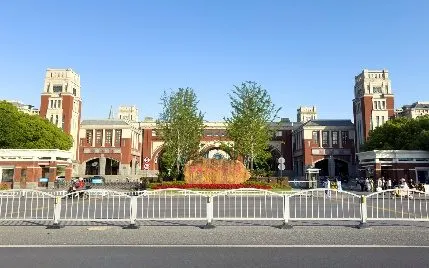
University · Shanghai