- Language courses
- English, Chinese
- Bachelor's Degree
- English, Chinese
- Master's Degree
- English, Chinese
- Doctoral (PhD) Programmes
- English, Chinese
- Accommodation from 75 ¥/day
华东理工大学
East China University of Science and Technology accepts international students on programmes in the following fields: business, engineering, education, economics, it. Choose the level and programme that suit your goals.
Chinese language study at the university — from a few weeks to a year or longer. Suitable for those starting from scratch or preparing for the HSK before entering a main programme.
self-funded · language programme
Cost: 9 800 ¥/semester
self-funded · language programme
Cost: 19 600 ¥/year
Foundation programme: language and core subjects before a bachelor's degree. It helps you strengthen your knowledge and get used to studying in China before the main programme begins.
self-funded · language programme · Intake 1
Cost: 15 000 ¥/semester
self-funded · language programme · Intake 2
Cost: 25 000 ¥/semester
The first level of higher education: usually four years of study, specialised subjects, internships and a graduation thesis. It opens the way to working in your field and to a master's degree.
self-funded
Cost: 22 000 ¥/year
self-funded · JMD, 1 diploma
Cost: 40 000–55 000 ¥/year
The first level of higher education: usually four years of study, specialised subjects, internships and a graduation thesis. It opens the way to working in your field and to a master's degree.
self-funded · JMD, 2 diplomas
Cost: 70 000 ¥/year
Advanced study after a bachelor's degree: research, applied projects and internships. It helps you become an expert in your chosen field and broaden your career opportunities.
self-funded
Cost: 28 000–34 000 ¥/year
East China University of Science and Technology is located in Shanghai. Nihao Study consultants keep track of the deadlines and admission requirements of this university, and you can always check the most accurate and up-to-date information on its official website. In university rankings, it is ranked 152 in China and 799 worldwide.
Come for a face-to-face meeting: together we will go through the requirements, deadlines, documents and study options that suit you.

At the meeting we will look at your situation, tell you which documents to prepare and by when, talk about possible programmes and help you decide on the next step.
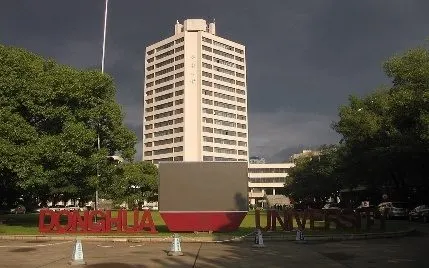
East China University of Science and Technology (ECUST, 华东理工大学), known in Russian as the East China University of Science and Technology, is a public research university in Shanghai. Its profile covers chemical engineering, materials science, biotechnology, economics and design. Russian-speaking applicants sometimes write 'University of Science and Technology of East China'. In China the university is called 华理 (Huálǐ) for short, while in rankings and international correspondence the abbreviation ECUST has become established.
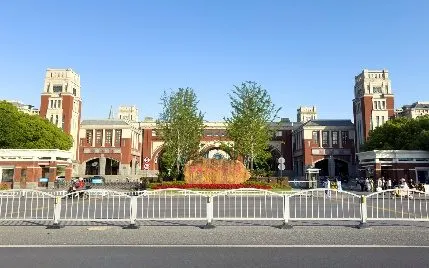
ECUST's main site is the historic Xuhui campus (Shanghai, 130 Meilong Road, postcode 200237). In addition, the university has the Fengxian and Jinshan campuses. Today most undergraduates study at Fengxian, while the international office, the dormitory for international students, and master's and doctoral programmes are concentrated at Xuhui.
Below you will find key figures, history, rankings, strong fields, programmes for international students, accommodation, scholarships and the application procedure. Questions about admission can be discussed during a consultation with Nihao Study.
| Indicator | Value | Notes |
|---|---|---|
| Year founded | 1952 | Then called East China Institute of Chemical Technology |
| Campuses | 3 | Xuhui, Fengxian, Jinshan |
| Students | about 25,000 | 15,667 bachelor's, 8,235 master's and 1,524 doctoral students |
| Colleges and schools | 15 | Cover fields from chemical engineering to business and design |
| International students | 1 358 | Handled by a dedicated College of International Education |
| Teaching staff | 3 052 | Full-time academic staff |
| Dormitories | 21 buildings, 15,000 beds | Including the Lizhi building for international students |
| Library holdings | more than 2,600,000 items | 3 libraries on different campuses |
ECUST was founded in October 1952, during the nationwide restructuring of higher education, under the name East China Institute of Chemical Technology. It brought together the chemistry departments of Jiao Tong University, Aurora (震旦大学), Utopia (大同大学) and Soochow (东吴大学). It became China's first higher education institution specialising in chemical technology; its library, which still operates today, was established at the same time.
The university received its current name, East China University of Science and Technology, in February 1993 by decision of the State Education Commission of the PRC. The renaming reflected that its profile had grown far beyond chemistry alone to include law, economics, biotechnology and materials science. ECUST was included in the national Project 211 in June 1996, and in July 2007 a new campus opened in Fengxian District.
In 2017 the first round of the national Double First-Class programme (双一流) listed ECUST among universities with world-class disciplines in chemistry, materials science and chemical engineering. These three fields remain the backbone of the university's research today.
ECUST's position depends heavily on the methodology behind a ranking. So it is more useful to look not at the overall figure but at positions in specific subject areas.
| Ranking | Position and year | What this means |
|---|---|---|
| ARWU (Shanghai Ranking) | 201–300 worldwide, 2025 | 42nd among Chinese universities, 2026 |
| ARWU in Chemical Engineering | 7th in China, 2025 | The university's flagship discipline |
| QS World University Rankings | 673rd, 2026 | 215th in QS Asia |
| QS by Subject, Chemical Engineering | in the world top 150 | Among the country's strong programmes |
| THE World University Rankings | 601–800 worldwide, 2026 | In China: 38th to 51st |
| CWUR | 339th worldwide, 2025 | 49th in China; in the top 1.6 per cent of universities worldwide |
| EduRank | 799th worldwide, 51st in China, 2026 | 41st worldwide in chemical engineering |
Another indicator is the ESI citation index. Six of ECUST's fields are in the world's top 1 per cent: pharmacology and toxicology, agricultural sciences, biology and biochemistry, engineering, materials science and chemistry, with chemistry even reaching the top 1 per mille. It is important to understand that ESI measures citations of research papers in individual fields, not a university's position in an overall ranking.
ECUST has been a member of Project 211 since 1996, and it has been represented in the Double First-Class programme by three disciplines since 2017. It is not part of Project 985, which includes only the 39 best-funded universities. In practice this means applicants get a strong reputation in chemistry and related fields, but ECUST's overall budget and international ranking are more modest than those of the C9 universities.
In 2007 the Chemical Engineering and Technology major was designated a national model programme. It is one of the oldest in China and enjoys high prestige. It is this programme that earns ECUST 7th place among Chinese universities in the ARWU subject ranking and a place in the top 150 of QS by Subject.
ECUST hosts the State Key Laboratory of Bioreactor Engineering. There are few specialised biotechnology laboratories of this level in China. This explains why pharmacology and toxicology, biology, biochemistry and materials science are all in the ESI top 1 per cent at the same time.
ECUST's own programme, Global JMD, lets students earn two bachelor's degrees in 4 years: one from ECUST and one from a partner university abroad. Fields: international economics, visual communication, computer science and chemical engineering. Confirmed partners include École Nationale Supérieure de Chimie de Rennes (France) and a business school set up jointly with Lucian Blaga University of Sibiu (Romania). As of 2026, ECUST's international links are focused mainly on Europe, North America and Australia.
ECUST's profile is not limited to chemistry: 15 colleges and schools cover engineering, natural sciences, economics, the humanities and creative subjects.
The core of the university is the School of Chemical Engineering. Alongside it, artificial intelligence and information science, environmental engineering and resources, and materials science are developing.
The School of Business recruits international students on its own; besides business, this group also includes law and social management. The College of International Education is responsible for admitting and supporting all international students.
Visual Communication Design is a JMD programme field belonging to the humanities and creative side of the university. It teaches branding, packaging, digital media and the use of artificial intelligence in visual communication.
| Level | Language of instruction | Duration |
|---|---|---|
| Bachelor's, standard programme | Chinese, HSK4 with 190 or 210 and above | 4 years |
| JMD bachelor's, single degree | English | 4 years |
| JMD bachelor's, dual degree | English; the 3rd year is spent abroad | 4 years, two degrees |
| Master's Degree | Chinese (HSK5, 210 or above) or English | 1.5 to 3 years |
| Doctoral (PhD) Programmes | English or Chinese (HSK5 with 210 or above, or HSK6 with 180 or above) | 3 to 4 years |
For English-taught programmes, one of these certificates is accepted: IELTS 6.0 or above, TOEFL iBT 80 or above, or Duolingo 105 or above. If English is your native language or you completed a programme taught in English, no certificate is needed. Chinese-taught bachelor's programmes require a valid HSK level 4: at least 190 for engineering majors and at least 210 for humanities and business; in addition, you need at least 60 points in the writing section.
ECUST's dormitory for international students is the Lizhi Building, at 130 Meilong Road, Xuhui, Shanghai, 200237.
| Room type | Condition |
|---|---|
| Single, renovated, 8th and 14th floors | For long-term programmes |
| Single, not renovated, other floors | For long-term programmes |
| Single, for short-term programmes | Including the holiday period |
The fee is paid for the whole semester at once, including the winter and summer holidays. You can move in 3 days before registration; you will need your passport and admission notice. You must give notice of moving out at least 2 weeks in advance; otherwise the money for the last 30 days of the contract will not be refunded. Renting off campus in Shanghai is considerably more expensive, so most international students book a room in Lizhi in advance.
The application fee for degree programmes is not refunded even if you are rejected, so think carefully before applying to several universities at once.
In 2026 international applicants can apply for several types of support at once. Read the terms carefully: what matters is not only the extent of coverage but also the list of fields the benefit does not apply to.
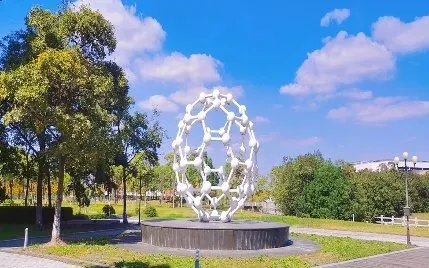
ECUST has three campuses, but the university's international life is concentrated in Xuhui. It has teaching buildings, sports grounds and canteens, and the university's library collection exceeds 2.6 million items spread across three sites. Hongqiao International Airport is just 17 kilometres away. The university has had its own university press since 1986 and an affiliated school for staff children since 1992.
The university cooperates with more than 60 universities, companies and research institutes in various countries, including partners in Germany, France, Romania, Australia and the USA. Through these links, exchange students from other countries come to ECUST and participants in joint JMD programmes study here.
| University and Chinese name | City and status | Key difference |
|---|---|---|
| ECUST, 华东理工大学 (East China University of Science and Technology) | Shanghai; national Project 211 university | Chemical engineering, materials science, bioengineering |
| University of Science and Technology of China, 中国科学技术大学 | Hefei; national university, C9 League | Abbreviation USTC; world-class physics and exact sciences |
| University of Shanghai for Science and Technology, 上海理工大学 | Shanghai; municipal university | Abbreviation USST; not part of Project 211 |
| East China Normal University, 华东师范大学 | Shanghai; national, part of Projects 211 and 985 | Strong in education, psychology and geography |
The two Shanghai universities with science and technology in their names are the ones most often confused: the municipal University of Shanghai for Science and Technology and ECUST. Their status, campuses and admission rules differ. The University of Science and Technology of China is a national university in Hefei with a different scale of funding, while East China Normal University shares with ECUST only the words East China at the start of its name.
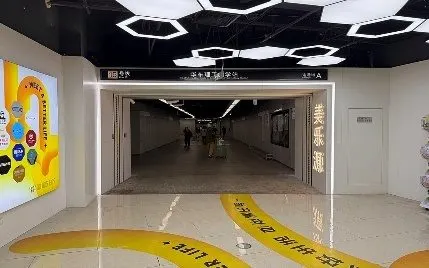
Campus videos help you picture the Xuhui campus in advance: teaching buildings, the Lizhi dormitory and its rooms, the surrounding streets. Note how far the buildings are from metro stations and public transport stops. This makes it easier to judge whether life in central Shanghai suits you, especially if you are choosing between ECUST, the University of Shanghai for Science and Technology and other universities in the city.
1. The standard Russian form, used in reference books and specialist publications, corresponds to 'East China University of Science and Technology'. 2. The form 'Eastchina University of Science and Engineering', as well as spelling without a hyphen, are common search-query mistakes and are not considered standard. 3. 'University of Science and Technology of East China' copies the English word order: this variant does occur, although it does not formally follow the rules of Russian. 4. East China University of Science and Technology is the official international name. 5. ECUST is the official abbreviation used by rankings and by the admissions office in correspondence. 6. 华理 (Huálǐ) is the student abbreviation in China; the university chose it because the character 工 also appears in the names of other universities, so this makes confusion easier to avoid. 7. The original Chinese name is 华东理工大学 (Huádōng Lǐgōng Dàxué).
ECUST is the abbreviated name of East China University of Science and Technology. The university is in Shanghai and is one of the public research universities: it was founded in 1952 as an institute of chemical technology and has borne its current name since 1993. The university is part of Project 211 and is represented in the Double First-Class programme by three disciplines.
Yes. The Global JMD programme offers English-taught fields in international economics, visual communication, computer science and chemical engineering; in addition, some master's programmes are taught in English. For admission, one of the following certificates is accepted: IELTS (6.0 or higher), TOEFL iBT (80 or higher) or Duolingo (105 or higher).
For Chinese-taught bachelor's programmes you need HSK level 4: at least 190 points for engineering programmes and at least 210 for humanities and business, with no less than 60 points for writing. For master's and doctoral programmes you need HSK 5 with at least 210 points or HSK 6 with at least 180 points.
Yes, but only with three disciplines: chemistry, materials science and chemical engineering, which entered the first round of the programme in 2017. Project 985 status is a different matter: ECUST is not among the 39 universities in that project.
The price of a room in the Lizhi dormitory depends on whether it has been renovated and on the type of programme. It is best to check the current rates on the university's official website.
Yes: ECUST accepts applications for the Chinese Government Scholarship Type B; the university code is 10251 and the application deadline is 15 February. The full scholarship covers tuition, dormitory accommodation and insurance and includes a monthly stipend, but it does not apply to all English-taught master's programmes. ECUST is one of 306 universities that accept CSC scholarship holders.
The venue for the HSK or BCT exam is chosen separately, through the Chinese Test system, after checking the current schedule of sessions.
The main campus and the dormitory for international students are in Shanghai, in Xuhui District (130 Meilong Road, 200237). Hongqiao International Airport is 17 kilometres away.
USST (University of Shanghai for Science and Technology) is an independent municipal university in Shanghai and is not part of Project 211. USTC (University of Science and Technology of China) is a national C9 League university based in Hefei, with an entirely different status and funding. Neither should be confused with ECUST, a Shanghai university with a focus on chemical engineering.
You will need a notarised school certificate or diploma, an official transcript, a language certificate suited to your chosen programme, a personal statement or study plan, a medical examination form, a police clearance certificate and a scan of your international passport. Your passport must be valid until at least September of the year of admission plus one more year. Documents are submitted online.
Shanghai (上海) is the largest city in China and one of the world's financial centres. Students from more than 150 countries study here. The Bund with its futuristic views, the skyscrapers of Pudong and the old French Concession together create a special atmosphere for student life.
By enrolling in Shanghai, students gain access to strong universities and thousands of international companies offering internships. The city has 16 metro lines, the campuses are equipped to modern standards, and student life is active. For parents, it matters that healthcare here is of a high standard, there are international schools and hospitals and direct international flights, the city is safe, and every major university has a support service for international students.
You work with Nihao Study specialists. They will help you put together a portfolio and a set of documents, draw up a study plan and choose a university or college and a specialty that genuinely interest you.
We take care of every stage of admission, from choosing to enrolment
We will gather, prepare, certify and send your documents to the institution
We will show the admissions committee your strengths
We run training sessions and courses so you can prepare with more confidence
We will help you settle in at the start of your studies and keep moving forward
Nihao Study specialists select universities and colleges that match the applicant's goals and means. We make sure the teachers are practitioners and that the knowledge will be useful in your profession.
We examine curricula, talk to students and teachers and look at which specialties employers need, and use this information to select options for the applicant.
Advisers guide the applicant from the first consultation to enrolment, help build a plan and spot mistakes in time that could get in the way.
The cost of our support depends on the programme and the partner university; you'll get an exact quote after a free consultation.
Get a quoteA free 15-minute consultation: together we will choose a university or college and a programme that suit your goals and budget.
Apply with peace of mind: we handle the documents, deadlines and correspondence with admissions committees, and you save time and energy.
Don't want to wait for a call? Message us in the chat.
Message us in chat 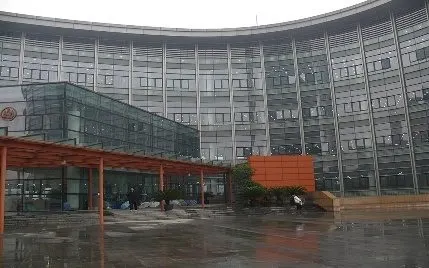
University · Shanghai