China Academy of Art
University · Hangzhou
Language courses · Bachelor's Degree · Master's Degree
ZJU · 浙江大学
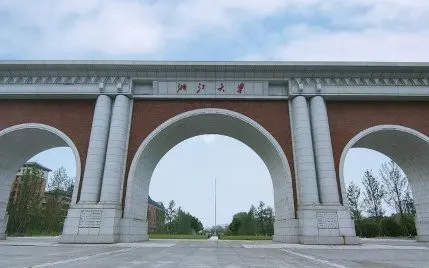
Zhejiang University accepts international students on programmes in the following fields: business, engineering, economics, arts, natural sciences. Choose the level and programme that suit your goals.
Chinese language study at the university — from a few weeks to a year or longer. Suitable for those starting from scratch or preparing for the HSK before entering a main programme.
self-funded · language programme
Cost: 18 000 ¥/year
The first level of higher education: usually four years of study, specialised subjects, internships and a graduation thesis. It opens the way to working in your field and to a master's degree.
self-funded
Cost: 19 800–29 800 ¥/year
Advanced study after a bachelor's degree: research, applied projects and internships. It helps you become an expert in your chosen field and broaden your career opportunities.
self-funded
Cost: 22 800–114 000 ¥/year
Zhejiang University is located in Hangzhou. Nihao Study consultants keep track of the deadlines and admission requirements of this university, and you can always check the most accurate and up-to-date information on its official website. In university rankings, it is ranked 4 in China and 83 worldwide.
Come for a face-to-face meeting: together we will go through the requirements, deadlines, documents and study options that suit you.

At the meeting we will look at your situation, tell you which documents to prepare and by when, talk about possible programmes and help you decide on the next step.
Zhejiang University (ZJU, 浙江大学) is one of China's leading public universities. It is based in Hangzhou, the capital of Zhejiang Province. Russian-speaking applicants sometimes also use a calque of the English name meaning "University of Zhejiang". In China students call the university by the short name 浙大 (Zhèdà), and the full name in pinyin is Zhèjiāng Dàxué. Reference books and academic literature use the established Russian form meaning "Zhejiang University", and rankings use the abbreviation ZJU.
ZJU is a member of the C9 League, an alliance of the country's nine leading research universities, and takes part in Projects 211 and 985 and the Double First-Class programme. In June 2026 the university took first place in the Nature Index Research Leaders ranking for the first time, overtaking Harvard University in the number of publications in leading scientific journals.
Below are the key facts about ZJU for applicants: figures and rankings, programmes taught in Chinese and English, HSK requirements, scholarships, dormitories, the admission procedure and the universities in Zhejiang Province that are often confused with ZJU.
| Item | Figure | Notes |
|---|---|---|
| Founded | 1897 | One of the oldest modern-type universities in China |
| Number of campuses | 7 | Total area of about 1,538 acres |
| Total students | 60 739 | Bachelor's — 26,527; master's and doctoral — 34,212 |
| International students | 5 596 | From more than 150 countries |
| Colleges and schools | 41 | 133 bachelor's programmes, plus over 300 master's and 200 doctoral programmes |
| Teaching staff | 4 191 | Including academicians: 26 of the Chinese Academy of Sciences, 27 of the Chinese Academy of Engineering |
| Libraries | 8 | Holdings of over 8.22 million print and electronic items |
| Alumni | more than 700,000 | At least 320 companies founded by ZJU alumni have gone public |
ZJU traces its history to 1897. That year, the mayor of Hangzhou, Lin Qi, founded the Qiushi Academy (Qiushi Shuyuan), one of the first new-style, modern schools in China. Its name goes back to the Neo-Confucian idea of "seeking truth", which later became the basis of the university's motto. In 1902 the school was named "Zhejiang University", and in 1903 it became the Zhejiang Higher Institute. The Revolution of 1911 temporarily interrupted classes.
The institutional history of today's university dates from 1927. That year, the Third Sun Yat-sen University was created from two colleges — the Zhejiang Industrial College and the Zhejiang Agricultural College — and in 1928 it became National Zhejiang University. The most important period in the university's history is considered to be the years under the leadership of Zhu Kezhen, from 1936 to 1949. During the Second Sino-Japanese War the university was evacuated to the west of the country, to Guizhou province. There, staff and students continued their studies for several years and preserved the library collections, and in 1946 the university returned to Hangzhou. The question Zhu Kezhen put to first-year students in 1936 is still carved on the campus: what kind of person do you want to become when you graduate?
The key event in ZJU's recent history dates to 1998. That year Zhejiang University merged with three universities: Hangzhou University, Zhejiang Agricultural University and Zhejiang Medical University. The merged university had over 30,000 students and more than 10,000 staff — at the time it was considered the largest university in Asia. The merger made ZJU truly comprehensive: it covers eleven branches of knowledge, from medicine, agronomy and engineering to philosophy and philology. The success of the merger was confirmed in 2012, when the university topped the national ranking of Chinese universities for the first time.
ZJU holds different positions in different rankings: each agency relies on its own criteria — number of publications, employer reputation, citations or strength in a narrow subject area.
| Ranking | Position and year | What you need to know |
|---|---|---|
| THE World University Rankings | 39th worldwide, 2026 | 8th among universities in Asia |
| QS World University Rankings | 49th worldwide, 2026 | Has held a place in the world top 50 for several years in a row |
| ARWU, ShanghaiRanking | 24th worldwide, 2025 | 3rd among universities in China, 2026 |
| CWUR | 68th worldwide, 2025 | In the top 0.4 per cent of universities worldwide; 20th for research |
| US News Best Global Universities | 35th worldwide | Ahead of many well-known European universities |
| EduRank | 124th worldwide, 4th in China, 2026 | 16th worldwide for engineering |
In June 2026, ZJU took first place in the Nature Index Research Leaders list for the first time, with Harvard University in second place. Nine of the top ten universities on the list are Chinese, Harvard being the only exception. The Nature Index does not assess teaching quality in the usual sense, but publication output in leading scientific journals. Even so, for an applicant choosing a university with a research career in mind, such growth is very telling. ESI, the global citation index, places 15 of ZJU's research fields in its top 1 per mille (data as of May 2025). The strength of individual disciplines is also confirmed by the ARWU 2025 subject rankings: nanoscience and nanotechnology — 2nd in the world, biotechnology — 2nd, biomedical engineering — 3rd.
ZJU is part of the Double First-Class programme, which includes universities and individual disciplines that the state is developing into world-class research centres. Together with its status as a Project 211 and Project 985 university, this shows that ZJU is a national priority.
According to the ARWU 2025 subject rankings, ZJU is second in the world in biotechnology and in nanoscience and nanotechnology; third in food science and technology and biomedical engineering; and fourth in artificial intelligence, instrument science, chemical engineering and environmental engineering. A combination of strong fundamental chemistry and applied engineering is rare among Chinese research schools, and ZJU is one of them.
ZJU has over 700,000 alumni worldwide, and more than 320 companies they founded are publicly listed. Notable alumni include Li Qiang, the current Premier of the State Council of the PRC; entrepreneur Duan Yongping; Huang Zheng, founder of the Pinduoduo platform, who made a donation to the university in 2021; and Liang Wenfeng, founder of DeepSeek. Graduates of ZJU and other Hangzhou universities form one of the densest tech clusters in China, and the headquarters of Alibaba is not far from the university's campuses.
ZJU has 11 State Key Laboratories. Since November 2025, Peter the Great St. Petersburg Polytechnic University (SPbPU) has held the status of the university's anchor partner. At the centre of this partnership is the joint Laboratory of Hydraulics and Mechatronic Systems, along with materials science, energy and biomedicine; cooperation includes summer and winter schools, student exchanges and courses in Russian as a foreign language. A separate strand is cooperation with HSE University (Higher School of Economics). In addition, ZJU and the Moscow Aviation Institute have opened a joint research centre for aviation technologies.
ZJU comprises 41 colleges and schools. They cover eleven broad areas of knowledge: medicine, agronomy, engineering, management, law, economics, natural sciences, education, history, philology and philosophy.
The largest group of programmes covers computer science and technology, software engineering, bioengineering, architecture and information design. Behind these fields are ZJU's high positions in engineering rankings and the university's State Key Laboratories.
Programmes in business administration, finance, international trade, accounting and law are taught in two languages — Chinese and English. These disciplines are rooted in the economics and management faculties that had developed at the university even before the 1998 merger.
Thanks to the 1998 merger with Zhejiang Medical University, ZJU trains specialists in clinical medicine, dentistry and pharmacy. The humanities include Chinese language and literature, translation studies, journalism and communication. There is also a programme in tea culture — a rare field for international applicants.
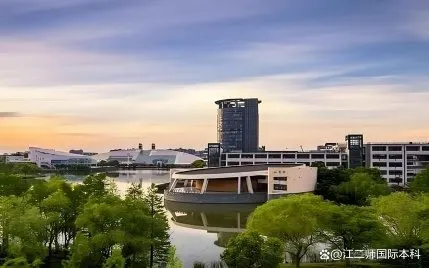
ZJU has 7 campuses with a combined area of about 1,538 acres. International students and language programme students traditionally most often live on the Yuquan campus, in the historic centre of Hangzhou near West Lake. The main modern campus is Zijingang, opened in 2002: most bachelor's and master's programmes are concentrated there. Engineering and language programmes are based at the historic Yuquan campus. The other five sites — the Haining International Campus, as well as Xixi, Huajiachi, Zhijiang and Zhoushan — host specific fields, from law and oceanography to joint double-degree programmes.
International students can choose from 10 dormitories in different parts of the city. Prices vary: the buildings belong to different campuses and were built in different years, so the cost depends on the specific building, the room type and the number of roommates. It is best to check current accommodation rates on ZJU's official website.
The main government support programme for international students is the Chinese Government Scholarship (CSC). In the CSC system, ZJU has its own agency number — 10335. The Type B scholarship covers tuition and on-campus dormitory accommodation (or pays an accommodation allowance), and includes a monthly stipend and medical insurance. Applications for the 2026/27 academic year closed on 31 December 2025 (Beijing time), and the university announces decisions between late July and early August 2026. Before applying, make sure ZJU is on the official list of universities accepting CSC scholarship holders.
The Type B selection takes place in two stages. First, the university checks the candidate's documents, which must include a police clearance certificate and a medical certificate. The strongest candidates are then invited to a competitive video interview. In addition, there is the Zhejiang Provincial Government Scholarship; its terms and quotas for master's and doctoral programmes should be checked directly with the university.
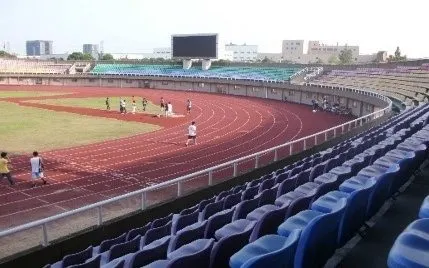
ZJU's library system has 8 branches holding over 8.22 million items. The university has 7 affiliated hospitals and its own museum with more than 140,000 botanical specimens. Sport also plays a prominent role: in 2012–2024, ZJU students won 1004 awards in 42 sports at provincial, national and international competitions.
Hangzhou is home to the headquarters of Alibaba, and a high-speed train gets from here to Shanghai in about 45 minutes. The Yuquan campus is next to West Lake, a UNESCO World Heritage Site, so the historic centre is a few minutes' walk from the dormitory. According to students who came to ZJU on exchange, language course classes last 5 or 6 hours a day, five days a week. Attendance is strictly monitored at the university, as the extension of the student visa depends directly on it.
The university shares its name with the province, and Hangzhou has several large universities whose English names sound similar. Each of them is a separate institution with no formal connection to ZJU.
| University and Chinese name | Type | Main focus |
|---|---|---|
| Zhejiang University, ZJU, 浙江大学 | Hangzhou, national university, C9, 985, 211 | Comprehensive research university |
| Zhejiang University of Technology, 浙江工业大学 | Hangzhou, provincial university | Engineering and chemical technology |
| Zhejiang Gongshang University, 浙江工商大学 | Hangzhou, provincial university | Business, economics and trade |
| Zhejiang Sci-Tech University, 浙江理工大学 | Hangzhou, provincial university | Light industry, textiles and design |
The main reason for the confusion is that the official English names of all four universities begin with the word Zhejiang. In Russian-language adverts and on aggregator sites this part is sometimes reduced to a simple "Zhejiang university", so a national Project 985 university is often confused with an ordinary provincial one.
The standard Russian form is a direct equivalent of "Zhejiang University": it is used on Wikipedia and in most academic sources. Common Russian misspellings drop a vowel or swap consonants, and a variant copying the English word order ("University of Zhejiang") is formally an error, although it often appears in adverts.
Zhejiang University is the official international name, and ZJU is the official abbreviation used in rankings and correspondence. 浙大 (Zhèdà) is the short form used by Chinese students, and 浙江大学 (Zhèjiāng Dàxué) is the original Chinese name in pinyin transcription. In correspondence with the university, use the English or Chinese name and do not translate it yourself.
ZJU is the short name of Zhejiang University. It is a public university in Hangzhou: it was founded in 1897 as the Qiushi Academy and took its present form after merging with three other universities in the province in 1998.
Yes. ZJU is one of the nine members of the C9 League, which unites China's leading research universities. It is also part of Projects 211 and 985 and the Double First-Class programme.
Yes. Some bachelor's and master's programmes are taught in English — for example, business administration, finance, bioengineering and information design. If English is not the applicant's native language, these programmes require an international language certificate.
For Chinese-taught programmes the university requires a valid HSK certificate, and each programme sets its own minimum threshold. Applicants who studied at secondary school in Chinese may be exempted from HSK if the language of instruction is confirmed.
The cost depends on the room type — single or double — and on the specific building. Check current terms on the university's official website.
Yes. In the CSC system, ZJU has its own agency number — 10335. The Type B scholarship covers tuition and accommodation and includes a monthly stipend. Selection is competitive, and one of its stages is a video interview.
The CSCA, or China Scholastic Competency Assessment, is a new entrance test. Starting with this year's intake, all international applicants to ZJU bachelor's programmes are required to take it. The first test session took place on 21 December 2025.
The international admissions office is on the Zijingang campus, postcode 310058. Language course students and exchange students usually live on the historic Yuquan campus by West Lake, in central Hangzhou.
ZJU is a national Project 985 and 211 university and a member of the C9 League. Zhejiang University of Technology and Zhejiang Gongshang University do not have this status — they are provincial universities: the former specialises in engineering, the latter in trade and economics programmes.
The package usually includes a passport, a secondary school-leaving certificate with a notarised translation, a transcript of grades, a language certificate, as well as medical certificates and a police clearance certificate.
Hangzhou (杭州) is the capital of Zhejiang Province and home to Alibaba's headquarters. The city is famous for West Lake and renowned for its beauty, and here a long history sits alongside modern technology.
Hangzhou has strong universities — Zhejiang University ranks in the country's top 5 — and its developed IT industry offers internship opportunities. Students can look forward to a good environment, picturesque nature for relaxing, 10 metro lines and a modern 'smart' city where cashless payment is the norm. Parents should bear in mind the high level of safety and quality of life, modern healthcare, the international airport and the proximity of Shanghai — 45 minutes by train. The campuses are well organised, with security and support services for international students.
You work with Nihao Study specialists. They will help you put together a portfolio and a set of documents, draw up a study plan and choose a university or college and a specialty that genuinely interest you.
We take care of every stage of admission, from choosing to enrolment
We will gather, prepare, certify and send your documents to the institution
We will show the admissions committee your strengths
We run training sessions and courses so you can prepare with more confidence
We will help you settle in at the start of your studies and keep moving forward
Nihao Study specialists select universities and colleges that match the applicant's goals and means. We make sure the teachers are practitioners and that the knowledge will be useful in your profession.
We examine curricula, talk to students and teachers and look at which specialties employers need, and use this information to select options for the applicant.
Advisers guide the applicant from the first consultation to enrolment, help build a plan and spot mistakes in time that could get in the way.
The cost of our support depends on the programme and the partner university; you'll get an exact quote after a free consultation.
Get a quoteA free 15-minute consultation: together we will choose a university or college and a programme that suit your goals and budget.
Apply with peace of mind: we handle the documents, deadlines and correspondence with admissions committees, and you save time and energy.
Don't want to wait for a call? Message us in the chat.
Message us in chat University · Hangzhou
Language courses · Bachelor's Degree · Master's Degree