China Academy of Art
University · Hangzhou
Language courses · Bachelor's Degree · Master's Degree
中国计量大学
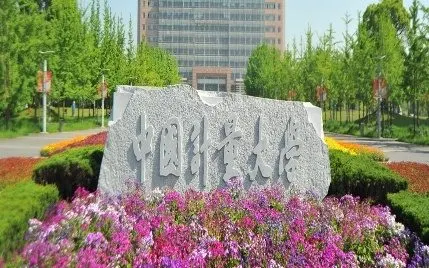
China Jiliang University accepts international students on programmes in the following fields: engineering, natural sciences. Choose the level and programme that suit your goals.
Chinese language study at the university — from a few weeks to a year or longer. Suitable for those starting from scratch or preparing for the HSK before entering a main programme.
self-funded · language programme
The first level of higher education: usually four years of study, specialised subjects, internships and a graduation thesis. It opens the way to working in your field and to a master's degree.
self-funded
Advanced study after a bachelor's degree: research, applied projects and internships. It helps you become an expert in your chosen field and broaden your career opportunities.
self-funded
China Jiliang University is located in Hangzhou. Nihao Study consultants keep track of the deadlines and admission requirements of this university, and you can always check the most accurate and up-to-date information on its official website. In university rankings, it is ranked 176 in China and 1718 worldwide.
Come for a face-to-face meeting: together we will go through the requirements, deadlines, documents and study options that suit you.

At the meeting we will look at your situation, tell you which documents to prepare and by when, talk about possible programmes and help you decide on the next step.
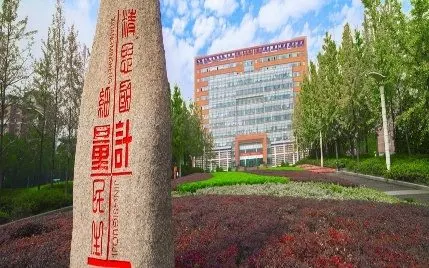
China Jiliang University (CJLU, 中国计量大学), known in Russian as the China Jiliang University, that is, the university of metrology, is a public university in Hangzhou. Its distinctive profile covers metrology, standardisation, quality, market regulation and inspection. Search queries also use variants such as 'China University of Metrology', 'Jiliang University of China' and a slightly different spelling of 'Jiliang'. The international names are China Jiliang University and CJLU; the Chinese name is read Zhōngguó Jìliàng Dàxué, and in China itself the university is called 中量大 (Zhongliang-da) for short.
The university's specialisation should be distinguished from its status straight away. CJLU is not part of the 211 or 985 projects, nor did it make the second round of Double First-Class (双一流): it is not on the Ministry of Education's official list. That does not make it a weak university; it simply calls for a different approach to choosing: students come here primarily for instrument engineering, measurement technology, standardisation, quality management, optics and related engineering fields, rather than for formal membership of a national programme.
Nihao Study has put together on one page what a 2026 applicant will find useful: CJLU's status, rankings, programmes for international students, HSK requirements, scholarships, dormitories and the admission steps.
| Item | Value |
|---|---|
| Founded | 1978 |
| Structure | 19 colleges, departments and centres |
| Students | undergraduates: over 19,000; master's and doctoral students: 5,600; international students: 460 |
| Teaching staff | full-time teaching staff: over 1,600, more than 700 of them with senior titles |
| Levels of study | doctoral: 2 disciplines; master's: 15 academic and 15 professional disciplines |
| Address | 258 Xueyuan Street, Qiantang District, Hangzhou 310018 |
The university itself reports that 6 of its disciplines are in the ESI top 1%. In addition, CJLU has 18 national first-class undergraduate majors and more than 40 provincial or ministerial-level research platforms.
By type, CJLU is a local public technical university. ShanghaiRanking explicitly labels it 地方公办 (a public university under local administration) and describes its specialisation as metrology, standards and quality inspection. Since 2019, the university has been jointly supported by the State Administration for Market Regulation and the Zhejiang Provincial Government; CJLU is also on the province's list of key universities.
211 and 985 were separate government programmes of past decades; the Ministry of Education later moved to the Double First-Class system. The current official 双一流 list contains second-round universities and disciplines, but CJLU is not on it. So phrases such as "CJLU 211", "CJLU 985" or "Double First-Class CJLU" are incorrect.
Employers in measurement technology look at other things: the department's focus, laboratory facilities, engineering accreditation, a portfolio and knowledge of Chinese. That is why applicants benefit from comparing not just the overall ranking but also the curricula of specific programmes in instrumentation, automation, optics or quality management.
The university began as Hangzhou Metrology School, founded in 1978 by the State Bureau of Metrology. With the approval of the Ministry of Education, in 1985 the school became China Institute of Metrology. The university has borne its current name, China Jiliang University, since 2016.
The university then added further research levels. CJLU gained the right to award doctoral degrees in 2021, and in 2023 it opened postdoctoral stations in optical engineering and instrument science. The university's historic motto links metrology to the development of the national economy and measurement to improving people's lives. This explains why even programmes in other fields here often include a module on standards or quality.
| Ranking | Position | What it means |
|---|---|---|
| QS Asian University Rankings 2026 | band 711–720 | regional ranking, not to be confused with the global QS WUR |
| CWUR 2026 | worldwide: 1119; in China: 214 | research output carries great weight |
| ShanghaiRanking China 2026 | 151st in China | comparison of comprehensive universities within the country |
| ARWU 2025 | band 901–1000 | assessment of research performance on a global scale |
| EduRank 2026 | worldwide: 3,539; in China: 285 | publication metrics and online reputation |
CJLU has a profile in THE, but neither a rank nor a band in the main World University Rankings is publicly listed for the university. The same goes for U.S. News: no separate position is visible there, and there is no need to substitute an invented figure. The differences between rankings are explained by their methodologies: QS Asia emphasises regional indicators, CWUR relies more on research output, and EduRank cites 18,599 publications and 247,850 citations from its database.
Subject positions are more useful than the overall line. According to ShanghaiRanking, CJLU's programmes in standardisation engineering and quality management rank 1st among Chinese programmes of this type, while instrument science and measurement technology rank 15th in this ranking's subject table. Both results match the university's specialisation precisely.
CJLU's oldest specialist unit is the College of Metrology, Measurement and Instrumentation. It has 1,822 students, 800 of whom are master's and doctoral students, and 6 provincial and ministerial-level research platforms. The college suits those interested in sensors, calibration, measurement systems, precision instrumentation and industrial automation.
The Standardization Engineering and Quality Management Engineering majors are run by the School of Management and Quality. In 2025, it brought together its resources in management, quality and standardisation; the standardisation and quality management programmes continue to occupy the top places in the national subject ranking. Another unit is the Standardisation and Intellectual Property Research Centre: it gained provincial status in 2015 and passed its formal review in 2019.
In 2018, an ISO international training base for standardisation opened at CJLU — the second of its kind in the world. More than 300 specialists have completed its programmes. On the university's initiative, an alliance of universities engaged in standardisation education and research was set up within the Belt and Road framework. For students interested in certification, technical regulation and international standards, this is a real practical advantage.
The choice of programmes is not limited to metrology. According to the university, it teaches in engineering, natural sciences, humanities, management and law. 18 of the university's majors are recognised as first-class at national level and 24 at provincial level.
When choosing a programme, check the language of instruction for the specific intake. The international school has its own admission announcements, while the general catalogue of colleges shows which unit is academically responsible for a programme.
| Level | Sample programmes and duration | Confirmed details |
|---|---|---|
| Bachelor's Degree | business administration, mechatronics, electronic information; usually 4 years | taught to an English-language curriculum; some programmes require HSK 4 for graduation |
| Master's Degree | optics, instrumentation, control, environmental engineering, international business | master's disciplines are available; the full cycle of study is offered |
| Doctoral (PhD) Programmes | instrument science and technology and related research fields | the university has 2 doctoral disciplines |
| Chinese Language | short-term courses, plus one-semester or one-year programmes | language and culture programmes are run by the International School |
The Mechatronic Engineering programme lasts 4 years in its standard form, is taught in English, and requires HSK 4 in Chinese by graduation. Business Administration has the same parameters — 4 years, English, HSK 4; its core subjects include quality management and standardization. The electronic information engineering programme covers circuit design, signals, communications, IoT and programming.
The university reports partnerships with more than 80 foreign universities and organisations. There are 2 joint bachelor's programmes and 1 joint master's programme.
The dormitories have rooms for 3 and 4 people. The price depends on the room type; check current rates, the contract term and how electricity is paid for on the university's official website before moving in.
The dormitories offer several room types, a separate storage area, a washbasin and a shared kitchen; there are sports facilities on site. Furniture and common areas are part of the campus infrastructure and are managed centrally.
The campus is in the Xiasha university zone of Qiantang District. The university recommends travelling via Wenze Road metro station (Line 1) and then taking a short ride to the campus. The central part of the city by West Lake is not close, so allow time for trips to Hangzhou's historic centre.
When planning your budget, remember insurance, the medical check-up, translation and legalisation of documents, the visa, flights, food and getting around the city.
Be sure to clarify exactly what the awarded scholarship covers: tuition only, or also the dormitory, insurance and a monthly stipend.
The campus has library reading areas, computer workstations, digital databases and Wi-Fi; library resources can also be accessed from the dormitories. On campus are the main gate, teaching buildings, the library, sports fields, the G3 canteen and a metrology museum. The museum is particularly significant for CJLU: the history of measurement is part of the university's identity.
International students can take Chinese courses and cultural modules. The 2026 summer school included Chinese language, calligraphy, traditional crafts, martial arts and trips around Hangzhou. Where and when you can take the HSK or BCT needs to be checked separately.
| University | City, status | Main specialism |
|---|---|---|
| China Jiliang University, 中国计量大学 | Hangzhou; not part of 211/985/双一流 | quality, standards, metrology |
| Jilin University, 吉林大学 | Changchun; 985/211/双一流 | large comprehensive research university |
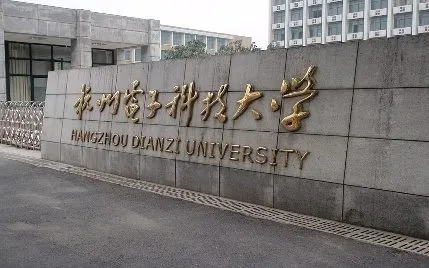
| Hangzhou Dianzi University | Hangzhou; public technical university | automation, IT, electronics |
| Zhejiang University of Technology | Hangzhou; provincial-level research university | industrial and chemical engineering |
The main trap in English-language searches is mixing up Jiliang and Jilin. Jilin University is in Changchun and has a completely different status. If you are comparing options in Hangzhou, also look at Hangzhou Dianzi University and Zhejiang University.
CJLU is worth considering if you are looking for an applied engineering programme leading to work with measurement systems, optics, automation, certification, quality management or industrial regulation. This profile is backed by the subject rankings, the metrology college and the ISO training base. However, the university will not suit those for whom formal 211, 985 or Double First-Class status is the main priority.
A convincing application shows why you want CJLU's specialisation in particular, rather than simply studying in Hangzhou. It helps if your previous projects relate to standards, calibration, sensors, process control, laboratory work or quality engineering. The environment here is genuinely international: the university reports students from 49 countries, and in the Belt and Road College more than 90% of students come from countries along the route.
The main Russian form on this page is the one meaning ‘Chinese Jiliang University’. The spelling ‘Jilian’ also occurs, but it matches the accepted name less well. ‘Jiliang University of China’ is a literal calque of the English. The university's official international name is China Jiliang University, and its abbreviation is CJLU. The short Chinese form is 中量大 (Zhongliang-da), and the original name is 中国计量大学 (Zhōngguó Jìliàng Dàxué).
It is a public university specialising in metrology, standardisation and quality. The address is 258 Xueyuan Street, Qiantang District, Hangzhou 310018. The area is the Xiasha university zone; Hangzhou's historic centre is in another part of the city.
No. The university did not take part in Projects 211 and 985, and it is not on the official second-round Double First-Class list. CJLU's current status is defined by the support of Zhejiang Province and the State Administration for Market Regulation.
Yes. The university reports English-taught curricula for a number of international programmes, such as business administration and mechatronic engineering. Check the current announcement to see whether the programme you want is open in your intake.
No common threshold is set for all programmes. In a number of English-taught curricula, HSK 4 is a condition for graduation, not necessarily for admission. Check the requirements for Chinese-taught programmes in the admission announcement.
In the application lists for the Chinese Government Scholarship, CJLU is listed with institution code 10356. The terms of the current CSC intake must be checked separately.
Yes, the Zhejiang Provincial Government Scholarship is listed among the opportunities for CJLU students. What it covers and how the competition works depend on the level of study and the year of admission.
Open sources confirm that the university has language programmes, but they do not allow us to say that an HSK or BCT test site operates here on any given date. Before registering, check separately whether there is a test centre and which session you can sign up for.
Besides the standard set, pay special attention to the anti-drug pledge on the CJLU form, the proof of language proficiency, the medical form and the requirements for legalising your diploma. Master's applicants should agree on their research area in advance.
They are two different institutions. CJLU is in Hangzhou and specialises in metrology and quality. Jilin University is in Changchun; it is a large multidisciplinary university with 985, 211 and Double First-Class status.
Hangzhou (杭州) is the capital of Zhejiang Province and home to Alibaba's headquarters. The city is famous for West Lake and renowned for its beauty, and here a long history sits alongside modern technology.
Hangzhou has strong universities — Zhejiang University ranks in the country's top 5 — and its developed IT industry offers internship opportunities. Students can look forward to a good environment, picturesque nature for relaxing, 10 metro lines and a modern 'smart' city where cashless payment is the norm. Parents should bear in mind the high level of safety and quality of life, modern healthcare, the international airport and the proximity of Shanghai — 45 minutes by train. The campuses are well organised, with security and support services for international students.
You work with Nihao Study specialists. They will help you put together a portfolio and a set of documents, draw up a study plan and choose a university or college and a specialty that genuinely interest you.
We take care of every stage of admission, from choosing to enrolment
We will gather, prepare, certify and send your documents to the institution
We will show the admissions committee your strengths
We run training sessions and courses so you can prepare with more confidence
We will help you settle in at the start of your studies and keep moving forward
Nihao Study specialists select universities and colleges that match the applicant's goals and means. We make sure the teachers are practitioners and that the knowledge will be useful in your profession.
We examine curricula, talk to students and teachers and look at which specialties employers need, and use this information to select options for the applicant.
Advisers guide the applicant from the first consultation to enrolment, help build a plan and spot mistakes in time that could get in the way.
The cost of our support depends on the programme and the partner university; you'll get an exact quote after a free consultation.
Get a quoteA free 15-minute consultation: together we will choose a university or college and a programme that suit your goals and budget.
Apply with peace of mind: we handle the documents, deadlines and correspondence with admissions committees, and you save time and energy.
Don't want to wait for a call? Message us in the chat.
Message us in chat University · Hangzhou
Language courses · Bachelor's Degree · Master's Degree