China Academy of Art
University · Hangzhou
Language courses · Bachelor's Degree · Master's Degree
杭州电子科技大学
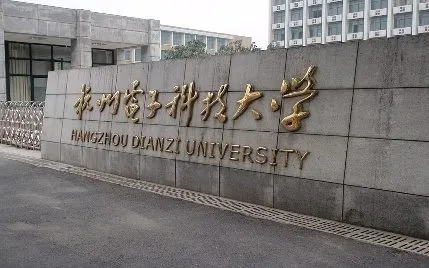
Hangzhou Dianzi University accepts international students on programmes in the following fields: business, engineering, medicine, education, economics. Choose the level and programme that suit your goals.
Chinese language study at the university — from a few weeks to a year or longer. Suitable for those starting from scratch or preparing for the HSK before entering a main programme.
scholarship-funded · language programme
Cost: 8 000–14 000 ¥/year
The first level of higher education: usually four years of study, specialised subjects, internships and a graduation thesis. It opens the way to working in your field and to a master's degree.
scholarship-funded
Cost: up to 20 000 ¥/year
self-funded
Cost: 18 000–20 000 ¥/year
Advanced study after a bachelor's degree: research, applied projects and internships. It helps you become an expert in your chosen field and broaden your career opportunities.
self-funded
Cost: 25 000–28 000 ¥/year
Hangzhou Dianzi University is located in Hangzhou. Nihao Study consultants keep track of the deadlines and admission requirements of this university, and you can always check the most accurate and up-to-date information on its official website. In university rankings, it is ranked 86 in China and 899 worldwide.
Come for a face-to-face meeting: together we will go through the requirements, deadlines, documents and study options that suit you.

At the meeting we will look at your situation, tell you which documents to prepare and by when, talk about possible programmes and help you decide on the next step.
Hangzhou Dianzi University (HDU; Chinese: 杭州电子科技大学, Hángzhōu Diànzǐ Kējì Dàxué) is usually referred to in Russian-speaking circles as "Dianzi University". It is a public university of Zhejiang Province in the city of Hangzhou, specialising in electronics, information technology, automation, economics and management. Other Russian forms also occur: a version with the words rearranged, and translations meaning "Hangzhou University of Electronics and Technology" and "Hangzhou University of Electronic Science and Technology", which convey the meaning of the full Chinese name. In China, however, the university is more often called simply 杭电 (Hángdiàn).
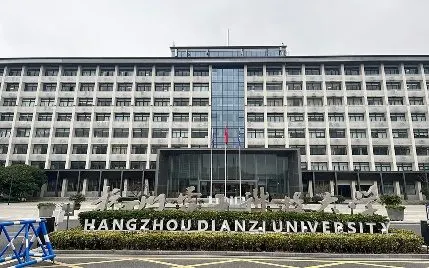
The university's main address is No. 1158, Ave. 2, Qiantang District, Hangzhou, Zhejiang 310018, China. This is the Xiasha campus (Qiantang university district). Applicants should focus on this campus: the admission of international students, the dormitories and most of the programmes in the international guide are based at Xiasha rather than in the historic city centre.
Here Nihao Study has brought together the key facts about HDU for 2026 applicants: programmes taught in English and Chinese, HSK requirements, rankings, scholarships, dormitories, the application procedure and the universities HDU is often confused with.
| Item | Data | Comment |
|---|---|---|
| Year founded | 1956 | Almost 70 years of development in its field |
| Campuses | 5 | For international students, the main campus is Xiasha |
| Students | more than 28,000 | A large research university of regional importance |
| Schools and institutes | 19 | Engineering, economics, law, design and other fields |
| Bachelor's programmes | 47 | More than 80 per cent are engineering or IT programmes |
| International students | 961 | A dedicated School of International Education serves them |
| Campus area | 240 hectares | Total area of all five campuses |
| Teaching and other staff | 2 708 | Of these, 2,059 are teaching staff |
The university traces its history to 1956, when Hangzhou Aviation Industry Finance and Economics School opened as a school of finance and economics for the aviation industry. This explains a combination rare for a technical university: a strong engineering base alongside accounting, economics and management. HDU trained not only specialists in radio engineering and computing systems, but also managers for industry.
In 1980 the State Council of China approved the establishment of Hangzhou Institute of Electronic Engineering, and the university has borne its current name, Hangzhou Dianzi University, since 2004. The word dianzi in the English name is not a random string of letters: in Chinese, 电子 means "electronics", and the full 电子科技 means electronic science and technology.
Since 2015 HDU has been one of the key universities developed by Zhejiang Province. It is also jointly supported by the provincial authorities and China's State Administration of Science, Technology and Industry for National Defence. So it is a regional technology university with strong industry links; it is not part of the 211, 985 or Double First-Class projects.
HDU's positions vary widely between rankings, because each system measures something different. Applicants will find it more useful to compare subject results and methodology than a single overall figure.
| Ranking | Position and year | What this means |
|---|---|---|
| THE World University Rankings | 1201–1500, 2026 | Computer Science: 601–800 |
| QS by Subject | 751–850, 2026 | Takes individual subjects into account; this is not the overall QS WUR |
| ARWU | 501–600, 2025 | A good result on research metrics |
| ARWU Instruments Science | 51–75, 2025 | HDU's best subject result |
| CWUR | 801st in the world, 2025 | In the top 3.8 per cent of universities covered by CWUR |
| EduRank | 1,391st in the world, 98th in China, 2026 | 279th in the world for automation and control |
The university reports that its engineering disciplines are in the top 1.5 per mille of ESI, an index that measures the citation of research papers by subject area.
No. Hangzhou Dianzi University is not on the second round of the official Double First-Class list of 2022, nor is it part of Project 211. Nevertheless, its status as a key Zhejiang university and its industry funding are real advantages. The lack of a national label does not make individual departments of a strong regional university any less competitive.
In the ARWU 2025 subject ranking, HDU's instrument science and technology is placed 51–75, while artificial intelligence, metallurgical engineering, and automation and control are placed 101–150. The university has 54 research platforms and four key laboratories at ministerial and provincial level. This environment suits those who want to work on circuit design, telecommunications, embedded systems, robotics and measurement systems.
In May 2026 the HDU team again achieved the highest average score among universities in the CCF CSP certification; a total of 5,778 participants from 219 universities and organisations took the certification in that session. Such a result does not replace an academic ranking, but it shows the level of practical training in algorithms and programming well. According to the university itself, 73.62 per cent of master's graduates and 68 per cent of bachelor's graduates are employed in IT industries.
HDU set up a joint institute with ITMO University, officially approved by the Ministry of Education of China in 2018. On the joint master's programme in computer technology, half of the courses were taught in English by ITMO staff, and graduates who met all requirements received degrees from both universities. The intake and format of this programme in any given year should be checked separately, but HDU already has a foundation for Russian–Chinese cooperation.
The range of majors at HDU is wider than the word "electronics" might suggest. It covers humanities, law, arts, economics, management, engineering and natural sciences, although the university classes more than 80 per cent of its bachelor's programmes as engineering or information technology.
This group includes computer science and software engineering, cyber security, automation, telecommunications, electronic and information engineering, mechanical engineering, and materials and environmental engineering. For international students, the official 2026 intake includes English-taught programmes in computer science and technology, software engineering, artificial intelligence, telecommunications engineering, and electronic and information engineering.
Programmes include Business Management and Digital Economy with a Digital Trade specialisation, taught in Chinese or English. The university's roots in industry finance explain why accounting, management and economics are not a minor add-on to engineering here but an essential part of the university's identity.
International students can choose programmes in communication studies, English, design, and foreign languages and literature, and at master's level, international Chinese language education. The list changes from cycle to cycle, so check the programmes for your year on the university's official website.
The university officially publishes the price of a place in a double room for international students; check the current amount on its website. International students live in suites where three double rooms share a common living room, shower and toilet. Each room has air conditioning and basic furniture, and each suite has a fridge and a washing machine. It is best to check the furnishings and availability for your semester in advance.
Xiasha is a large education district in the east of Hangzhou. The easiest way to reach HDU's teaching area is by metro: Wenze Road station, Line 1; Exit B leads to the university. Note that Nangang District in Harbin has nothing to do with HDU, although it sometimes ends up in template descriptions of Chinese universities by mistake: the correct landmarks are Qiantang, Xiasha and Wenze Road station.
The main scholarship the university has confirmed for the 2026 intake is the HDU Scholarship for Outstanding New International Students (SONIS). It is awarded for the first year of study only: the first-class scholarship covers tuition and dormitory for that year, the second-class one covers tuition only.
Besides SONIS, according to the university, the Zhejiang Provincial Government Scholarship is available; check its current terms and award amounts on the official website.
HDU appears in the public lists of host universities for the Chinese Government Scholarship under agency number 10336. Check in advance which channel to apply through for your programme and for the year you need.
HDU's five campuses cover 240 hectares in total; the main ones are Xiasha, Wenyi and Qingshanhu. For an international student Xiasha matters most: it has the teaching buildings, sports grounds, canteens, library, international office and dormitory.
HDU has 64 international science and technology platforms and three Silk and Road institutes; the university also runs 77 study-abroad programmes and four double-degree master's programmes.
Xiasha campus hosts an official IELTS test centre at No. 1158 Second Street, Qiantang District. Check HSK session dates and the exam venue in the Chinese Test system.
| University (Chinese name) | City, status | How it differs |
|---|---|---|
| Hangzhou Dianzi University, HDU, 杭州电子科技大学 | Hangzhou; public provincial university | Electronics, IT, automation, economics |
| University of Electronic Science and Technology of China, 电子科技大学 | Chengdu; national Double First-Class university | The accepted abbreviation is UESTC, not HDU |
| Xidian University, 西安电子科技大学 | Xi'an; national Double First-Class university | Abbreviation XDU; the university's historical name is linked to Xi'an |
| Hangzhou Normal University, 杭州师范大学 | Hangzhou, public university | Education, humanities and natural sciences |
The confusion most often comes from the word electronic: UESTC in Chengdu and Xidian in Xi'an have a different status, their own campuses and their own admission rules. Within Hangzhou itself, HDU should also not be mixed up with Hangzhou Normal University.
Video tours and photos help you compare the official figures with what the campus really looks like. Look at how far the dormitory is from the teaching buildings, how the double rooms and shared areas of a block are laid out, what condition the furniture is in, what sports grounds there are and how transport around Xiasha works. These details make it easier to decide whether you will be comfortable on a large technology campus in the east of Hangzhou.
The official international name is Hangzhou Dianzi University, and the official English abbreviation is HDU. The original Chinese name is 杭州电子科技大学 (Hángzhōu Diànzǐ Kējì Dàxué), and 杭电 (Hángdiàn) is the colloquial abbreviation used by students. 'Dianzi University' is a common form in Russian-language searches. A form meaning 'Hangzhou University of Electronic Science and Technology' conveys the meaning of the full Chinese name; forms meaning 'University of Hangzhou Dianzi' and 'Hangzhou University of Electronics and Technology' are also understandable but less established. In your admission documents, give the English and Chinese names and do not translate them yourself.
HDU stands for Hangzhou Dianzi University. Founded in 1956, it is a public university in Hangzhou (Zhejiang Province) specialising in electronic information, engineering, computer science, economics and management.
Yes. In the official 2026 intake there are English-taught bachelor's, master's and doctoral programmes. You can prove your language skills with IELTS, TOEFL, Duolingo or EF SET results. There are no programmes in Russian.
Chinese-taught bachelor's programmes require HSK 4 with a score of at least 180 points; master's and doctoral programmes accept HSK 5 with the same minimum of 180 points. A BCT certificate is not accepted in place of the HSK.
No. HDU is not on the second-round official Double First-Class list and is not part of Project 211. It is more accurately described as a key university of Zhejiang Province: a public institution with strong industry-oriented programmes.
International students are housed in double rooms; see HDU's official website for the current accommodation cost for this year.
HDU appears on the public CSC lists under agency number 10336. Check CSC availability, the category and the quota for your specific programme when preparing your application.
SONIS is designed for new international students and applies only to the first year of study. The first category matches the cost of tuition and the dormitory for that year, and the second the cost of tuition only.
HDU has a one-year Chinese language course; the university publishes its cost for 2026. Choose the exam venue separately in the Chinese Test system.
The main campus address is No. 1158, Ave. 2, Qiantang District, Hangzhou, Zhejiang 310018. By metro, take line 1 to Wenze Road station: exit B leads to the university area.
You will need a passport, a photo, a school certificate and transcript (notarised, with a translation into English or Chinese), medical forms, a police clearance certificate, a bank statement and a language certificate suited to your chosen programme. Documents are uploaded online, so no paper package is needed at the application stage.
Hangzhou (杭州) is the capital of Zhejiang Province and home to Alibaba's headquarters. The city is famous for West Lake and renowned for its beauty, and here a long history sits alongside modern technology.
Hangzhou has strong universities — Zhejiang University ranks in the country's top 5 — and its developed IT industry offers internship opportunities. Students can look forward to a good environment, picturesque nature for relaxing, 10 metro lines and a modern 'smart' city where cashless payment is the norm. Parents should bear in mind the high level of safety and quality of life, modern healthcare, the international airport and the proximity of Shanghai — 45 minutes by train. The campuses are well organised, with security and support services for international students.
You work with Nihao Study specialists. They will help you put together a portfolio and a set of documents, draw up a study plan and choose a university or college and a specialty that genuinely interest you.
We take care of every stage of admission, from choosing to enrolment
We will gather, prepare, certify and send your documents to the institution
We will show the admissions committee your strengths
We run training sessions and courses so you can prepare with more confidence
We will help you settle in at the start of your studies and keep moving forward
Nihao Study specialists select universities and colleges that match the applicant's goals and means. We make sure the teachers are practitioners and that the knowledge will be useful in your profession.
We examine curricula, talk to students and teachers and look at which specialties employers need, and use this information to select options for the applicant.
Advisers guide the applicant from the first consultation to enrolment, help build a plan and spot mistakes in time that could get in the way.
The cost of our support depends on the programme and the partner university; you'll get an exact quote after a free consultation.
Get a quoteA free 15-minute consultation: together we will choose a university or college and a programme that suit your goals and budget.
Apply with peace of mind: we handle the documents, deadlines and correspondence with admissions committees, and you save time and energy.
Don't want to wait for a call? Message us in the chat.
Message us in chat University · Hangzhou
Language courses · Bachelor's Degree · Master's Degree