- Language courses
- English, Chinese
- Bachelor's Degree
- English, Chinese
- Master's Degree
- English, Chinese
- Doctoral (PhD) Programmes
- English, Chinese
- Accommodation from 2 000 ¥/year
BFU · 北京林业大学
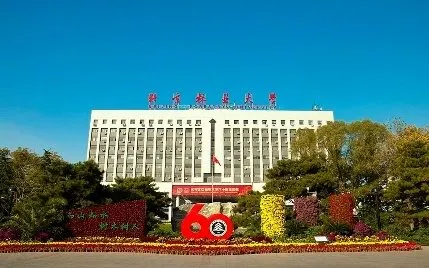
Beijing Forestry University accepts international students on programmes in the following fields: business, engineering, education, economics, arts. Choose the level and programme that suit your goals.
Chinese language study at the university — from a few weeks to a year or longer. Suitable for those starting from scratch or preparing for the HSK before entering a main programme.
self-funded · language programme
The first level of higher education: usually four years of study, specialised subjects, internships and a graduation thesis. It opens the way to working in your field and to a master's degree.
self-funded
Advanced study after a bachelor's degree: research, applied projects and internships. It helps you become an expert in your chosen field and broaden your career opportunities.
self-funded
Beijing Forestry University is located in Beijing. Nihao Study consultants keep track of the deadlines and admission requirements of this university, and you can always check the most accurate and up-to-date information on its official website. In university rankings, it is ranked 89 in China and 982 worldwide.
Come for a face-to-face meeting: together we will go through the requirements, deadlines, documents and study options that suit you.

At the meeting we will look at your situation, tell you which documents to prepare and by when, talk about possible programmes and help you decide on the next step.
Beijing Forestry University (Chinese: 北京林业大学, pinyin Běijīng Línyè Dàxué; official abbreviation BFU) is a public research university in Beijing reporting directly to the Ministry of Education of the PRC. The English name and the abbreviation BFU are set out in the charter registered with the Ministry of Education. Within China the university is known for short as 北林 (Běilín), or Beilin. Russian-language sources use several variants of the name, as well as the unofficial abbreviation BJFU; this page uses the official English name.
BFU takes part in Project 211 and the Double First-Class programme (双一流). An important clarification: in the second round of 双一流, only landscape architecture (风景园林学) and forestry (林学) are listed for the university; ecology is not on this list. Ecology nevertheless remains one of BFU's strengths and is in the top 1% according to ESI, but that does not make it a separate 双一流 discipline.
Below you will find what matters to 2026 applicants: statuses, rankings, programmes, HSK requirements, scholarships, the campus and dormitories. Admission conditions are confirmed by the university's International College, and you can ask questions about admission at a Nihao Study consultation.
| Indicator | Data |
|---|---|
| Status | Key national university under the Ministry of Education; Project 211; Double First-Class |
| Address | No. 35 Qinghua East Road, Haidian District, Beijing, 100083 |
| Structure | 17 schools; 68 bachelor's programmes, including specialist tracks |
| Number of students | 26,458 (the university's own data) |
| Staff | 2,215 academic and other staff, according to BFU |
| Master's and doctoral programmes | Master's: 25 academic and 21 professional fields; doctoral: 8 academic and 2 professional tracks |
| International students | Over 300 students from more than 70 countries; more than 90% of them on degree programmes |
| International partners | Over 190 universities and research institutions from more than 40 countries and regions |
Different sections of the BFU website are updated at different times, so the figures may not match. The home page, for example, gives 26,458 students, while the International College, counting various categories of learners, cites more than 25,000. Either figure is enough to judge the size of the university, and they do not contradict each other. In your application, however, it is best to rely on the number in the current admissions notice.
BFU traces its history back to 1902, when a forestry programme opened within the agricultural department of the Imperial University of Peking. It became a separate institution, Beijing Forestry College, in 1952, when the forestry departments of two institutions, Beijing Agricultural University and Hebei Agricultural College, were merged. The next expansion came in 1956, when the horticulture programme of the same Beijing Agricultural University and part of the architecture department of Tsinghua University joined the college. This explains BFU's current profile, which brings together forestry, plant science, ecology and landscape design.
The college was designated a national key university in 1960. It has been called Beijing Forestry University since 1985, and in 1996 it was among the first participants in Project 211. Forestry and landscape architecture were included in the first Double First-Class list in 2017 and remained on it after the second round in 2022.
A new chapter in BFU's history is Xiong'an. The university's campus there was approved in 2021, and construction began in 2024. The strategy is summed up as "one university, two campuses and a forest park". This does not mean international students are automatically moved to Xiong'an: where you will actually study is stated in the programme description and the admission letter.
BFU is part of Project 211 but was never in the former Project 985. It was among the first Project 211 universities, took part as a pilot in the innovation platform for priority disciplines and belongs to Double First-Class. All these statuses apply to the university as a whole, while the list of 双一流 disciplines is drawn up under its own rules.
In the ministry's list from the second round, 北京林业大学 has exactly two disciplines: landscape architecture (风景园林学) and forestry (林学). Ecology, nature conservation and environmental science are important to BFU's research, but it is wrong to call them additional Double First-Class disciplines. This precision also matters in a personal statement: link your topic to a specific school, laboratory and supervisor rather than just to the 双一流 label.
| Ranking | Position |
|---|---|
| QS World University Rankings 2027 | 731–740 worldwide |
| CWUR 2026 | 619th worldwide, 115th in China |
| ARWU 2025 | 601–700 worldwide |
| EduRank 2026 | 1469th worldwide, 105th in China, 7th for landscape architecture |
| Times Higher Education | 1001–1200 in the 2022 edition; this is an archived, not a current, result |
The positions differ because the rankings use different methodologies. CWUR gives more weight to research output and career outcomes, QS also takes reputation and international metrics into account, and ARWU is based on research indicators. EduRank looks at publications, citations, prominence and alumni. So a single overall position cannot tell you whether a particular programme suits you.
In its specialist fields BFU looks much stronger than in the overall tables. According to the International College, seven fields are in the ESI top 1%: plant and animal science, agricultural science, environment and ecology, biology and biochemistry, chemistry, materials science and engineering. This shows the strength of its environmental block, but it is no substitute for the official 双一流 list.
At BFU, fundamental biology is combined with practical forestry, plant protection, soil and water studies and the restoration of degraded land. Among its resources the university lists two national key laboratories in forestry, an ecological civilisation satellite and a large genetic resources bank. What matters to a master's student is not grand wording but real access to laboratories, field stations and interdisciplinary topics.
The School of Landscape Architecture brings together landscape architecture, architecture, urban planning, horticulture and tourism management. It is aimed at those who want to design parks, urban green systems and sustainable spaces rather than limit themselves to decorative planting.
The School of Ecology and Nature Conservation has contributed to drafting environmental protection laws and over five years has produced more than 138 analytical papers, strategies and protocols. The School of Environmental Science and Engineering conducts research in five areas, including water treatment, ecosystem restoration, functional materials, waste recycling and carbon sequestration. BFU is therefore worth considering if you need natural sciences, engineering and natural resource management all at once.
BFU's official list of schools covers forestry, landscape architecture, soil and water conservation, ecology and nature conservation, environmental science, grassland science, biology and biotechnology, materials science, technology, information technology, natural sciences, economics and management, humanities, foreign languages, art and design, as well as a number of other units. The International College is part of BFU, not a separate university.
International bachelor's students can choose programmes from ten schools. Teaching is in Chinese and the standard length is four years. Majors include forestry, forest protection, GIS, landscape architecture, urban and rural planning, biotechnology, environmental engineering, wood science and engineering, grassland science, network engineering, as well as economics, management and design.
BFU also has international projects. The International College lists among its partners Michigan State University (wood science and engineering), the University of British Columbia (materials engineering and biotechnology) and Chiba University (landscape architecture). BFU has signed an agreement with the University of Tyumen on a joint expert centre for low-carbon campuses. This is research cooperation: it does not mean that every applicant has access to an active joint dual-degree programme.
| Level | Format and language of instruction |
|---|---|
| Bachelor's Degree | According to the university, more than 25 programmes are open to international students; taught in Chinese, standard length 4 years |
| Master's and doctoral programmes | Over 90 graduate programmes: in Chinese, some in English |
| Taught in English | 13 graduate programmes and 58 English-taught courses for international students |
| Chinese Language | The course lasts a semester or a year; according to the university, the programme includes 32 weeks of intensive language and culture classes |
| Exchange and short modules | Visiting and exchange study, plus the four-week BFU UBC Joint Teaching Program |
Bachelor's programmes require at least HSK 4 or higher. Applicants must hold foreign citizenship, a school-leaving certificate and a valid passport; the age range is usually 18 to 30. Master's programmes accept applicants aged 18 to 35, and doctoral programmes those aged 18 to 40. Chinese-taught programmes require HSK 4 or above; English-taught ones require IELTS 6.0 or above, TOEFL 79 or above, or equivalent proof of proficiency.
HSK 4 is the general minimum stated on the website, and it does not guarantee that this level is enough for every major or scholarship. Before applying, check the requirements of your chosen programme and the language in which the thesis is written. BFU does not accept BCT in place of HSK for admission.
Current tuition fees are published by the International College, and the final figure is given on the university's invoice; check it on the official website bjfu.edu.cn. Besides tuition, budget for flights, a visa, insurance, a medical check-up, accommodation, food and study materials.
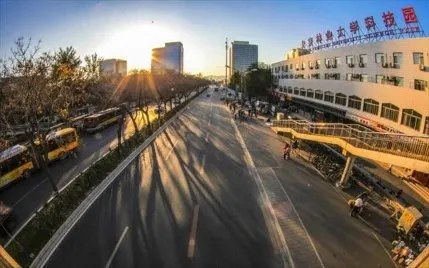
BFU's main address is Qinghua East Road in Haidian District. The East Canteen covers 21,000 square metres: the building has seven levels, including underground ones, and can hold 4,100 people at once. The West Canteen is smaller, at 6,000 square metres, but is designed for the same 4,100 diners.
The library building, with a floor area of 23,400 square metres, opened in 2003. The BFU museum covers forest life and four major ecosystems: forests, grasslands, deserts and wetlands. The university history museum consists of nine halls; it opened on 15 October 2022. The campus also has sports grounds and a medical centre.
Campus housing consists of nine buildings with a total floor area of almost 200,000 square metres. Staff are on duty in the buildings 24 hours a day; there is air conditioning, shared laundries and showers, vending machines and household appliances. International students live in Building No. 9, in the western part of the campus. Rooms are single or double, with either a private bathroom or shared facilities on the floor; according to the university, rooms have a fridge, air conditioning, a wardrobe, a desk and internet. Shared kitchens are located on each floor.
Current accommodation rates are published by the university; water and electricity are paid separately. Room availability, payment deadlines and housing rules are confirmed after enrolment: admission itself does not guarantee that a particular room type is reserved for the student.
The procedure is as follows: the candidate applies for a BFU degree programme, and the university then selects candidates from among those who have passed preliminary admission. You may apply for several scholarships at once, but you may not hold more than one awarded scholarship at the same time. Selection is competitive: even fully meeting the formal requirements does not guarantee a positive decision.
Chinese courses at the International College last a semester or a year; in addition, according to the university, there is a separate 32-week programme for beginners and intermediate learners. Chinese-taught bachelor's programmes require at least HSK 4; graduate programmes accept applicants with HSK 4 or, for English-taught programmes, with proven English proficiency.
You cannot take HSK or BCT at BFU itself: the university requires a certificate but is not a test centre. Choose a test venue in the official registration system, and check session dates in advance. Under BFU's admission rules, a BCT certificate does not automatically replace HSK.
| Institution | Difference |
|---|---|
| Beijing Forestry University, BFU, 北京林业大学 | The university this article is about: forestry, landscape architecture, ecology and nature conservation; Project 211 and Double First-Class |
| China Agricultural University, CAU, 中国农业大学 | An independent university in Haidian District that belonged to the former Projects 211 and 985; a broad agricultural profile with strong positions |
| Beijing University of Agriculture, BUA, 北京农学院 | An applied university under the city government in Changping District; specialises in modern urban agriculture and forestry |
| Chinese Academy of Forestry, CAF, 中国林业科学研究院 | A state research institution; it has no regular bachelor's intake like a university |
The most reliable guide is the Chinese name and abbreviation: for BFU these are 北京林业大学, and the official domain is bjfu.edu.cn.
The official English name is Beijing Forestry University, and the abbreviation set out in the charter approved by the Ministry of Education is BFU. The abbreviation BJFU appears in unofficial sources; in documents it is better to write BFU. In Chinese, the full name is 北京林业大学 (Běijīng Línyè Dàxué) and the short form is 北林 (Běilín). In Russian, this page uses the form meaning "Beijing Forestry Engineering University". A common shortened translation means "Beijing Forest University", while the literal renderings mean "University of Forestry of Beijing" and "Beijing University of Forestry".
It is the official abbreviation of Beijing Forestry University — a key public university in Beijing under the Ministry of Education of China and part of Project 211 and Double First-Class.
Following the second round, there are two: landscape architecture (风景园林学) and forestry (林学). Ecology shows strong results in ESI, but it is not BFU's third 双一流 discipline.
Yes: at graduate level there are some English-taught programmes, as well as 58 English-taught courses. Judging by published information, the international bachelor's programmes are taught mainly in Chinese, so check the language of instruction in the current intake's catalogue.
For Chinese-taught bachelor's programmes, the published general minimum is HSK 4 or higher. Individual schools, programmes or scholarships may have higher requirements, so it is best to plan the exam well in advance.
The fee depends on the level and language of the programme. The university publishes the current amounts, and the final figure is stated on the invoice it issues — check the official website bjfu.edu.cn.
The price depends on the room type — single or double. Water and electricity are not included in the rate; current terms are published by the university.
BFU accepts Chinese Government Scholarship holders. A full or partial scholarship can cover tuition, accommodation, living expenses and insurance, but places are awarded on a competitive basis.
No: there is no permanent test venue on campus operating every session. Requiring an HSK certificate for admission is not the same as having test-centre status. The test venue is chosen in the official registration system.
The main address is No. 35 Qinghua East Road, Haidian District, Beijing, postcode 100083. Before travelling, check your route and the right entrance on an up-to-date map.
The main set includes a passport, an educational certificate, a transcript, a study plan, a language certificate, a police clearance certificate, proof of financial means and a medical form. Applicants to graduate programmes also need two recommendation letters.
Beijing (北京) is the capital of China and a major centre of education: the city has more than 90 universities, among them Peking University and Tsinghua University, which rank in the country's top 2. Here you can see the Forbidden City and the Great Wall of China, as well as the modern tech district of Zhongguancun, known as China's Silicon Valley.
Studying in Beijing goes hand in hand with good career prospects: the city hosts the headquarters of major companies and research centres, getting around is easy (the metro has 22 lines), and cultural life is very rich. Parents should know that the capital's infrastructure is highly developed, there are international clinics with Russian-speaking staff, many direct flights leave the city, and students are supported by a well-established system: dormitories are located right on the guarded university campuses.
You work with Nihao Study specialists. They will help you put together a portfolio and a set of documents, draw up a study plan and choose a university or college and a specialty that genuinely interest you.
We take care of every stage of admission, from choosing to enrolment
We will gather, prepare, certify and send your documents to the institution
We will show the admissions committee your strengths
We run training sessions and courses so you can prepare with more confidence
We will help you settle in at the start of your studies and keep moving forward
Nihao Study specialists select universities and colleges that match the applicant's goals and means. We make sure the teachers are practitioners and that the knowledge will be useful in your profession.
We examine curricula, talk to students and teachers and look at which specialties employers need, and use this information to select options for the applicant.
Advisers guide the applicant from the first consultation to enrolment, help build a plan and spot mistakes in time that could get in the way.
The cost of our support depends on the programme and the partner university; you'll get an exact quote after a free consultation.
Get a quoteA free 15-minute consultation: together we will choose a university or college and a programme that suit your goals and budget.
Apply with peace of mind: we handle the documents, deadlines and correspondence with admissions committees, and you save time and energy.
Don't want to wait for a call? Message us in the chat.
Message us in chat