- Language courses
- English, Chinese
- Bachelor's Degree
- English, Chinese
- Master's Degree
- English, Chinese
- Doctoral (PhD) Programmes
- English, Chinese
- Accommodation from 2 000 ¥/year
BVCA · 北京农业职业学院
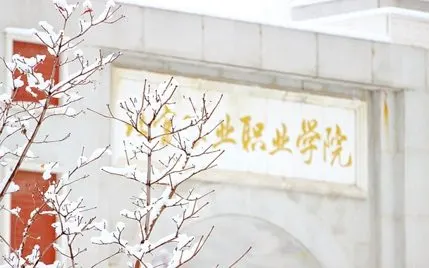
Beijing Vocational College of Agriculture accepts international students on programmes in the following fields: engineering, education. Choose the level and programme that suit your goals.
Secondary vocational education: practice-oriented programmes where you learn the language and a profession. Suitable for graduates of grades 9 and 11, and some programmes lead on to a bachelor's degree.
self-funded
Cost: 34 560 ¥/year
Beijing Vocational College of Agriculture is located in Beijing. Nihao Study consultants keep track of the deadlines and admission requirements of this university, and you can always check the most accurate and up-to-date information on its official website. In the ranking of Chinese universities, it is ranked 90.
Come for a face-to-face meeting: together we will go through the requirements, deadlines, documents and study options that suit you.

At the meeting we will look at your situation, tell you which documents to prepare and by when, talk about possible programmes and help you decide on the next step.
Beijing Vocational College of Agriculture (BVCA, 北京农业职业学院, Běijīng Nóngyè Zhíyè Xuéyuàn) is a public vocational college in Beijing, the capital of the PRC. Russian-speaking applicants usually call it simply Nong Ye. Chinese students shorten the name to 农职院 in conversation – as is usual for institutions with 职业学院 in their name. In international rankings the college appears under the abbreviation BVCA.
BVCA is the only public full-time vocational college in Beijing specialising in agriculture. It traces its history back to 1957, when the Beijing Youth Agricultural Farm was founded; in 1958 it was turned into the Beijing Agricultural School. The college took its present form around the turn of the 2000s, when four specialist Beijing vocational schools were merged into it. Today it has more than 9600 full-time students and 775 permanent staff, including 53 professors. Its international students come from Uzbekistan, Kazakhstan, Russia, South Korea and Thailand; they study Chinese and the E-commerce speciality on a 5-year secondary vocational programme. One more detail: Beijing is a municipality directly under the central government, not a province, so BVCA does not and cannot have a provincial scholarship in the strict sense; instead, city programmes supporting vocational education apply.
In this overview Nihao Study has gathered the essentials for 2026 applicants: which specialities admit students without a Chinese language exam, what government statuses and awards the college holds, how to move on to a bachelor's degree after graduating, and which Beijing universities Nong Ye is easily confused with because of its name.
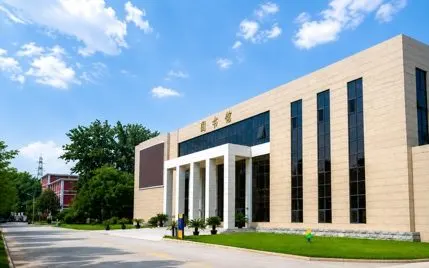
| Indicator | Data |
|---|---|
| Founded | 1957/1958 |
| Type | public higher vocational college (高职专科) |
| Full-time students | over 9600 |
| Permanent staff | 775, including 53 professors |
| Campuses | 4: Changyang, Xiangshan, Qinghe, Beiyuan |
| Total area | 1,263.91 mu (about 84.3 ha) |
| Schools (faculties) | 8 |
| International partners | 55 institutions in various countries |
| Main programme for international students | E-commerce, 5 years |
The college's official history begins with the Beijing Youth Agricultural Farm, set up in 1957; in 1958 the Beijing Agricultural School was established on its basis. A specialised College of Agricultural Management Cadres opened in the city in 1984. Around the turn of the 2000s, four Beijing schools merged into a single Beijing Vocational College of Agriculture: the Bayi ("8-1", i.e. 1 August) school of agricultural mechanisation, the school of urban and rural construction, the college of agricultural management cadres and the agricultural school. According to Baidu Baike, the merger was formalised in June 2001, and the merged college officially opened in April 2002. The college has been admitting international students since that same year, 2002.
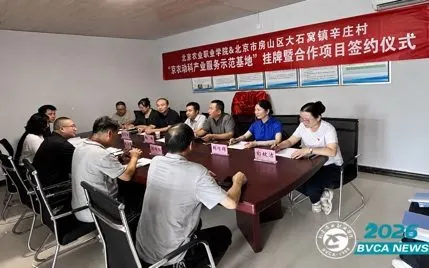
In July 2008 the college joined the national 国家示范性高等职业院校建设计划 (Model Higher Vocational College) project and entered the first hundred vocational colleges in China. It had earlier been named a National Civilised Institution in October 2005, and was recognised as a National Quality Vocational College in July 2019. Also in 2019, the college opened an overseas branch in Thailand, where a joint China–Thailand vocational education programme in horticultural technology is run. At the 2019 Beijing International Horticultural Exhibition (世园会), the college won 21 gold medals and 5 grand prix for its landscaping and horticulture work. In 2026 a new Rural Revitalisation Academy opened on the Fangshan District campus, and an Industrial College of Veterinary Diagnostics became a new unit; both projects continue the college's agricultural focus and train specialists for Beijing's agriculture.
BVCA is a higher vocational college (高职专科), not a university (大学). Rankings such as Times Higher Education, CWUR or QS, the ESI citation index, Double First-Class status (双一流) and Projects 211 and 985 were created to assess research universities, so they do not apply to an applied college. Chinese vocational colleges have their own system of recognition, and BVCA holds a strong position in it. One example is the 双高计划, or Double High-Level Plan, the plan to build high-level vocational schools and programmes with Chinese characteristics. The college joined it in 2019 by decision of the Ministry of Education and the Ministry of Finance of the PRC. Within the plan the college is developing seven programme groups. Horticultural Technology and Urban Horticulture holds national-level status; four groups, Food Safety, Veterinary Science, Hydraulic Engineering and Smart Agriculture, are at Beijing level; and two more, Modern Services and Economic Management, are at college level.
In addition, the college holds the titles of Beijing High-Level Vocational College with Regional Characteristics and national Model School for Rural Revitalisation Training, and is a Ministry of Education pilot site for modern apprenticeships. It is in the top 50 Chinese vocational institutions for teaching resources and also in the top 50 for its contribution to service industries; it is also included in the sixth edition of the "50 strongest vocational colleges in China" ranking. Note that the college's official status for 2026 remains unchanged: a higher vocational college (专科) awarding diplomas below bachelor's level; it does not award bachelor's degrees.
First, a narrow industry specialisation backed by government demand. The college works directly for China's rural revitalisation programme and Beijing's urban agriculture, so its graduates are sought after by local government bodies and agribusiness. According to the college, about 53% of the first graduating class of the rural affairs management programme found jobs in grassroots village self-government bodies (村两委).
Second, recognised expertise in horticulture and landscaping. The Horticultural Technology (Urban Horticulture) programme group holds national status under the Double High-Level Plan, and at the 2019 Beijing International Horticultural Exhibition the college's team won 21 gold medals and 5 grand prix.
Third, a clear route to a bachelor's degree for international students. Graduates of the college's 5-year programme can continue in the same E-commerce programme at bachelor's level, in a shortened time, at Beijing Wuzi University (BWU). The link is confirmed by BWU running its own "Bachelor's (1+3)" programme in e-commerce.
Teaching at BVCA is divided among 8 schools, each responsible for its own field of agricultural or related vocational education:
In total the college runs 36 higher vocational programmes. In practice, international students, including those from CIS countries, have access to a small and clear set of programmes, all of them in the School of Business and Management.
The main programme open to international students is E-commerce, supported by International Economics and Trade. The programme combines trade and marketing theory with placements at companies, the applied model typical of Chinese higher vocational education. Teaching is in Chinese, and the first year is essentially an intensive language course, so applications are accepted even with zero HSK level.
| What matters | How it works |
|---|---|
| Where international students live | in a separate dormitory building on the Beiyuan campus |
| Rooms | for 3 or 4 people, each with its own bathroom |
| Accommodation fee | included in the programme fee, not paid separately |
| Hot water | 24 hours a day (not found in every Chinese dormitory) |
International students live on the new Beiyuan campus in central Beijing, near the Olympic Village built for the 2008 Games. Teaching buildings, canteens, sports grounds and the library are within walking distance of the dormitory. Conditions for international students at BVCA are noticeably more comfortable than for local students: fewer people per room and a private bathroom, whereas some dormitories for Chinese students have shared facilities on each floor.
International students at BVCA are not allowed to use the shared kitchen on their floor. They can eat in the student canteen, which has several serving lines with Chinese and adapted dishes, or cook in their room with a multicooker. Canteen meals are much cheaper than eating out in the city, and prices in the campus shop are almost the same as in town. Students usually receive a pass to go into the city for groceries within the first few days after arrival, and during the first week they can order food delivery through mobile apps.
The BVCA campus is closed and guarded 24 hours a day, seven days a week. On weekdays students may leave the gates on their own only in limited cases, usually with teachers' approval; at weekends they can go into the city after informing their supervisors. Male and female students live on separate floors and cannot access each other's floors. Students are usually housed by country of origin and language, but by mutual agreement they can also live with students from other language groups.
The ground floor of the dormitory has leisure areas with chess, table tennis and other board games, a TV and games consoles. Outdoors on campus there is a football pitch, tennis and basketball courts and other sports grounds.
China's main government scholarship programme is the CSC scholarship, awarded by the China Scholarship Council. It is intended mainly for bachelor's, master's and doctoral students at around 306 universities on a special list. Scholarship terms vary, from full coverage of tuition and accommodation to a living allowance.
BVCA applicants should keep an eye on Beijing city programmes supporting vocational education, which from time to time open for certain programmes at the college. The current terms and availability of places for a specific intake are best checked before applying.
The campus for international students is Beiyuan, in central Beijing near the Olympic Park and the 2008 Games venues. This sets BVCA apart from many regional Chinese colleges, whose campuses are often on the outskirts: metro stations and large shopping centres are 10–15 minutes away on foot or by bus. Besides Beiyuan, the college has the Changyang campus in Fangshan District, home to the administration and a training and production base, as well as the Xiangshan and Qinghe campuses.
The main campus has a library, canteens, sports grounds, a shop and a medical centre, and the college's agricultural focus shows in its teaching greenhouses and experimental plots. The college's international office works with 55 vocational institutions in different countries, among them Bucheon University in South Korea, the Dutch education group Lentiz, DEULA-Nienburg in Germany and Voronezh State Agrarian University in Russia. The college also runs exchange programmes in accounting, international economics and tourism with Seneca College (Canada) and Kapiʻolani Community College (USA).
| Institution (Chinese name) | Type | Main focus |
|---|---|---|
| Beijing Vocational College of Agriculture (BVCA), 北京农业职业学院 | Vocational college (高职专科) | e-commerce, applied agricultural training, 5-year programmes |
| Beijing University of Agriculture, 北京农学院 | University (bachelor's, master's) | modern urban-oriented agricultural and forestry education |
| China Agricultural University, 中国农业大学 | Research university, Project 985 | fundamental agricultural sciences, engineering, veterinary medicine |
All three institutions are in Beijing and are connected with agriculture, but they sit at different levels of the Chinese education system. BVCA awards secondary vocational diplomas on completion of its applied programmes and does not award bachelor's degrees itself. Beijing University of Agriculture (北京农学院) trains bachelor's and master's students in 35 fields, specialising in applied urban-oriented agricultural education. China Agricultural University (中国农业大学) was formed in 1995 by the merger of Beijing Agricultural Engineering University and Beijing Agricultural University; it was granted Project 985 status in 2004 and is considered the country's leading agricultural research university. The shared word "agricultural" makes them easy to mix up, but their admission procedures, costs and final diplomas are completely different.
Videos filmed right on the college grounds in Beijing let you see the BVCA campus for yourself. While watching, pay attention to the Beiyuan campus: the teaching buildings, canteens, sports grounds and the dormitory for international students with rooms for 3 or 4 people. It is also worth finding out how the access control system works on the gated campus and how Russian-speaking students settle in during their first weeks after arrival.
Let’s go through seven variants that come up in practice. ‘Beijing Nong Ye Vocational College’ is the standard Russian form, used by most official translations. Other Russian spellings such as Nung Ye, Nong Yeh or the single word NongYe are different ways of rendering the syllable 农 (nung/nong); there is no generally accepted transliteration standard, so all these spellings turn up in applicants’ correspondence. ‘Beijing College of Agricultural Studies’ and similar descriptive calques are not the official name, although in conversation they are sometimes used instead of the abbreviation. The international name Beijing Vocational College of Agriculture appears on diplomas, in correspondence with the admissions office and in certificates. The abbreviation BVCA is used in emails and applications. 农职院 is the informal Chinese short form used by students: institutions of the 职业学院 type are usually shortened to two or three characters. The main spelling in Chinese documents remains the original 北京农业职业学院 (pinyin Běijīng Nóngyè Zhíyè Xuéyuàn).
BVCA is a state vocational college (高职专科), not a university (大学). The difference is significant: the college issues a diploma of secondary specialised education and does not itself award a bachelor’s degree. A university, by contrast, offers full bachelor’s and master’s programmes, and often doctoral programmes too.
Yes. The first year of the 5-year programme is essentially an intensive Chinese course, so HSK is not needed to apply.
For most specialities, a graduate of the 5-year programme receives a 高职专科-level diploma, which is secondary specialised education. A bachelor’s degree requires separate admission to a bachelor’s programme, for example at Beijing WUZI University in the same speciality, E-commerce.
No. Double First Class and Projects 211 and 985 are statuses for research universities, while BVCA, as a vocational college, is assessed under a different system. However, Nong Ye takes part in the Double High Plan (双高计划) for vocational schools; its national-level speciality is Horticultural Technology.
Accommodation in rooms for 3 or 4 people is included in the programme fee. Rates are reviewed for each intake, so check the current terms on the college’s official website before applying.
As a rule, no. CSC is intended for bachelor’s, master’s and doctoral programmes at around 306 universities on a special list, and 专科-level vocational colleges, including BVCA, are usually not on it.
There is no minimum HSK level on entry: the first year of the programme is devoted to intensive Chinese. But if you plan to move on to a bachelor’s programme at another university, such as BWU, the receiving university usually expects HSK 4 or higher.
International students study in central Beijing, on the Beiyuan campus, close to the Olympic Park and the venues built for the 2008 Games. The Changyang campus in Fangshan District is the college’s administrative centre and its training and production base. From Beiyuan, the nearest metro stations are 10–15 minutes away on foot or by bus.
All three are in Beijing and work in agriculture, but they sit at different levels of the education system. Nong Ye (BVCA) is a vocational college awarding a diploma of secondary specialised education. Beijing University of Agriculture (北京农学院) trains bachelor’s and master’s students. China Agricultural University (中国农业大学) is part of Project 985 and carries out extensive research.
The basic set is an international passport, a certificate of completing 9 years of school or an equivalent document, a medical certificate and photos. The exact list is specified in the admission rules each year.
Yes, this is the usual route. After the 5-year programme, graduates most often move on to Beijing WUZI University, where the same speciality is studied on a 2-year bachelor’s programme, or enrol on a regular 4-year bachelor’s programme at any other university in China.
Beijing (北京) is the capital of China and a major centre of education: the city has more than 90 universities, among them Peking University and Tsinghua University, which rank in the country's top 2. Here you can see the Forbidden City and the Great Wall of China, as well as the modern tech district of Zhongguancun, known as China's Silicon Valley.
Studying in Beijing goes hand in hand with good career prospects: the city hosts the headquarters of major companies and research centres, getting around is easy (the metro has 22 lines), and cultural life is very rich. Parents should know that the capital's infrastructure is highly developed, there are international clinics with Russian-speaking staff, many direct flights leave the city, and students are supported by a well-established system: dormitories are located right on the guarded university campuses.
You work with Nihao Study specialists. They will help you put together a portfolio and a set of documents, draw up a study plan and choose a university or college and a specialty that genuinely interest you.
We take care of every stage of admission, from choosing to enrolment
We will gather, prepare, certify and send your documents to the institution
We will show the admissions committee your strengths
We run training sessions and courses so you can prepare with more confidence
We will help you settle in at the start of your studies and keep moving forward
Nihao Study specialists select universities and colleges that match the applicant's goals and means. We make sure the teachers are practitioners and that the knowledge will be useful in your profession.
We examine curricula, talk to students and teachers and look at which specialties employers need, and use this information to select options for the applicant.
Advisers guide the applicant from the first consultation to enrolment, help build a plan and spot mistakes in time that could get in the way.
The cost of our support depends on the programme and the partner university; you'll get an exact quote after a free consultation.
Get a quoteA free 15-minute consultation: together we will choose a university or college and a programme that suit your goals and budget.
Apply with peace of mind: we handle the documents, deadlines and correspondence with admissions committees, and you save time and energy.
Don't want to wait for a call? Message us in the chat.
Message us in chat