- Language courses
- English, Chinese
- Bachelor's Degree
- English, Chinese
- Master's Degree
- English, Chinese
- Doctoral (PhD) Programmes
- English, Chinese
- Accommodation from 2 000 ¥/year
BTBU · 北京工商大学
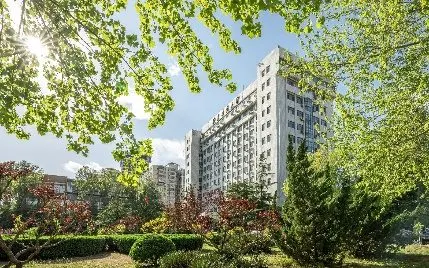
Beijing Technology and Business University accepts international students on programmes in the following fields: business, engineering, law, economics, it. Choose the level and programme that suit your goals.
Chinese language study at the university — from a few weeks to a year or longer. Suitable for those starting from scratch or preparing for the HSK before entering a main programme.
self-funded · language programme
The first level of higher education: usually four years of study, specialised subjects, internships and a graduation thesis. It opens the way to working in your field and to a master's degree.
self-funded
Advanced study after a bachelor's degree: research, applied projects and internships. It helps you become an expert in your chosen field and broaden your career opportunities.
self-funded
Beijing Technology and Business University is located in Beijing. Nihao Study consultants keep track of the deadlines and admission requirements of this university, and you can always check the most accurate and up-to-date information on its official website. In university rankings, it is ranked 163 in China and 1819 worldwide.
Come for a face-to-face meeting: together we will go through the requirements, deadlines, documents and study options that suit you.

At the meeting we will look at your situation, tell you which documents to prepare and by when, talk about possible programmes and help you decide on the next step.
Beijing Technology and Business University (BTBU, 北京工商大学, Běijīng Gōngshāng Dàxué) is a public research university in Beijing. Within China the name is often shortened to 北工商 (Běigōngshāng). Russian-language sources use several different translations of the name. BTBU has existed in its present form since 1999, when two sector-specific universities merged and an institute for training managers joined them.
In terms of administration, BTBU is a municipal university: Beijing's official register lists the city's education authority, not the Ministry of Education, as its founder. So its status should be described carefully. The university is public and conducts research, but it is not part of Project 211 or Project 985 and was not included in the second round of Double First-Class. Its value lies not in formal labels but in specific fields: food science, light industry, applied economics, statistics and business.
The Nihao Study overview below is aimed at 2026 applicants: status, rankings, programmes, language requirements, dormitories, scholarships and how BTBU differs from similarly named universities in Beijing.
| Item | Data |
|---|---|
| Status and governing body | Public university; supervising authority (主管部门): Beijing Municipal Education Commission |
| Founding and current form | Roots dating back to 1950; the institutions merged into a single BTBU in 1999 |
| Campuses | Liangxiang and Fuchenglu; total area of 830,000 m² |
| Structure | 11 学院 (schools), 1 teaching unit and 3 general education colleges |
| Students | Over 17,000 on degree programmes |
| Staff | Over 1,600 faculty and staff |
| Programmes | 62 bachelor's programmes, 19 academic master's disciplines, 22 professional master's programmes |
| Doctoral (PhD) Programmes | 7 academic doctoral disciplines, 1 professional doctorate, 5 postdoctoral stations |
| Main campus, address | 1 Heyuan South Road, Fangshan District, Beijing, postcode 102488 |
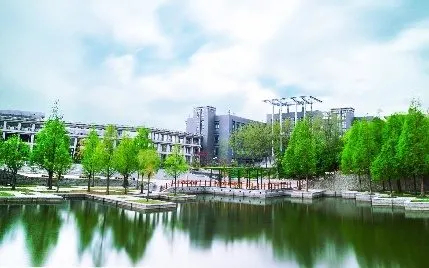
In terms of scale, this is a fully-fledged multidisciplinary university. It is important to remember that there are two campuses. The main one, Liangxiang, is in the university town of Fangshan district, while Fuchenglu is in Haidian, closer to central Beijing. Which campus you study on depends on the programme and intake year, so the faculty name alone will not tell you where classes take place.
The university has several roots. One branch goes back to the cadre school of the All-China Federation of Supply and Marketing Cooperatives, which opened in early 1950. In 1953 the Central School of Commercial Cadres appeared, in 1959 the State Council approved the founding of the Central Institute of Commerce, and from 1960 it was known as Beijing Business School. This is the source of BTBU's current strength in economics, trade, accounting and management.
The second branch is the Beijing Institute of Light Industry. It was founded in 1958 as one of China's first specialised light-industry institutions. For a time the institute operated in Xianyang, and in 1978 it was re-established in Beijing. From it BTBU inherited research in consumer goods, food technology, chemistry, materials and bioengineering.
In June 1999 the Ministry of Education approved the merger of Beijing Business School with the Beijing Institute of Light Industry; the Management Cadre Institute of the Machinery Industry also became part of the new university. The university gained its own right to award doctoral degrees in 2018, first in food science and applied economics, with chemical engineering and statistics added in 2024. BTBU is therefore best seen as a blend of engineering and commercial traditions rather than a narrowly focused business school.
BTBU is not on the official list of Project 211 universities maintained by the Ministry of Education of the PRC. Nor is it among the 39 Project 985 universities. The university was also not included in the list of universities and disciplines for the second round of Double First-Class, published by three government bodies in 2022.
When BTBU writes about building Double First-Class disciplines, it is referring to a development goal, not an awarded national status. In practice, it is a strong Beijing municipal university. It can be a sensible choice for those who prioritise life in Beijing, an applied major, a specific laboratory and supervisor over a degree from a 211 or 985 university. Before deciding, it is worth comparing it with other universities in Beijing.
| Ranking | Position |
|---|---|
| ARWU 2025 | 601–700 band worldwide |
| ShanghaiRanking, Food Science & Technology 2025 | 12th in the world |
| CWUR 2025 | 1037th in the world, 186th in China |
| EduRank 2026 | 1798th in the world, 133rd in China, 22nd in Beijing |
| U.S. News (according to BTBU, as of June 2026) | 833rd in the world, 115th among mainland Chinese universities |
BTBU has a Times Higher Education profile listing its bachelor's, master's and doctoral programmes, but it shows no numerical position in the main ranking. Moreover, the university's overall position cannot automatically be attributed to an individual programme.
Subject assessments are the most telling. In 2025, ShanghaiRanking placed BTBU's Food Science & Technology 12th in the world. According to the university itself, 9 of its fields are in the ESI top 1%: chemistry, engineering, materials science, agricultural sciences, microbiology, environment/ecology, social sciences, biology and biochemistry, and economics and business. Agricultural sciences are also in the ESI top 0.1%. For those planning to work in food safety, biotechnology or food engineering, these figures say more than the overall position.
The food cluster combines chemistry, microbiology, nutrition science, quality control and industrial technology. According to the university, bachelor's programmes include food science and engineering, food quality and safety, nutrition and health, and flavour and fragrance technology and engineering. Both the subject ranking and ESI indicators confirm the research base of this area.
The international component is a joint programme with University College Cork, running since 2015. It combines courses from both universities, and students who meet all requirements receive two bachelor's degrees. It should not be confused with a regular BTBU programme: it has its own language of instruction, fees, curriculum and academic mobility rules.
The economics cluster covers international trade, financial engineering, fintech, insurance, and digital and experimental economics. The business school teaches accounting, financial management, marketing, logistics, supply chain management and digital management. This is not a faculty simply bolted onto a technical university but a direct continuation of the Beijing Business School tradition.
The third pillar is data and technology: the university is developing applied statistics, computer science and artificial intelligence, as well as materials, cosmetic technology and bioengineering. The Applied Statistics programme run jointly with University College Cork follows a 2+2 model and is taught in English. At master's level there are tracks in financial data, big data in the food industry, industrial analytics and artificial intelligence.
The official structure covers economics, business, food science and health, light industry, new materials, mathematics and statistics, computer science and AI, design and art, law, and languages and communication. When choosing a programme, it is easier to rely not on unit names but on four broad groups:
In 2026, BTBU had 7 academic doctoral disciplines: applied economics, statistics, systems science, food science and engineering, chemical engineering, light industry technology, and business administration. The presence of doctoral programmes matters for research master's students; which tracks are open to international students in a given intake must be checked separately each year.
| Level | Format and guidelines |
|---|---|
| Bachelor's Degree | Usually 4 years; check the list of open majors and the language of instruction in the current year's admissions guide |
| Master's Degree | Academic and professional tracks; the minimum language threshold depends on the programme's language |
| Doctoral (PhD) Programmes | Research programmes in the disciplines open that year |
| Chinese Language | A semester or academic year; payment terms follow the university's published fee schedule |
For Chinese-taught master's and doctoral programmes under the CSC scheme, BTBU requires at least HSK level 4. For English-taught programmes, the 2026 admissions guide states a minimum of IELTS 5.5 or TOEFL 80 (or an equivalent document). Individual faculties may set a higher bar, so meeting the general minimum does not guarantee admission.
If your language skills are not yet sufficient, Chinese courses in Beijing are an option. According to the university, separate fees apply to language students, and the International Education School announces the spring intake and group levels. Check upcoming HSK exam dates against the official timetable.
BTBU fees for international students vary by level of study and programme profile, and joint programmes, the MBA and some English-taught tracks have their own prices. Check the current cost of tuition, registration, insurance and residence permit on the university's official website or during a consultation. The tuition invoice is issued by the university itself, so do not transfer money to intermediaries using payment details from old advertisements.
The published admissions guide offers international students double rooms on the Liangxiang campus. Payment is charged per bed per day, so the total depends on your contract dates and availability. A campus place requires a separate application: on the BTBU form, it is approved by the International Education School and the administrative office.
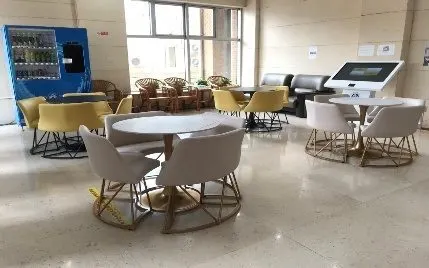
The original photos of the rooms and shared areas show beds, study furniture, heating, a kitchen and a laundry: this is practical housing, not a hotel. Before arriving, find out whether bedding is provided, whether there is a bathroom in the unit, how kitchen access works, when payment is due and what rules apply during the holidays. The Liangxiang campus is in Fangshan district; newcomers are given Liangxiang University Town West station on the Fangshan metro line as the nearest landmark.
For master's and doctoral students, the main route is the Chinese Government Scholarship High-Level Postgraduate Program. In the 2026/2027 intake, this scholarship covered tuition, dormitory accommodation, monthly stipends and comprehensive medical insurance. Applications went through two stages: by 28 February 2026 the application had to be entered into the BTBU system, and candidates who received a recommendation completed registration in the CSC system by 15 March.
For bachelor's students, the official BTBU brochure offers two support options:
BTBU does accept CSC scholars, but the scholarship is not automatically awarded to everyone admitted. The outcome depends on the competition, completeness of documents, academic record, language level, recommendations and how well the candidate fits the chosen programme. Study the CSC terms carefully before applying.
BTBU has two campuses, Liangxiang and Fuchenglu. Their total area is 830,000 m²; historically, Liangxiang accounted for about 620,000 m² and Fuchenglu for 210,000 m². The campuses are linked by a paid university bus, whose timetable may change in line with the academic calendar.
The library system comprises three sites on two campuses. At the end of 2025, the collection held about 1.98 million print items, 63 databases and roughly 1.50 million e-books. Thanks to the opening and renovation of the Liangxiang libraries in 2025, the number of reading seats increased by about 1,200. There is a stadium and other sports spaces, as well as a renovated university history museum, open to visitors at set hours.
BTBU's partner network includes 99 universities and research organisations in 38 countries and regions. In 2024 the business school joined AACSB, and in 2025 the university continued building international platforms in food science and digital business.
It is best not to leave legalisation and translation of documents until the last week. For the 2026 CSC application, your passport had to be valid beyond September 2026, and a certificate of no criminal record was usually accepted if no more than 6 months had passed between its date of issue and submission. These timeframes need to be checked again for the next intake.
| University | Type | Main focus |
|---|---|---|
| Beijing Technology and Business University, 北京工商大学 | BTBU, public university under municipal authority | Food science, light industry, economics, business |
| Beijing University of Technology, 北京工业大学 | BJUT, municipal; Project 211 and Double First-Class | Engineering, materials, computer science |
| Beijing Institute of Technology, 北京理工大学 | BIT, national; Projects 211, 985 and Double First-Class | Engineering, defence technology, computer science |
| University of International Business and Economics, 对外经济贸易大学 | UIBE, national; Project 211 and Double First-Class | International economics and trade, law, business |
| Beijing Wuzi University, 北京物资学院 | BWU, municipal | Logistics, supply chains, commodity management |
Confusion most often arises from the English words technology, business and university in the names. BTBU must not be shortened to BIT or BJUT. On your application form, diploma translation and in letters, give the full name, Beijing Technology and Business University, and the code 10011.
The main Russian form is the one meaning ‘Beijing University of Technologies and Business’. The variant with ‘technology’ in the singular is inaccurate. ‘Beijing Technological and Business University’ conveys the meaning correctly but is not used as the main name, while ‘University of Technologies and Business of Beijing’ is a literal copy of the English word order. The official international name is Beijing Technology and Business University, and the official English abbreviation is BTBU. In Chinese, the full name is written 北京工商大学 (Běijīng Gōngshāng Dàxué) and the short form is 北工商 (Běigōngshāng).
It is a public university in Beijing. The main campus, Liangxiang, is in Fangshan District, and the second, Fuchenglu, is in Haidian District. Together the two campuses cover 830,000 m².
No. The university is not on the official 211 or 985 lists, nor on the second-round Double First-Class list. When BTBU writes about building Double First-Class-level disciplines, this is a strategic goal, not a status it has already been granted.
Above all, Food Science & Technology: in the 2025 ShanghaiRanking it ranked 12th in the world. Applied economics, business, light industry, chemical engineering, statistics and materials are also well placed.
Yes: some programmes and joint tracks are taught in English. For English-taught master's programmes, the 2026 admission guide requires IELTS 5.5 or higher, TOEFL 80 or higher, or a recognised equivalent. Check the language of instruction for each major before applying.
The published minimum for Chinese-taught master's and doctoral programmes under the CSC route is HSK 4. Bachelor's programmes and individual schools may set a different bar. Do not apply the master's threshold to bachelor's programmes: check the current programme table and the HSK exam calendar.
The cost depends on the level of study and the programme's field; joint programmes and the MBA have their own fees. Current terms are published in the admission guide, so check them on the university's official website.
The amount depends on how long you stay: a place in a double room on the Liangxiang campus is paid per day and confirmed separately. See the university's official website for current terms.
Yes, there is the High-Level Postgraduate Program for master's and doctoral students. A full scholarship covers tuition, accommodation, a monthly stipend and medical insurance, but selection is competitive. Bachelor's applicants usually consider two options: the Type A scholarship, applied for through the embassy, and the Beijing Government Scholarship.
The basic set: passport, diploma or certificate of expected graduation, grades, certified translations, a language certificate, a medical form and a police clearance certificate. Master's and doctoral applicants also need recommendation letters and a study or research plan.
From Beijing West Railway Station, take Line 9 to Guogongzhuang and change there to the Fangshan Line; your stop is Liangxiang University Town West. On registration days the university has published information about a shuttle from the station. On a normal day, check the route in a navigation app, taking into account the address of your dormitory.
Beijing (北京) is the capital of China and a major centre of education: the city has more than 90 universities, among them Peking University and Tsinghua University, which rank in the country's top 2. Here you can see the Forbidden City and the Great Wall of China, as well as the modern tech district of Zhongguancun, known as China's Silicon Valley.
Studying in Beijing goes hand in hand with good career prospects: the city hosts the headquarters of major companies and research centres, getting around is easy (the metro has 22 lines), and cultural life is very rich. Parents should know that the capital's infrastructure is highly developed, there are international clinics with Russian-speaking staff, many direct flights leave the city, and students are supported by a well-established system: dormitories are located right on the guarded university campuses.
You work with Nihao Study specialists. They will help you put together a portfolio and a set of documents, draw up a study plan and choose a university or college and a specialty that genuinely interest you.
We take care of every stage of admission, from choosing to enrolment
We will gather, prepare, certify and send your documents to the institution
We will show the admissions committee your strengths
We run training sessions and courses so you can prepare with more confidence
We will help you settle in at the start of your studies and keep moving forward
Nihao Study specialists select universities and colleges that match the applicant's goals and means. We make sure the teachers are practitioners and that the knowledge will be useful in your profession.
We examine curricula, talk to students and teachers and look at which specialties employers need, and use this information to select options for the applicant.
Advisers guide the applicant from the first consultation to enrolment, help build a plan and spot mistakes in time that could get in the way.
The cost of our support depends on the programme and the partner university; you'll get an exact quote after a free consultation.
Get a quoteA free 15-minute consultation: together we will choose a university or college and a programme that suit your goals and budget.
Apply with peace of mind: we handle the documents, deadlines and correspondence with admissions committees, and you save time and energy.
Don't want to wait for a call? Message us in the chat.
Message us in chat