- Language courses
- English, Chinese
- Bachelor's Degree
- English, Chinese
- Master's Degree
- English, Chinese
- Doctoral (PhD) Programmes
- English, Chinese
- Accommodation from 2 000 ¥/year
BISU · 北京第二外国语学院
Beijing International Studies University accepts international students on programmes in the following fields: economics. Choose the level and programme that suit your goals.
A language programme lasting several weeks or months. It helps you quickly improve your Chinese and understand how studying in China works.
Check upcoming application deadlines for this level with your Nihao Study adviser.
All programmes at this level →Chinese language study at the university — from a few weeks to a year or longer. Suitable for those starting from scratch or preparing for the HSK before entering a main programme.
self-funded · language programme
Cost: 25 600 ¥/year
The first level of higher education: usually four years of study, specialised subjects, internships and a graduation thesis. It opens the way to working in your field and to a master's degree.
self-funded
Cost: 20 000–22 000 ¥/year
Advanced study after a bachelor's degree: research, applied projects and internships. It helps you become an expert in your chosen field and broaden your career opportunities.
self-funded
Cost: 27 000–30 000 ¥/year
Beijing International Studies University is located in Beijing. Nihao Study consultants keep track of the deadlines and admission requirements of this university, and you can always check the most accurate and up-to-date information on its official website. In university rankings, it is ranked 51 in China and 750 worldwide.
Come for a face-to-face meeting: together we will go through the requirements, deadlines, documents and study options that suit you.

At the meeting we will look at your situation, tell you which documents to prepare and by when, talk about possible programmes and help you decide on the next step.
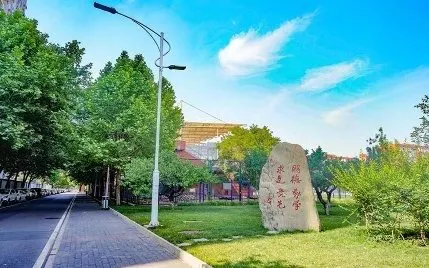
Beijing International Studies University (BISU, 北京第二外国语学院) is a public university in Beijing whose main fields are foreign languages, translation and tourism. In Russian it also has other names: a historical one meaning 'Second Beijing Institute of Foreign Languages', a literal translation meaning 'Beijing Second University of Foreign Languages', and a calque of the English name. In China itself the abbreviations 北二外 and 二外 are used, and the full name is pronounced Běijīng Dì'èr Wàiguóyǔ Xuéyuàn.
The university is under the Beijing municipal authorities, and since 2022 it has been jointly supervised by the Ministry of Culture and Tourism of the PRC and the Beijing Municipal People's Government. It offers bachelor's and master's programmes; for international students the university additionally offers Chinese language courses, foundation, exchange and short-term programmes. BISU should not be confused with either Beijing Foreign Studies University (BFSU) or Peking University (PKU) – the differences are explained below.
This page gathers information for 2026 applicants: the university's status in Projects 211 and 985 and 双一流, HSK requirements, scholarships, dormitories and the application procedure. You can ask questions about admission at a Nihao Study consultation.
| Indicator | Value |
|---|---|
| Year founded | 1964 |
| Total students | about 10,000 |
| Bachelor's students | more than 6,300 |
| Master's students | more than 1,800 |
| International students | more than 700 (as of March 2024) |
| Staff | about 1,000 |
| Campuses | Chaoyang and Yanqing |
| Chaoyang campus address | Dingfuzhuang Nanli 1, Chaoyang, Beijing, 100024 |
BISU admits more than 1,500 international students a year to long- and short-term programmes. This is the annual intake, not the number of international students studying at any one time, so this figure cannot be compared directly with the data in the table.
The university was founded in October 1964 on the initiative of Premier Zhou Enlai, on the basis of the foreign staff school of Xinhua News Agency. According to BISU, it was among the first institutions in China authorised to admit bachelor's students. The English name Beijing International Studies University came later, and Russian-language reference books still sometimes use its historical name, the Second Beijing Foreign Languages Institute.
Tourism developed here as a specialisation in its own right, not as an add-on to languages. The university began training staff for the tourism industry in 1979, a dedicated department appeared in 1981, and in 2018 tourism, hospitality and exhibition economics were brought together in a single school, the School of Tourism Sciences. Since 2022 BISU has been jointly supported by the Beijing government and the Ministry of Culture and Tourism.
This logic still holds today: language is a tool for international communication, while translation, area studies, economics and tourism determine where to apply it. In 2025 the university defined its educational model as a combination of language, a comprehensive specialisation and practice.
BISU is in neither Project 211 nor Project 985, nor is it in the second round of Double First-Class (双一流). Of Beijing's language universities, the official Project 211 list includes Beijing Foreign Studies University, but Beijing International Studies University is not mentioned there. The official Project 985 list has 39 universities, and BISU is not among them either. The second round of 双一流 has 147 universities, and BISU did not make that list.
That said, BISU is not a college or a private institute. Its official admissions charter describes it as a public full-time university under the Beijing government offering bachelor's and master's programmes. It is most accurately described as a strong specialist municipal university that does not take part in the national elite projects.
| Ranking | Position | How to read it |
|---|---|---|
| QS Asia 2026 | 791–800 | overall position in a regional ranking |
| EduRank 2026 | 3,581st worldwide, 292nd in China | based on bibliometrics |
| EduRank, tourism and hospitality 2026 | 212th worldwide | one of its strong specialist fields |
| EduRank, international relations 2026 | 504th worldwide | result for a single subject |
| THE | profile exists, no overall position at present | we do not give a numerical position |
As of the 15 March 2026 update, BISU has 2,303 publications and 16,364 citations in the EduRank database. These figures help compare the research visibility of universities, but if you are choosing a language or tourism programme, it matters more to look at the specific faculty, language of instruction, internship opportunities and partnerships.
BISU has 16 academic units. They include the schools of translation and interpreting, tourism, and economics and business; English and Japanese; Asian, European and Middle Eastern studies; as well as units for area studies, culture and communication, artificial intelligence and language sciences. The word School (学院) in their names means a unit of the university, not an independent college.
The first key area is foreign languages. The 15 bachelor's programmes recognised as national first-class include translation, English and business English, as well as Arabic, Persian, Portuguese, Spanish, French, German, Russian, Korean and Japanese. The second area is tourism and hospitality: the specialist school trains professionals in tourism, hotel management, exhibition economics and management, as well as geography and planning.
The third is the applied international environment. According to BISU, in 2024 the university signed 64 agreements with 42 foreign institutions and international organisations. Its research centres work on tourism, cultural development, the translation industry, trade in services and the Belt and Road Initiative. BISU therefore suits those who want not just to study philology but to link a language to a specific industry.
International students are admitted under different rules from Chinese applicants. The spring 2025 intake included: transfer into the Chinese language bachelor's programme (2.5 or 3.5 years of study), long-term language courses, an intensive course with HSK preparation, general and advanced visiting study, and short summer programmes. Check the list of autumn intake programmes on the university website.
| Format | Language of instruction and length | Who it is for |
|---|---|---|
| Chinese Language | a semester or an academic year | for any level, from beginner to advanced |
| Intensive Chinese | a semester or an academic year | HSK preparation plus 4 hours of extra practice a week on top of the programme |
| Bachelor's, Chinese language | 2.5 or 3.5 years (transfer) | for those whose previous study will be credited |
| Master's Degree | usually 3 years; some English-taught programmes 2 years | for those who already hold a bachelor's degree |
| Short-term course | 1 to 4 weeks | summer language practice |
The beginner group is for those learning Chinese from scratch: the aim is to reach HSK 2 or 3 in one semester. The advanced track promises HSK 6 and a vocabulary of more than 8,000 words after long-term study.
BISU is one of the first official HSK centres opened in Beijing, and exam preparation is also offered here. Session dates change, so check the current HSK schedule.
The university takes part in several scholarship programmes; what exactly is covered depends on the specific programme and competition.
Before applying, check the current call for the level of study, language, age limits, deadline and whether your chosen major is open for admission.
Application dates change from one intake to the next. For example, for the spring 2025 intake, documents were accepted in 2024, from 1 October to 30 November; that was a past round, not the current deadline.
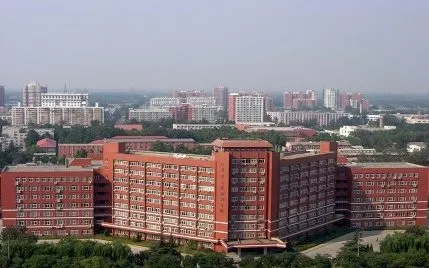
The main campus is in Chaoyang District, between Beijing's central business district and Tongzhou. The second campus, Yanqing, lies in an ecological zone in the north-west of the city. Which campus you study on depends on your programme: the 2025 admissions regulations list the majors whose first-year students begin their studies in Yanqing.
The library has been open since 1964. The university reports that its collection holds over 1.2 million printed books and over 1.3 million e-books, some 48,000 electronic journals and around 60 databases. For classes there are language labs, simultaneous interpreting booths and multimedia classrooms, which is especially useful for those practising speaking and interpreting.
The officially confirmed route to the Chaoyang campus starts at Communication University station on the Batong line: according to BISU's map, from Exit B you walk east for about 700 metres to the south gate. The international atmosphere is kept up by exchanges, lectures by visiting teachers and joint projects; in 2024 the university signed cooperation agreements with 42 foreign institutions and organisations.
International students are housed by the university itself, so it is not always possible to choose a particular building in advance. All the options listed below are double rooms.
| Building | In the room |
|---|---|
| Apartment 2, A or B | shower, bathroom, hot water 24 hours a day |
| Apartment 2, C | furniture, air conditioning |
| Qinxue Apartment | furniture, air conditioning |
| Apartment 12 | shower, bathroom, hot water, TV |
On moving in, you pay a refundable deposit. The Apartment 2 and Qinxue buildings have shared kitchens, washing machines and dryers; each room gets 100 kWh of electricity free every month.
| University and its Chinese name | Status | Main focus |
|---|---|---|
| Beijing International Studies University, BISU, 北京第二外国语学院 | public university under the Beijing municipality; not part of either 211 or 双一流 (Double First-Class) | tourism, translation and interpreting, languages |
| Beijing Foreign Studies University, BFSU, 北京外国语大学 | part of 211 and 双一流 (Double First-Class) | area studies, foreign languages |
| University of International Business and Economics, UIBE, 对外经济贸易大学 | part of 211 and 双一流 (Double First-Class) | international trade, finance, economics |
| Peking University, PKU, 北京大学 | comprehensive research university; part of 985, 211 and 双一流 (Double First-Class) | a very wide range of fields |
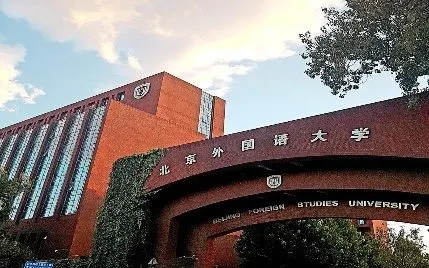
To tell BISU apart by its Chinese name, look for the characters 第二, meaning "second". In BISU's English name the key words are International Studies, whereas BFSU's are Foreign Studies. When choosing a university, check all three markers at once: the abbreviation, the Chinese name and the address.
The name used on this page is the Russian form meaning "Beijing University of International Studies". The variant meaning "Beijing University of Foreign Studies" is best avoided for BISU: it often leads to confusion with BFSU. The form meaning "Second Beijing Institute of Foreign Languages" is the historical Russian name, and the one meaning "University of International Studies of Beijing" is a calque from English. Beijing International Studies University is the official international name, and BISU is the official abbreviation. 北二外 and 二外 are Chinese abbreviations of the full name 北京第二外国语学院 (Běijīng Dì'èr Wàiguóyǔ Xuéyuàn).
It is a public university in Beijing offering bachelor's and master's programmes; it specialises in foreign languages, translation, tourism, economics and international studies.
No. The university does not appear in the official lists of 211, 985 or the second round of 双一流.
Yes, some master's programmes and non-degree study programmes are taught in English. The catalogue, for example, lists English-taught Tourism Management, MBA and MPAcc; check with the university whether admission to a specific programme is open this year.
It depends on the programme. The university states these requirements: HSK 3 for transferring to the Chinese language bachelor's programme, HSK 4 for general non-degree study, and HSK 5 for Chinese-taught master's programmes.
The price depends on the building and room type. The university publishes current terms on its official website; before paying, be sure to request the current invoice.
Yes. BISU has announced a CSC High Level Postgraduate Program competition — application type B, agency code 10031. Check the current competition and CSC scholarship terms with the university before applying.
Yes. The university states that its Chinese language school is one of the first official HSK centres in Beijing; preparation classes are also held there. Look for the specific exam date in the current HSK calendar.
Chaoyang campus: Dingfuzhuang Nanli 1, postcode 100024. You can get there from Communication University station on the Batong line: leave through exit B and walk east for about 700 metres to the south gate.
BISU is a municipal university with a notable tourism profile; it is not part of 211 or 双一流. BFSU is under the Ministry of Education, belongs to 211 and 双一流, and its main profile is foreign languages and area studies.
As a rule, these are a passport, an application form, an educational certificate with transcript, a CV, photos and a language certificate. Master's applicants also submit recommendation letters, a study plan, a medical form and a police clearance certificate. The final list depends on the specific programme.
Beijing (北京) is the capital of China and a major centre of education: the city has more than 90 universities, among them Peking University and Tsinghua University, which rank in the country's top 2. Here you can see the Forbidden City and the Great Wall of China, as well as the modern tech district of Zhongguancun, known as China's Silicon Valley.
Studying in Beijing goes hand in hand with good career prospects: the city hosts the headquarters of major companies and research centres, getting around is easy (the metro has 22 lines), and cultural life is very rich. Parents should know that the capital's infrastructure is highly developed, there are international clinics with Russian-speaking staff, many direct flights leave the city, and students are supported by a well-established system: dormitories are located right on the guarded university campuses.
You work with Nihao Study specialists. They will help you put together a portfolio and a set of documents, draw up a study plan and choose a university or college and a specialty that genuinely interest you.
We take care of every stage of admission, from choosing to enrolment
We will gather, prepare, certify and send your documents to the institution
We will show the admissions committee your strengths
We run training sessions and courses so you can prepare with more confidence
We will help you settle in at the start of your studies and keep moving forward
Nihao Study specialists select universities and colleges that match the applicant's goals and means. We make sure the teachers are practitioners and that the knowledge will be useful in your profession.
We examine curricula, talk to students and teachers and look at which specialties employers need, and use this information to select options for the applicant.
Advisers guide the applicant from the first consultation to enrolment, help build a plan and spot mistakes in time that could get in the way.
The cost of our support depends on the programme and the partner university; you'll get an exact quote after a free consultation.
Get a quoteA free 15-minute consultation: together we will choose a university or college and a programme that suit your goals and budget.
Apply with peace of mind: we handle the documents, deadlines and correspondence with admissions committees, and you save time and energy.
Don't want to wait for a call? Message us in the chat.
Message us in chat