China Academy of Art
University · Hangzhou
Language courses · Bachelor's Degree · Master's Degree
浙江越秀外国语学院
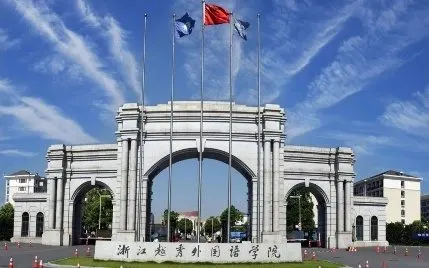
Zhejiang Yuexiu University of Foreign Languages accepts international students on programmes in the following fields: business, medicine, education, economics, it. Choose the level and programme that suit your goals.
Chinese language study at the university — from a few weeks to a year or longer. Suitable for those starting from scratch or preparing for the HSK before entering a main programme.
self-funded · language programme
Cost: 14 000 ¥/year
The first level of higher education: usually four years of study, specialised subjects, internships and a graduation thesis. It opens the way to working in your field and to a master's degree.
scholarship-funded
Cost: 10 500–23 000 ¥/year
self-funded
Cost: 21 000–23 000 ¥/year
Zhejiang Yuexiu University of Foreign Languages is located in Shaoxing. Nihao Study consultants keep track of the deadlines and admission requirements of this university, and you can always check the most accurate and up-to-date information on its official website.
Come for a face-to-face meeting: together we will go through the requirements, deadlines, documents and study options that suit you.

At the meeting we will look at your situation, tell you which documents to prepare and by when, talk about possible programmes and help you decide on the next step.
Zhejiang Yuexiu University of Foreign Languages (ZYUFL, 浙江越秀外国语学院, Zhèjiāng Yuèxiù Wàiguóyǔ Xuéyuàn), known in Russian as the "Zhejiang Yuexiu University of Foreign Languages", is a full-fledged university in Zhejiang Province. It is located in the ancient city of Shaoxing, birthplace of the Chinese writer Lu Xun. Russian speakers often call it simply "Yuexiu" or "Zhejiang Yuexiu"; Chinese students affectionately shorten the name to 越外 (Yuèwài), and in international rankings the university appears under its official abbreviation ZYUFL. The full name, Zhejiang Yuexiu University of Foreign Languages, remains the standard in Russian-language documents of PRC embassies and in diploma supplements.
The university dates back to 1981, when it was founded by the educator Shao Hongshu on the basis of Shaoxing Yuexiu Vocational College of Foreign Languages and a school of the same name. In 2008 it became a full university offering four-year bachelor's degrees — a status granted by the Ministry of Education of the PRC. In 2015 ZYUFL successfully passed the national evaluation of its bachelor's programmes, and in 2017 it was shortlisted by the Zhejiang Provincial Academic Degrees Committee, which lists universities preparing to launch master's programmes.
Below, Nihao Study has gathered figures, rankings, accommodation conditions, scholarships and the admission procedure for ZYUFL.
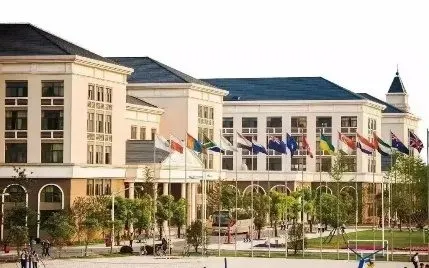
The table gives a brief profile of the university and the main facts that matter to international applicants.
| Indicator | Data |
|---|---|
| Founded | 1981 |
| Recognised by the MOE as a 4-year university | 2008 |
| Campuses | Jishan and Jinghu |
| Campus area | 1600 mu, about 106 hectares |
| Building floor area | about 470,000 sq m |
| Full-time students | about 17,000 |
| International students admitted per year | about 500 |
| Full-time teaching staff | about 1000 |
| Teachers from abroad | about 100 (USA, UK, Canada, Korea, Japan and others) |
| Number of foreign languages taught | 17, including Russian |
| Schools and faculties | 14 |
| Partner universities worldwide | more than 180 in 30+ countries |
| Library holdings (print books + e-books) | 2.25 million + 1.44 million |
| Member of UN Academic Impact | yes |
| Jinghu campus address | No.2801 Qunxianzhong Road, Yuecheng District, Shaoxing 312000 |
ZYUFL is a private university: it is not part of Project 211 or the Double First-Class programme (双一流, "double first-class"), which covers the traditional universities. This affects its sources of funding and access to the CSC scholarship, but it gives the university more freedom in admitting international students.
The starting point was 1981, when a private foreign language school founded by educator Shao Hongshu opened in Shaoxing. At the turn of the 1980s and 1990s it grew step by step into a vocational college. By the early 2000s this college was already supplying the whole Yangtze River Delta region with staff who knew English, Korean and Japanese.
The turning point came in 2008, when the Ministry of Education of the PRC recognised ZYUFL as a bachelor's-level university with four-year programmes. Since then the university has been entitled to award Bachelor of Arts, Bachelor of Management and Bachelor of Economics degrees, which are also recognised outside China. ZYUFL passed the national assessment of bachelor's programmes organised by the MOE in 2015, and in 2017 the Zhejiang Provincial Academic Degrees Committee included it among the universities expected to gain the right to award master's degrees in the foreseeable future.
By 2024 ZYUFL had about 17,000 full-time students, about 1000 permanent teaching staff and about 100 professors from abroad, from the UK, the USA, Canada, Korea and Japan. Over its history the university has produced more than 70,000 graduates, mostly linguists; employers in the Yangtze River Delta value them for their language training, intercultural communication skills and practical focus.
A private language university should not expect a place in the top hundred of THE or ARWU; those are taken by research universities of the calibre of Tsinghua University and Peking University. ZYUFL competes in a different category: what matters for it are specialised rankings of China's private and language universities. Below are the most telling positions for 2026.
| Ranking | ZYUFL's position in 2026 |
|---|---|
| ShanghaiRanking, Best Chinese Non-government Language Universities | No. 2 in China (2024, 2025, 2026) |
| EduRank, overall global ranking | No. 2 in Shaoxing, No. 666 in China, No. 9460 worldwide |
| UniRank Top Universities in Zhejiang | on the province's main list of universities |
| Wu Shulian University Rankings by Subject | literature: No. 1 among China's private universities; economics and management: top 20 |
| Provincial internationalisation ranking | No. 1 among Zhejiang's private universities for 9 years running |
ZYUFL's most important ranking is Shanghai Ranking's "Best Chinese Non-government Language Universities": here ZYU comfortably holds second place among China's private language universities. In EduRank the university is 666th in China and 9460th in the world, and over the last two years this figure has been steadily improving. In Shaoxing ZYUFL shares the lead with Shaoxing University (绍兴文理学院), and it is No. 2 in the EduRank city ranking. For those choosing linguistics, such specialised rankings are more informative than a place in the general THE or ARWU tables: they speak to the university's specialisation rather than the strength of its STEM research.
The first advantage is the variety of languages. ZYUFL teaches 17 foreign languages: English, Arabic, Indonesian (bahasa Indonesia), Spanish, Italian, Korean, German, Polish, Portuguese, Russian, Thai, Turkish, Persian, French, Hindi, Czech and Japanese. Such a range is rare even at public universities, and no other private university in Zhejiang has anything like it.
The second is the applied "Chinese plus a specialism" format for international students. The bachelor's offering is an unusual combination: you can study International Business and Hospitality Administration in English while improving your HSK level, so that you can later build a career in Zhejiang. Those who plan to teach Chinese back home can choose Teaching Chinese to Speakers of Other Languages (汉语国际教育). This pair of programmes is on the list of national-level "first-class" bachelor's programmes.
The third is international exchange. Agreements link ZYUFL with more than 180 universities in 30+ countries; every year about 600 students go to partner universities for a semester or a year, and the university itself admits about 500 international students a year. ZYUFL takes part in the United Nations Academic Impact programme, which reflects its humanities focus. In the provincial internationalisation ranking of Zhejiang's private universities, ZYUFL has held first place for 9 years running.
All of ZYUFL's international students are housed on the Jinghu campus in double rooms. The university does not provide single rooms: the administration believes this makes it easier for newcomers to adapt to the language environment. Renting accommodation in Yuecheng District is also an option; it is mentioned in the admissions office's official Q&A section.
Fees for the dormitory, medical insurance, medical check-up, bedding set, residence permit and textbooks are best checked on the university's official website before you apply.
The double room is furnished with everything needed for student life: beds, desks, wardrobes and air conditioning; the bathroom is shared within the unit. The dormitory does not officially close during the winter and summer holidays. Students on short-term programmes have to pay extra for the holiday period, while for long-term programmes this charge is already included in the annual fee, according to the admissions office's Q&A for 2026.
The question applicants ask most often is whether the CSC scholarship is available at ZYUFL. It is not: the university is private and is not on the list of 306 universities that accept Chinese Government Scholarship holders through CSC. If you cannot do without CSC, it makes sense to apply to Zhejiang's public universities at the same time. ZYUFL itself relies mainly on two internal sources of funding, described below.
The first source is the Zhejiang Provincial Government Scholarship. Bachelor's students receive it under category B; it covers almost all of the tuition fee and, together with subsidised dormitory accommodation, removes most of the costs. You apply separately, through the university's admissions office; the competition is held every year.
The second source is ZYUFL's internal School Scholarship for bachelor's students and language course students. Bachelor's students can apply for the Freshman Award (for first-year students), the First Prize (for top students) and the Second Prize. Language course students can receive a First, Second or Third Prize; these awards are paid per semester. Check the award amounts with the admissions office.
The Jinghu campus is in Yuecheng, the historic part of Shaoxing: the old canals are 8 minutes away by bike, and Hangzhou is 15 minutes away by high-speed train. Shaoxing is one of the oldest cities in Zhejiang, with a history of more than 2500 years; UNESCO counts it among the "open-air museum cities" for its preserved traditional buildings and canals. The writer Lu Xun was born here, and the city is also known as the centre of Asia's textile and pearl market, with up to 75% of world supplies passing through these markets.
ZYUFL's library is one of the largest among Zhejiang's private universities: its holdings include 2.25 million print publications in Chinese and other languages and 1.44 million e-books, plus 68 digital databases, including JSTOR, Wanfang, CNKI and WeipuPedia. The campus has a municipal key laboratory, a municipal think tank, a provincial base for extracurricular practice, two provincial centres of applied linguistics and 7 municipal-level demonstration centres for teaching practice. In recent years ZYUFL students have won more than 1800 national and provincial academic competitions, which per student is comparable to the results of public universities at the 211 level.
For sport there is an artificial-turf football pitch, tennis and basketball courts, an indoor swimming pool, a gym and a martial arts hall where coaches teach tai chi and wushu. Students eat in two large canteens with different cuisines, including Hunan, Cantonese and north-eastern, and there is a halal counter; near the campus there are many noodle shops serving Shaoxing noodles and cafés with local food.
Applying to ZYUFL is straightforward: applications go through the university's single online portal, the CSCA and entrance exams are not required, and an apostille on your diploma is usually not needed (exceptions are rare and concern certain countries). The procedure for ZYUFL is as follows:
Application deadlines, according to the admissions office: for the spring semester, by the end of December; for the autumn semester, by the end of June; applications for short-term programmes are accepted all year round.
Videos filmed at the university in Shaoxing help you get an idea of ZYU's campus, dormitories and teaching buildings before you travel. When watching, look out for the main entrance of the Jinghu campus, the central square with its sculpture group, the library with 2.25 million volumes, the indoor swimming pool and a typical double room in the international student dormitory: desks, wardrobes, bathroom. It is also worth assessing the route from the campus to the canal embankment in Yuecheng District. This makes it easier to tell whether the campus atmosphere suits you, especially if you are considering private universities in Hangzhou or comparing ZYUFL with neighbouring Shaoxing University.
There are seven variants in all, and they turn up both in academic certificates and in applicants' letters.
In Russian there is one standard full form of the name, used for documents such as diploma supplements, apostilles and translations, by Russian-language Wikipedia and by the university itself in correspondence with consulates. The other Russian renderings are a common spelling mistake, an unadapted letter-by-letter transliteration of the English spelling, and a word-order calque of the English; they should not be used in official papers.
Zhejiang Yuexiu University of Foreign Languages is the official international name: it appears on the Admission Notice, on the diploma and in international rankings.
ZYUFL and ZYU are abbreviations: you can find them in the EduRank and ShanghaiRanking rankings and in email correspondence with the admissions office.
浙江越秀外国语学院 (pinyin Zhèjiāng Yuèxiù Wàiguóyǔ Xuéyuàn) is the original Chinese name; students in Shaoxing shorten it to 越外 (Yuèwài) or 越秀 (Yuèxiù).
It is the abbreviation of the English name Zhejiang Yuexiu University of Foreign Languages. This is a private university of foreign languages offering four-year bachelor's programmes in Shaoxing (Zhejiang Province), founded in 1981.
There are no programmes taught entirely in Russian: bachelor's programmes are taught in Chinese or English. Two programmes are available in English: Hospitality Administration and International Business. Russian is studied here as a foreign language.
Chinese-taught bachelor's programmes require HSK 4 or an equivalent certificate; language courses accept students at any level.
No. ZYUFL is a private university and is not part of Double First-Class (双一流) or Project 211. At the same time, four of its bachelor's programmes have been shortlisted among programmes recognised as "first-class" at national level, and Foreign Language & Literature is a key provincial discipline.
It depends on the programme: bachelor's students pay for a double room per academic year, language course students per semester. Insurance, the medical check-up and the visa are paid for separately. Current terms are published on the university's official website.
No. Neither the standard CSC Type A through the embassy nor Type B with direct application to the university applies to ZYUFL: because ZYUFL is a private university, it is not on the list of 306 universities that accept scholarship holders. The realistic alternatives are the Zhejiang Provincial Government Scholarship and the university's internal awards.
Yes. ZYUFL is an accredited test centre for the HSK, BCT and YCT. The university publishes session dates on its portal, and they are also on chinesetest.cn. Language course students take the HSK right on campus without travelling to another city.
The Jinghu campus address is No.2801 Qunxianzhong Road, Yuecheng District, Shaoxing 312000. It is 30 minutes from Hangzhou by high-speed train and 1.5 hours from Shanghai. The nearest major airport is Hangzhou Xiaoshan International Airport (HGH); the journey from there by taxi or direct bus takes about 60 minutes.
Shaoxing University is a public university with a broader STEM profile, including medicine and engineering. Zhejiang Industry Polytechnic College is a specialised vocational college with no academic bachelor's programmes. ZYUFL is a private university with a narrow focus on languages and a high degree of internationalisation.
The usual set: international passport, secondary school certificate with an apostille and translation, police clearance certificate, photo on a white background, language certificate (HSK 4, IELTS 5.5 or TOEFL 80, depending on the language of the programme), a completed Foreigner Physical Examination Form (medical certificate), and payment of the registration fee.
Shaoxing (绍兴) is an ancient city of canals in Zhejiang Province. It is known as the birthplace of the writer Lu Xun and as one of the centres of traditional Chinese culture. Hangzhou is 30 minutes away.
Shaoxing attracts students with its unhurried life, low prices and the closeness of the economic centres of the Yangtze River Delta. The city has good universities, well-developed textile and chemical industries that offer work placements, and picturesque canals for relaxing. For parents, it matters that it is safe and comfortable here, healthcare is good, getting here is easy (the airports of Hangzhou and Shanghai are nearby), accommodation is cheaper, and the student campuses are well organised and supportive of international students.
You work with Nihao Study specialists. They will help you put together a portfolio and a set of documents, draw up a study plan and choose a university or college and a specialty that genuinely interest you.
We take care of every stage of admission, from choosing to enrolment
We will gather, prepare, certify and send your documents to the institution
We will show the admissions committee your strengths
We run training sessions and courses so you can prepare with more confidence
We will help you settle in at the start of your studies and keep moving forward
Nihao Study specialists select universities and colleges that match the applicant's goals and means. We make sure the teachers are practitioners and that the knowledge will be useful in your profession.
We examine curricula, talk to students and teachers and look at which specialties employers need, and use this information to select options for the applicant.
Advisers guide the applicant from the first consultation to enrolment, help build a plan and spot mistakes in time that could get in the way.
The cost of our support depends on the programme and the partner university; you'll get an exact quote after a free consultation.
Get a quoteA free 15-minute consultation: together we will choose a university or college and a programme that suit your goals and budget.
Apply with peace of mind: we handle the documents, deadlines and correspondence with admissions committees, and you save time and energy.
Don't want to wait for a call? Message us in the chat.
Message us in chat University · Hangzhou
Language courses · Bachelor's Degree · Master's Degree