- Language courses
- English
- Bachelor's Degree
- English
- Master's Degree
- English
- Doctoral (PhD) Programmes
- English
- Accommodation from 8 400 ¥/year
WUT · 武汉理工大学
Wuhan University of Technology accepts international students on programmes in the following fields: business, engineering, education, economics, it. Choose the level and programme that suit your goals.
Chinese language study at the university — from a few weeks to a year or longer. Suitable for those starting from scratch or preparing for the HSK before entering a main programme.
self-funded · language programme
The first level of higher education: usually four years of study, specialised subjects, internships and a graduation thesis. It opens the way to working in your field and to a master's degree.
self-funded
Advanced study after a bachelor's degree: research, applied projects and internships. It helps you become an expert in your chosen field and broaden your career opportunities.
self-funded
Wuhan University of Technology is located in Wuhan. Nihao Study consultants keep track of the deadlines and admission requirements of this university, and you can always check the most accurate and up-to-date information on its official website. In university rankings, it is ranked 39 in China and 507 worldwide.
Come for a face-to-face meeting: together we will go through the requirements, deadlines, documents and study options that suit you.

At the meeting we will look at your situation, tell you which documents to prepare and by when, talk about possible programmes and help you decide on the next step.
Wuhan University of Technology (abbreviated WUT; Chinese 武汉理工大学, pinyin Wǔhàn Lǐgōng Dàxué) is a public research-oriented university in Wuhan, directly under the Ministry of Education of China. Russian-language searches turn up several renderings of its Russian name, one of which is simply incorrect. The English name and the abbreviation WUT are set out in the charter. The short Chinese form is 武汉理工, and students also say 武理工 (Wǔlǐgōng).
The university was in the first wave of Project 211 and takes part in the Double First-Class (双一流) programme. Precision matters here: in the second national round, only one discipline at this level is assigned to WUT, Materials Science and Engineering. The university's strong sectoral areas are transport, shipbuilding and logistics, but they are not listed as separate 双一流 disciplines. WUT is not part of Project 985; the name 985 Engineering Innovation Platform, which appears in older publications, does not make it a university of that project.
WUT is easily confused with Wuhan University (WHU, 武汉大学), but it is a completely different university, with its own Chinese name, abbreviation, history and address. Below, Nihao Study has gathered the essentials for applicants to the 2026 intake: rankings, 211 and 双一流 status, programmes in two languages (Chinese and English), dormitories, HSK and CSCA requirements, scholarships and documents.
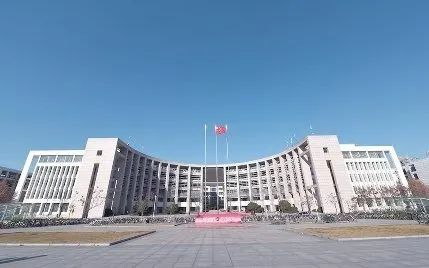
| Indicator | Data |
|---|---|
| Status and governing body | national key university under the Ministry of Education of the PRC |
| Status in national programmes | Project 211, Double First-Class; not part of Project 985 |
| Discipline on the 双一流 (Double First-Class) list | Materials Science and Engineering |
| Campuses | Mafangshan, Yujiatou, South Lake |
| Area | land area: 2.67 million sq m; buildings: 1.95 million sq m |
| Size | over 60,000 people (students, teaching staff and employees), 26 schools |
| Libraries | 4 libraries, holdings of about 4.16 million books |
| Main address | 122 Luoshi Road, Hongshan District, Wuhan, 430070 |
International applicants will also find a second address useful. The international admissions office is at 205 Luoshi Road, Mafangshan East Campus, room 421, School of International Education. This is not a separate university but a unit within WUT's large campus complex. In your application, invoice and admission letter, check the Chinese name 武汉理工大学 and the domain whut.edu.cn.
WUT's official history dates back to 1898, when the Hubei Institution of Technology (湖北工艺学堂) was founded. Its present legal form took shape much later: on 27 May 2000, Wuhan University of Technology, Wuhan Transportation University and Wuhan Automotive Polytechnic University merged into a single university.
Each of the three branches was responsible for its own sector. The industrial branch traces its roots to the Hubei Institution of Technology, the maritime and transport branch to the National Maritime Vocational School, opened in 1946, and the automotive branch to the Wuhan Institute of Technology of 1958. So the dates do not contradict each other: 1898 marks the start of historical continuity, and 2000 the emergence of the present merged university.
The university's profile grew out of this history: at first it was built around building materials, transport and automotive engineering, and now it also includes IT, energy, economics, management, law, design and the humanities. Since 1949, the units that came together to form the university have produced over 700,000 graduates.
WUT was among the first group of Project 211 members, which confirms the university's profile. However, this is a historical government programme: it clearly shows the scale of support, but the current priority discipline should be checked against the Double First-Class list.
As early as the first 双一流 list, Wuhan University of Technology had Materials Science and Engineering, and in the second round the government list names the same discipline.
Transport, logistics, marine engineering and automotive engineering are the university's strengths: these sectors are built into its history and its joint development with the Ministry of Transport. But the wording needs to be careful: WUT has Materials Science and Engineering as its Double First-Class discipline, and alongside it a strong transport cluster. Claiming that transport is WUT's second 双一流 discipline is incorrect.
| Ranking | Position | Edition |
|---|---|---|
| ARWU | 201–300 band | 2025 |
| QS World University Rankings | band 951–1000 | 2026 |
| CWUR Global 2000 | 347th worldwide, 58th in China | 2026 |
| EduRank | 884th worldwide, 55th in China | 2026 |
| ShanghaiRanking China | 54th place | 2026 |
Differences between rankings are to be expected. ARWU mainly assesses research output, QS combines reputation and bibliometric metrics, CWUR relies on its own criteria for education, employment and research, and EduRank uses an independent bibliometric model. So any position should be considered together with the name of the methodology and the year of publication.
Times Higher Education has no separate page with WUT's position for 2026. The university reports that it was included in the Times Higher Education World University Rankings in 2019, but that old position applies only to the 2019 edition and does not replace a current one. The Wuhan University page on THE is about a different university — this is important to remember, as a THE search for the word Wuhan often leads precisely to WHU.
Subject rankings reflect the university's specialisation more accurately. In ShanghaiRanking GRAS 2025, WUT's Marine and Ocean Engineering ranks 5th, Materials Science and Engineering 39th, Oceanography 40th and Mining and Mineral Engineering 41st. They are followed by Civil Engineering (42nd), Energy Science and Engineering (43rd), Instruments Science and Technology (48th) and Nanoscience and Nanotechnology (49th). EduRank 2026 also highlights marine engineering, transport and automotive engineering among its strengths, though its data is based on its own bibliometric methodology.
When it comes to ESI, it is more reliable to refer to a specific field. According to the School of Materials Science and Engineering, in 2025 WUT's materials science entered the top 0.203‰ by international impact and ranked 31st in its sample. This is a high figure, but ESI, ARWU, QS and Double First-Class measure different things, and they cannot be merged into a single notional position.
Of all WUT's disciplines, only materials science is included in the official Double First-Class list. The university states that its national platforms work on composites, silicate science, modern building materials, glass, light alloys and fibre-optic sensors. For an applicant, this means a choice wider than classic building materials: nanomaterials, functional films, materials for energy, semiconductor components and testing methods.
The Yujiatou campus has historically been linked to transport: in its description of the campuses, the university states plainly that the transport disciplines are concentrated here. This cluster includes the School of Transportation and Logistics Engineering, the School of Naval Architecture, Ocean and Energy Power Engineering and the School of Navigation. Fifth place for marine and ocean engineering in GRAS 2025 shows how visible this field is in international research.
The automotive field became part of WUT with the 2000 merger. Today mechanics and transport engineering are complemented by automation, computer science, AI, electronics and management. According to the official list of schools, Computer and Artificial Intelligence is at Yujiatou, Automation at Mafangshan, and mathematics and physics at South Lake. This geography is worth taking into account when choosing a dormitory: the WUT name covers teaching areas that are quite far apart.
International students choosing a Chinese-taught bachelor's programme can apply for materials science, transport, marine engineering, mechanics, civil engineering, architecture, computer science, electronics and environmental science. The catalogue also includes mathematics, geoinformatics, chemical technology, economics, management, law, foreign languages, journalism, design and animation.
The words School and College in these lists refer to units of WUT itself. For example, the School of International Education is part of the university, not a separate institution.
| Language of instruction | Duration | Example fields |
|---|---|---|
| Chinese-taught | usually 4 years | materials, transport, maritime studies, mechanics, IT, economics, law |
| English-taught | 4 years | Business administration, civil engineering, economics, computer science, mining engineering, logistics management, mechanical engineering |
| Architecture | 5 years | taught in Chinese; a separate portfolio is required |
An English-taught group opens only if enough students register: under the 2026 rules the threshold is more than 10 people. If the group cannot be filled, the university may offer another available major. The language of instruction is stated in the offer letter.
Admission to a master's programme requires a bachelor's degree, and to a doctoral programme a master's degree. For the 2026 intake, master's applicants had to be under 35 and doctoral applicants under 40. The application must include two recommendation letters from teachers holding at least the rank of associate professor, a research plan and, under WUT's rules, a provisional acceptance letter from the prospective supervisor.
The Chinese language courses in Wuhan are designed both for complete beginners and for those preparing to study for a degree in Chinese. In 2025 the official programme lasted one academic year, and there was also a foundation programme. The terms are tied to a specific intake, so check the 2026 fees on the university's official website.
Fees at WUT depend on the level of study, the field and the language of the programme. Under university rules, the first year must be paid in full before registration unless the student has a confirmed scholarship exemption. Check the current 2026 rates on the university's official website or ask during a consultation.
| Room type | Facilities |
|---|---|
| Double | air conditioning, water heater, bathroom, internet, furniture |
| Single | air conditioning, water heater, bathroom, internet, furniture |
The kitchen and laundry are shared, on each floor. Under the rules for the 2026 bachelor's intake, new international students are housed in double rooms. Master's and doctoral students can have double or single rooms, subject to availability.
The campus and room type are stated in the accommodation confirmation. Mafangshan and South Lake are in Hongshan District, while Yujiatou, home to the transport and maritime schools, is in another part of Wuhan. If a student rents accommodation off campus, the rules require signing a tenancy agreement and registering temporary residence with the police.
WUT is one of the universities that accept CSC scholarship holders. Promises of guaranteed funding should be treated as advertising.
Mafangshan has historically been home to materials science, mechanics, automotive engineering, economics and management. South Lake is developing as the main campus, hosting the sciences, humanities and information-related fields. Yujiatou retains its transport, shipping and maritime profile. The official interactive map shows canteens, shops, medical centres, sports facilities, banks, delivery services and routes for each of the three campuses.
The university has 4 modern libraries with holdings of about 4.16 million books. The grounds also include stadiums, gyms, a campus history museum and premises for student societies.
Do not send money on the strength of a messenger message alone. Check the recipient's details, the application number and the payment reference against WUT's official instructions.
For Chinese-taught bachelor's programmes and most WUT master's and doctoral programmes, HSK 4 or higher is enough. For the High Level Postgraduate Scholarship, requirements vary by field: HSK 4 is enough for engineers, while humanities applicants need HSK 5. If your language level is insufficient, you can first take a language or foundation course.
WUT's list of services for the 2025 academic year includes HSK levels 1 to 6, so the university does provide a testing service for students. However, check the session schedule, exam format and whether external candidates can register on the official Chinese Test website. Admission to WUT does not in itself mean registration for the HSK.
| University | Status | How it differs |
|---|---|---|
| Wuhan University of Technology, 武汉理工大学, WUT | public university under the Ministry of Education | materials, transport, maritime, automotive; 211 and 双一流 |
| Wuhan University, 武汉大学, WHU | public comprehensive university | a different university with its own domain and the abbreviation WHU |
| Wuhan University of Science and Technology, 武汉科技大学, WUST | provincially administered university | metallurgy and engineering, abbreviation WUST |
| Wuhan Institute of Technology, 武汉工程大学, WIT | provincially administered university | traces its roots to an institute of chemical technology, abbreviation WIT |
| Hubei University of Technology, 湖北工业大学, HBUT | provincially administered university | separate university on Nanli Road, abbreviation HBUT |
Checking takes a couple of seconds. WUT is 武汉理工大学, Wuhan University of Technology, abbreviation WUT, domain whut.edu.cn. Wuhan University is 武汉大学, abbreviation WHU, domain whu.edu.cn. Just one missing letter T means a different university.
Several Russian versions of the name circulate online; some are typos or search variants rather than the standard form, and one is a literal calque that is understandable but not the main form. The official international name is Wuhan University of Technology, and the official English abbreviation is WUT. The full Chinese name is 武汉理工大学 (Wǔhàn Lǐgōng Dàxué), and the short Chinese form is 武理工 (Wǔlǐgōng).
Project 211 and Double First-Class — yes; Project 985 — no. In the second round of 双一流, WUT has one single discipline on the list: Materials Science and Engineering.
No, the official list includes only Materials Science and Engineering. WUT's strong fields are transport, logistics, shipbuilding and navigation, but they are not listed as separate disciplines on the government 双一流 list.
Yes. In the 2026 intake, English-taught bachelor's programmes were offered in business administration, civil engineering, economics, computer science and technology, mining engineering, logistics management and mechanical engineering. Applicants whose native language is not English needed TOEFL 80 or IELTS 6.0 or higher.
For Chinese-taught bachelor's programmes, HSK 4 or higher. In the scholarship programme for master's and doctoral students, HSK 4 is enough for engineering fields, while the humanities require HSK 5. Check exam dates against the official HSK schedule.
The amount depends on the programme level, field of study, language of instruction and room type. Current rates are published on the university's official website.
Yes, if the applicant wins the competition. WUT's full scholarship for master's and doctoral study in 2026 covered tuition, the dormitory, insurance and a monthly stipend.
Yes, under the rules of the 2026 international intake, a CSCA score report is required. Everyone takes mathematics; engineering programmes add physics or chemistry, and Chinese-taught study adds Professional Chinese.
HSK levels 1 to 6 are on WUT's list of services, but before registering you need to make sure the specific session is open to external candidates. Use the official Chinese Test Service.
WUT is 武汉理工大学, specialising in materials, transport, maritime studies and automotive engineering. Wuhan University is 武汉大学, abbreviated WHU. Wuhan University of Science and Technology is 武汉科技大学, abbreviated WUST.
You will need a passport, a school-leaving certificate with transcript, CSCA results, a language document (HSK or proof of English), a medical form, a certificate of no criminal record, a financial guarantee and a receipt for the application fee. Art and architecture applicants also need a portfolio or other proof of their background.
Wuhan (武汉) stands at the confluence of the Yangtze and Han rivers and serves as the main transport hub of central China — it is called the 'thoroughfare of nine provinces'. It is also a huge student city: more than 1 million people study here.
Wuhan gives applicants a wide choice of universities, among them Wuhan University, known for its very beautiful campus. Youth life is buzzing, prices are moderate, and it is a convenient base for travelling all over China. In spring the city is covered in cherry blossom. Parents should take into account the advanced healthcare and infrastructure, high standard of education, support for international students, modern campuses and a renewed, safe urban environment.
You work with Nihao Study specialists. They will help you put together a portfolio and a set of documents, draw up a study plan and choose a university or college and a specialty that genuinely interest you.
We take care of every stage of admission, from choosing to enrolment
We will gather, prepare, certify and send your documents to the institution
We will show the admissions committee your strengths
We run training sessions and courses so you can prepare with more confidence
We will help you settle in at the start of your studies and keep moving forward
Nihao Study specialists select universities and colleges that match the applicant's goals and means. We make sure the teachers are practitioners and that the knowledge will be useful in your profession.
We examine curricula, talk to students and teachers and look at which specialties employers need, and use this information to select options for the applicant.
Advisers guide the applicant from the first consultation to enrolment, help build a plan and spot mistakes in time that could get in the way.
The cost of our support depends on the programme and the partner university; you'll get an exact quote after a free consultation.
Get a quoteA free 15-minute consultation: together we will choose a university or college and a programme that suit your goals and budget.
Apply with peace of mind: we handle the documents, deadlines and correspondence with admissions committees, and you save time and energy.
Don't want to wait for a call? Message us in the chat.
Message us in chat