- Language courses
- English, Chinese
- Bachelor's Degree
- English, Chinese
- Master's Degree
- English, Chinese
- Doctoral (PhD) Programmes
- English, Chinese
- Accommodation from 10 000 ¥/year
CUG · 中国地质大学
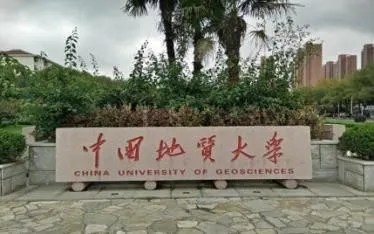
China University of Geosciences accepts international students on programmes in the following fields: engineering. Choose the level and programme that suit your goals.
Chinese language study at the university — from a few weeks to a year or longer. Suitable for those starting from scratch or preparing for the HSK before entering a main programme.
self-funded · language programme
The first level of higher education: usually four years of study, specialised subjects, internships and a graduation thesis. It opens the way to working in your field and to a master's degree.
self-funded
Advanced study after a bachelor's degree: research, applied projects and internships. It helps you become an expert in your chosen field and broaden your career opportunities.
self-funded
China University of Geosciences is located in Wuhan. Nihao Study consultants keep track of the deadlines and admission requirements of this university, and you can always check the most accurate and up-to-date information on its official website. In university rankings, it is ranked 61 in China and 820 worldwide.
Come for a face-to-face meeting: together we will go through the requirements, deadlines, documents and study options that suit you.

At the meeting we will look at your situation, tell you which documents to prepare and by when, talk about possible programmes and help you decide on the next step.
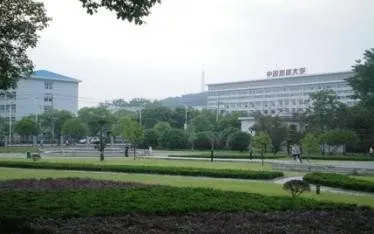
This page is about the Wuhan university: China University of Geosciences (Wuhan), abbreviated CUG, in Chinese 中国地质大学(武汉), pinyin Zhōngguó Dìzhì Dàxué (Wǔhàn). The university is located in Wuhan, on the shore of East Lake, and by its own account is a national key university under the Ministry of Education. Russian-language searches also call it the 'University of Geosciences of China' or the 'Chinese University of Earth Sciences', while the variant 'Chinese Geological University' is inaccurate. Chinese students call it simply 地大 (Dìdà). In documents and applications it is safest to give the full name with the note Wuhan or 武汉.
The city matters here. CUG in Wuhan and China University of Geosciences (Beijing), or CUGB, share a common history, but since 2005 they have been two separate legal entities, each with its own leadership, admission rules, finances, domains and logos. Everything below applies only to CUG in Wuhan: the Nanwangshan and Future City campuses, as well as the International Education College.
The university is a member of the historical Project 211 and the national Double First-Class initiative. In the second round of the programme, the Wuhan university has two disciplines: geology, and geological resources and geological engineering. The phrase 'earth sciences' describes its profile broadly correctly, but in an official application it is better to give the exact names of both disciplines.
Below Nihao Study explains what a 2026 applicant should know: how to tell CUG in Wuhan from its Beijing counterpart, what the university's strengths are, which programmes are open to international students, what is required for HSK and CSCA, how the CSC and university scholarships work and where to check application deadlines.

| Item | Value |
|---|---|
| Year founded | 1952 |
| Status | Ministry of Education university, Project 211, Double First-Class |
| Campuses | Nanwangshan and Future City in Wuhan |
| Full-time students | over 34,120 (as of April 2026) |
| International students | over 1,000 (as of April 2026) |
| Total campus area | about 1.48 million sq m |
| Academic degrees | first-level disciplines: 19 doctoral and 34 master's; 16 postdoctoral stations |
The official English and Chinese websites are updated at different times. For example, the Chinese profile lists 76 bachelor's programmes, while the English overview gives 66. So when applying, rely not on the overall figure but on the international admissions catalogue for the cycle you are applying in.
Beijing Geological Institute was founded in 1952 by merging the geology departments of Tsinghua University, Peking University and Tianjin University, as well as Tangshan Railway Institute. It became a national key university in 1960. In 1970 it was moved to Hubei Province and renamed Hubei Geological Institute, and from 1974 it was based in Wuhan under the name Wuhan Geological Institute.
A graduate school opened in Beijing in 1978. The university received its current name, China University of Geosciences, in 1987, with its headquarters in Wuhan. CUG was included in Project 211 in 1997, and in 2000 the university was transferred from the Ministry of Land and Resources to the Ministry of Education.
The Beijing and Wuhan parts have operated independently of each other since March 2005. Hence today's confusion: both institutions kept the historic name China University of Geosciences, but an international applicant applies separately, either to CUG Wuhan or to CUGB Beijing. CUG Wuhan entered the first round of Double First-Class in 2017, and in the second round in 2022 geology, as well as geological resources and geological engineering, were on the list again.
| Ranking | Position | How to read it |
|---|---|---|
| ARWU 2025 | band 201 to 300 worldwide | overall assessment of research |
| ShanghaiRanking GRAS 2025 | earth sciences: 3rd; remote sensing: 3rd | the strongest side of its profile |
| ShanghaiRanking GRAS 2025 | water resources: 10th; mining engineering: 10th | applied fields |
| ShanghaiRanking China 2026 | 56th in China | national table |
| QS 2026 | band 851 to 900 | overall international ranking |
| CWUR 2025 | 433rd in the world, 69th in China | Global 2000 research ranking |
QS has already published its 2027 edition, in which CUG is tied for 677th place. This is not a date error: ranking agencies release tables labelled with the following academic year in advance. So when comparing positions, always state the edition year together with the ranking name.
In the THE profile, the latest available overall position for CUG Wuhan is the 801–1000 band for 2022, and it should not be presented as a 2026 result. EduRank, by contrast, places the university 7357th in the world in 2026, noting that its admissions figure is an estimate. Because of such discrepancies, for CUG it makes more sense to rely on confirmed disciplines and subject results than to derive a single averaged number.
ESI bibliometrics deserve special attention. According to the university, 12 of CUG's fields are in the global top 1 per cent of institutions; for earth sciences this is the top 0.01 per cent, and for engineering, chemistry, materials science, and ecology and environment the top 0.1 per cent. This points to a broad research base built around geology, resources, the environment and engineering.
Both Double First-Class disciplines received an A+ grade in the national discipline evaluation. Field training takes place at the university's bases in Badong, Zigui, Beidaihe and Zhoukoudian. For a future geologist this matters: study is not confined to the classroom but includes mapping, sampling, studying sections and interpreting natural processes.
ShanghaiRanking subject positions show that CUG is strong not only in classical petrology. In the 2025 edition, remote sensing is 3rd, water resources and mining engineering 10th, and geography 21st. The university's units include schools of computer science, automation and engineering, geophysics and geomatics, and geography and information engineering.
According to CUG, the university has agreements with 172 foreign universities, and around 1,500 students take part in exchanges every year. The university initiated the International University Consortium for Earth Sciences, whose founders include Stanford University, the University of Waterloo, Lomonosov Moscow State University and a number of other institutions. In 2025, CUG opened its first overseas preparatory centre for international applicants in Europe, which shows that academic and language cooperation works in practice.
CUG's structure includes units for earth sciences and earth resources, materials and chemistry, ecology, geophysics and geomatics, oceanography, mechanics and electronics, automation, economics and management, foreign languages, mathematics and physics, gemmology, computer science and sustainable energy. The words School and College in their names refer to parts of the university, not independent institutions.
The university has 58 provincial or ministerial-level key laboratories and three state key laboratories. For master's and doctoral students this is a practical guide: first choose the laboratory and supervisor, and only then check the language of instruction, publication requirements and funding.
| Level | Sample programmes and language | Duration |
|---|---|---|
| Chinese Language | intensive language course | one academic year |
| Bachelor's in English | Telecommunication Engineering, Business Management | 4 years |
| Master's in English | Environmental engineering, MPA, economic management, chemistry | 2 to 3 years |
| English-taught master's and PhD | Oil and Natural Gas Engineering | 3 years |
| Doctoral (PhD) Programmes | under the catalogue rules, any PhD programme can be taught in English | duration depends on the programme |
The list of English-taught programmes was compiled in February 2025, so whether a specific programme is open for admission should be double-checked against the 2026 guide and in the application system. For 2026 the university has issued separate guides for bachelor's, master's and other categories of international students. Bachelor's candidates for the university scholarship need Chinese-taught study, HSK level 4 or higher with a score of at least 180, and CSCA in Chinese and mathematics; science and engineering fields additionally require a physics or chemistry result.
For Chinese-taught master's and doctoral programmes, the requirements depend on which competition you apply to. The university scholarship requires HSK 4 with at least 180 points, the CSC High-Level Postgraduate Program HSK 4 with at least 200 points. English-taught master's and doctoral programmes usually accept IELTS 6.0, TOEFL iBT 80 or above, or a certificate showing that previous education was conducted in English.
The university updated its fees for international students on 16 April 2026. Rates differ for the language course, the foundation programme, bachelor's and master's programmes (separately for humanities and science) and doctoral programmes. Besides tuition, the first-year budget includes the dormitory, insurance, application, medical check-up, residence permit processing, study materials and personal expenses. Check the current amounts on the official website cug.edu.cn and do not pay invoices based on outdated PDF files.
| Room type | What to check |
|---|---|
| Twin room | utility bills are paid separately |
| Single room | availability is confirmed by the university |
Rooms for international students have a private bathroom, air conditioning, a water heater and internet access, and the dormitory building has a shared kitchen and laundry. Accommodation must be paid for at least six months in advance; the service centre bills water, electricity and internet separately. A student who lives off campus must register their address with the local police within 24 hours.
Nanwangshan is by East Lake, and Future City is in a new district of the Wuhan innovation zone; the two campuses together cover about 148 hectares. The International Education College (admissions correspondence also goes to this address) is located at: No. 388 Lumo Road, Hongshan District, Wuhan, Hubei, 430074. It is best to check in advance which site a student on a given programme will study and live at: classes and the dormitory may belong to different campuses.
No one can guarantee a scholarship. Your chances in the competition depend on your grades, language level, CSCA result, the quality of your study or research plan, recommendations and how well your topic matches the university's strong laboratories. The President Scholarship cannot be combined with the CSC.
Nanwangshan's main attraction is the Yifu Museum. The university describes it as a 4A-rated tourist attraction, the only one at this level among Chinese universities. The library covers 46,180 sq m, and its print collection numbers around 2.65 million volumes. The sporting traditions are also notable: rock climbing, swimming, badminton, basketball and athletics. According to the university, its athletes have won more than 270 gold and 600 silver medals at major competitions.
CUG is an authorised HSK test centre. According to a published announcement about the computer-based exam, testing took place at the language centre in the northern part of the Nanwangshan campus, and registration was through chinesetest.cn. Dates change from session to session, so check the current schedule on the official exam service.
If you are choosing between universities in this city, it is also worth looking at other universities in Wuhan, for example Wuhan University and Wuhan University of Technology.
| University and Chinese name | City and status | Main focus |
|---|---|---|
| China University of Geosciences, CUG, 中国地质大学(武汉) | Wuhan, Project 211, Double First-Class | geology, resources, environment, geo-engineering |
| China University of Geosciences Beijing, CUGB, 中国地质大学(北京) | Beijing, independent university | geology, resources, geo-engineering |
| Wuhan University, WHU, 武汉大学 | Wuhan, comprehensive university | a wide range of academic fields |
| Wuhan University of Technology, WUT, 武汉理工大学 | Wuhan, industry-focused university | materials, transport, engineering |
The main identifiers of the right university are the city of Wuhan and the cug.edu.cn domain. Since 2005, CUG Wuhan and CUG Beijing have operated separately. If a source does not name the city, check the domain, the qualifier in Chinese brackets and the address; otherwise it is easy to mix up the fees, rankings and application deadlines of the two universities.
The Russian version of this page uses the name meaning 'Chinese University of Geosciences'. The variant 'Chinese Geological University' is inaccurate, while 'University of Geosciences of China' is an understandable calque of the English but not the main form. The exact international name is China University of Geosciences (Wuhan); the abbreviation CUG is official and used in rankings. The short Chinese name is 地大 (Dìdà, 'Dida' for Russian speakers), and the full Chinese name of the Wuhan university is 中国地质大学(武汉), Zhōngguó Dìzhì Dàxué (Wǔhàn).
This page covers CUG Wuhan: the official admissions address is in Wuhan. CUGB in Beijing has separate management and its own admission procedure.
CUG Wuhan is part of Project 211. The university took part in Project 985's innovation platform for priority disciplines, but it does not have full 985 university status.
In the second round, the list included geology, and geological resources and geological engineering; both disciplines were rated A+.
The 2026 rates depend on the level of study and the field: separate rates are set for the language course, bachelor's, master's and doctoral programmes. The university publishes the current amounts on its official website cug.edu.cn.
Yes, the university accepts Chinese Government Scholarship holders. A full scholarship can cover tuition, accommodation, insurance and a monthly stipend, but the competition terms, deadlines and list of majors need to be checked every year.
Chinese-taught programmes usually require HSK 4, but the minimum score depends on the scheme: at least 180 for the President Scholarship and at least 200 for the CSC High-Level Postgraduate Program. English-taught master's and PhD programmes usually accept IELTS 6.0 or higher, TOEFL iBT 80 or higher, or proof that your previous studies were in English.
Yes, the university has an authorised HSK test centre. The venue and available levels change from session to session, so check the test schedule on the official website chinesetest.cn.
The basic set includes a passport, transcript, education certificate, language certificate, medical form and police clearance certificate. Master's and doctoral programmes also require two academic references and a research plan; the exact list depends on the programme and the scholarship.
Yes, a CSC application for a bachelor's programme requires a valid CSCA report. For the President Scholarship, applicants take Chinese and mathematics, with physics or chemistry added for science and engineering majors.
The International Education College, which houses the admissions office, is at 388 Lumo Road, Wuhan. The dormitory has twin and single rooms, and utilities are paid separately; the price depends on the room type, and current terms are published on the university's official website.
Wuhan (武汉) stands at the confluence of the Yangtze and Han rivers and serves as the main transport hub of central China — it is called the 'thoroughfare of nine provinces'. It is also a huge student city: more than 1 million people study here.
Wuhan gives applicants a wide choice of universities, among them Wuhan University, known for its very beautiful campus. Youth life is buzzing, prices are moderate, and it is a convenient base for travelling all over China. In spring the city is covered in cherry blossom. Parents should take into account the advanced healthcare and infrastructure, high standard of education, support for international students, modern campuses and a renewed, safe urban environment.
You work with Nihao Study specialists. They will help you put together a portfolio and a set of documents, draw up a study plan and choose a university or college and a specialty that genuinely interest you.
We take care of every stage of admission, from choosing to enrolment
We will gather, prepare, certify and send your documents to the institution
We will show the admissions committee your strengths
We run training sessions and courses so you can prepare with more confidence
We will help you settle in at the start of your studies and keep moving forward
Nihao Study specialists select universities and colleges that match the applicant's goals and means. We make sure the teachers are practitioners and that the knowledge will be useful in your profession.
We examine curricula, talk to students and teachers and look at which specialties employers need, and use this information to select options for the applicant.
Advisers guide the applicant from the first consultation to enrolment, help build a plan and spot mistakes in time that could get in the way.
The cost of our support depends on the programme and the partner university; you'll get an exact quote after a free consultation.
Get a quoteA free 15-minute consultation: together we will choose a university or college and a programme that suit your goals and budget.
Apply with peace of mind: we handle the documents, deadlines and correspondence with admissions committees, and you save time and energy.
Don't want to wait for a call? Message us in the chat.
Message us in chat