- Language courses
- English
- Bachelor's Degree
- English
- Master's Degree
- English
- Doctoral (PhD) Programmes
- English
- Accommodation from 8 400 ¥/year
HUST · 华中科技大学
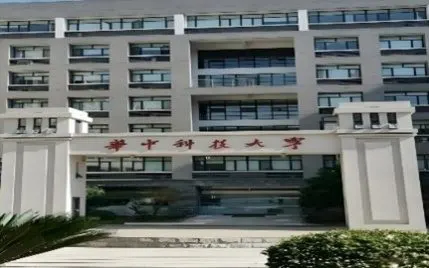
Huazhong University of Science and Technology accepts international students on programmes in the following fields: engineering, medicine, law. Choose the level and programme that suit your goals.
Chinese language study at the university — from a few weeks to a year or longer. Suitable for those starting from scratch or preparing for the HSK before entering a main programme.
self-funded · language programme
The first level of higher education: usually four years of study, specialised subjects, internships and a graduation thesis. It opens the way to working in your field and to a master's degree.
self-funded
Advanced study after a bachelor's degree: research, applied projects and internships. It helps you become an expert in your chosen field and broaden your career opportunities.
self-funded
Huazhong University of Science and Technology is located in Wuhan. Nihao Study consultants keep track of the deadlines and admission requirements of this university, and you can always check the most accurate and up-to-date information on its official website. In university rankings, it is ranked 13 in China and 307 worldwide.
Come for a face-to-face meeting: together we will go through the requirements, deadlines, documents and study options that suit you.

At the meeting we will look at your situation, tell you which documents to prepare and by when, talk about possible programmes and help you decide on the next step.
Huazhong University of Science and Technology (HUST, 华中科技大学) is a public research university in Wuhan, the administrative centre of Hubei Province, directly under the Ministry of Education of China. International rankings use the abbreviation HUST, while in China the abbreviations 华科大, 华科 and 华中大 are common.
HUST took part in the now-completed 985 and 211 projects and was included in the first round of the national Double First-Class initiative. Talk of it being a "top 10" university also has some basis: in major rankings HUST regularly appears among the ten strongest universities in the country, and CWUR 2026 places it 8th in China. At the same time, the university is not a member of the C9 — it does not appear on the list of the group's nine members. There is no contradiction here: these are different systems of status and comparison.
This Nihao Study overview is designed for a 2026 applicant: it brings together statuses and rankings, programmes taught in Chinese and English, dormitories, CSC scholarships and the application procedure.
| Item | Data | What this means for applicants |
|---|---|---|
| Status and governing body | Public research university under the Ministry of Education of the PRC | Degrees are awarded by the university, which offers bachelor's, master's and doctoral programmes |
| Statuses | Projects 985 and 211 (former), first-round Double First-Class | The university is not a member of the C9 |
| Students | About 55,000 full-time | THE 2026 uses a broader base: 61,789 students |
| Teaching staff | More than 3,700 full-time teaching staff; over 1,500 professors | The scale is felt most in the engineering and medical schools |
| Programmes and degrees | 119 bachelor's programmes; first-level authorisation for 49 master's and 49 doctoral disciplines | The list open to international students is updated every year |
| Campus area | Over 7,000 mu, with 72 per cent of the area landscaped with greenery | Hence its nickname, the "university in the forest" |
| Address | 1037 Luoyu Road, Hongshan District, Wuhan 430074 | The main campus is located near Optics Valley |
| Double First-Class | 9 disciplines in the second round | The status is granted to individual disciplines, not automatically to all of the university's programmes |
The university's engineering history dates back to 1952, when the Huazhong Institute of Technology was created in Wuhan from departments of several universities. In 1960 the institute became a national key university, and in 1988 it was renamed Huazhong University of Science and Technology, following the English-language convention of the time. So as a modern merged institution HUST is young, but as an engineering school it has existed for more than seventy years.
The medical line is much older. Tongji Medical College traces its origins to the German Medical School, opened in Shanghai in 1907 and headed by the physician Erich Paulun. In 1951 the medical school moved to Wuhan, then bore the name Wuhan Medical College, and from 1985 Tongji Medical University. Thanks to this line, medicine, clinical research and public health have a full place at HUST rather than being an add-on to a technical university.
The present university was formed on 26 May 2000, when Huazhong University of Science and Technology, Tongji Medical University and Wuhan Urban Construction Institute merged. The third institution contributed architecture, urban planning and civil engineering. The university itself describes its history as a condensed model of the development of higher education in new China. The practical takeaway for applicants: HUST's strength lies not in one narrow technology but in combining engineering and medicine with optics, digital systems and the urban environment.
| Ranking | Position | Comment |
|---|---|---|
| ARWU 2025 | 73rd in the world | 8th among mainland Chinese universities in the full ARWU table |
| CWUR 2026 | 84th worldwide, 14th in Asia, 8th in China | Strong research output: in the top 0.4 per cent of universities |
| THE 2026 | 176th in the world | 81st for engineering, 101–125 band for medicine |
| QS 2027 | 307th in the world | The QS methodology relies more on reputation and international indicators |
| EduRank 2026 | 261st worldwide, 11th in China | 7th in China and 46th in the world for engineering |
| ESI, May 2026 | Global top 0.1 per cent: 11 disciplines | Engineering and materials science are also in the top 0.01 per cent |
When talking about the "top 10", you need to name the specific ranking and year. In CWUR 2026, HUST is eighth in China; in ARWU 2025 it is among the top ten universities in mainland China; and in EduRank 2026 it is eleventh. This wording is stronger and more accurate than an unsupported "tenth in the country". It has nothing to do with the C9: the C9 is a closed alliance of nine specific universities, not a ranking published every year.
HUST covers mechanical engineering, energy, materials science, electrical engineering, automation, telecommunications and computer science. On the national list of first-level key disciplines, the university holds optics, mechanical engineering, energy, materials science, electrical engineering, biomedical engineering and management. EduRank 2026 particularly highlights HUST's high positions in computer engineering, telecommunications, automation and electrical engineering. For international students this means access to large schools and laboratories, but a place in a specific research group has to be agreed with the faculty.
HUST is the only university in China with four national research facilities at once. The Chinese fact sheet lists them: the Wuhan National Laboratory for Optoelectronics, the National Pulsed High Magnetic Field Science Center, the National Center for Precision Gravity Measurement and the National Innovation Center for Digital Design and Manufacturing. These platforms underpin HUST's international reputation in photonics, measurement technology, high magnetic field research and digital manufacturing.
The medical division consists of Tongji Medical College and a network of affiliated hospitals; among its clinical bases the university names Tongji Hospital, Union Hospital, Liyuan Hospital and others. In the fourth national discipline evaluation, mechanical engineering, optics, biomedical engineering and public health were rated A+. So MBBS and medical master's programmes should be chosen not only by HUST's overall position but also with regard to the language of clinical practice, the specific hospital and the faculty's requirements.
HUST's programmes cover 11 broad areas of knowledge, including engineering, medicine, economics, philosophy, art and interdisciplinary studies. International applicants will find it easier to choose not from a long list of majors but from four broad pathways.
The words School and College in names refer to units within HUST, not independent universities. The final list of programmes for international students is published in an appendix to the annual admission guide: the general bachelor's catalogue is larger than the international intake.
Chinese-taught programmes in the 2026 intake in engineering, natural sciences, creative fields, economics and management usually last 4 to 5 years. Literature, education and law take 4 years, and medicine 4 or 5 years. There are fewer English-taught options: MBBS takes 6 years, while pharmacy, telecommunications engineering, mechanical design, manufacturing and automation, and biomedical engineering take 4 years.
| Level | Fields of study | Language and duration |
|---|---|---|
| Bachelor's Degree | Engineering, natural sciences, economics, management, literature, medicine | In Chinese, usually 4 to 5 years |
| Bachelor's Degree | MBBS | In English, 6 years |
| Bachelor's Degree | Pharmacy, telecommunications, mechanical design, biomedical engineering | In English, 4 years |
| Master's Degree | Engineering, natural sciences, economics, management | 3 years in Chinese, 2 years in English |
| Doctoral (PhD) Programmes | Research fields | Usually 4 years |
Master's programmes admit bachelor's degree holders under the age of 35 with an average grade equivalent to at least GPA 3.0 out of 4.0, 3.75 out of 5.0 or 75 per cent. Doctoral candidates need a master's degree and must be under 40. This is the university's minimum threshold, and a faculty may set a higher competitive bar. Some schools require a letter from your prospective supervisor, while in others it is optional.
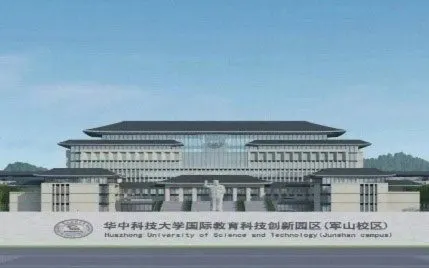
You can study Chinese at HUST for a semester or an academic year; there is also a 3+3 programme (three months of language and three months of internship) and intensive courses lasting 1 to 4 weeks. The 2026 language programmes are based at Junshan Campus, so you will not necessarily be studying at the main site on Luoyu Road. Check this before booking accommodation and planning your daily commute.
The published guides for 2026 contain no separate general-admission programme taught in Russian: teaching is in Chinese or English. HUST's international partners include Russian universities: a key partnership with ITMO University was established in 2021, and in July 2026 a student exchange agreement was signed with Lomonosov Moscow State University. According to the university, joint projects are under way with more than 20 Russian partner organisations. These are exchanges and joint research, while double degrees are awarded within separate joint programmes.
The main campus is next to East Lake and Optics Valley, and the medical campus is in Hankou. Greenery covers 72 per cent of the grounds, hence the nickname university in the forest. Since 2019, Wuhan Metro Line 2 has had a Huazhong University of Science and Technology station; this line takes you without changes to Hankou Railway Station and Tianhe Airport.
The university's three libraries, with a total area of 53,000 square metres, are combined into a single system. The fact sheet for international students cites 5.79 million books and 4,200 reading room seats. The East-9, East-12, West-5 and West-12 teaching buildings are used for classes and independent study. The Wutongyu Academic Centre has conference rooms, dining areas, sports grounds and a bookshop. International students are supported by the SICA association, which helps with orientation, city tours and language exchange.
The 2026 guide for master's students describes single and double rooms. Rooms have furniture, air conditioning, a water heater, internet and a place to do laundry; utilities may be charged separately. The university publishes current accommodation prices and estimates of everyday expenses, and it is worth checking them before applying.
| Item | Comment |
|---|---|
| Twin room | The price is per occupant |
| Single room | Places are limited |
| Living expenses | Food, transport and personal shopping |
Admission does not automatically mean a place in a dormitory: international students arrange accommodation through the relevant office and sign a contract. Students who want to live off campus must agree this with the International Student Office and then register their temporary residence with the police within 24 hours.
A full CSC scholarship for master's and doctoral students covers tuition, accommodation, a monthly allowance and medical insurance. However, broad coverage does not mean the scholarship is guaranteed: HUST selects candidates based on academic assessment, and scholarship holders undergo an annual review of their academic performance and conduct.
In 2026, Chinese-taught bachelor's programmes in engineering, natural sciences and medicine required HSK 4 with at least 180 points. Applicants to economics, management, philosophy, literature, education, law, arts and the School of Artificial Intelligence needed HSK 5, also with at least 180 points. English-taught bachelor's programmes accepted IELTS 5.5 or above or TOEFL 80 or above; if a candidate had already studied in English and could prove it, the certificate might not be required.
For master's programmes the English-language bar is higher: IELTS 6.0 or above, TOEFL 80 or above, or GRE 310 or above. Chinese-taught medical programmes at some hospitals may require an HSK 5 score of up to 200 points. At HUST, the HSK result serves as a basis for scholarships and for admission to Chinese-taught programmes; exam dates, fees and test centres are published on chinesetest.cn. The campus does not host every HSK or BCT session, so check the city and date of a specific exam separately.
| University and Chinese name | Status | Main focus |
|---|---|---|
| Huazhong University of Science and Technology, HUST, 华中科技大学 | Project 985 and 211 university, Double First-Class | Engineering, IT, optics, medicine |
| Wuhan University, WHU, 武汉大学 | Comprehensive research university | Wide range, including law, natural sciences and medicine |
| Wuhan University of Technology, WUT, 武汉理工大学 | Research university with a specialised profile | Engineering, materials, transport |
| Wuhan University of Science and Technology, WUST, 武汉科技大学 | Provincial university | Metallurgy, industrial engineering, materials |
| China University of Geosciences, Wuhan, CUG, 中国地质大学(武汉) | Specialised university in the Double First-Class programme | Geology, natural resources, environment |
In English-language searches, HUST and WUST are confused most often: the name of the first begins with Huazhong, the second with Wuhan. In addition, HUST is not the Hong Kong University of Science and Technology, nor is it connected with the University of Science and Technology of China in Hefei. Always check the university's Chinese name.
The main Russian form translates as 'Huazhong University of Science and Technologies'. The variant with the singular ('…of Science and Technology') is a common mistake in Russian, while 'University of Science and Technologies of Huazhong' copies the English word order, i.e. it is a calque. The official international name is Huazhong University of Science and Technology, and the main English abbreviation is HUST. The Chinese short forms are 华科大, 华科 and 华中大, and the original Chinese name is 华中科技大学 (Huázhōng Kējì Dàxué).
HUST is short for Huazhong University of Science and Technology. The main campus address is 1037 Luoyu Road, Hongshan District, Wuhan 430074.
No. HUST took part in Projects 985 and 211 and is part of Double First-Class, but it is not one of the nine members of the C9. High positions in individual rankings do not make a university a member of this alliance.
In major rankings HUST regularly makes the top ten. For example, in CWUR 2026 it ranks 8th in China. Its position may differ under other methodologies.
Some programmes are taught in English — MBBS, Pharmacy and several engineering bachelor's programmes. No general-admission programmes in Russian are listed in the 2026 guides. Partnerships with Russian universities concern exchanges and joint projects.
For Chinese-taught bachelor's programmes in 2026, engineering, natural sciences and medicine required HSK 4 with a score of 180 or more, while economics, management, the humanities, arts, law and AI required HSK 5 with a score of 180 or more. Requirements for master's programmes and hospitals must be checked separately.
The price depends on the room type — single or double. The university publishes current rates for the new academic year; check them before applying.
Yes, HUST accepts scholarship holders under several CSC tracks. For selected master's and doctoral students, the full scholarship covers tuition, accommodation, a monthly allowance and insurance. Not all Type B routes cover bachelor's programmes; as for Silk Road, its conditions depend on citizenship and the programme.
The university takes HSK into account for admission and scholarship awards, but for dates, fees and registration it refers candidates to chinesetest.cn via its own page. Check whether HUST is listed as a test centre for the specific session you have chosen.
Huazhong University of Science and Technology station on Line 2 of the Wuhan Metro is next to the main campus. If you are coming for Chinese language courses, check the location of Junshan Campus, which is named in the 2026 intake, separately.
In 2026 the basic set included a CSCA result, passport, school certificate or a letter confirming upcoming graduation, grades, a language certificate, a personal statement, a short video, a medical form, a police clearance certificate and proof of financial means. Check the details against the requirements of the current intake.
Wuhan (武汉) stands at the confluence of the Yangtze and Han rivers and serves as the main transport hub of central China — it is called the 'thoroughfare of nine provinces'. It is also a huge student city: more than 1 million people study here.
Wuhan gives applicants a wide choice of universities, among them Wuhan University, known for its very beautiful campus. Youth life is buzzing, prices are moderate, and it is a convenient base for travelling all over China. In spring the city is covered in cherry blossom. Parents should take into account the advanced healthcare and infrastructure, high standard of education, support for international students, modern campuses and a renewed, safe urban environment.
You work with Nihao Study specialists. They will help you put together a portfolio and a set of documents, draw up a study plan and choose a university or college and a specialty that genuinely interest you.
We take care of every stage of admission, from choosing to enrolment
We will gather, prepare, certify and send your documents to the institution
We will show the admissions committee your strengths
We run training sessions and courses so you can prepare with more confidence
We will help you settle in at the start of your studies and keep moving forward
Nihao Study specialists select universities and colleges that match the applicant's goals and means. We make sure the teachers are practitioners and that the knowledge will be useful in your profession.
We examine curricula, talk to students and teachers and look at which specialties employers need, and use this information to select options for the applicant.
Advisers guide the applicant from the first consultation to enrolment, help build a plan and spot mistakes in time that could get in the way.
The cost of our support depends on the programme and the partner university; you'll get an exact quote after a free consultation.
Get a quoteA free 15-minute consultation: together we will choose a university or college and a programme that suit your goals and budget.
Apply with peace of mind: we handle the documents, deadlines and correspondence with admissions committees, and you save time and energy.
Don't want to wait for a call? Message us in the chat.
Message us in chat