- Language courses
- English
- Bachelor's Degree
- English
- Master's Degree
- English
- Doctoral (PhD) Programmes
- English
- Accommodation from 8 400 ¥/year
HZAU · 华中农业大学
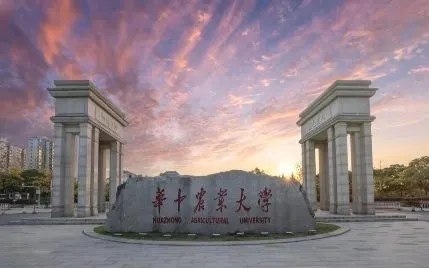
Huazhong Agricultural University accepts international students on programmes in the following fields: engineering, medicine, education, social sciences, humanities, natural sciences. Choose the level and programme that suit your goals.
Chinese language study at the university — from a few weeks to a year or longer. Suitable for those starting from scratch or preparing for the HSK before entering a main programme.
self-funded · language programme
The first level of higher education: usually four years of study, specialised subjects, internships and a graduation thesis. It opens the way to working in your field and to a master's degree.
self-funded
Advanced study after a bachelor's degree: research, applied projects and internships. It helps you become an expert in your chosen field and broaden your career opportunities.
self-funded
Huazhong Agricultural University is located in Wuhan. Nihao Study consultants keep track of the deadlines and admission requirements of this university, and you can always check the most accurate and up-to-date information on its official website. In university rankings, it is ranked 63 in China and 588 worldwide.
Come for a face-to-face meeting: together we will go through the requirements, deadlines, documents and study options that suit you.

At the meeting we will look at your situation, tell you which documents to prepare and by when, talk about possible programmes and help you decide on the next step.
Huazhong Agricultural University (HZAU, 华中农业大学, pinyin Huázhōng Nóngyè Dàxué) is an agricultural university in Wuhan, the capital of Hubei Province. The university's charter also sets out the Chinese short forms 华中农大 and 华农; the latter is pronounced ‘Huanong’. Russian-language sources also use the abbreviation HAU and several other renderings of the name, but this overview uses the standard name and the official abbreviation HZAU.
It is a public research university under the Ministry of Education of China. Its main fields are agricultural sciences, biology, veterinary medicine, food technology and agricultural economics. HZAU is part of Project 211 and the national Double First-Class (双一流) programme, but not Project 985. Its strong agricultural research makes this an easy mistake to make, but HZAU is not on the official list of 985 universities published by the Ministry of Education of China.
This Nihao Study overview gathers what a 2026 applicant will need: the university's status and rankings, programmes, HSK requirements, scholarships, accommodation and the application procedure.
| Item | Data | Comment |
|---|---|---|
| Year founded | 1898 | One of the starting points of higher agricultural education in China |
| Structure | 17 colleges and units | Coverage from crop science to management and computer science |
| Bachelor's Degree | 67 majors | A wide choice of agricultural and related fields |
| Students | Over 34,000 full-time students | A large specialised research university |
| International students | 432 people | International admissions lean noticeably towards research degrees |
| Staff | 3,022 people, including 1,701 teaching staff | A solid base for teaching and research |
| Campus | 5 square kilometres | Extensive lakeside grounds on Shizi Hill |
| Address | No. 1 Shizishan Street, Hongshan District, Wuhan, 430070 | Hongshan District in the south-central part of Wuhan |
HZAU's size on its own says little; what matters more is that this large teaching system is focused on the life sciences. The official portfolio lists master's programmes, both academic (27) and professional (18), as well as doctoral programmes, both academic (15) and professional (5). For international applicants this suggests that the most detailed English-language admissions and the scholarship system apply mainly to master's and doctoral study.
Its history dates back to 1898 and the Hubei Agricultural School founded by the statesman Zhang Zhidong. After reorganisation in 1903 it became Hubei Higher Agricultural School. After the revolution the institution changed its name and format several times, and in 1938 it was evacuated to Wufeng, a mountainous area in Enshi.
Its modern institutional basis took shape in 1952, when the agricultural units of Wuhan University and Hubei Agricultural College were merged with the relevant parts of several other universities, creating Huazhong Agricultural College. In 1957 the college moved to the site by Shizi Hill and South Lake, where the campus is today.
The university has borne its current name, Huazhong Agricultural University, since 1985. In 2000 it was transferred from the Ministry of Agriculture to the direct control of the Ministry of Education, in 2005 it joined Project 211, and since 2017 it has been part of the Double First-Class initiative. In this way a practical agricultural school became a research university where classical agricultural disciplines are combined with genomics, engineering, bioinformatics and economics.
It is important to be precise about status. Project 211 brings together key universities that received targeted support to develop research and teaching. HZAU joined it in 2005.
In the second round of the Double First-Class programme, HZAU has five disciplines on the list: veterinary science, animal science, horticulture, biology, and agricultural and forestry economics and management. The second list was published in 2022 jointly by the National Development and Reform Commission, the Ministry of Finance and the Ministry of Education.
Project 985 is a separate, narrower historical list. The official list includes 39 universities, among them Wuhan University and Huazhong University of Science and Technology, but Huazhong Agricultural University is not on it. So on application forms and in consultations, the correct description of its status is: HZAU has 211 and Double First-Class, but not 985.
| Ranking | Position | Notes |
|---|---|---|
| QS World University Rankings 2027 | 1001–1200 | Composite international assessment |
| ARWU 2025 | 201–300 | Strong results on research indicators |
| CWUR 2026 | 348th worldwide, 59th in China | In the top 1.7% of the CWUR list |
| EduRank 2026 | 963rd worldwide, 65th in China | Bibliometric assessment taking reputation into account |
| THE, published profile | 601–800 in the 2022 edition | No more recent overall position is given on the university's page |
QS, ARWU, CWUR, THE and EduRank use different sets of criteria, so reducing their positions to a single average is pointless. ARWU is particularly sensitive to research publications and their citations, whereas the overall QS ranking gives more weight to reputation and international indicators. When choosing by field, the subject lists are more useful: in EduRank 2026 HZAU ranks 16th in the world for horticulture, 29th for agricultural sciences and 35th for food and nutrition science.
The university reports that 14 of its disciplines are in the ESI top 1 per cent, two of them in the top one-thousandth and one in the top one ten-thousandth. In a more recent summary, the Hubei Provincial Department of Education already names 15 disciplines in the ESI top 1 per cent, three of them in the top one-thousandth. The difference is explained by the date of the snapshot.
Among its results of practical importance for the agricultural sector, the university counts work on hybrid rapeseed, green rice, cotton and maize. For a prospective master's student, finding a suitable programme is not enough: it is worth researching the specific laboratory and supervisor, their recent publications, and checking how well their methods fit your own project.
Both disciplines, animal science and veterinary science, are among the five in the second round of Double First-Class. Among HZAU's applied work, animal vaccines and freshwater fish research are singled out. So the university is worth considering for those interested in animal health, aquaculture, laboratory veterinary science or the biosafety of the food chain.
What sets HZAU apart from a narrowly specialised agronomy institute is that food science sits alongside agricultural and forestry economics. The university's structure includes, among others, colleges of chemistry, engineering, informatics, food science, public administration, and economics and management. This makes interdisciplinary projects possible, for example on raw material quality, digital agriculture, supply chains or rural development.
HZAU has colleges of life sciences, plant science, horticulture and forestry, animal science and veterinary medicine, fisheries, resources and environment, food science, engineering, chemistry, informatics, biomedicine, economics and management, humanities, and foreign languages. The university also has a joint institute with Lincoln University in New Zealand.
A bachelor's student usually decides on a subject area and language of instruction first, while for master's and doctoral students choosing a specific supervisor matters more. The university's international office states plainly that international students are recruited mainly into its strong fields: plant science, horticulture, animal science, veterinary science, food science and engineering.
| Level | Language of instruction and format | What to check before applying |
|---|---|---|
| Chinese Language | Preparatory course lasting one academic year | Whether the intake is open, current cost, final HSK level |
| Bachelor's Degree | Usually in Chinese; standard duration four years | Whether the major accepts international students, HSK requirements, admission interview |
| Master's Degree | In Chinese or English, research track | Supervisor, curriculum, language of the chosen programme |
| Doctoral (PhD) Programmes | In Chinese or English, research track | Project topic and a professor's consent obtained in advance |
For Chinese-taught study, the international admissions page specifies HSK 5 or higher. For those whose level is not yet sufficient, the university offers a one-year Chinese course first, after which they demonstrate HSK 5. Applicants to the English-taught track should attach TOEFL, IELTS or another proof of English proficiency recognised by HZAU.
For the 2026 intake, the application window for CSC and the university scholarship opened on 1 November 2025 and closed on 27 February 2026. These deadlines apply only to that intake and do not automatically carry over to later ones, so check the dates on HZAU's official website before applying again.
HZAU publishes annual fees for international master's and doctoral students: they depend on the field and language of instruction, and the registration fee and medical insurance are paid separately. Domestic bachelor's fees for Chinese applicants do not automatically apply to international students, and costs for food, transport, phone, visa, study materials and medical services beyond insurance cover are counted separately in your personal budget. Check current amounts for this intake on the university's official website.
HZAU publishes the cost of a single room for international master's and doctoral students. It is worth finding out in advance whether places are available, which utilities are included, whether a deposit is required and whether you can move in before registration. According to the university, CSC scholarship holders receive free accommodation as part of their package.
The campus sits on Shizi Hill and is surrounded by lakes on three sides. According to the official description, the shoreline stretches for 9 kilometres, the forest roads for 10 kilometres, and the green route is 6.6 kilometres long. The grounds are large, so the distance from your dormitory to your laboratory can matter more than the distance from the campus gate to the metro.
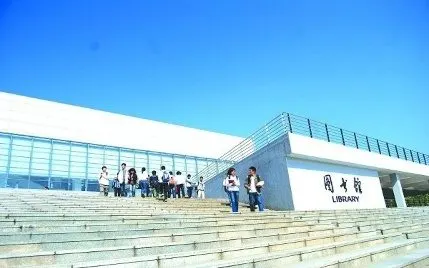
In everyday life you will use the canteens, library, museum, sports grounds and on-campus transport. The library holds more than 2.2 million printed books and over 4.05 million e-journals and e-books. In addition, according to the university, 15 sightseeing and campus vehicles run on two routes.
HZAU may nominate candidates for the Chinese Government Scholarship High-Level Postgraduate Program, but the final decision rests with the China Scholarship Council. It is a competition: receiving an offer does not in itself guarantee a scholarship.
A convincing application shows how the candidate's previous experience relates to a specific HZAU laboratory, rather than amounting to a general interest in China. For a research degree, a well-thought-out study plan, relevant publications, recommendation letters and prior contact with a professor carry particular weight.
The campus covers 5 square kilometres, with a total floor area of 1.98 million square metres. The lakeshore and long green paths make HZAU a self-contained university environment rather than a single building in the middle of the city.
At the foot of Shizi Hill stands the HZAU museum, which serves at once as a natural history, agricultural and science education museum. Besides that, the grounds have venues for academic, sports and cultural events and a student centre. International students should find out in advance how the canteens work during holidays, how laboratory access is arranged and where to go for medical help.
The university's official address is No. 1 Shizishan Street, Hongshan District, Wuhan, Hubei, 430070. The Wuhan city authorities describe Shengnongkeyuan station on Line 8 as the transport hub used by HZAU students and staff. It is more reliable to plan your route from the airport or railway station using an up-to-date map on the day of travel.
| University and Chinese name | Status | Main focus |
|---|---|---|
| Huazhong Agricultural University, HZAU, 华中农业大学 | 211, Double First-Class, not 985 | Agricultural sciences, biology, veterinary science and food technology |
| Huazhong University of Science and Technology, HUST, 华中科技大学 | 985, 211, Double First-Class | Engineering, medical and natural sciences |
| Central China Normal University, CCNU, 华中师范大学 | 211, Double First-Class | Teacher training, humanities and social sciences |
Huazhong and Central China both refer to the central part of China, so these words appear in the English names of several Wuhan universities. To avoid mistakes, look at the abbreviation rather than just the transliterated name: HZAU is the agricultural university, HUST the university of science and technology, CCNU the normal (teacher-training) university.
The main Russian form is an adjectival rendering of "Huazhong Agricultural University"; a variant with a garbled first syllable comes from an erroneous transcription found in older spellings, and another form is a calque of the English word order. The official international name is Huazhong Agricultural University, and the official English abbreviation is HZAU. The abbreviation HAU appears in older sources, but HZAU's charter does not establish it. The Chinese short form 华农 is pronounced Huanong, and the full name 华中农业大学 is pronounced Huázhōng Nóngyè Dàxué in Chinese. English-language references also mention the historical name Central China Agricultural University.
It is a public research university in Hongshan District, Wuhan. The main address is No. 1 Shizishan Street, postcode 430070.
The university takes part in Project 211 and Double First-Class, but it is not on the official Project 985 list.
Yes: the university's international page has information on English-taught master's and doctoral programmes. It is advisable to attach TOEFL, IELTS or another English proficiency document recognised by HZAU to your application. The language of instruction should be checked separately for each programme.
According to the published rule, international programmes taught in Chinese require HSK 5 or higher.
Tuition fees for master's and doctoral programmes depend on the field of study and the language of instruction, and there is a separate rate for single rooms for international master's and doctoral students. Check the official university website for the exact amounts for the current intake.
Yes, through the CSC High-Level Postgraduate Program competition. The university nominates candidates, and the final decision is made by the China Scholarship Council. The full package covers tuition, dormitory and insurance and includes a monthly stipend under the programme rules.
It is not a good idea to choose an HSK venue based on an old mention by the university. Find a test centre and date using the official search and calendar on the Chinese Test Service website.
The basic list: application form, transcript, diploma or certificate of expected graduation, two letters of recommendation, study plan, passport, medical form, police clearance certificate, language certificate and a letter from a professor. The requirements may vary depending on the programme and year.
The reference point is the address No. 1 Shizishan Street in Hongshan District. City transport planning mentions Shengnongkeyuan station on Line 8, which university students and staff use. Check the final route against a map on the day you arrive.
HZAU specialises in agricultural sciences and biology. HUST is a large comprehensive research university with strengths in engineering and medicine. CCNU is known first and foremost as a university that trains teachers and conducts research in education, as well as in the humanities and social sciences.
Wuhan (武汉) stands at the confluence of the Yangtze and Han rivers and serves as the main transport hub of central China — it is called the 'thoroughfare of nine provinces'. It is also a huge student city: more than 1 million people study here.
Wuhan gives applicants a wide choice of universities, among them Wuhan University, known for its very beautiful campus. Youth life is buzzing, prices are moderate, and it is a convenient base for travelling all over China. In spring the city is covered in cherry blossom. Parents should take into account the advanced healthcare and infrastructure, high standard of education, support for international students, modern campuses and a renewed, safe urban environment.
You work with Nihao Study specialists. They will help you put together a portfolio and a set of documents, draw up a study plan and choose a university or college and a specialty that genuinely interest you.
We take care of every stage of admission, from choosing to enrolment
We will gather, prepare, certify and send your documents to the institution
We will show the admissions committee your strengths
We run training sessions and courses so you can prepare with more confidence
We will help you settle in at the start of your studies and keep moving forward
Nihao Study specialists select universities and colleges that match the applicant's goals and means. We make sure the teachers are practitioners and that the knowledge will be useful in your profession.
We examine curricula, talk to students and teachers and look at which specialties employers need, and use this information to select options for the applicant.
Advisers guide the applicant from the first consultation to enrolment, help build a plan and spot mistakes in time that could get in the way.
The cost of our support depends on the programme and the partner university; you'll get an exact quote after a free consultation.
Get a quoteA free 15-minute consultation: together we will choose a university or college and a programme that suit your goals and budget.
Apply with peace of mind: we handle the documents, deadlines and correspondence with admissions committees, and you save time and energy.
Don't want to wait for a call? Message us in the chat.
Message us in chat