- Language courses
- English
- Bachelor's Degree
- English
- Master's Degree
- English
- Doctoral (PhD) Programmes
- English
- Accommodation from 8 400 ¥/year
WHU · 武汉大学
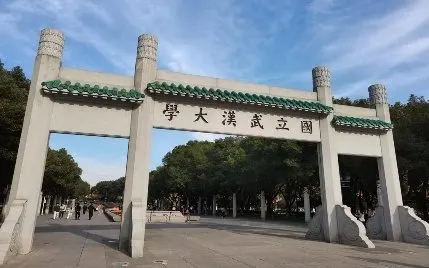
Wuhan University accepts international students on programmes in the following fields: engineering, medicine, law, natural sciences. Choose the level and programme that suit your goals.
Chinese language study at the university — from a few weeks to a year or longer. Suitable for those starting from scratch or preparing for the HSK before entering a main programme.
self-funded · language programme
The first level of higher education: usually four years of study, specialised subjects, internships and a graduation thesis. It opens the way to working in your field and to a master's degree.
self-funded
Advanced study after a bachelor's degree: research, applied projects and internships. It helps you become an expert in your chosen field and broaden your career opportunities.
self-funded
Wuhan University is located in Wuhan. Nihao Study consultants keep track of the deadlines and admission requirements of this university, and you can always check the most accurate and up-to-date information on its official website. In university rankings, it is ranked 12 in China and 257 worldwide.
Come for a face-to-face meeting: together we will go through the requirements, deadlines, documents and study options that suit you.

At the meeting we will look at your situation, tell you which documents to prepare and by when, talk about possible programmes and help you decide on the next step.
Wuhan University (WHU, 武汉大学) is a public research university in Wuhan, the capital of Hubei Province. The abbreviation WHU is officially set out in the university charter. The full Chinese name is pronounced Wǔhàn Dàxué, and students usually just say 武大 (Wǔdà). Russian-language searches also turn up several non-standard variants of the name alongside the standard dictionary form.
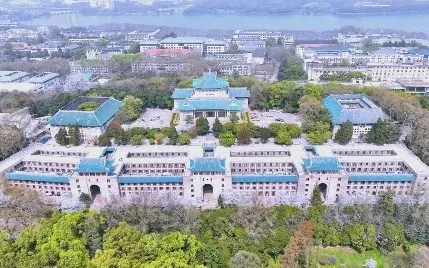
WHU is part of Project 985, Project 211 and the Double First-Class (双一流) programme, and all three statuses are confirmed. In the second round of Double First-Class, 11 of the university's disciplines receive support. There are good grounds for counting WHU among the country's leading universities, but this should rest on its national status and positions in international rankings rather than on promotional epithets. Talk of the campus's beauty is also a matter of reputation: according to THE, WHU's campus, with Luojia Hill, East Lake and its cherry blossoms, is renowned as one of the most picturesque in China.

| Item | Value based on verified data |
|---|---|
| Founded | History dates back to 1893 |
| Status | 985, 211, Double First-Class |
| Structure | 41 units, 131 bachelor's programmes |
| Double First-Class | 11 disciplines |
| Number of students | 49,045; about 6 per cent international students (THE 2026 data) |
| Library collection | 7.4571 million items |
| Research and medicine | 3 top-tier hospitals; 7 national key laboratories |
| Main address | 299 Bayi Road, Wuchang District, Wuhan, Hubei, 430072 |
Different statistical sections of the WHU website are updated at different times. So student numbers should be matched to the period the data refers to and not mixed with older figures. When choosing a programme, what matters is not the total number of students but the current admission catalogue for international students.
According to its official history, the university dates back to the Ziqiang Institute, founded in 1893 by the statesman Zhang Zhidong. The name National Wuhan University appeared in 1928, and the university became one of the first comprehensive national universities of modern China. By 1946 it already covered medicine, agriculture, engineering, natural sciences, law and the humanities.
The university reached its current scale in 2000, when four institutions merged: the former Wuhan University, Hubei Medical University, Wuhan University of Hydraulic and Electrical Engineering and Wuhan Technical University of Surveying and Mapping. This explains its unusually strong combination of fields: law and the humanities sit alongside hydraulic engineering, geodesy, remote sensing and medicine.
The main campus grew up around Luojia Hill and East Lake. The university reports that 26 of its early buildings are protected by the state as major national cultural heritage sites. The historic library building was built in 1935, and the Songqing Gymnasium was completed in 1936. So WHU's look is not just about cherry blossom but also a unified architectural ensemble in which Chinese and Western features are set into the hilly terrain.
Each ranking uses its own methodology, so they cannot be reduced to one ‘absolute’ place. QS gives more weight to reputation and internationalisation, THE assesses teaching together with research, ARWU looks primarily at research output, and CWUR takes into account the quality of education, graduate employment and research.
| Ranking | Rank and edition | What it measures |
|---|---|---|
| QS World University Rankings | 165th, 2027 edition | Global reputation and international recognition |
| Times Higher Education | 122nd, 2026 edition | Teaching, research, citations, international outlook |
| ARWU | 81st, 2025 edition | Research output |
| CWUR | 131st in the world, 12th in China, 2026 edition | Overall score; 66th for research |
In the THE 2026 subject rankings, WHU is 49th for law, 79th for engineering, 88th for physical sciences and 97th for computer science. If you have already chosen your field, these figures are more informative than the overall place. The figure 257, which appears in older materials, is not current: it comes from past QS editions, and in the 2027 edition the university rose to 165th.
Together, the schools of geodesy, remote sensing, geophysics and computer science form a powerful cluster focused on spatial data. Geodesy and geophysics are on the Double First-Class list, and surveying and mapping, according to the university, has national key discipline status. For applicants this opens up a wide choice, from geoinformatics and satellite navigation to smart cities and monitoring natural processes.
From this area, law, theoretical economics, Marxist theory, and library, information and archives management entered the second round of Double First-Class. Internationally, law stands out most: it is 49th in the THE 2026 subject ranking. WHU also cooperates with Russian universities: in 2025 it signed a memorandum with Baikal State University that envisages developing double-degree programmes in economics and information management.
The 11 Double First-Class disciplines include chemistry, biology, hydraulic engineering, civil engineering, stomatology and a number of humanities fields. The medical side relies on 3 top-tier hospitals, and the research base is complemented by national laboratories and engineering centres. This combination suits interdisciplinary paths well, for example in bioinformatics, medical data, environmental monitoring or water resources management.
WHU's units are grouped into six large academic blocks. The humanities block includes philosophy, history, literature, journalism, foreign languages and art. The social sciences block includes law, economics and management, sociology, public administration and information management. The natural sciences include mathematics, physics, chemistry and biology, as well as Earth and space sciences, resources and the environment.
The engineering block brings together the schools of electrical engineering, power and mechanical engineering, hydraulic engineering, civil engineering, robotics, integrated circuits and urban design. The information block covers computer science, electronics, geodesy, remote sensing, artificial intelligence and cybersecurity. The medical block covers basic medicine, clinical schools, pharmacy, public health, stomatology and nursing.
In 2025, 8 new programmes appeared in the catalogue, including robotics, digital economy, smart energy, smart urban planning and spatio-temporal information engineering. This shows that the range of programmes is being updated. However, WHU's internal catalogue is broader than the list for international students, so whether a particular programme is open to international students needs to be checked separately.
Bachelor's, master's and doctoral programmes are open to international students, as well as non-degree Chinese language courses. The current list of Chinese-taught bachelor's programmes includes, among others, law, philosophy, finance, international economics and trade, Chinese language and literature, mathematics, chemistry, biology and geographic information science. Most bachelor's programmes last 4 years; clinical medicine may take 6 years.
| Level | Usual duration | Language of instruction and examples |
|---|---|---|
| Bachelor's Degree | 4 years, longer for medicine | Chinese; some programmes in business, finance and clinical medicine are taught in English |
| Master's Degree | 2 to 3 years | Mainly in Chinese, with some English-taught programmes |
| Doctoral (PhD) Programmes | 4 years | Chinese or English, depending on the school's catalogue |
| Chinese Language | a semester or an academic year | Language and academic preparation at the School of International Education |
According to the 2026 guide, Chinese-taught bachelor's programmes require HSK 4 with at least 180 points. English-taught programmes require TOEFL 80 or above, TOEFL Essentials 8 or above, or IELTS 6.0 or above. Native English speakers and those who completed their previous programme in English may be exempted from submitting a certificate; the decision is made by WHU. These figures are only the minimum threshold for admission and do not guarantee comfortable study: for lectures, lab work and everyday life it is better to have Chinese above the minimum.
WHU has a centre that hosts HSK and BCT exams, as well as qualification exams for teachers of Chinese. Not every session is held at every centre, so check dates and format with the exam organiser against the current HSK schedule.
The tuition fee depends on the level, the programme's field and the language of instruction; WHU's guide for international students gives rates per academic year. Master's and doctoral programmes have a registration fee, and insurance is compulsory. The final bill is issued in your WHU personal account: the faculty updates the rate, and some professional programmes have their own price. Check current amounts on the university's official website.
The main campus is in Wuchang District, between East Lake and Luojia Hill. Here modern teaching facilities stand alongside historic buildings. According to university statistics, the library holdings total 7.4571 million items. Besides a network of modern libraries, the campus has preserved the old library, the arched dormitories, the Songqing Gymnasium and an administrative complex from the first half of the 20th century.
For sport there are stadiums, sports grounds, halls and a swimming pool. Cultural life revolves around student clubs, lectures and festivals; the Luojia Golden Autumn Art Festival has been held since 1987. The campus's best-known seasonal symbol is its cherry blossom, but spring brings very large numbers of visitors, which is worth bearing in mind if you plan to come and see the university.
WHU has extensive international ties: according to the university, in 2025 its partners included 341 universities and research institutions from 53 countries. In 2026 WHU signed a student exchange agreement with Lomonosov Moscow State University. Joint programmes in specific subjects, however, are launched separately from such agreements.
According to the WHU guide, on-campus accommodation fees vary widely depending on the building and room type, so you should not count on getting a particular room from a photo. Places are allocated based on campus, programme, gender, application date and room availability. Housing for new international students is arranged by the School of International Education; self-funded students are advised to submit their request early.
The official guide gives a minimum benchmark for monthly expenses, as well as separate items for textbooks, the medical check-up and the residence permit; it is best to check the current figures on the university website. Personal spending will be higher if you travel often, eat outside the canteens or rent accommodation off campus.
WHU's public guide does not state what share of applicants receive a scholarship, so without data it would be wrong to guarantee a scholarship or estimate average chances. In practice, a strong application stands out for a high GPA, proven language proficiency, a well-thought-out study or research plan and documents submitted before the scholarship application window closes.
1. Decide on the degree level and programme. You need to choose from the list for international students: it is not the same as the domestic list of 131 bachelor's programmes.
2. Assess your language level. For Chinese-taught bachelor's programmes the benchmark is HSK 4 with at least 180 points; for English-taught ones, TOEFL 80 or IELTS 6.0 or higher. It is worth checking the HSK test schedule in advance.
3. Prepare your documents. According to the guide, bachelor's applicants need a passport, a school-leaving certificate (or a certificate of expected graduation), a school transcript, a language certificate, proof of financial means and the results of a medical check-up taken no earlier than 6 months before applying.
4. Submit your application on the WHU portal. For the autumn 2026 intake, applications from self-funded students were accepted from 1 December 2025 to 15 June 2026. These are the dates of a cycle that has already closed, not a permanent deadline — for the next intake you will need to check the new guide.
5. Go through the selection process. After reviewing the documents, the university may invite you to an interview and an entrance exam. Scholarship applications are submitted in parallel and separately, via the relevant platform.
6. Receive your admission documents and arrange entry to China. With the Admission Notice and the JW201 or JW202 form, the student obtains an X1 or X2 visa, and at registration at the university presents the originals of the diploma, transcript and medical documents.
| University and Chinese name | Type | Main focus |
|---|---|---|
| Wuhan University, WHU, 武汉大学 | National comprehensive university — 985, 211 and Double First-Class | Law, geodesy, hydraulic engineering, sciences, medicine |
| Wuhan University of Technology, WHUT, 武汉理工大学 | Independent public university | Transport, materials, engineering |
| Wuhan University of Science and Technology, WUST, 武汉科技大学 | Public provincial-level university | Materials, metallurgy, engineering |
| Wuhan Institute of Technology, WIT, 武汉工程大学 | Provincially administered engineering university | Chemical technology and industrial engineering |
| Wuhan Sports University, WHSU, 武汉体育学院 | Specialised sports university | Sport, sports science, coach training |
It is best to check by the Chinese name and the abbreviation. WHU is always 武汉大学; if another university has the word Wuhan in its English name, that does not mean it is part of Wuhan University.
Several Russian spellings of the name are in circulation, and some of them are common mistakes; the standard Russian form is a direct equivalent of "Wuhan University". The official international name is Wuhan University, and the official English abbreviation is WHU. The Chinese short form 武大 is pronounced Wǔdà, and spelling it "Wuda" is only an approximate rendering. The full name 武汉大学 is read Wǔhàn Dàxué.
WHU is short for Wuhan University. The abbreviation is set out in the university's official charter; it is used in international rankings, in domain names and in correspondence.
Yes, all three statuses are confirmed. In the second round of Double First-Class, the university has 11 disciplines on the list.
Yes, some programmes are taught in English — in particular, a number of fields in business, finance and medicine. However, most master's and doctoral programmes are taught in Chinese, so you need to check the language of instruction in the description of the specific programme.
The 2026 guide for Chinese-taught bachelor's programmes specifies HSK 4 with at least 180 points. Individual schools or majors may set a higher bar.
The tuition fee depends on the degree level, language and field of the programme, and the dormitory fee on the building and room type. The final amount is confirmed by the invoice issued by WHU; check the current terms on the university's official website.
Yes, the university takes part in several Chinese Government Scholarship programmes. What exactly the scholarship covers depends on the programme and category; admission and scholarship decisions are made separately.
WHU is listed as an HSK and BCT test centre. However, the date, level and format of a specific session need to be confirmed in the official Chinese Test system.
Address: 299 Bayi Road, Wuchang District, Wuhan, Hubei, 430072. The campus is by East Lake and Luojia Hill. Before your trip, check which building and which campus your faculty is based on.
You will usually need a passport, a school-leaving certificate or a certificate of expected graduation, a transcript, a language certificate, proof of finances and a medical certificate. Documents in languages other than Chinese and English must be translated and notarised.
Wuhan (武汉) stands at the confluence of the Yangtze and Han rivers and serves as the main transport hub of central China — it is called the 'thoroughfare of nine provinces'. It is also a huge student city: more than 1 million people study here.
Wuhan gives applicants a wide choice of universities, among them Wuhan University, known for its very beautiful campus. Youth life is buzzing, prices are moderate, and it is a convenient base for travelling all over China. In spring the city is covered in cherry blossom. Parents should take into account the advanced healthcare and infrastructure, high standard of education, support for international students, modern campuses and a renewed, safe urban environment.
You work with Nihao Study specialists. They will help you put together a portfolio and a set of documents, draw up a study plan and choose a university or college and a specialty that genuinely interest you.
We take care of every stage of admission, from choosing to enrolment
We will gather, prepare, certify and send your documents to the institution
We will show the admissions committee your strengths
We run training sessions and courses so you can prepare with more confidence
We will help you settle in at the start of your studies and keep moving forward
Nihao Study specialists select universities and colleges that match the applicant's goals and means. We make sure the teachers are practitioners and that the knowledge will be useful in your profession.
We examine curricula, talk to students and teachers and look at which specialties employers need, and use this information to select options for the applicant.
Advisers guide the applicant from the first consultation to enrolment, help build a plan and spot mistakes in time that could get in the way.
The cost of our support depends on the programme and the partner university; you'll get an exact quote after a free consultation.
Get a quoteA free 15-minute consultation: together we will choose a university or college and a programme that suit your goals and budget.
Apply with peace of mind: we handle the documents, deadlines and correspondence with admissions committees, and you save time and energy.
Don't want to wait for a call? Message us in the chat.
Message us in chat