- Language courses
- English, Chinese
- Bachelor's Degree
- English, Chinese
- Master's Degree
- English, Chinese
- Doctoral (PhD) Programmes
- English, Chinese
- Accommodation from 2 000 ¥/year
USTB · 北京科技大学
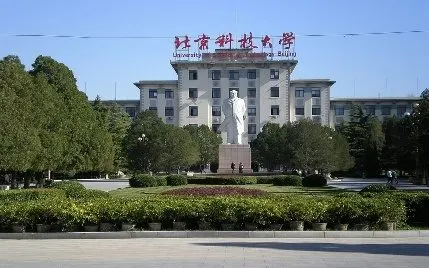
University of Science and Technology Beijing accepts international students on programmes in the following fields: business, engineering, humanities, natural sciences. Choose the level and programme that suit your goals.
Chinese language study at the university — from a few weeks to a year or longer. Suitable for those starting from scratch or preparing for the HSK before entering a main programme.
self-funded · language programme
The first level of higher education: usually four years of study, specialised subjects, internships and a graduation thesis. It opens the way to working in your field and to a master's degree.
self-funded
Advanced study after a bachelor's degree: research, applied projects and internships. It helps you become an expert in your chosen field and broaden your career opportunities.
self-funded
University of Science and Technology Beijing is located in Beijing. Nihao Study consultants keep track of the deadlines and admission requirements of this university, and you can always check the most accurate and up-to-date information on its official website. In university rankings, it is ranked 35 in China and 466 worldwide.
Come for a face-to-face meeting: together we will go through the requirements, deadlines, documents and study options that suit you.

At the meeting we will look at your situation, tell you which documents to prepare and by when, talk about possible programmes and help you decide on the next step.
University of Science and Technology Beijing (USTB, 北京科技大学) is a public research university under the Ministry of Education of China, located in Haidian District, Beijing. Russian-language sources also use other renderings of the name. Students in China call the university 北科大 (Běikēdà) for short, an abbreviation of the full Běijīng Kējì Dàxué. International correspondence and rankings use the abbreviation USTB, which should not be confused with USTC, the university in Hefei.
USTB is part of Project 211 and the Double First-Class (双一流) programme. According to the Ministry of Education list, the university has four Double First-Class disciplines: materials science and engineering, metallurgical engineering, mining engineering, and the history of science and technology. So reducing USTB to metallurgy and materials alone would be too narrow a view, even though these fields have historically formed its core.
Below, Nihao Study has gathered the essentials about USTB for 2026 applicants: statuses and rankings, programmes, HSK and CSCA requirements, accommodation, scholarships and application documents. Admission conditions should always be checked against the university's official admission regulations.
| Item | Data | Comment |
|---|---|---|
| Founding of the modern university | 1952 | mining and metallurgy education here dates back to 1895 |
| Status | Project 211, Double First-Class | the university is among the national research priorities |
| Full-time students | more than 27,000 | almost equal numbers of undergraduates and postgraduates |
| Bachelor's students | 14 038 | a wide choice of engineering and interdisciplinary programmes |
| Master's and doctoral students | 13,949, including 4,446 doctoral students | a well-developed research environment |
| International students | 1 011 | a noticeable number of international students, but they are not the majority |
| Teaching staff | 2,189 full-time teaching staff | a large team for teaching and research |
| Bachelor's programmes | 68 | the fields go well beyond metallurgy |
| Library collection | more than 2.624 million items | resources for study and research |
Main campus: No. 30 Xueyuan Road, Haidian District, Beijing 100083, China. It sits in the Xueyuan Road university belt of Haidian District and is not a separate out-of-town campus. If you are choosing between several universities in the capital, it is worth comparing USTB with other Beijing universities too.
The university dates its history not from a formal founding date but from 1895, when China's first modern discipline in mining and metallurgy appeared at the Peiyang Western Academy. The university in its present form took shape in 1952, when it was assembled from the relevant departments of six universities, including Tsinghua and Tianjin University. It was originally called the Beijing Institute of Iron and Steel Industry, a name that pointed directly to its mission.
In 1960 the institute was renamed the Beijing Steel Institute and gained national key university status. In 1984 it was among the first Chinese universities to officially open a graduate school, and in 1988 it received its current Chinese and English names. This was followed by the first wave of Project 211 in 1997, the innovation platform for priority disciplines in 2006 and admission to Double First-Class in 2017.
Historically the university has been associated with the steel industry, but today USTB teaches engineering and natural sciences, management, humanities, economics and law. According to the university, it has more than 330,000 graduates, 50 of whom have become academicians, members of the Chinese Academy of Sciences or the Chinese Academy of Engineering. This explains why USTB's reputation is especially strong in metallurgy, materials science and industrial engineering.
It is important to understand the statuses precisely. USTB is a Project 211 member, but it was not part of the original Project 985. The university had a special status, an innovation platform for priority disciplines under 985, and this is not the same as membership of the 985 group. In the second round of Double First-Class, USTB was assigned four fields: materials, metallurgy, and also mining and the history of science and technology.
| Ranking | Position | Comment |
|---|---|---|
| QS World University Rankings 2027 | joint 443rd | overall world ranking; joint 480th in the 2026 edition |
| CWUR 2025 | 304th in the world, 44th in China | strong research indicators; the university is in the top 1.5 per cent of the list |
| EduRank 2026 | 674th in the world, 43rd in China | assessment based on publications and citations, with subject sections |
| ShanghaiRanking, Metallurgical Engineering 2025 | 1st | the subject ranking shows USTB's specialisation more accurately than the overall one |
| THE World University Rankings | 801–1000 (band, 2023 edition) | the latest overall result visible on the open THE page; it must not be carried over to the new year |
According to the university's 2025 data, materials science, engineering and chemistry are in the top 0.1 per cent of ESI, while physics, ecology, computer science, geosciences, biology and biochemistry, and social sciences are in the top 1 per cent. In the EduRank 2026 subject section, USTB is 5th in the world for mining and 17th for metallurgical engineering. Because QS, THE, CWUR, EduRank, ESI and U.S. News use different methodologies, they cannot be reduced to a single ‘average place’. It is better not to quote an exact U.S. News position without an accessible, up-to-date university page.
Metallurgical engineering at USTB is broader than traditional steelmaking. It covers energy storage, processing of strategic metals, resource-saving processes, industrial safety and low-carbon technologies. The university has a national research centre, seven national key laboratories (including joint ones) and three national engineering research centres. For students, this is a chance to work on problems at the intersection of fundamental science and industry.
Materials science at USTB includes metals and alloys, nanomaterials, energy materials and structural reliability assessment. This explains the university's high position in subject rankings. Materials Science appears in the list of English-taught bachelor's programmes for international students, and a wide choice of research areas is open at master's and doctoral level.
The School of Resources and Safety offers programmes in mining engineering, mineral processing, safety engineering, engineering mechanics, occupational health and intelligent mining. In parallel, the university is developing robotics, automation, artificial intelligence, the Internet of Things and information security. This combination suits those interested not only in working with raw materials but also in digital manufacturing, modelling and the management of complex systems.
USTB's academic structure is based on specialised schools and research institutes. The engineering block includes metallurgy and environmental engineering, materials, resources and safety, mechanics, energy and the environment, future cities, automation, computer science and communications, and artificial intelligence.
The natural sciences are represented by mathematics, physics, applied chemistry and biotechnology. The management and humanities blocks include law, accounting, business administration, financial engineering, international economics and trade, big data management, public administration, social work and foreign languages.
When choosing a programme, do not stop at the name of the school. For example, the School of Materials Science and Engineering is a unit of the university, not an independent college. For each programme, check the language of instruction, the required CSCA subjects, the supervisor and the curriculum. USTB has no full programmes taught in Russian.
| Programme | Format | Main requirements |
|---|---|---|
| Bachelor's Degree | 4 years, full-time | taught in Chinese or in selected English-taught programmes; CSCA required |
| Master's Degree | Chinese or English | bachelor's diploma, research plan, recommendation letters |
| Doctoral (PhD) Programmes | Chinese or English | bachelor's and master's diplomas, research proposal |
| International Economics and Trade | 1 + 3 scheme | Chinese and core subjects in the first year, then professional training |
| Chinese Language | a semester or an academic year | levels from beginner to advanced, separate admission |
| Foundation programme | one academic year | Chinese language, culture and subject basics; further study after final exams and HSK 4 |
Materials Science and Engineering and Environmental Engineering are taught in English at bachelor's level, but even these require some basic Chinese. English-taught master's programmes include, among others, sociology, international trade, management, environmental engineering, safety, metallurgy, information and communication technologies and other fields.
The standard language programme is 20 academic hours a week at one of three levels: beginner, intermediate or advanced. That adds up to 160 hours per semester and 320 per year; the foundation programme is more intensive, with 640 hours a year at 40 hours a week. Students work on reading, writing, listening, speaking and grammar, and optionally on HSK preparation. The BCT certificate is not listed in the admission rules as a substitute for HSK.
NUST MISIS is among USTB's partners. The university's official partner list dates the links with the Moscow Institute of Steel and Alloys to 1989, and in 2025 USTB announced an opportunity for its students to enter a MISIS master's programme with a scholarship. This is an academic partnership and exchange programme, not admission of international students in Beijing to Russian-taught programmes.
The application registration fee is non-refundable, even if the admissions office rejects you. Medical insurance is taken out for a year or a semester. In addition, your personal budget should allow for flights, the visa, transport, food, study materials and possibly renting accommodation off campus. Current fee amounts are published on the USTB official website.
| Option | What to check |
|---|---|
| Twin room | limited number of places |
| Four-person room | check-in is confirmed separately |
| Renting off campus | you must register with the police within 24 hours of moving in |
The university openly warns that there may not be enough dormitory places for international students. If a booking is not confirmed, students find accommodation themselves. Confirmation of a dormitory place comes separately, and it is worth receiving it before buying your ticket.
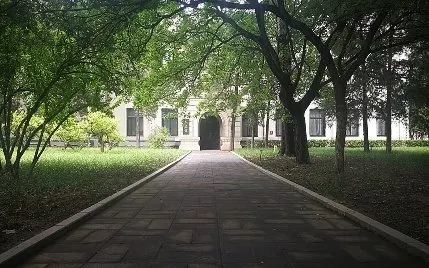
The main campus is on Xueyuan Road. The university grounds cover about 803,900 square metres, and the total floor area of its buildings is roughly 996,800 square metres. The campus has laboratories, a library, sports facilities, a university history museum and student services. For comparison, you can also look at its neighbours in the capital, BIT (Beijing Institute of Technology) and BUCT (Beijing University of Chemical Technology).
The chances of getting a scholarship depend on the individual candidate's profile.
| University and Chinese name | Type of institution | Main focus |
|---|---|---|
| USTB, 北京科技大学 — University of Science and Technology Beijing | Ministry of Education university, Project 211 member | metallurgy, materials, mining, history of science |
| BIT, 北京理工大学 — Beijing Institute of Technology | national-level research university | mechanical engineering, information and defence technologies |
| BJUT, 北京工业大学 — Beijing University of Technology | municipal university | engineering, civil engineering, urban technologies |
| BUCT, 北京化工大学 — Beijing University of Chemical Technology | national-level engineering university | chemical engineering, materials, polymers |
| BISTU, 北京信息科技大学 — Beijing Information Science and Technology University | municipal university | information technology, management, instrument engineering |
The main way to avoid mistakes with USTB is the Chinese name 北京科技大学. There is also the University of Science and Technology of China (USTC, 中国科学技术大学), but that university is in Hefei. The shared words Science and Technology in the English names do not indicate any link between the universities.
Russian-language texts use one standard Russian form of the name; a word-for-word calque of the English name also circulates but is not the accepted form. The official international name is University of Science and Technology Beijing, and the official abbreviation is USTB. 北科大 (Běikēdà) is the Chinese abbreviation, and 北京科技大学 (Běijīng Kējì Dàxué) is the original Chinese name.
It is a public research university under the Ministry of Education of the PRC. The main campus is at 30 Xueyuan Road, Haidian District, Beijing 100083.
Yes. 北京科技大学 appears on the Ministry of Education's official Project 211 list. In the second round of Double First-Class, the university was assigned mining engineering, metallurgical engineering, materials science and engineering, and the history of science and technology.
USTB has no programmes in Russian. There are some English-taught programmes: bachelor's degrees in materials science and environmental engineering, some master's fields and doctoral programmes. Always check the language of instruction in the catalogue for the specific intake.
Chinese-taught bachelor's programmes require HSK 4. Under the 2026 admission rules, Chinese-taught master's programmes require HSK 5 and doctoral programmes HSK 6.
For bachelor's programmes, yes, a CSCA transcript is mandatory. The subjects depend on the programme: everyone takes mathematics, and most applicants to engineering and science programmes also need physics or chemistry.
The price depends on the room type: double or quadruple. Current accommodation rates are published on the university's official website; check them before applying.
Yes: USTB works with both the Type A and Type B routes. Full funding usually covers tuition, accommodation, medical insurance and a living allowance, but the decision is made on a competitive basis.
No. The international centre states plainly that housing is limited and asks students whose room has not been confirmed to find accommodation off campus themselves.
USTB (北京科技大学) is in Beijing and specialises in metallurgy, materials, mining and industrial engineering. USTC (中国科学技术大学) is in Hefei. BIT (北京理工大学) has a different focus: engineering and defence technology. BUCT (北京化工大学) specialises in chemical technology. So always check both the Chinese name and the abbreviation.
An application form, passport, school certificate with transcript, proof of language proficiency, medical form, financial guarantee, police clearance certificate and CSCA transcript. Documents not in Chinese or English must be translated and notarised.
Beijing (北京) is the capital of China and a major centre of education: the city has more than 90 universities, among them Peking University and Tsinghua University, which rank in the country's top 2. Here you can see the Forbidden City and the Great Wall of China, as well as the modern tech district of Zhongguancun, known as China's Silicon Valley.
Studying in Beijing goes hand in hand with good career prospects: the city hosts the headquarters of major companies and research centres, getting around is easy (the metro has 22 lines), and cultural life is very rich. Parents should know that the capital's infrastructure is highly developed, there are international clinics with Russian-speaking staff, many direct flights leave the city, and students are supported by a well-established system: dormitories are located right on the guarded university campuses.
You work with Nihao Study specialists. They will help you put together a portfolio and a set of documents, draw up a study plan and choose a university or college and a specialty that genuinely interest you.
We take care of every stage of admission, from choosing to enrolment
We will gather, prepare, certify and send your documents to the institution
We will show the admissions committee your strengths
We run training sessions and courses so you can prepare with more confidence
We will help you settle in at the start of your studies and keep moving forward
Nihao Study specialists select universities and colleges that match the applicant's goals and means. We make sure the teachers are practitioners and that the knowledge will be useful in your profession.
We examine curricula, talk to students and teachers and look at which specialties employers need, and use this information to select options for the applicant.
Advisers guide the applicant from the first consultation to enrolment, help build a plan and spot mistakes in time that could get in the way.
The cost of our support depends on the programme and the partner university; you'll get an exact quote after a free consultation.
Get a quoteA free 15-minute consultation: together we will choose a university or college and a programme that suit your goals and budget.
Apply with peace of mind: we handle the documents, deadlines and correspondence with admissions committees, and you save time and energy.
Don't want to wait for a call? Message us in the chat.
Message us in chat