- Language courses
- English, Chinese
- Bachelor's Degree
- English, Chinese
- Master's Degree
- English, Chinese
- Doctoral (PhD) Programmes
- English, Chinese
- Accommodation from 2 000 ¥/year
UIBE · 对外经济贸易大学
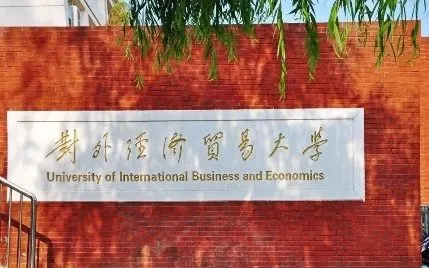
University of International Business and Economics accepts international students on programmes in the following fields: business, law, economics. Choose the level and programme that suit your goals.
Chinese language study at the university — from a few weeks to a year or longer. Suitable for those starting from scratch or preparing for the HSK before entering a main programme.
self-funded · language programme
Cost: 19 000 ¥/year
Chinese at an accelerated pace: more classroom hours per week and a packed curriculum. For those who need results in a short time.
self-funded · language programme
Cost: 38 600 ¥/year
Foundation programme: language and core subjects before a bachelor's degree. It helps you strengthen your knowledge and get used to studying in China before the main programme begins.
self-funded
Cost: 31 200 ¥/year
The first level of higher education: usually four years of study, specialised subjects, internships and a graduation thesis. It opens the way to working in your field and to a master's degree.
self-funded
Cost: 24 800–49 750 ¥/year
Advanced study after a bachelor's degree: research, applied projects and internships. It helps you become an expert in your chosen field and broaden your career opportunities.
self-funded
Cost: 29 800–128 640 ¥/year
University of International Business and Economics is located in Beijing. Nihao Study consultants keep track of the deadlines and admission requirements of this university, and you can always check the most accurate and up-to-date information on its official website. In university rankings, it is ranked 147 in China and 1364 worldwide.
Come for a face-to-face meeting: together we will go through the requirements, deadlines, documents and study options that suit you.

At the meeting we will look at your situation, tell you which documents to prepare and by when, talk about possible programmes and help you decide on the next step.
UIBE (University of International Business and Economics, 对外经济贸易大学) is a public university in Beijing with a clear specialisation. It is aimed at those who plan to study economics and finance, international trade, business or international law. In Chinese the name is pronounced Duìwài Jīngjì Màoyì Dàxué, and on campus the university is often called simply 贸大 (Màodà).
The university is under the Ministry of Education of China, with the Ministry of Commerce contributing support. UIBE is part of Project 211 and the national Double First-Class (双一流) programme; in the second round of the programme, applied economics was named as its designated discipline. Nihao Study has prepared this overview for 2026 applicants, separating permanent facts about the university from what changes from one intake to the next: admission rules and scholarships.
UIBE is worth shortlisting if you prefer a strong environment focused on foreign trade, finance, international business, economic law and business foreign languages to a huge university that covers everything. The university itself names finance, international trade, international law, business administration and foreign languages as its competitive areas. Even so, you should choose a specific programme, not just a famous name: programmes differ greatly in language of instruction, cost, HSK or English requirements and course content.
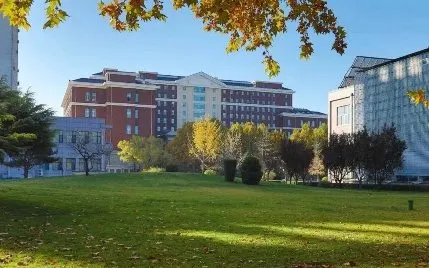
| Item | Data |
|---|---|
| Year founded | 1951 |
| Status | Ministry of Education university (jointly with the Ministry of Commerce); 211; Double First-Class |
| Students | over 17,000: more than 9,000 bachelor's students, 6,500 master's and doctoral students |
| International students | over 2,300 from 160 countries and territories |
| Teaching staff | 1,097 full-time, including 353 professors and 405 associate professors |
| Programmes and degrees | bachelor's: 58 programmes; master's: 14 academic and 14 professional fields; doctoral: 8 academic and 2 professional fields |
| Address | No. 10 Huixin Dongjie, Chaoyang District, Beijing, 100029 |
These figures describe the university as a whole, not only international admissions. The share of international students and the number of programmes open to them change over time, so the list of programmes and the conditions for your year should be checked again.
UIBE dates back to 1951, when the Advanced School for Commercial Cadres was opened under the central trade authority of new China. In 1953 it was named Beijing Foreign Trade College. In 1954 the relevant department of Renmin University of China was merged into it, and the institution was renamed Beijing Institute of Foreign Trade. So for UIBE foreign trade is not a specialisation that emerged later, but the core of its entire academic identity.
The university was granted national key university status in 1960. Its current Chinese name was adopted in 1984, and in 1997 UIBE joined Project 211. The merger with the China Institute of Finance in 2000 strengthened its finance programmes. In 2017 the university was included in the first round of Double First-Class; UIBE and its applied economics also remained on the official list of the second round.
For an applicant this history has practical meaning: the schools of international economics, finance, business and law grew in close connection with China's foreign trade system rather than in isolation. UIBE is also home to research centres studying the WTO, global value chains and the open economy.
The overall world ranking only partly reflects UIBE's specialisation. In the Times Higher Education World University Rankings 2026, the university is in the 501 to 600 band; in the Business and Economics subject it is in the 251 to 300 range, and in Law, 201 to 250. In the QS World University Rankings 2026, UIBE is listed in the 1201 to 1400 range.
In individual subjects the results are higher. According to ShanghaiRanking's Global Ranking of Academic Subjects 2025, UIBE's finance is in the 51 to 75 range; economics and transportation science are at 101 to 150; and business administration at 201 to 300. Its core fields therefore look noticeably stronger than the university's overall position.
| Ranking | Position |
|---|---|
| THE World 2026 | 501 to 600 |
| THE Business and Economics 2026 | 251 to 300 |
| ShanghaiRanking Finance 2025 | 51 to 75 |
| ShanghaiRanking Economics 2025 | 101 to 150 |
| QS World 2026 | 1201 to 1400 |
When comparing UIBE with other Chinese universities, looking at the overall position is not enough: also take into account the programme language, the curriculum, the teaching staff and the connections of the specific school.
On the national Double First-Class list, UIBE is represented specifically by applied economics. The School of International Trade and Economics runs programmes in low-carbon economics, law and economics, logistics, industrial economics, finance and international trade. It has 115 teaching staff, each holding a doctorate, and 80% of staff hold senior academic titles.
Students get the chance to see trade as a whole, from microeconomics and econometrics to supply chains, customs regulation, digital trade and global governance. This university is well suited to a career in international companies and banks, consulting and logistics, government regulation or research on the world economy.
UIBE's finance programmes became stronger after the merger with the China Institute of Finance in 2000. Their research weight is also shown by the 2025 ShanghaiRanking result: finance is in the 51 to 75 range.
The business school holds three international accreditations: EQUIS, AACSB and AMBA. They do not remove the need to study the curriculum, but they give a benchmark for the quality of processes and teaching and for how comparable the programmes are with those abroad. Those applying for an MBA or International Business should separately compare the full cost, the professional experience of fellow students and the work experience requirements.
International law has historically been one of UIBE's strengths: the university counts international law among its competitive disciplines, and in the THE 2026 edition UIBE's Law is in the 201 to 250 range. The combination of law, trade and the WTO will suit those who plan to work in trade policy, compliance, dispute resolution and cross-border transactions.
In parallel, UIBE is developing business foreign languages. The School of English offers business English, translation, English literature, linguistics and international communication. This explains why the university presents itself as a place where economics meets professional communication.
International students can choose from language programmes and bachelor's, master's and doctoral programmes. The English-taught bachelor's programmes include economics, international economics and trade, finance, business administration, marketing, international politics, international business and artificial intelligence; the usual length of study is 4 academic years.
Chinese-taught bachelor's programmes include international economics and trade, finance, logistics management, business administration, marketing, accounting, law, business Chinese, international politics, insurance, e-commerce, investment and customs. English-taught master's programmes cover finance, transport economics and logistics, international business, international trade, international law, international relations, public administration, customs administration, IMBA, WTO law and economics, international development and quantitative tracks.
| Level | Programmes (examples) | Language, duration |
|---|---|---|
| Bachelor's Degree | Economics, finance, international business, international trade | English, 4 years |
| Bachelor's Degree | Trade, finance, accounting, law, e-commerce | Chinese, 4 years |
| Master's Degree | International trade, finance, international development | Chinese, 2 years |
| Master's Degree | Finance, international business, IMBA, international law | English, 2 years |
| Doctoral (PhD) Programmes | Trade, finance, business, law, public policy | English, usually 4 years |
The list is not fixed: some programmes only start if enough students enrol. Electives within an English-taught programme are sometimes taught in a different language from the main course. It is best to request the current curriculum, the rules for choosing courses and the thesis requirements in advance.
If your previous degree was not taught entirely in Chinese, the admissions page requires HSK 5 with at least 180 points for Chinese-taught master's programmes. At the same time, more recent internal UIBE rules set a final threshold for Chinese-taught programmes of HSK 5 with at least 210 or HSK 6 with at least 180, and HSK 6 with at least 190 for language majors. The admission threshold and the requirement for study or graduation are different things, so check both documents.
English-taught bachelor's programmes usually require TOEFL 86 or above or IELTS 6.0 or above, or a document showing that your school education was conducted entirely in English. The benchmarks for English-taught master's and doctoral programmes are the same: TOEFL 86 or IELTS 6.0. Chinese is still needed on the English track: by graduation, bachelor's students must have HSK 4 with at least 180, and master's and doctoral students HSK 3 with at least 180.
Plan your exam with time to spare and do not leave it until the last days before the deadline: the university accepts a verifiable result, not the fact that you have registered for the HSK.
UIBE has four residential complexes for international students: Huibin House, Huicai Apartment, Huide Apartment and International Students Apartment Complex, with a total of 1,235 rooms and 2,203 beds. A place is not guaranteed to anyone: accommodation can be booked in the online system after admission is confirmed, and rooms are allocated until they run out.
The price of long-term accommodation depends on the building and room type; in addition, degree students pay a deposit on moving in. See the official UIBE website for current amounts.
Living in Beijing is noticeably more expensive than in many regional cities in China. It makes sense to work out two options: living on campus and renting off campus. In the second case, add the deposit, agent's fees, utilities and transport. Do not pay for a private flat until you have checked the contract and the registration rules for foreigners.
In addition, your budget includes the application fee, a non-refundable advance payment, insurance, the dormitory, meals, transport, the visa and a medical examination.
UIBE takes part in the Chinese Government Scholarship programme. A full CSC scholarship waives tuition and provides a dormitory place or accommodation subsidy, medical insurance and a monthly stipend. According to the published standard, its amount depends on the level: it differs for bachelor's, master's and doctoral students.
Master's and doctoral applicants can apply for the CSC High Level Postgraduate programme. According to UIBE's guide for the 2026/27 academic year, the age limit is 35 for master's and 40 for doctoral programmes; the language requirement is HSK 5 for Chinese-taught programmes or TOEFL 86 or IELTS 6.0 for English-taught ones. The competition assesses the candidate's academic background and potential, not just whether they meet the minimum requirements.
The Beijing Municipal Government Scholarship usually helps cover tuition; on the UIBE page the limit for doctoral students is higher than for master's students. In addition, the university runs its own competitions, whose amounts and categories change from year to year, so the conditions need to be checked for the current intake.
Remember that the scholarship application and the university application are linked, but they are not always the same process. Follow the instructions for your track and keep confirmations of every submission.
The main campus address is 10 Huixin Dongjie, Chaoyang District, Beijing, 100029. The university is close to the Olympic business district and the northern part of central Beijing. This is convenient for internships and professional events, but you will have to keep a closer eye on expenses here.
The library holds over 1.25 million printed books, as well as 367 periodicals and 61 databases. UIBE's partners include 397 universities and organisations from 62 countries and territories. Whether a student gets an exchange place depends on the school, the terms of the agreement, their academic performance and quotas.
The campus has teaching buildings, canteens, sports grounds and facilities for international students. UIBE has also run Chinese culture classes for international students: calligraphy, painting and traditional practices.
The final decision on admission always rests with UIBE.
| University | Status | Main focus |
|---|---|---|
| UIBE, 对外经济贸易大学 | Ministry of Education, 211, Double First-Class | finance, international trade, business, international law |
| CUFE, 中央财经大学 | centrally administered university, 211, Double First-Class | taxation, economics, public finance |
| CUEB, 首都经济贸易大学 | municipal university (Beijing) | urban business, management, economics |
| BTBU, 北京工商大学 | municipal-level research university | applied technology, food science, business |
The easiest way to tell UIBE apart is by its Chinese name, 对外经济贸易大学, and its focus on foreign trade. CUFE has a stronger connection with central finance, CUEB is a broad-profile municipal economics university, and BTBU combines business with applied and engineering disciplines. Compare specific programmes with each other, above all by language, cost and career focus.
Start with your professional goal: finance, trade, law, management or international development. The next step is the language of instruction and a comparison of compulsory courses. Then work out your full budget, including the dormitory, and apply to your first choice and a back-up option at the same time. This sequence helps avoid a common mistake: an applicant chooses a big name and discovers too late that the language or cost does not suit them.
Russian-language sources use several versions of the name: different word orders, a version with "Beijing" added (which indicates the city but is not the literal official name), and a more literal rendering as "University of Foreign Economics and Trade", which better reflects the Chinese components of the name. The official English name is University of International Business and Economics, and the official abbreviation is UIBE. The full Chinese name 对外经济贸易大学 is read Duìwài Jīngjì Màoyì Dàxué, and the short Chinese form is 贸大 (Màodà).
UIBE is the abbreviation of University of International Business and Economics. It is a public university in Beijing's Chaoyang District; the address is 10 Huixin Dongjie, postcode 100029.
Yes. UIBE is part of Project 211 and was included in the first Double First-Class intake, and in the second national round its applied economics is on the list.
Yes, at all three levels: bachelor's, master's and doctoral. English-taught bachelor's programmes include economics, finance, international business, and international economics and trade. Before applying, check which programmes are open in the current intake.
Under the new rules, Chinese-taught non-language degree programmes require HSK 5 with at least 210 or HSK 6 with at least 180, and Chinese-taught language majors require HSK 6 with at least 190. English-track students need 180 points by graduation: bachelor's students on HSK 4, master's and doctoral students on HSK 3.
Yes, provided you win the competition. A full CSC scholarship covers tuition, dormitory accommodation or a housing subsidy and insurance, and a monthly stipend is also paid.
Yes: there are four residential complexes for international students with different room types. A place can be booked after admission, and moving in depends on whether there are places left.
As a rule, these are an online application form, passport, photos, school leaving certificate with transcript, language certificate, police clearance certificate and proof of finances. English-taught bachelor's programmes additionally require a CSCA mathematics result. Confirm the final list for your intake year.
UIBE focuses on international trade, foreign economic business, international law and business languages. CUFE is more oriented towards public finance, taxation and financial policy. Both have 211 and Double First-Class status, so it is better to decide based on the specific curriculum rather than status.
For many degree programmes starting in the autumn, applications are accepted from 20 March to 30 June. The CSC and other scholarships have their own deadlines, often earlier, so check the programme and scholarship dates for the same academic cycle.
Beijing (北京) is the capital of China and a major centre of education: the city has more than 90 universities, among them Peking University and Tsinghua University, which rank in the country's top 2. Here you can see the Forbidden City and the Great Wall of China, as well as the modern tech district of Zhongguancun, known as China's Silicon Valley.
Studying in Beijing goes hand in hand with good career prospects: the city hosts the headquarters of major companies and research centres, getting around is easy (the metro has 22 lines), and cultural life is very rich. Parents should know that the capital's infrastructure is highly developed, there are international clinics with Russian-speaking staff, many direct flights leave the city, and students are supported by a well-established system: dormitories are located right on the guarded university campuses.
You work with Nihao Study specialists. They will help you put together a portfolio and a set of documents, draw up a study plan and choose a university or college and a specialty that genuinely interest you.
We take care of every stage of admission, from choosing to enrolment
We will gather, prepare, certify and send your documents to the institution
We will show the admissions committee your strengths
We run training sessions and courses so you can prepare with more confidence
We will help you settle in at the start of your studies and keep moving forward
Nihao Study specialists select universities and colleges that match the applicant's goals and means. We make sure the teachers are practitioners and that the knowledge will be useful in your profession.
We examine curricula, talk to students and teachers and look at which specialties employers need, and use this information to select options for the applicant.
Advisers guide the applicant from the first consultation to enrolment, help build a plan and spot mistakes in time that could get in the way.
The cost of our support depends on the programme and the partner university; you'll get an exact quote after a free consultation.
Get a quoteA free 15-minute consultation: together we will choose a university or college and a programme that suit your goals and budget.
Apply with peace of mind: we handle the documents, deadlines and correspondence with admissions committees, and you save time and energy.
Don't want to wait for a call? Message us in the chat.
Message us in chat