- Language courses
- English, Chinese
- Bachelor's Degree
- English, Chinese
- Master's Degree
- English, Chinese
- Doctoral (PhD) Programmes
- English, Chinese
- Accommodation from 2 000 ¥/year
UCAS · 中国科学院大学
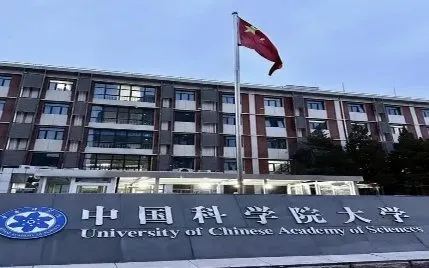
University of Chinese Academy of Sciences accepts international students on programmes in the following fields: business, engineering, medicine, education, arts. Choose the level and programme that suit your goals.
Chinese language study at the university — from a few weeks to a year or longer. Suitable for those starting from scratch or preparing for the HSK before entering a main programme.
self-funded · language programme
The first level of higher education: usually four years of study, specialised subjects, internships and a graduation thesis. It opens the way to working in your field and to a master's degree.
self-funded
Advanced study after a bachelor's degree: research, applied projects and internships. It helps you become an expert in your chosen field and broaden your career opportunities.
self-funded
University of Chinese Academy of Sciences is located in Beijing. Nihao Study consultants keep track of the deadlines and admission requirements of this university, and you can always check the most accurate and up-to-date information on its official website. In university rankings, it is ranked 30 in China and 421 worldwide.
Come for a face-to-face meeting: together we will go through the requirements, deadlines, documents and study options that suit you.

At the meeting we will look at your situation, tell you which documents to prepare and by when, talk about possible programmes and help you decide on the next step.
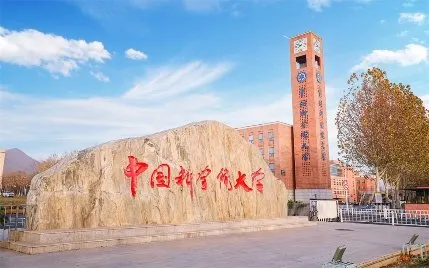

The University of Chinese Academy of Sciences (UCAS) is a university that forms part of the Chinese Academy of Sciences (CAS), the country's largest scientific organisation. Within the CAS academic system, the university is responsible for training researchers, scientists and specialists.
CAS was founded in Beijing on 1 November 1949. Its history goes back to Academia Sinica, established in Shanghai in 1928. The name Academia Sinica remained with the Taiwanese organisation, while CAS became the leading scientific institution of mainland China.
At the outset the academy had 16 institutes and 6 laboratories employing 224 scientists. By 1962 its research staff had grown to 8,000, and by 1967 it exceeded 10,000. The Chinese Academy of Social Sciences separated from CAS in 1977, built on the academy's philosophy and social sciences division.
From the mid-1980s, commercial enterprises began to emerge from the academy, and the greatest success among them was the technology corporation Lenovo.
In 1999, when the academy turned 50, asteroid 7800 Zhongkeyuan, discovered at the Xinglong Observatory near Beijing, was named in its honour.
CAS has achieved notable results in a number of cutting-edge fields, including:
These results strengthen China's place in world science and lay the groundwork for the technologies of the future.
CAS regards international ties as key to scientific progress and to responding to global challenges. The academy's partners include:
The academy's scientists take part in major international projects, including:
The academy supports young scientists, including those from abroad, and offers them:
This policy helps Chinese science become more international, while CAS is turning into a research hub that appeals to researchers from all over the world.
Since 2004, CAS has invited around 50 researchers from developing countries to its institutes every year to carry out research there. The academy also intends to expand PhD-level training so that its ties with research centres in the Global South become deeper and more lasting.
Together, UCAS and CAS form the backbone of scientific research in China. Drawing on a long scientific tradition, strategic thinking and a global outlook, the university is training a new generation of scientists and expanding the international presence of Chinese science.
Beijing (北京) is the capital of China and a major centre of education: the city has more than 90 universities, among them Peking University and Tsinghua University, which rank in the country's top 2. Here you can see the Forbidden City and the Great Wall of China, as well as the modern tech district of Zhongguancun, known as China's Silicon Valley.
Studying in Beijing goes hand in hand with good career prospects: the city hosts the headquarters of major companies and research centres, getting around is easy (the metro has 22 lines), and cultural life is very rich. Parents should know that the capital's infrastructure is highly developed, there are international clinics with Russian-speaking staff, many direct flights leave the city, and students are supported by a well-established system: dormitories are located right on the guarded university campuses.
You work with Nihao Study specialists. They will help you put together a portfolio and a set of documents, draw up a study plan and choose a university or college and a specialty that genuinely interest you.
We take care of every stage of admission, from choosing to enrolment
We will gather, prepare, certify and send your documents to the institution
We will show the admissions committee your strengths
We run training sessions and courses so you can prepare with more confidence
We will help you settle in at the start of your studies and keep moving forward
Nihao Study specialists select universities and colleges that match the applicant's goals and means. We make sure the teachers are practitioners and that the knowledge will be useful in your profession.
We examine curricula, talk to students and teachers and look at which specialties employers need, and use this information to select options for the applicant.
Advisers guide the applicant from the first consultation to enrolment, help build a plan and spot mistakes in time that could get in the way.
The cost of our support depends on the programme and the partner university; you'll get an exact quote after a free consultation.
Get a quoteA free 15-minute consultation: together we will choose a university or college and a programme that suit your goals and budget.
Apply with peace of mind: we handle the documents, deadlines and correspondence with admissions committees, and you save time and energy.
Don't want to wait for a call? Message us in the chat.
Message us in chat