- Language courses
- English, Chinese
- Bachelor's Degree
- English, Chinese
- Master's Degree
- English, Chinese
- Doctoral (PhD) Programmes
- English, Chinese
- Accommodation from 2 000 ¥/year
RUC · 中国人民大学
Renmin University of China accepts international students on programmes in the following fields: business, engineering, medicine, education, law, economics. Choose the level and programme that suit your goals.
Chinese language study at the university — from a few weeks to a year or longer. Suitable for those starting from scratch or preparing for the HSK before entering a main programme.
self-funded · language programme
The first level of higher education: usually four years of study, specialised subjects, internships and a graduation thesis. It opens the way to working in your field and to a master's degree.
self-funded
Advanced study after a bachelor's degree: research, applied projects and internships. It helps you become an expert in your chosen field and broaden your career opportunities.
self-funded
Renmin University of China is located in Beijing. Nihao Study consultants keep track of the deadlines and admission requirements of this university, and you can always check the most accurate and up-to-date information on its official website. In university rankings, it is ranked 38 in China and 503 worldwide.
Come for a face-to-face meeting: together we will go through the requirements, deadlines, documents and study options that suit you.

At the meeting we will look at your situation, tell you which documents to prepare and by when, talk about possible programmes and help you decide on the next step.
Renmin University of China (RUC; Chinese 中国人民大学, pinyin Zhōngguó Rénmín Dàxué) is a public research university in Beijing. It reports directly to the Ministry of Education of the PRC and is jointly supported by the ministry and the city authorities of the capital. Russian-language sources use other names as well: 'People's University of China', a common translation by meaning, plus two transliterated variants, one with simplified spelling and one a calque with a different word order. The university itself uses the international name Renmin University of China and the abbreviation RUC, while Chinese students shorten the full name to 人大 (Réndà).
RUC's statuses are officially confirmed. The university was among the first participants in Projects 985 and 211; in 2017 it was also among the first universities included in the Double First-Class initiative (双一流). As of January 2026, according to official data, the university has 14 disciplines on the Double First-Class list. All these designations apply to the university as a whole, not to any single school or short-term programme.
In this overview for a 2026 applicant, Nihao Study has gathered the admission rules, HSK and CSCA requirements, information on scholarships, accommodation and rankings, variants of the name and a comparison of RUC with other Beijing universities.
Below is the scale of the university as of January 2026.
| Indicator | Value | What this means in practice |
|---|---|---|
| Founded | 1937 | Traces its origins to Shaanbei Public School |
| Campuses | 4 campuses | Where you study depends on the programme |
| Students | 28 633 | A large research university |
| Teaching staff | 2 004 | Strong research and teaching environment |
| Academic units | 48 | Broad coverage of humanities, social sciences and the exact sciences |
| Bachelor's majors | 89 | Not all majors are open to international students |
| Master's and doctoral programmes | 337 | The main focus is on postgraduate education |
| Library holdings | 4.2 million volumes | A valuable resource above all for research in the humanities |
| International links | 63 countries and regions, more than 200 partners | Opportunities for exchanges and joint programmes |
| Main address | Zhongguancun Street 59, Haidian, Beijing, 100872 | The international office is based here, on the Zhongguancun campus |
The official chronicle dates the university's history from 1 November 1937, the day Shaanbei Public School opened. In its first two years alone, the school trained more than 6,000 specialists and administrators. Its successors were North China United University, Northern University and North China University. This is why the university defines its identity through the social sciences and the training of administrative personnel for the state.
The central government decided to establish Renmin University of China on 16 December 1949, and the official opening took place on 3 October 1950. It initially had eight departments, including economics, public finance, banking, trade, enterprise management, law and diplomacy. Even before 1965, more than 400 international students from 24 countries and regions studied here.
When work resumed in 1978, RUC restored and opened 15 units, including statistics, finance, law, philosophy, history, journalism, archival science, Chinese literature and political economy. In 2007 the Ministry of Education approved eight key first-level and eight key second-level disciplines at the university; by the number of such disciplines in the humanities and social sciences, it ranked first in China.
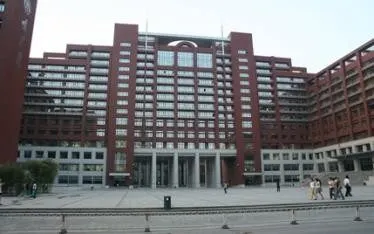
For international applicants today, it is important to understand the differences between the campuses. The admissions rules list Zhongguancun, Tongzhou and Suzhou. The Tongzhou campus became fully operational in 2025: 28 academic units were moving there, and more than 4,000 new master's students were expected. So check where your classes and dormitory will be in your admission letter.
985 and 211 are historical government development programmes, not annual rankings. RUC was in the first group of both projects. Today the main priority framework is the Double First-Class initiative: RUC has been part of it since 2017, and according to the university, 14 of its disciplines are included.
For an applicant, this status shows the university's priority standing as an institution, but scholarships, accommodation and admission are decided separately. It matters far more to look at the specific school and subject. RUC has eight key disciplines at both first and second level; the university states that on this measure it ranks first in the country among humanities and social sciences. Its statistics also cite 14 Double First-Class disciplines, but this does not mean that all 89 bachelor's majors are equally strong.
Each ranking has its own methodology. QS relies on reputation and international indicators, ARWU primarily on research output, CWUR also takes education and employment into account, and EduRank uses its own bibliometric model. That is why RUC's overall position is best complemented by its subject results.
| Ranking | Position | What the result means |
|---|---|---|
| QS World University Rankings 2027 | 521st place | A year earlier, in the 2026 edition: 566th place |
| ARWU 2025 | Band 301 to 400 | Overall research ranking |
| ShanghaiRanking, public administration | 9th in the world, 2025 edition | One of the weightiest external indicators of RUC's profile |
| ShanghaiRanking, finance | 21st in the world, 2025 edition | Reflects the strength of its finance school |
| ShanghaiRanking, statistics | 49th in the world, 2025 edition | A strong area in the quantitative sciences |
| CWUR 2026 | 454th out of 21,291 (top 2.2 per cent) | Employment is rated highly: 78th place |
| EduRank 2026 | 37th in China, 603rd in the world | Takes into account publications, citations and recognition |
In ShanghaiRanking 2025, RUC also has other subject results: business administration and library and information science are in the 51 to 75 band, economics is in the 76 to 100 group, and communication is in the 101 to 150 band. This set of results describes the university more accurately than a single overall position.
Reviews often mention Times Higher Education, U.S. News, CWUR, EduRank and ESI as a matter of routine. However, RUC has no exact position in THE or U.S. News: the THE 2026 edition included 2,191 institutions and U.S. News 2025/26 assessed more than 2,250 universities, but no stable entry with RUC's profile appeared there. According to ESI as of May 2023, 11 of RUC's fields were in the world's top one per cent, and two social science fields were even in the top three per mille.
Economics as an academic discipline, finance, public policy and the study of China's development are all interconnected at RUC. Officially, the university comprises the School of Finance, the School of Economics, the School of Applied Economics, Renmin Business School, the School of Public Administration and Policy, and the School of Agricultural Economics and Rural Development. External confirmation of this specialisation comes from its subject positions in ShanghaiRanking: 21st for finance and 9th for public administration.
The university is home to Renmin Law School, the School of Journalism and Communication, the School of International Studies, the School of Sociology, the School of Population and Health, and the School of Information Resource Management. According to RUC, its experts took part in work on China's Constitution and its Civil and Criminal Codes, both in drafting and in revision, as well as in designing major state reforms. As a result, teaching is closely linked to China's legal and administrative practice; professional accreditation in another country, however, has to be arranged separately.
Beyond its humanities core, the university has a School of Information, the Gaoling School of Artificial Intelligence, a School of Statistics and an Institute of Statistics and Big Data, as well as units for mathematics, physics and chemistry. In the national discipline assessment, RUC's statistics received an A+ rating, and it was included in Double First-Class twice, in 2017 and 2022, according to the school itself.
There are also new international agreements. In March 2026, RUC signed agreements with Russian universities on joint and dual programmes, including a dual master's degree in energy with Saint Petersburg State University of Economics. Other partners under these agreements include RANEPA, Saint Petersburg State University, MIPT and the Stieglitz Academy. Whether a specific intake will open needs to be checked case by case.
The university's structure covers a very wide range of fields: philosophy, history, literature, Chinese classics, Marxist studies, foreign languages and art; economics, finance, labour relations, business, agricultural economics and ecology; law, international relations, public administration, journalism, sociology, demography, psychology and archives; information, artificial intelligence, statistics, mathematics, physics and chemistry.
In 2026, three new units were created: the International School of Finance, the School of Foreign-Related Rule of Law and the School of International Communication. Their creation reflects the growth of fields such as global communication, cross-border law and international finance. However, whether an English-taught programme for international students is offered does not depend on the school's name, so the international admissions catalogue is the only reliable guide.
The Sino-French Institute in Suzhou offers separate joint pathways, and RUC is also developing an international triple bachelor's programme in management. In 2026, the Chinese-Italian-American triple programme was recognised as a model of digital education: credits are mutually recognised and degree-awarding standards are aligned. Check the specific programme's description for mobility conditions, languages of instruction and final diplomas.
| Format | Language and duration | What you need to know |
|---|---|---|
| Bachelor's Degree | Chinese, usually 4 years | A CSCA result is essential for the 2026 intake |
| Master's Degree | Chinese, 2 or 3 years | The required HSK level depends on the field |
| Global Talents master | English | Categories: Chinese studies, international relations, finance and management, fundamental disciplines |
| Chinese language courses in Beijing | Chinese, 1 semester or 1 year | Classes are taught by the School of Chinese Studies and Cultural Exchange |
| Visiting program | 1 semester or 1 year; Chinese or English | Courses within your category can be chosen according to RUC rules |
To enter the English-taught Global Talents master's programme, you need a bachelor's degree and proof of English: IELTS Academic 6.0 or above, or TOEFL iBT 90 or above. Native speakers and graduates of English-taught programmes may be exempted from the certificate. The programme includes basic Chinese, from six months to a year, at no extra cost.
Fees for the 2026 intake depend on the level, school and programme: art, which requires a creative portfolio, professional master's programmes and certain English-taught programmes have their own prices, and some Global Talents entries in the catalogue are still marked TBD. The tuition fee does not include accommodation, meals, insurance or personal expenses; the application fee is non-refundable. Check the current amounts in the international admissions catalogue on RUC's official website, and remember that the price at one school does not necessarily match the price at another.
The 2026 admissions rules confirm that single and double rooms are available, but the university gives the price only in a personal booking sheet issued after admission. This means old figures cannot be treated as a guaranteed rate for 2026.
| Option | What is known for certain | What to check |
|---|---|---|
| On-campus room | Single and double options for new students | Campus, building, bathroom, payment deadline |
| Off-campus housing | Allowed if you register your address with the police within 24 hours | Contract, deposit, transport, registration |
Even government scholarship holders are not automatically assigned a dormitory place: the official FAQ asks scholarship recipients to complete the booking as well. The international office has a dedicated line for room enquiries: phone 86-10-62511395, plus the email LGIA@ruc.edu.cn.
Scholarship decisions are made by the admissions selection committee, so nobody can guarantee approval. It is sensible to prepare two applications in parallel: a self-funded one and a scholarship one.
RUC's library covers 56,000 square metres, holds over 4.2 million volumes and more than 400,000 ancient books, and provides access to around 970 databases. According to the schedule on its website, it is open from 7:00 to 22:00. For future economists, lawyers, historians and journalists, it is one of the campus's key resources.
The university museum has a historical exhibition that traces, in order, Shaanbei Public School, North China United University, North China University and the stages of RUC's development. The museum is open on weekdays from 9:00 to 17:00, with last entry at 16:30, but outsiders are not automatically allowed onto the campus.
The Zhongguancun campus is in Haidian. You can get there by metro: Line 4 to Renmin University station, or Line 10 to Suzhoujie or Haidianhuangzhuang. Among international events, the cultural festival is worth a mention: in 2026, its exhibition featured cuisines, traditional dress, crafts, music and games from different countries.
The 2026 dates should not be assumed to carry over to the next cycle.
A Chinese-taught master's programme requires a bachelor's degree. Applicants in the humanities and social sciences need HSK 6 with at least 180 points and a minimum of 60 in the writing section; those in natural sciences and engineering need HSK 5 with at least 210, also with a minimum of 60 for writing. If your previous studies were entirely in Chinese, the certificate may not be required, but this is RUC's decision.
For Global Talents, English is proven with an IELTS 6.0 or TOEFL iBT 90 certificate. According to one catalogue, self-funded admissions ran until 31 May 2026, while CSC Type B candidates had to complete their application by 15 February. The deadline for scholarship applications is usually earlier than for self-funded ones.
| University | Type | Main focus |
|---|---|---|
| Renmin University of China, RUC, 中国人民大学 | 985, 211 and Double First-Class university | Economics, law, management, statistics, social sciences |
| Peking University, PKU, 北京大学 | Comprehensive university | Medicine, engineering, natural sciences and humanities |
| People's Public Security University of China, PPSUC, 中国人民公安大学 | Police university under ministry supervision | Police training, public security |
| China University of Political Science and Law, CUPL, 中国政法大学 | Specialised law university | Law, public administration, political science |
| University of International Business and Economics, UIBE, 对外经济贸易大学 | Economics university | Business, finance, international trade, foreign languages |
Most of the confusion comes from the word People's. 'People's University of China' is RUC, whereas People's Public Security University of China is a separate university under the Ministry of Public Security. To avoid mistakes, always check the abbreviation, the Chinese name and the domain.
This page uses the Russian form meaning ‘Renmin University of China’. ‘People's University of China’ is a common translation by meaning. A simplified Russian spelling of Renmin occurs, although the transliteration rules call for a different vowel letter. Another variant is a calque with the words rearranged. The official international name is Renmin University of China, and the English abbreviation is RUC. In Chinese the university is called 人大 (Réndà) for short and 中国人民大学 (Zhōngguó Rénmín Dàxué) in full.
Yes. According to the university, RUC joined 985 and 211 in the first group and, in 2017, the first round of Double First-Class participants.
Certain Global Talents master's programmes are open in English, including in Chinese economy, law, international relations, management and business. There is no full catalogue of degree programmes in Russian.
For a bachelor's in Chinese language: HSK 4 with at least 180 points; for other humanities and social science majors: HSK 6 with at least 180; for natural science and engineering majors: HSK 5 with at least 210.
Tuition depends on the level, school and programme, and the dormitory price is given in the personal booking form issued after enrolment. See the current terms in the admissions catalogue on RUC's official website.
Yes: to do so, you need to win the competition under Type A or Type B. The full High-Level Postgraduate scholarship covers tuition, on-campus accommodation, insurance and an allowance.
RUC's admission rules mention the HSK, and the BCT is not named as a universal substitute. Whether the university is an exam venue, and on which dates, varies from session to session, so check this in the official exam registration system.
The Zhongguancun campus address is Zhongguancun Street 59, Haidian District, Beijing, 100872. The metro is the most convenient way to get there: line 4 to Renmin University station, or line 10 to Suzhoujie and Haidianhuangzhuang stations.
RUC's strengths are economics, finance, law, management and the social sciences. PKU is a broader comprehensive university, CUPL specialises in law, and PPSUC trains personnel for public security. Similar English or Russian words in their names do not indicate any connection between these universities.
You will need a passport, a school certificate, a transcript, a CSCA result, proof of language proficiency and a medical form; for the categories listed by the PRC Ministry of Education, additional proof of citizenship is required. Documents not drawn up in Chinese or English must be accompanied by a certified translation.
Yes. The language programme lasts one semester or one academic year. To move from a language course to a degree programme, you submit a separate application.
Beijing (北京) is the capital of China and a major centre of education: the city has more than 90 universities, among them Peking University and Tsinghua University, which rank in the country's top 2. Here you can see the Forbidden City and the Great Wall of China, as well as the modern tech district of Zhongguancun, known as China's Silicon Valley.
Studying in Beijing goes hand in hand with good career prospects: the city hosts the headquarters of major companies and research centres, getting around is easy (the metro has 22 lines), and cultural life is very rich. Parents should know that the capital's infrastructure is highly developed, there are international clinics with Russian-speaking staff, many direct flights leave the city, and students are supported by a well-established system: dormitories are located right on the guarded university campuses.
You work with Nihao Study specialists. They will help you put together a portfolio and a set of documents, draw up a study plan and choose a university or college and a specialty that genuinely interest you.
We take care of every stage of admission, from choosing to enrolment
We will gather, prepare, certify and send your documents to the institution
We will show the admissions committee your strengths
We run training sessions and courses so you can prepare with more confidence
We will help you settle in at the start of your studies and keep moving forward
Nihao Study specialists select universities and colleges that match the applicant's goals and means. We make sure the teachers are practitioners and that the knowledge will be useful in your profession.
We examine curricula, talk to students and teachers and look at which specialties employers need, and use this information to select options for the applicant.
Advisers guide the applicant from the first consultation to enrolment, help build a plan and spot mistakes in time that could get in the way.
The cost of our support depends on the programme and the partner university; you'll get an exact quote after a free consultation.
Get a quoteA free 15-minute consultation: together we will choose a university or college and a programme that suit your goals and budget.
Apply with peace of mind: we handle the documents, deadlines and correspondence with admissions committees, and you save time and energy.
Don't want to wait for a call? Message us in the chat.
Message us in chat