- Language courses
- English, Chinese
- Bachelor's Degree
- English, Chinese
- Master's Degree
- English, Chinese
- Doctoral (PhD) Programmes
- English, Chinese
- Accommodation from 2 000 ¥/year
NCEPU · 华北电力大学
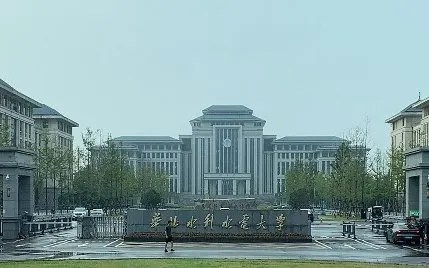
North China Electric Power University accepts international students on programmes in the following fields: business, engineering, natural sciences. Choose the level and programme that suit your goals.
Chinese language study at the university — from a few weeks to a year or longer. Suitable for those starting from scratch or preparing for the HSK before entering a main programme.
self-funded · language programme
The first level of higher education: usually four years of study, specialised subjects, internships and a graduation thesis. It opens the way to working in your field and to a master's degree.
self-funded
Advanced study after a bachelor's degree: research, applied projects and internships. It helps you become an expert in your chosen field and broaden your career opportunities.
self-funded
North China Electric Power University is located in Beijing. Nihao Study consultants keep track of the deadlines and admission requirements of this university, and you can always check the most accurate and up-to-date information on its official website. In university rankings, it is ranked 59 in China and 769 worldwide.
Come for a face-to-face meeting: together we will go through the requirements, deadlines, documents and study options that suit you.

At the meeting we will look at your situation, tell you which documents to prepare and by when, talk about possible programmes and help you decide on the next step.
North China Electric Power University (NCEPU, 华北电力大学) is a public research university under the Ministry of Education of the PRC. Its main campus is in Beijing and the second in Baoding (Hebei Province), and both campuses are run as a single system. In Chinese the name is pronounced Huáběi Diànlì Dàxué, and students and staff often call it simply 华电 (Huádiàn).
Russian-language sources use several versions of the name, which translate as 'University of Electric Power of Northern China', 'North China Energy University' and a one-word spelling of 'North China Electric Power University', as well as the English North China Electric Power University. This page uses the full form North China Electric Power University: the characters 电力 mean specifically electric power, so this name reflects the university's profile more accurately.
NCEPU was part of the former Project 211 and is included in the second cycle of the Double First-Class (双一流) programme. It cannot be called a Project 985 university in the full sense: it participates only in the Project 985 Innovation Platform for Advantageous Disciplines. During the first 双一流 cycle the university developed its energy and electric power cluster, and in the second its officially designated discipline became Electrical Engineering.
In this overview for 2026 applicants, Nihao Study has brought together verified statuses, rankings, programmes in Chinese and English, accommodation, CSC scholarships, HSK requirements and the application procedure.
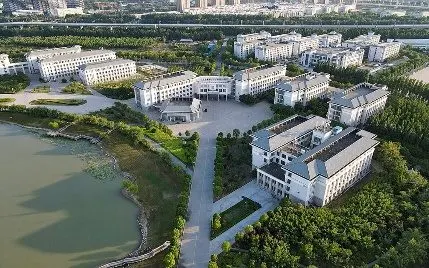
The data are given as of the latest available date, and the period they refer to is stated in the text.
| Item | Data | Notes |
|---|---|---|
| Year founded | 1958 | founded as Beijing Electric Power College |
| Location | Beijing and Baoding | two campuses under joint management |
| Students | more than 42,000 | over 25,000 bachelor's students, plus 17,000 master's and doctoral students |
| Staff | about 3,200 | teaching and administrative staff |
| Academic units | 25 schools and departments | including electrical engineering, energy, management and IT |
| Bachelor's majors | 67 | the university's full catalogue, not just what is open to international students |
| International students | more than 1,100 | according to the International Education Institute |
| Status | 211, 985 platform, 双一流 (Double First-Class) | second-round discipline: Electrical Engineering |
The Beijing International Students Office is located at: No. 2 Beinong Road, Huilongguan, Changping District, Beijing, 102206. Baoding campus: 619 Yonghua North Street, Baoding, Hebei, 071003. International students are recruited primarily by the Institute of International Education in Beijing, so check which campus your programme is taught on before booking accommodation.
If information about deadlines or conditions differs between sources, the international admissions prospectus for the current cycle takes precedence.
NCEPU's path is inseparable from the development of China's electric power industry. The university opened in Beijing in 1958 as Beijing Electric Power College. As early as 1961 it absorbed specialist programmes from the Harbin Institute of Technology, including power plants and power systems, high-voltage engineering and power enterprise economics.
In 1969 the institution was moved to Handan, and in 1970 it relocated to Baoding and was renamed Hebei Electric Power College. In 1978 it gained national key university status and a new name, North China Institute of Electric Power. The present university took shape in 1995, when North China Institute of Electric Power merged with Beijing Power Economics Institute. The headquarters were then in Baoding, with a separate campus operating in Beijing.
In 2003 NCEPU left industry ministry control and came directly under the Ministry of Education. In 2005 the university joined Project 211, and in the same year its headquarters were officially moved to Beijing, while the Baoding campus was retained. Today the university is jointly supported by the China Electricity Council, the Ministry of Education and a council of twelve major energy companies, including State Grid and China Southern Power Grid.
Membership of Project 211 is confirmed by NCEPU's charter and the university's official history: it joined the project in 2005. This is now a historical status, but it is still used as shorthand for a strong national university, even though new rounds of government funding are built around Double First-Class.
The "985" label needs caution. NCEPU was not on the original list of Project 985 universities; it takes part in the 985 Project Advantage Discipline Innovation Platform, a separate platform for developing priority disciplines. So the caption "211 and 985" on an old English-language page, without explanation, can mislead applicants.
In 2017 NCEPU was included in the first round of 双一流 (Double First-Class) with the Energy and Power Science and Engineering cluster. After the 2022 evaluation, the university moved into the second round, where its official discipline under development is Electrical Engineering. So describing NCEPU as a 211 and Double First-Class university with an energy profile is broadly correct, but the second-round discipline is more accurately called electrical engineering.
| Ranking | Position | Edition |
|---|---|---|
| ARWU | 501–600 band worldwide | 2025 |
| CWUR Global 2000 | 465th worldwide, 73rd in China | 2025 |
| THE World University Rankings | 801–1000 band | 2025 |
| EduRank | 1249th worldwide, 87th in China | 2026 |
| THE Engineering | 601–800 band | 2025 |
The overall ranking reveals only part of the university's profile. In the 2025 ShanghaiRanking subject rankings, NCEPU is in the 51–75 band for Energy Science and Engineering and for Instrument Science and Technology, the 76–100 band for Chemical Engineering, 101–150 for Automation and Control and 151–200 for Electrical and Electronic Engineering.
Seven of NCEPU's fields are in the ESI top 1 per cent: engineering, computer science, environment and ecology, materials science, chemistry, social sciences and physics. Engineering scores even higher, in the global top 0.1 per cent and among the top 50 institutions. This is a measure of research activity, not an assessment of teaching quality, but it confirms a large volume of publications in the engineering core.
According to EduRank 2026, NCEPU is first in the global subject category of Renewable Energy Engineering, 14th in Nuclear Engineering and 53rd in Electrical Engineering. This aggregator has its own methodology, different from that of ARWU and THE, so an individual position should not be taken as unconditional proof of superiority. When choosing a programme, it is more important to look at the laboratory, the supervisor and the content of the curriculum.
The School of Electrical Engineering traces its history to a specialist faculty founded in 1958. In the fourth round of the national discipline evaluation, electrical engineering was rated A, and Power System and Automation has national key discipline status. This is where to look for programmes in power systems, high-voltage engineering, relay protection, power electronics and smart grids.
The second pillar consists of energy and power engineering, power engineering and engineering thermophysics, new energy science and engineering, as well as hydropower and nuclear technology. The Ministry of Education particularly highlights NCEPU's work in energy storage, hydrogen, smart energy and new-type power systems. This profile suits those who want to combine traditional energy with decarbonisation and digital management.
Through its university council, NCEPU works with around a hundred major energy companies and more than twenty regional governments. The university also reports partnerships with approximately 140 foreign universities and research organisations.
A joint bachelor's programme in Electrical Engineering is run together with the University of Manchester and the University of Strathclyde. Eligible students can complete the first two years at NCEPU, then continue at the British partner university and, if they meet the conditions, receive two degrees. Within the Shanghai Cooperation Organization University (SCO University), NCEPU runs projects with Russian universities and energy organisations, and in 2026 the university confirmed cooperation in training specialists with several partners from Russia.
NCEPU has schools of electrical and electronic engineering, energy and mechanical engineering, control and computer engineering, economics and management, environmental science and engineering, new energy, hydraulic engineering and hydropower, nuclear science and engineering, mathematics and physics, humanities and social sciences, and foreign languages. The word "school" in these names refers to a unit within the university, not a separate institution.
For international students the catalogue is noticeably narrower. According to the official 2026 admission rules, international students can apply for bachelor's programmes in electrical engineering and automation, energy and power engineering, new energy science and engineering, and business administration; the language of instruction is Chinese or English. Master's and doctoral programmes focus on three fields: electrical engineering; power engineering and engineering thermophysics; business administration.
| Level | Fields and language | Duration |
|---|---|---|
| Bachelor's Degree | four programmes in Chinese or English | 4 to 6 years |
| Master's Degree | business administration, electrical engineering, energy | 3 to 4 years |
| Doctoral (PhD) Programmes | business administration, electrical engineering, energy | from 4 to 8 years |
| Chinese Language | from beginner to advanced level, including HSK preparation | a semester or a year |
| Academic scholar | General or Senior Scholar | 1 year |
Chinese-taught bachelor's programmes accept applicants with HSK 3 (at least 220 points) or HSK 4 (at least 180 points). For English-taught programmes, TOEFL, IELTS or a document showing that your previous education was in English will do. Chinese-taught master's and doctoral programmes require at least HSK 4.
Language courses in Beijing cover listening, reading, writing, speaking practice and comprehensive Chinese, as well as HSK preparation. The BCT exam is not accepted instead of HSK for admission, so you need to prepare specifically for HSK.
From the 2026/2027 cycle, international bachelor's applicants must pass the university's entrance exam before applying. For Business Administration this is mathematics; for the three engineering programmes it is mathematics and physics. In general, the exam may include Professional Chinese, mathematics, physics and chemistry; the specific subjects depend on the programme.
Current tuition fees are published in the international admissions prospectus and may change from cycle to cycle, so check them on the university's official website, ncepu.edu.cn. Bear in mind that insurance and the residence permit are paid for separately, and bachelor's applicants need a bank statement showing sufficient funds issued no more than three months earlier; if it is in another language, an official translation into Chinese or English is required.
International students are housed in Student Apartment No. 13 and the International Student Dormitory. As a rule, bachelor's and master's students live four to a room, and doctoral students two to a room. The rooms and shared areas have air conditioning, a fridge, a wardrobe, a water heater, a bathroom and internet, as well as a kitchen, laundry and rooms for independent study.
| Option | Note |
|---|---|
| Four-person room | for bachelor's and master's students |
| Twin room | for doctoral students |
| Deposit | refunded if you check out according to the rules |
Accommodation is paid in a single instalment for six months or a year, and the final amount depends on the actual period of residence. Electricity above the free monthly allowance is paid for separately.
The Beijing campus is in Huilongguan (Changping District), outside the central Haidian university cluster. According to the university, there are shopping centres, cinemas, restaurants and a street of inexpensive eateries nearby. If you plan to rent accommodation off campus, work out in advance how long the commute will take.
The teaching and research facilities match the university's engineering profile. The official list includes the State Key Laboratory of Alternate Electrical Power System with Renewable Energy Sources, the National Engineering Laboratory for Biomass Power Generation Equipment and the National Thermal Power Engineering and Technology Research Center. Whether you get into a particular laboratory is decided by the school and the research group.
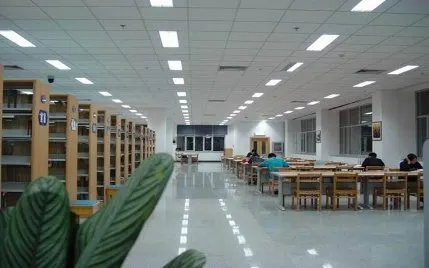
For independent study, the library, classrooms and rooms in the international dormitory are available. According to the Institute of International Education, 15 smart classrooms are equipped on the fourth floor of main building C, and another 3 on the fifth floor. Sports facilities include a football pitch, courts for basketball, volleyball, tennis and badminton, a swimming pool, a gym and fitness centres.
The Beijing campus is served by three canteens with a total area of 19,882 square metres and 5,070 seats. According to the university, the menu offers more than 40 main dishes and over 60 additional items every day.
NCEPU takes part in several scholarship programmes, but the level of support varies. In all cases, funding is awarded on a competitive basis.
Grants are awarded competitively. Your chances improve with high grades, motivation linked to your subject and a research plan, and, for master's or doctoral applicants, contact with a prospective supervisor.
For NCEPU, the process looks like this:
The age limits here are stricter than usual: bachelor's programmes accept applicants aged 18 to 20, master's programmes those under 35, and doctoral programmes those under 40. If your age is close to the limit, get written confirmation before paying for translations and notarisation.
| University | City and status | Main focus |
|---|---|---|
| North China Electric Power University, 华北电力大学 | Beijing and Baoding, public university | electric power, power grids, new energy sources |
| North China University of Technology, 北方工业大学 | Beijing, municipal university | broad-based engineering, computer science, management |
| North China University of Water Resources and Electric Power, 华北水利水电大学 | Zhengzhou, provincial university | hydropower, water resources, construction |
| Northeast Electric Power University, 东北电力大学 | Jilin, provincial university | thermal engineering and electric power |
The words North China Electric Power and the abbreviation NCEPU help you identify the right university. North China University of Technology is also in Beijing, but it is a different university. North China University of Water Resources and Electric Power and Northeast Electric Power University are located in other cities and have their own admission rules.
In Russian we use the full form, which corresponds to ‘North China Electric Power University’. A shorter Russian variant meaning ‘North China Energy University’ appears in catalogues, but it does not fully convey the sector focus. A Russian spelling without the hyphen is inconsistent, and another common variant is a calque of the English word order. The official international name is North China Electric Power University, the generally accepted abbreviation is NCEPU, and Huadian is the romanisation of the internal short form 华电. The original Chinese name is 华北电力大学 (Huáběi Diànlì Dàxué).
It is a public university under the Ministry of Education of the PRC. It has two campuses, the main one in Beijing and a second in Baoding, and they are managed as a single whole.
Project 211 and Double First-Class: yes. NCEPU is not in the original group of full Project 985 universities, but it does take part in the 985 Advantage Discipline Innovation Platform. In the second round of 双一流, the university's discipline under construction is Electrical Engineering.
Yes. The 2026 intake lists English-taught programmes in electrical engineering, energy and business administration at all three levels: bachelor's, master's and doctoral. English proficiency is demonstrated with TOEFL, IELTS or a document showing previous study in English.
Bachelor's programmes taught in Chinese require HSK 3 (220 points or more) or HSK 4 (180 points or more). Master's and doctoral programmes taught in Chinese require at least HSK 4. Students on English-taught bachelor's programmes admitted from 2023 onwards must pass HSK 4 with at least 180 points by graduation.
Fees depend on the level and format of the programme and may change from one intake to the next. Current rates are published in the international admissions prospectus on the university's official website, ncepu.edu.cn.
The cost depends on the room type: bachelor's and master's students live in four-person rooms, doctoral students in double rooms; there is also a deposit. Check the current rates on the university's official website.
Yes, but under the current international admission rules, CSC and the CSC Chinese University Program are intended for master's and doctoral students. Bachelor's students can apply for the Beijing Government Scholarship and the International Education Institute Scholarship. All scholarships are awarded competitively.
The university offers language courses from beginner to advanced level, as well as HSK preparation. However, verified sources show no confirmed schedule for its own exam centre, so choose your exam date and venue through the official Chinese Test service.
The basic set: online application form, passport, school certificate and transcript, language certificate, study plan, guarantor documents and the entrance exam result. If the applicant is a minor, a birth certificate and documents of the parents and guardian are added.
Beijing (北京) is the capital of China and a major centre of education: the city has more than 90 universities, among them Peking University and Tsinghua University, which rank in the country's top 2. Here you can see the Forbidden City and the Great Wall of China, as well as the modern tech district of Zhongguancun, known as China's Silicon Valley.
Studying in Beijing goes hand in hand with good career prospects: the city hosts the headquarters of major companies and research centres, getting around is easy (the metro has 22 lines), and cultural life is very rich. Parents should know that the capital's infrastructure is highly developed, there are international clinics with Russian-speaking staff, many direct flights leave the city, and students are supported by a well-established system: dormitories are located right on the guarded university campuses.
You work with Nihao Study specialists. They will help you put together a portfolio and a set of documents, draw up a study plan and choose a university or college and a specialty that genuinely interest you.
We take care of every stage of admission, from choosing to enrolment
We will gather, prepare, certify and send your documents to the institution
We will show the admissions committee your strengths
We run training sessions and courses so you can prepare with more confidence
We will help you settle in at the start of your studies and keep moving forward
Nihao Study specialists select universities and colleges that match the applicant's goals and means. We make sure the teachers are practitioners and that the knowledge will be useful in your profession.
We examine curricula, talk to students and teachers and look at which specialties employers need, and use this information to select options for the applicant.
Advisers guide the applicant from the first consultation to enrolment, help build a plan and spot mistakes in time that could get in the way.
The cost of our support depends on the programme and the partner university; you'll get an exact quote after a free consultation.
Get a quoteA free 15-minute consultation: together we will choose a university or college and a programme that suit your goals and budget.
Apply with peace of mind: we handle the documents, deadlines and correspondence with admissions committees, and you save time and energy.
Don't want to wait for a call? Message us in the chat.
Message us in chat