- Language courses
- English, Chinese
- Bachelor's Degree
- English, Chinese
- Master's Degree
- English, Chinese
- Doctoral (PhD) Programmes
- English, Chinese
- Accommodation from 2 600 ¥/month
黑龙江大学
Heilongjiang University accepts international students on programmes in the following fields: business, engineering, education, economics, it. Choose the level and programme that suit your goals.
Chinese language study at the university — from a few weeks to a year or longer. Suitable for those starting from scratch or preparing for the HSK before entering a main programme.
scholarship-funded · language programme
Cost: 9 100 ¥/year
self-funded · language programme
Cost: 13 000 ¥/year
The first level of higher education: usually four years of study, specialised subjects, internships and a graduation thesis. It opens the way to working in your field and to a master's degree.
scholarship-funded
Cost: 7 750–15 500 ¥/year
self-funded
Cost: 15 500 ¥/year
The first level of higher education: usually four years of study, specialised subjects, internships and a graduation thesis. It opens the way to working in your field and to a master's degree.
self-funded
Cost: 15 500 ¥/year
The first level of higher education: usually four years of study, specialised subjects, internships and a graduation thesis. It opens the way to working in your field and to a master's degree.
self-funded
Cost: 15 500 ¥/year
Advanced study after a bachelor's degree: research, applied projects and internships. It helps you become an expert in your chosen field and broaden your career opportunities.
scholarship-funded
Cost: 10 500–21 000 ¥/year
self-funded
Cost: 21 000 ¥/year
Heilongjiang University is located in Harbin. Nihao Study consultants keep track of the deadlines and admission requirements of this university, and you can always check the most accurate and up-to-date information on its official website. In university rankings, it is ranked 85 in China and 1221 worldwide.
Come for a face-to-face meeting: together we will go through the requirements, deadlines, documents and study options that suit you.

At the meeting we will look at your situation, tell you which documents to prepare and by when, talk about possible programmes and help you decide on the next step.
Heilongjiang University (黑龙江大学), HLJU for short, is the largest public comprehensive university in Heilongjiang Province; it is located in Harbin, the regional capital. Russian-speaking applicants often use a Russian name meaning "University of Heilongjiang", Chinese students call it simply "Heida" (黑大), and in international rankings the university appears under its official abbreviation HLJU.
The university traces its history back to 1941 and is regarded as the first foreign-language educational institution founded by the Communist Party of China. Today it belongs to the provincial branch of Double First-Class — the national programme to develop world-class universities and first-class disciplines — officially accepts recipients of the national CSC scholarship and serves as an official centre for the international HSK exam. Questions about admission can be discussed during a Nihao Study consultation.
The easiest way to grasp the university's scale is the summary table. The figures are taken from Heilongjiang University's own data for the 2026 academic year and checked against Wikipedia and Times Higher Education.
| Indicator | Data |
|---|---|
| Founded | 1941: a Russian language group set up at the Anti-Japanese Military and Political University (its 3rd branch) |
| Type | Public comprehensive university, jointly governed by Heilongjiang Province and the Ministry of Education of the PRC |
| Status | Provincial-level Double First-Class (Class A); provincial-level Project 211 |
| Full-time students | 36 181 |
| Teaching staff | 2 682 |
| International students | 692 |
| Schools and colleges | 30 |
| Bachelor's programmes | 86 |
| Partner universities worldwide | more than 140 |
| Campuses | 6: Hulan, Jianqiao, main, southern, Biological and National Defence |
| Library holdings | more than 5.1 million volumes — the largest collection in Heilongjiang Province |
| Main campus address | 74 Xuefu Road, Nangang District, Harbin, postcode 150080 |
| Admissions office phone | 0451-86608114 |
The university began in spring 1941 as a small Russian language group in the revolutionary base of Yan'an, set up at the Third Branch of the Anti-Japanese Military and Political University. It was the first school in the history of the CPC and the Chinese People's Liberation Army to train foreign-language interpreters.
After the founding of the PRC, the school was reorganised several times. First it was the Russian Language Department under the Military Academy of the Central Military Commission. Its next names were the Yan'an Foreign Languages School and the Harbin Specialised Institute of Foreign Languages. The institute became comprehensive in August 1958, when it was renamed Heilongjiang University and became the first comprehensive university in Heilongjiang Province.
Over 80-plus years the university has built a solid reputation in Russian studies: on the home page of its website it officially calls itself China's base for Russian language teaching and the cradle of top-level Russian-speaking specialists. HLJU's combination of statuses is unusual for China: participation in Double First-Class (provincial branch, Class A), provincial Project 211 status and admission of international students under the CSC government scholarship programme.
In 2026 HLJU appears in more than 14 respected international rankings. For ease of comparison, its positions are summarised in the table.
| Position (year) | Ranking |
|---|---|
| included in the main edition, 2026 | Times Higher Education (THE) World University Rankings |
| No. 731–740 in Asia, 2026 | EduRank Asia University Rankings |
| No. 1,337 worldwide, 2026 | U.S. News Best Global Universities |
| in the Global 2000, 2025 | CWUR World University Rankings |
| featured in 14 rankings, 2026 | UniversityGuru (aggregate) |
| Category A — the highest level in the PRC, 2025 | ESI "Foreign Languages and Literature" |
| top 1% worldwide, 2025 | ESI Engineering |
| top 1% worldwide, 2025 | ESI Computer Science |
| top 3% worldwide, 2025 | ESI Chemistry |
| top 4% worldwide, 2025 | ESI Materials Science |
For an applicant, this means the following. In the humanities — Russian, Chinese and Manchu languages and philosophy — HLJU is among China's leading universities: it ranks 6th nationally in foreign languages and literature and 14th in philosophy. In technical subjects the university is mid-level, but two genuinely strong fields stand out — engineering and computer science, both in the ESI global top 1%.
Before moving on to the full list of schools, it is worth looking at the three core fields that bring students to HLJU from Russia, Korea, Japan, Germany and African countries.
First, Russian studies and translation studies. The Russian language programme has a strong reputation in mainland China; this historical niche dates back to 1941. The campus hosts a Russian Centre opened by the Russian Federation — there are only three such centres in China. Another of the university's specialities is Chinese–Russian simultaneous interpreting, which has almost no equivalent elsewhere in the PRC.
Second, Manchu studies. Heilongjiang University is the only university in China that offers a full academic programme in Manchu language and literature and runs a dedicated research centre.
Third, a solid interdisciplinary base in STEM: according to ESI, engineering and computer science are in the global top 1%, chemistry in the top 3% and materials science in the top 4%. For a university with roots in the humanities, this is a notable result: an international student can choose a technical track without losing out on prestige.
HLJU has 30 schools and colleges covering almost all major fields of knowledge, and 86 bachelor's programmes. The main groups of fields are listed below.
HLJU offers international students seven broad categories of programmes. Applications for the academic year are accepted until the end of May 2026. The self-funded option is available on all programmes, and most of them can also be studied on a CSC or Heilongjiang Provincial scholarship; the exception is the 1+3 and 1+4 preparatory formats, which are self-funded only.
| Programme and duration | Who it suits |
|---|---|
| Long-term language courses: 1 semester to 1 year | Those preparing for a bachelor's or master's degree and working through HSK levels 4-6 |
| Standard bachelor's degree: 4 years | School leavers with HSK 4 (HSK 5 for philology and journalism) |
| 1+3 bachelor's degree: 4 years, self-funded only | Those whose language level is not yet sufficient: 1 year of preparation, then 3 years of the main programme |
| 1+4 bachelor's degree: 5 years, self-funded only | Those starting from scratch: intensive preparation followed by a full bachelor's degree |
| Master's degree: 2-3 years | Bachelor's degree holders with HSK 5 or higher |
| Doctoral programmes: 3-4 years | Candidates who hold a master's degree |
| Summer programmes: 2-4 weeks, self-funded | Those who want a short immersion in Chinese language and culture |
International students at HLJU are housed in modern dormitories with double rooms equipped with furniture, air conditioning, free Wi-Fi and round-the-clock hot water. Each floor has shared kitchens and laundry rooms. You can choose standard or upgraded accommodation.
| Room type |
|---|
| Standard double room |
| Upgraded double room |
You can also rent accommodation off campus — for example, a one-room flat in the Xuefu area, which effectively serves as Harbin's university district. It is best to check current rents locally.
HLJU is an authorised university of the Chinese Government Scholarship (CSC) programme; it is on the official list of 306 Chinese universities that accept its scholarship holders. An international student can receive coverage of up to 100% of tuition, accommodation and insurance costs, plus a monthly living allowance. The university has three main funding lines.
Your chances of a 100% scholarship increase with your grade average and Chinese language level.
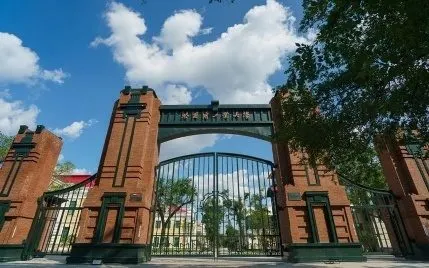
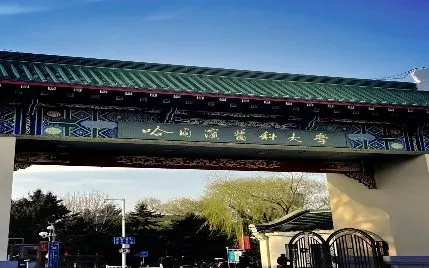
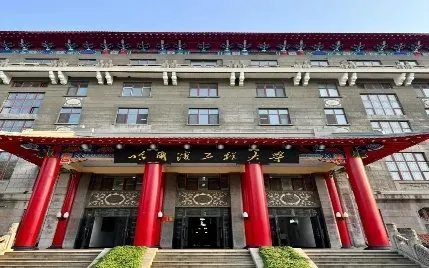
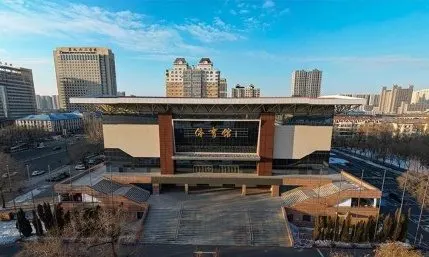
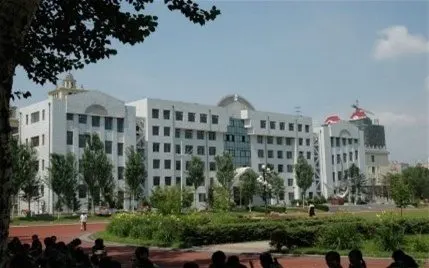
The main campus, covering more than 1.8 million m², is essentially a separate neighbourhood in Nangang, Harbin's academic and research district. It has two libraries with a combined collection of over 5.1 million volumes (the largest library collection in Heilongjiang Province), a university museum, laboratories, a multipurpose science building, a sports hall, two swimming pools and three dining centres.
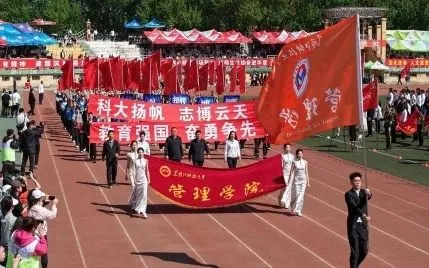
International students are helped by a dedicated international student support service. There is a "Chinese mentor" programme in which each international student is paired with a Chinese student volunteer, as well as language clubs, an annual culture festival and sports competitions. In 2025 HLJU held its first campus mini-marathon and the 38th Student Arts and Culture Festival — international students could take part in both.
Harbin (哈尔滨) itself, known as the Ice City, is among the five safest cities in China for international students, with a safety rating of 8 out of 10. The city has three metro lines, Taiping International Airport and direct trains to Russia — to Khabarovsk and Vladivostok. Winters are harsh, with temperatures dropping to −21°C, but all university buildings and dormitories are connected to central heating — one of the main everyday differences between northern and southern China.
Admission to HLJU for an international student consists of 6 steps. The process is the same for bachelor's and master's programmes and long-term language courses.
The campus has an international office, a canteen for international students, a library with a collection of 5.1 million volumes and the main teaching building with lecture halls. The dormitories have standard and upgraded double rooms with furniture, air conditioning and Wi-Fi, plus shared kitchens and laundry rooms on each floor. Heilongjiang University metro station (line 1) is next to the campus, surrounded by the infrastructure of Nangang District. This picture of the campus is especially useful for those comparing HLJU with its neighbour, Harbin Institute of Technology (HIT).
There is one standard Russian form, which translates as 'Heilongjiang University': it is used by Wikipedia, embassies and the university's own official website. The two misspelt versions are common typos from search queries; the correct Russian spelling follows the standard transliteration of the province's name. 'University of Heilongjiang' is a calque of the English Heilongjiang University: strictly speaking it is incorrect, but it has taken hold on commercial websites, so you may see it on education agencies' sites.
Heilongjiang University is the official international name, under which the university is listed by Times Higher Education, CWUR, EduRank and U.S. News. HLJU is the international abbreviation used for e-mail, documents and ranking databases. Heida, or 黑大, is an affectionate short form used by Chinese students and lecturers. 黑龙江大学 (pinyin Hēilóngjiāng Dàxué) is the original Chinese name. All seven variants refer to the same public comprehensive university in Harbin.
It is the official international abbreviation of Heilongjiang University. The short form is used in e-mail correspondence, documents and ranking databases — Times Higher Education, CWUR, EduRank, U.S. News.
HLJU has no bachelor's programme taught entirely in Russian or English — the main language of instruction is Chinese. Applicants without HSK can choose the 1+3 and 1+4 preparatory formats (a year of language study, then 3–4 years of the main programme) or separate long-term Chinese language courses lasting from one semester to a year.
The requirements depend on the level: doctoral programmes — HSK 6, master's — HSK 5, bachelor's — usually HSK 4 (and HSK 5 for philology and journalism programmes). Language courses can be entered without HSK.
Yes. HLJU belongs to the provincial branch of Double First-Class (双一流) — a national programme aimed at building world-class universities and first-class disciplines — and was given class A within it. The university also has the status of a provincial 211 university.
The cost depends on the room type — a standard or an upgraded double — and is calculated per day. Check current rates on the university's official website.
Yes. HLJU officially accepts holders of the Chinese Government Scholarship (CSC); the scholarship covers 100% of tuition, accommodation and insurance and includes a monthly stipend. The decision depends on your HSK level, grade point average, motivation letter and whether there are quotas in a given year.
Yes. Heilongjiang University is an official test centre for the HSK and BCT (the Business Chinese Test) in Heilongjiang Province. Exam dates for the current year are published in the official calendar.
The main campus address is 74 Xuefu Road, Nangang District, Harbin, postcode 150080. You can reach the campus by metro: the nearest station is Heilongjiang University on Line 1. A taxi from Harbin Taiping International Airport takes about 50 minutes, and the journey from Harbin railway station takes 25 minutes.
HLJU (黑龙江大学) is a public comprehensive university with Double First-Class class A status, founded in 1941. Heilongjiang International University, HIU (黑龙江外国语学院), is a private university with a language focus that appeared in the 2000s. Heilongjiang University of Chinese Medicine (黑龙江中医药大学) is a public medical university specialising in TCM and pharmacology. These three institutions have different histories, different funding and different admission rules for international students.
A passport valid for at least 18 months; a school certificate with a notarised translation; a transcript of grades; an HSK 4 certificate (or a guarantee that it will be obtained before classes start); a medical certificate on the Chinese form; a motivation letter; 2 photos, 33×48 mm, on a white background; a recommendation letter if the programme requires one.
Harbin (哈尔滨), the capital of Heilongjiang Province in northern China, is called the 'Ice City'. Its Russian architectural heritage has survived, including Saint Sophia Cathedral, and the city owes its worldwide fame to its international ice sculpture festival.
For students there are strong technical universities (Harbin Institute of Technology ranks in the country's top 10), low prices, an unusual blend of Chinese and Russian cultures and a developed urban infrastructure with a metro (3 lines). Winters are harsh, but all buildings are heated. For parents, it matters that the city is safe and its atmosphere feels familiar to Russian speakers — signs are often duplicated in Russian. There is also good healthcare, an international airport, well-organised heated campuses and support services for international students.
You work with Nihao Study specialists. They will help you put together a portfolio and a set of documents, draw up a study plan and choose a university or college and a specialty that genuinely interest you.
We take care of every stage of admission, from choosing to enrolment
We will gather, prepare, certify and send your documents to the institution
We will show the admissions committee your strengths
We run training sessions and courses so you can prepare with more confidence
We will help you settle in at the start of your studies and keep moving forward
Nihao Study specialists select universities and colleges that match the applicant's goals and means. We make sure the teachers are practitioners and that the knowledge will be useful in your profession.
We examine curricula, talk to students and teachers and look at which specialties employers need, and use this information to select options for the applicant.
Advisers guide the applicant from the first consultation to enrolment, help build a plan and spot mistakes in time that could get in the way.
The cost of our support depends on the programme and the partner university; you'll get an exact quote after a free consultation.
Get a quoteA free 15-minute consultation: together we will choose a university or college and a programme that suit your goals and budget.
Apply with peace of mind: we handle the documents, deadlines and correspondence with admissions committees, and you save time and energy.
Don't want to wait for a call? Message us in the chat.
Message us in chat