- Language courses
- English, Chinese
- Bachelor's Degree
- English, Chinese
- Master's Degree
- English, Chinese
- Doctoral (PhD) Programmes
- English, Chinese
- Accommodation from 2 600 ¥/month
HIT · 哈尔滨工业大学
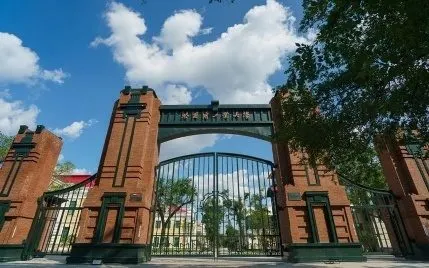
Harbin Institute of Technology accepts international students on programmes in the following fields: engineering, education, it, arts. Choose the level and programme that suit your goals.
A short language programme during the winter holidays: intensive Chinese classes and a cultural programme. Suitable for refreshing your language or visiting a Chinese university for the first time.
self-funded · language programme
Cost: 2 800 ¥ for 2 weeks
self-funded · language programme
Cost: 2 800 ¥ for 3 weeks
self-funded · language programme
Cost: 3 800 ¥/month
A short language programme during the summer holidays: Chinese classes and getting to know the campus and the city. A convenient way to try studying in China before applying for a main programme.
self-funded · language programme
Cost: 2 800 ¥ for 3 weeks
self-funded · language programme
Cost: 3 500 ¥/month
Chinese language study at the university — from a few weeks to a year or longer. Suitable for those starting from scratch or preparing for the HSK before entering a main programme.
self-funded · language programme
Cost: 7 300 ¥ for 6 months
self-funded · language programme
Cost: 14 600 ¥/year
Foundation programme: language and core subjects before a bachelor's degree. It helps you strengthen your knowledge and get used to studying in China before the main programme begins.
scholarship-funded · language programme
Cost: 12 300–24 600 ¥/year
The first level of higher education: usually four years of study, specialised subjects, internships and a graduation thesis. It opens the way to working in your field and to a master's degree.
scholarship-funded
Cost: up to 26 000 ¥/year
self-funded
Cost: 20 000–26 000 ¥/year
Advanced study after a bachelor's degree: research, applied projects and internships. It helps you become an expert in your chosen field and broaden your career opportunities.
self-funded
Cost: 28 000–34 000 ¥/year
Harbin Institute of Technology is located in Harbin. Nihao Study consultants keep track of the deadlines and admission requirements of this university, and you can always check the most accurate and up-to-date information on its official website. In university rankings, it is ranked 10 in China and 201 worldwide.
Come for a face-to-face meeting: together we will go through the requirements, deadlines, documents and study options that suit you.

At the meeting we will look at your situation, tell you which documents to prepare and by when, talk about possible programmes and help you decide on the next step.
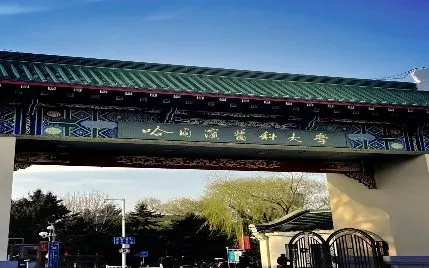
Harbin Institute of Technology (HIT, 哈尔滨工业大学) is located in Harbin, in Heilongjiang Province. In Russian the university calls itself by a name meaning "Harbin Polytechnic University" and uses the corresponding Russian abbreviation. Searches also turn up other variants — "Harbin Polytechnic Institute", "Harbin Institute of Technologies" — as well as a misspelt version of the polytechnic name. Chinese students call it simply 哈工大 (Hāgōngdà), which Russian-speaking students render as "Hagunda". The full name in pinyin is Hā'ěrbīn Gōngyè Dàxué.
HIT is a public research university under the Ministry of Industry and Information Technology of China. It is part of the 211 and 985 projects, a member of the C9 League and included in the Double First-Class programme. In the second round of this programme, eight disciplines are assigned to HIT: this refers to an entry in the current national list, not to an advertising claim.
This Nihao Study overview brings together what will be useful to an applicant for the 2026 intake: HIT's statuses and programmes, language requirements, dormitories, scholarships, rankings and the HSK test centre.
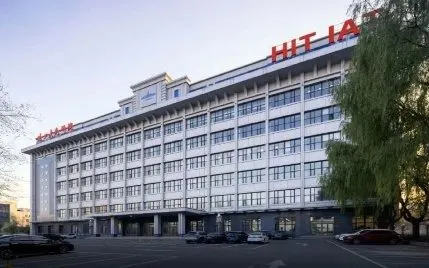
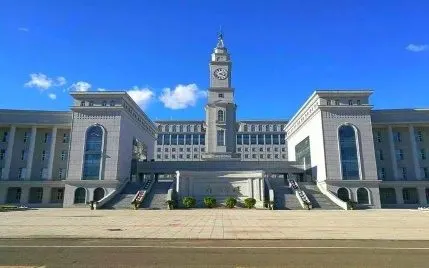
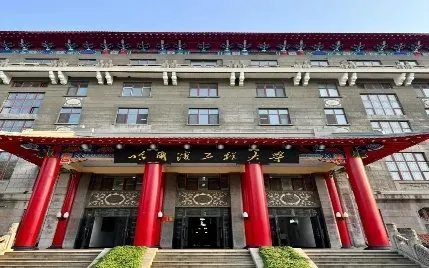
HIT is organised as a single university with three campuses, in Harbin, Weihai and Shenzhen. The main campus, which also houses the admissions office for international students, is in Harbin's Nangang District: No. 92 West Dazhi Street, Nangang District, Harbin 150001.
| Item | Data | Source |
|---|---|---|
| Year founded | 1920 | University data |
| Campuses | Harbin, Weihai, Shenzhen | University data |
| Bachelor's programmes | 127 | University data as of 31 August 2025 |
| First-level master's disciplines | 39 | University data |
| First-level doctoral disciplines | 36 | University data |
| Postdoctoral stations | 27 | University data |
| Disciplines on the Double First-Class list | 8 | Ministry of Education of the PRC |
| Total students | 36,258 students | ShanghaiRanking |
| International students | 1,772 (4.9 per cent) | ShanghaiRanking |
Student numbers are given for the university as a whole. When choosing a programme, check which campus it is taught at: Harbin, Weihai and Shenzhen differ in logistics, climate and the range of disciplines.
The university began as a Russian-Chinese industrial school opened in 1920 to train railway engineers. It was international from day one: Harbin was then growing around the Chinese Eastern Railway, and teaching was based on the Russian engineering tradition. That is why Russian-language sources still sometimes use its old name, Harbin Polytechnic Institute.
With the founding of the PRC the university was given a special role in training engineers. In 1951 HIT was designated one of two national model universities adopting foreign methods of higher education, and in 1954 it joined the country's first six key universities. Since then it has been known as the "cradle of engineers".
In 1996 HIT was included in the first round of Project 211, and in 1999 it became one of the first nine members of Project 985. In 2000 Harbin University of Civil Engineering and Architecture merged into it, strengthening construction, architecture and urban planning. When the first Double First-Class list was drawn up in 2017, the university was placed in category A, and when the list was updated in 2022 eight HIT disciplines were included.
Today HIT is associated above all with robotics, aerospace engineering and complex engineering systems. The university reports taking part in lunar missions, in building satellites and space manipulators, and in technologies for the FAST radio telescope. For an applicant this says less about a glorious past than about the research environment: teaching laboratories here are linked to major national projects.
International rankings use different methodologies, so it is wiser to compare several at once. HIT's overall positions are noticeably lower than its subject positions: engineering and research score higher than internationalisation and the university's reputation as a whole.
| Ranking | Position | What it measures |
|---|---|---|
| QS World University Rankings 2027 | 190th place | Internationalisation, citations and reputation |
| THE World University Rankings 2026 | 131st place | Citations, research, teaching quality |
| ARWU 2025 | 101-150 band | Research output |
| CWUR 2026 | 147th in the world | Alumni achievements and research |
| EduRank 2026 | 314th in the world, 15th in China | Reputation, publications and citations |
Subject rankings are even more telling. In ShanghaiRanking GRAS 2025 HIT is first for instrument science, second for mechanical engineering and third for chemical engineering; control science and aerospace engineering are both in the top five. In THE 2026 HIT is 42nd for engineering and 89th for computer science. According to the university itself, materials science and engineering are in the top 0.01 per cent of ESI, and a number of other fields in the top 0.1 or 1 per cent.
The first aerospace engineering faculty among Chinese universities was opened at HIT. The university has helped build its own satellites, laser communication between Earth and space, and robotic systems for experiments in orbit. This environment suits students for whom lectures on mechanics or control theory are not enough and who want to work on large interdisciplinary projects.
HIT's strong subject positions extend to metallurgy, civil engineering, chemical engineering, mechanics and instrument engineering. When choosing a programme, this means that design, automated manufacturing, materials science and fundamental physics are closely linked here.
The university runs classes in intelligent robotics and artificial intelligence, and there is a joint HIT track with the University of Hong Kong. Computer science, electronics and control complement the classic engineering base, so HIT suits those who want to combine programming with work on physical systems.
The word institute in the English name does not reflect the university's scale: HIT awards bachelor's, master's and doctoral degrees and covers engineering, natural sciences, management and the humanities.
The academic core is formed by eight disciplines from the new round of Double First-Class: mechanical engineering, mechanics, materials science, computer science, control, civil engineering, and aerospace and environmental engineering. The words School and College in names denote a unit within HIT, not a separate university.
| Level | Duration and language of instruction | Main requirement |
|---|---|---|
| Bachelor's Degree | 4 to 5 years; taught in Chinese, some programmes in English | For Chinese-taught study: HSK 4 with 210 points or more |
| Master's Degree | 2 to 3 years; Chinese, some engineering programmes in English | Bachelor's degree, language certificate, study plan, recommendation letters |
| Doctoral (PhD) Programmes | 4 years; English-taught study is possible in almost all schools | Master's degree, research plan, recommendation letters |
| Chinese language, long-term course | 16 weeks; the course is split into nine sub-levels | Develops listening, speaking, reading and writing |
| Foundation Programme | 18 or 36 weeks | Language study, mathematics, physics or chemistry; preparation for the HSK and CSCA exams |
Under the 2026 admission rules, bachelor's applicants must present a CSCA result. Chinese-taught study requires HSK 4 with a score of at least 210. For the English-taught stream, applicants whose previous education was not in English need IELTS above 6.0 or TOEFL iBT above 80. An English-taught group is only opened if at least 20 students enrol.
International students can live in the university dormitory. The fee for a place does not include electricity, water or internet, and rooms may be allocated at random. It is best to check current accommodation costs on HIT's official website.
The international office is at 92 West Dazhi Street, Nangang District, postcode 150001. This is central Harbin, and the area around the campus has all city amenities. A student renting accommodation off campus must sign a tenancy agreement and register with the local police station within 24 hours of moving in.
The university is one of the host institutions of the Chinese Government Scholarship (CSC) programme.
A scholarship does not in itself guarantee admission: the committee looks at your diploma and grades, language level, study or research plan and recommendation letters. Plan your application strategy in advance, especially if you have to choose between the embassy and university channels.
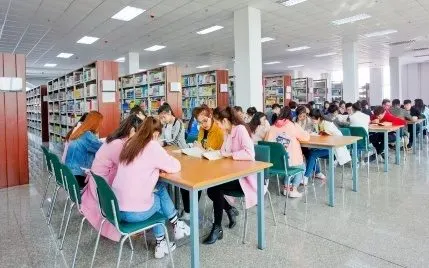
The main campus has laboratories, teaching buildings, libraries, the university museum and sports grounds. The library combines storage, lending and reading in one system; books can be borrowed with a campus card. As of August 2025 the electronic collection stood at 2.125 million books. The HIT Museum is housed in a historic building and is usually open from 8:30 to 17:00, with last admission at 16:30.
For sport there are more than 100 indoor badminton courts and other facilities. For international students the way language teaching is organised also matters: the long-term Chinese course is divided into beginner, intermediate and advanced levels, nine sub-levels in total.
HIT has a computer-based HSK test centre. For 2026 the centre scheduled exams on four dates: 16 May, 28 June, 18 July and 13 December. When preparing for the next intake, check the latest schedule on the Chinese Test Service website.
Deadlines depend on the level. In the 2026 admission campaign self-funded bachelor's applications were accepted until 15 July, and master's and doctoral applications until 31 May. Dates may shift in the new cycle, so check them again on HIT's official website.
Names built on technology, engineering and science and technology are easy to confuse, especially in translation, but they belong to different universities, each with its own admissions office.
| University and Chinese name | Status | Main focus |
|---|---|---|
| Harbin Institute of Technology, HIT, 哈尔滨工业大学 | National research university; C9, 985, 211, Double First-Class | Engineering, aerospace, computing, materials |
| Harbin Engineering University, HEU, 哈尔滨工程大学 | National university; 211, Double First-Class | Nuclear energy, ocean, shipbuilding |
| Harbin University of Science and Technology, HUST, 哈尔滨理工大学 | Provincial-level technical university | Mechanical engineering, electrical engineering, applied technologies |
| Harbin University, HRBU, 哈尔滨学院 | Municipal applied university | Design, education, applied majors for the city |
HIT stands out for its C9 status and broad research profile, with particularly strong aerospace and engineering disciplines. HEU is a separate university, not a branch of HIT, and HUST is not at all an English version of the same name.
The correct Russian form is the one meaning 'Harbin Polytechnic University': this is the name the university itself uses. The spelling with an 'i' in place of the 'e' in 'polytechnic' is a spelling mistake. 'Harbin Polytechnic Institute' is a historical name, and 'Harbin Institute of Technologies' is a literal translation from English. Harbin Institute of Technology is the official international name, and HIT is the generally accepted English abbreviation. 哈工大 (Hāgōngdà, Hagongda) is the short Chinese name; the full name is 哈尔滨工业大学 (Hā'ěrbīn Gōngyè Dàxué).
It is a Chinese public research university. The main campus is in Harbin (Heilongjiang Province), in Nangang District, at 92 West Dazhi Street. The university has two more campuses, in Weihai and Shenzhen.
Yes. HIT joined Project 211 in 1996 and became one of the first nine members of Project 985 in 1999. The university is a member of the C9, and it has eight disciplines in the second round of Double First-Class.
Yes, but a lot depends on the level and the programme. An English-taught bachelor's group opens if at least 20 students enrol. English-taught master's programmes are offered in selected fields: management, materials science, civil engineering, mechanics, electronics and chemical engineering. At doctoral level almost all programmes can be studied in English, except those in the humanities and social sciences.
Under the 2026 rules, most Chinese-taught programmes (bachelor's, master's and doctoral) require HSK 4 with at least 210 points. The CSC requirements set the threshold differently: HSK 4 with at least 180 points. The scholarship threshold and the general academic threshold are different things and should not be confused.
The cost of a dormitory place is quoted without utilities: electricity, water and internet are paid separately. Check the current accommodation rates on HIT's official website.
Yes, if you win the competition. For master's and doctoral students, CSC pays for tuition, the dormitory and medical insurance, and also provides a monthly allowance.
Yes, HIT's International School holds the computer-based HSK. According to the university, four exam dates are scheduled for 2026; you register through the Chinese Test Service, choosing the Harbin Institute of Technology centre. Check the dates for the next cycle against the current HSK calendar.
HIT is a C9 member with strong positions in aerospace, mechanics, materials science, management and computer science. Harbin Engineering University specialises in shipbuilding, as well as ocean and nuclear engineering. Harbin University of Science and Technology (HUST) is a separate provincial technical university.
You will need a school certificate and school transcript, a passport, a CSCA result, a language certificate, a medical certificate, a police clearance certificate, a CV and a document proving your financial means. Documents that are not in Chinese or English must be accompanied by a notarised translation.
Harbin (哈尔滨), the capital of Heilongjiang Province in northern China, is called the 'Ice City'. Its Russian architectural heritage has survived, including Saint Sophia Cathedral, and the city owes its worldwide fame to its international ice sculpture festival.
For students there are strong technical universities (Harbin Institute of Technology ranks in the country's top 10), low prices, an unusual blend of Chinese and Russian cultures and a developed urban infrastructure with a metro (3 lines). Winters are harsh, but all buildings are heated. For parents, it matters that the city is safe and its atmosphere feels familiar to Russian speakers — signs are often duplicated in Russian. There is also good healthcare, an international airport, well-organised heated campuses and support services for international students.
You work with Nihao Study specialists. They will help you put together a portfolio and a set of documents, draw up a study plan and choose a university or college and a specialty that genuinely interest you.
We take care of every stage of admission, from choosing to enrolment
We will gather, prepare, certify and send your documents to the institution
We will show the admissions committee your strengths
We run training sessions and courses so you can prepare with more confidence
We will help you settle in at the start of your studies and keep moving forward
Nihao Study specialists select universities and colleges that match the applicant's goals and means. We make sure the teachers are practitioners and that the knowledge will be useful in your profession.
We examine curricula, talk to students and teachers and look at which specialties employers need, and use this information to select options for the applicant.
Advisers guide the applicant from the first consultation to enrolment, help build a plan and spot mistakes in time that could get in the way.
The cost of our support depends on the programme and the partner university; you'll get an exact quote after a free consultation.
Get a quoteA free 15-minute consultation: together we will choose a university or college and a programme that suit your goals and budget.
Apply with peace of mind: we handle the documents, deadlines and correspondence with admissions committees, and you save time and energy.
Don't want to wait for a call? Message us in the chat.
Message us in chat