- Language courses
- English, Chinese
- Bachelor's Degree
- English, Chinese
- Master's Degree
- English, Chinese
- Doctoral (PhD) Programmes
- English, Chinese
- Tuition from 12 300 ¥/year
- Accommodation from 800 ¥/month
HEU · 哈尔滨工程大学
Harbin Engineering University accepts international students on programmes in the following fields: engineering. Choose the level and programme that suit your goals.
Chinese language study at the university — from a few weeks to a year or longer. Suitable for those starting from scratch or preparing for the HSK before entering a main programme.
self-funded · language programme
The first level of higher education: usually four years of study, specialised subjects, internships and a graduation thesis. It opens the way to working in your field and to a master's degree.
self-funded
Advanced study after a bachelor's degree: research, applied projects and internships. It helps you become an expert in your chosen field and broaden your career opportunities.
self-funded
Harbin Engineering University is located in Harbin. Nihao Study consultants keep track of the deadlines and admission requirements of this university, and you can always check the most accurate and up-to-date information on its official website. In university rankings, it is ranked 61 in China and 851 worldwide.
Come for a face-to-face meeting: together we will go through the requirements, deadlines, documents and study options that suit you.

At the meeting we will look at your situation, tell you which documents to prepare and by when, talk about possible programmes and help you decide on the next step.
Harbin Engineering University (HEU for short, Chinese: 哈尔滨工程大学) is a public research university in Harbin, the administrative centre of Heilongjiang Province. Its official short Chinese name is 哈工程, pronounced Hā Gōngchéng. The standard Russian name means "Harbin Engineering University". Russian-language searches also turn up a calque of the English word order and incorrect forms such as "Harbin Engineering and Technical University" or a misspelt "Harbin Engineers' University".
HEU traces its origins to the PLA Military Engineering Institute, known as Ha Jungong. From it the university inherited a profile that in China is summed up by the formula 三海一核: ocean exploration, shipbuilding, naval engineering and the use of nuclear energy. The university is part of the 211 project and the second round of Double First-Class, but it has only one official 双一流 discipline — naval architecture and ocean engineering. Nuclear science is a strong core field at HEU, but it is not included in the national Double First-Class list as a separate discipline.
This Nihao Study overview brings together information that will be useful to a 2026 applicant: the university's statuses and rankings, programmes taught in Chinese and English, dormitories, CSC scholarships, HSK and CSCA requirements, and how HEU differs from other technical universities in Harbin.
The enrolment figures below were collected from university pages and ranking profiles updated at different times. They give an idea of HEU's scale but do not form a single statistical snapshot for one date.
| Indicator | Value | Notes |
|---|---|---|
| Year founded | 1953 | The university's roots lie in the PLA Military Engineering Institute |
| Full-time bachelor's students | 16,618, 2022 data | Only full-time students are counted |
| Master's and doctoral students | 15,237, including 3,243 doctoral students | University data as of October 2022 |
| Bachelor's majors | 63 in 7 fields of study | Only some programmes are open to international students |
| Academic structure | 17 schools and bachelor's-level units | The word College refers to a unit of HEU |
| Degree-granting authority | First-level disciplines: 15 doctoral, 32 master's | Reflects the university's research status |
| Address | 145 Nantong Street, Nangang District, Harbin, 150001 | The main campus is in Nangang District |
| ESI | 8 disciplines are in the world top 1%, engineering in the top 0.1% | HEU data as of November 2025 |
HEU's predecessor was founded in 1953: the Military Engineering Institute of the PLA (People's Liberation Army of China), known as Hajungong. Its first head was General Chen Geng, and teaching was built around five engineering faculties organised by branch of the armed forces. The institute gained national key university status in 1959. This past is reflected both in the campus's museums and architecture and in the applied focus of today's schools of underwater acoustics, shipbuilding, nuclear technology and automation.
In the 1960s a number of units were moved to other cities, where several independent universities grew out of them. In 1970 the Harbin Shipbuilding Engineering Institute, under the relevant ministry, was established on the original site. The university has had its current name since April 1994, and in 1996 it passed the preliminary selection for Project 211, becoming one of its first members.
Later steps secured HEU's status as a research university. In 2002 it was allowed to open a pilot graduate school and begin building a national university science park. Since 2008 the university has been under the Ministry of Industry and Information Technology of the PRC. It has taken part in Double First-Class since 2017, and in the second round it again retained the discipline 船舶与海洋工程 (Naval Architecture and Ocean Engineering).
World rankings measure different things, and HEU's position depends on the methodology. So an applicant should look at both the overall band and the results in individual subjects.
| Ranking | Position | Comment |
|---|---|---|
| THE World University Rankings 2026 | 601-800 | Engineering separately: 401-500 band |
| QS World University Rankings 2026 | 1001-1200 | QS Asia: 343rd place |
| ARWU 2025 | 501-600 | Research ranking by ShanghaiRanking |
| CWUR 2025 | 688 in the world, 122 in China | Under the CWUR methodology the university is in the world top 3.3% |
| EduRank 2026 | 1073 in the world, 76 in China | Marine engineering: 2nd place in the world |
| ESI, November 2025 | 844 among top 1% institutions | 8 HEU disciplines are in the world top 1% |
The difference between 501-600 in ARWU and 1001-1200 in QS does not mean the data contradict each other. ARWU focuses on research publications and citations, while QS also takes reputation and international indicators into account. By subject the picture is much clearer: in EduRank HEU is 2nd in the world for marine engineering and 37th for nuclear engineering. This matches the university's real profile and explains why students choose it for a specific engineering school rather than for a widely known brand.
The shipbuilding school's roots go back to Hajungong's naval engineering department. In the fourth national discipline evaluation, 船舶与海洋工程 (Naval Architecture and Ocean Engineering) received an A+ and then became an official Double First-Class discipline. The school runs programmes in naval architecture and ocean engineering, port, waterway and coastal engineering, and marine robotics, and hosts national and inter-ministerial research platforms. This profile suits those who plan to work in hydrodynamics, ship design, autonomous vehicles or marine structures.
At HEU underwater acoustics is closely linked with electronics, communications and control. International bachelor's students can choose underwater acoustic engineering, electronic information engineering with an acoustics profile, or marine information engineering. For master's and doctoral studies there are English-taught tracks: underwater acoustic engineering, information and communication engineering, control science and engineering, and intelligent science and technology. In essence this is not one narrow speciality but a cluster where robotics, sensors, decision-making systems and signal processing come together.
The College of Nuclear Science and Technology admits bachelor's students to Nuclear Energy Engineering and Technology and Nuclear Chemical and Fuel Engineering. Postgraduates are offered Nuclear Science and Technology, as well as Energy and Power with a nuclear focus; both tracks appear on the list of English-taught programmes. The field is genuinely strong and backed by dedicated scholarships, but the national Double First-Class status belongs to shipbuilding and ocean engineering, not to all of HEU's strong disciplines.
For an international applicant it is more useful to look not at the total number of HEU majors but at the current international intake list. In the 2026 intake the programmes are grouped as follows:
According to the official 2026 list, bachelor's study fully in English is possible in artificial intelligence and in civil engineering (double-degree format). Some other programmes, such as robotics, computer science and technology, and electronic information engineering, are also marked as available in English. Check the language for the specific line of the list before applying: an English-taught version of one programme does not mean the whole college teaches in English.
| Level | Duration and language | Sample programmes |
|---|---|---|
| Chinese Language | Semester or year, Chinese | Long-term language courses |
| Bachelor's Degree | 4 years; Chinese, some programmes in English | Shipbuilding, AI, robotics, IT, nuclear energy |
| Master's Degree | 3 years, Chinese or English | Ocean structures, control, acoustics, nuclear energy |
| Doctoral (PhD) Programmes | 4 years, Chinese or English | Engineering, science, management and specialised research |
HEU's long-term courses are suitable for language preparation. Those aiming for a degree should compare the official list with the bachelor's programmes currently open for admission and check the current deadline in the university's application system.
For the 2026 intake the university published official international admission fees; the fee varies with the level and language of the programme, and on the Civil Engineering double degree the fourth year is spent at the University of Aberdeen. The fees do not include bank charges, flights, food or personal spending. Besides tuition, budget for the application fee, medical insurance, residence permit and the medical check at registration. Current amounts are published on the official website hrbeu.edu.cn; it is best to check them before applying.
HEU accepts candidates for the Chinese Government Scholarship. The 2026 instructions for master's and doctoral programmes list the Type B category and agency number 10217. For the bachelor's bilateral Type A programme, applications are usually submitted through the authorised body of the candidate's country or through the embassy. Rules differ between programmes, so study the conditions of the specific competition in advance.
HEU's own HEU Scholarship for degree program students is divided into three categories. The first fully covers tuition and includes a monthly allowance whose amount depends on the level: bachelor's, master's or doctoral. The second category fully waives tuition, and the third reduces it by 50%. In addition, there is a separate one-off award for first-year bachelor's students with good Chinese or notable achievements.
The scholarship is not awarded automatically to every admitted student: the committee looks at academic results, language level, the research plan and how well the candidate meets the competition's conditions. For HEU's own scholarship there are age guidelines: up to 25 for bachelor's, up to 35 for master's and up to 40 for doctoral studies.
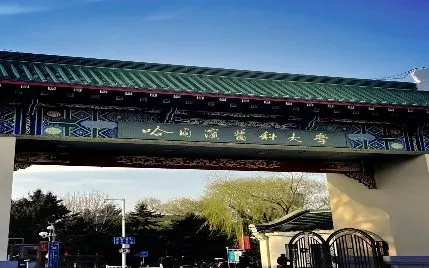
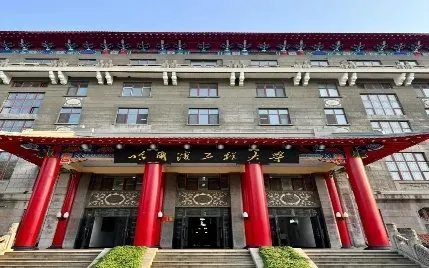
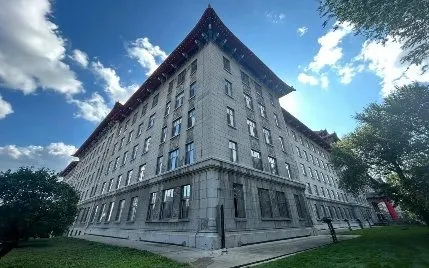
The main campus is on Nantong Street in Nangang, a large university district of Harbin. On its grounds the historical Hajungong axis stands alongside modern teaching buildings, and there are laboratories, library spaces and sports grounds. The international office reports three canteens, one of which is a separate Muslim canteen.
In November 2025 HEU announced that 8 of its disciplines are in the ESI world top 1%, and engineering in the top 0.1%. This base gives students a research environment, but whether a student gets into a laboratory depends on the programme, the supervisor and the student's level of preparation. The international master's is especially useful for those who have matched their research topic with the department's profile in advance.
In the 2026 intake on-campus accommodation was charged at five levels, depending on room type. Earlier HEU pages describe apartments for international students: single, double and family rooms, with a private bathroom, internet, a fridge and a TV; the kitchen and laundry are shared. Medical insurance is compulsory for international students, and the room deposit is confirmed before moving in. Which building you get and how it is equipped must be confirmed from the admission notice: prices and room allocation change.
| Item | Guideline | Note |
|---|---|---|
| Heating | Paid by the university | This matters given the Harbin winter |
In the 2026 intake bachelor's applications were accepted in four rounds, from 1 November 2025 to 15 May 2026. The last postgraduate round closed on 30 April 2026. These are the dates of a specific admission campaign, not a permanent calendar, so check the dates of the next cycle on the university's official website.
| University | Status and profile | Distinguishing features |
|---|---|---|
| Harbin Engineering University, HEU, 哈尔滨工程大学 | Project 211 member; Double First-Class discipline: shipbuilding and ocean engineering | Underwater acoustics, marine technology, nuclear energy |
| Harbin Institute of Technology, HIT, 哈尔滨工业大学 | Member of the C9, broader engineering profile | English abbreviation HIT; the Chinese name contains 工业 |
| Harbin University of Science and Technology, HRBUST, 哈尔滨理工大学 | Provincial-level science and technology university | Its English name is Harbin University of Science and Technology |
| Heilongjiang University, HLJU, 黑龙江大学 | Provincial comprehensive university, strong in Russian studies | Named after the province, not an engineering specialisation |
HEU and HIT are two different universities. If acoustics, ocean engineering, ships or nuclear energy matter most, HEU's profile is the closer fit. Those who want the broader engineering environment of a C9 university should compare HEU with Harbin Institute of Technology.
The standard Russian name is the one meaning 'Harbin Engineering University'. Forms that use 'engineering and technical' or a misspelt 'engineer's' instead of 'engineering' are mistakes found in searches. 'Engineering University of Harbin' is an understandable calque from English, but it is not considered the main Russian name. Harbin Engineering University is the official international name, and the abbreviation HEU appears in correspondence, applications and rankings. The short Chinese name is 哈工程 (Hā Gōngchéng), and the full name is 哈尔滨工程大学 (Hā'ěrbīn Gōngchéng Dàxué).
HEU is Harbin Engineering University. This official English code of the university is given in the 2026 admission regulations. It should not be confused with HIT, the abbreviation for Harbin Institute of Technology.
Yes. Following the 1996 selection, the university became one of the first members of Project 211. The discipline of naval architecture and ocean engineering is assigned to HEU in the second round of Double First-Class. Nuclear engineering at the university is strong, but it is not listed separately on the national list.
Yes. At bachelor's level there are some English-taught programmes, such as the Civil Engineering double degree and Artificial Intelligence. For master's and doctoral programmes the choice in English is wider: ocean structures, control, acoustics, mechanics, materials, nuclear science. Russian is not offered as the main language of degree programmes.
The Chinese Language bachelor's programme requires HSK 3, and other Chinese-taught programmes HSK 4. Master's and doctoral students studying in Chinese need HSK 5. Before applying, check that your certificate has not expired and consult the current HSK calendar.
In the 2026 intake fees depended on the level of study and the language of the programme. The amounts need to be rechecked for the new cycle: current rates are published on the university's official website, hrbeu.edu.cn.
The 2026 international intake had five rate levels. The final cost is determined by the room type and building, and is confirmed once a place has been allocated; current terms are on the university's official website.
Yes, provided the candidate wins the relevant competition. The postgraduate Type B category uses agency number 10217, while the bachelor's Type A is usually arranged through an authorised body in your own country or the embassy. What exactly the scholarship covers depends on the CSC programme.
Yes. Starting with the 2026 intake, HEU requires a valid CSCA score report. Engineering programmes require results in mathematics and physics, while humanities and management programmes require Chinese and mathematics.
The main address is 145 Nantong Street, Nangang District, Harbin, Heilongjiang, 150001. Nangang District is the central university area of Harbin. Before travelling, check in your admission notice which building registration takes place in.
The basic set includes a passport, a language certificate, a school certificate or diploma with a transcript, a medical form, a study plan, a police clearance certificate and a financial guarantee. Postgraduate applicants will also need recommendations and a more detailed research plan. The final list depends on the level of study and the scholarship.
Harbin (哈尔滨), the capital of Heilongjiang Province in northern China, is called the 'Ice City'. Its Russian architectural heritage has survived, including Saint Sophia Cathedral, and the city owes its worldwide fame to its international ice sculpture festival.
For students there are strong technical universities (Harbin Institute of Technology ranks in the country's top 10), low prices, an unusual blend of Chinese and Russian cultures and a developed urban infrastructure with a metro (3 lines). Winters are harsh, but all buildings are heated. For parents, it matters that the city is safe and its atmosphere feels familiar to Russian speakers — signs are often duplicated in Russian. There is also good healthcare, an international airport, well-organised heated campuses and support services for international students.
You work with Nihao Study specialists. They will help you put together a portfolio and a set of documents, draw up a study plan and choose a university or college and a specialty that genuinely interest you.
We take care of every stage of admission, from choosing to enrolment
We will gather, prepare, certify and send your documents to the institution
We will show the admissions committee your strengths
We run training sessions and courses so you can prepare with more confidence
We will help you settle in at the start of your studies and keep moving forward
Nihao Study specialists select universities and colleges that match the applicant's goals and means. We make sure the teachers are practitioners and that the knowledge will be useful in your profession.
We examine curricula, talk to students and teachers and look at which specialties employers need, and use this information to select options for the applicant.
Advisers guide the applicant from the first consultation to enrolment, help build a plan and spot mistakes in time that could get in the way.
The cost of our support depends on the programme and the partner university; you'll get an exact quote after a free consultation.
Get a quoteA free 15-minute consultation: together we will choose a university or college and a programme that suit your goals and budget.
Apply with peace of mind: we handle the documents, deadlines and correspondence with admissions committees, and you save time and energy.
Don't want to wait for a call? Message us in the chat.
Message us in chat