- Language courses
- English, Chinese
- Bachelor's Degree
- English, Chinese
- Master's Degree
- English, Chinese
- Doctoral (PhD) Programmes
- English, Chinese
- Accommodation from 2 600 ¥/month
HMU · 哈尔滨医科大学
Harbin Medical University accepts international students on programmes in the following fields: engineering, medicine. Choose the level and programme that suit your goals.
Chinese language study at the university — from a few weeks to a year or longer. Suitable for those starting from scratch or preparing for the HSK before entering a main programme.
self-funded · language programme
The first level of higher education: usually four years of study, specialised subjects, internships and a graduation thesis. It opens the way to working in your field and to a master's degree.
self-funded
Advanced study after a bachelor's degree: research, applied projects and internships. It helps you become an expert in your chosen field and broaden your career opportunities.
self-funded
Harbin Medical University is located in Harbin. Nihao Study consultants keep track of the deadlines and admission requirements of this university, and you can always check the most accurate and up-to-date information on its official website. In university rankings, it is ranked 117 in China and 1518 worldwide.
Come for a face-to-face meeting: together we will go through the requirements, deadlines, documents and study options that suit you.

At the meeting we will look at your situation, tell you which documents to prepare and by when, talk about possible programmes and help you decide on the next step.
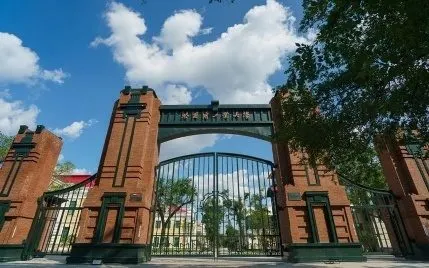
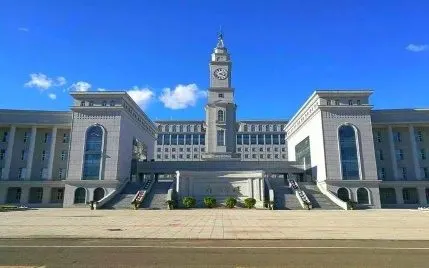
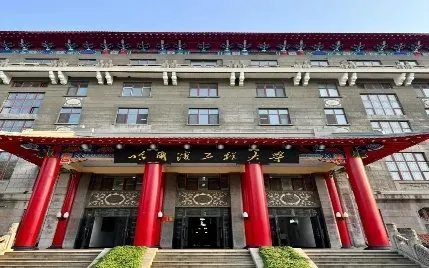
Harbin Medical University (HMU, 哈尔滨医科大学) is one of the oldest specialist medical universities in north-east China. It is located in Harbin, the administrative centre of Heilongjiang Province. Chinese students call it 哈医大 (Ha Yi Da) for short; in ranking databases it appears as HMU.
The university traces its history back to 1926. Two medical traditions came together in it: the civilian school of the epidemiologist Wu Lien-teh and the field medicine of the Chinese Red Army. HMU is not currently part of the 211 project or the Double First-Class programme. However, since 2015 it has been jointly developed by the Ministry of Education, the National Health Commission of China and the Heilongjiang provincial government. Its graduates' diplomas are recognised without additional validation by the medical councils of India, Bangladesh, Jordan and a number of other countries.
Nihao Study has gathered here what will be useful to a 2026 applicant: the university's actual rankings and status, programmes for international students, dormitory conditions, available scholarships and Harbin universities with similar names.
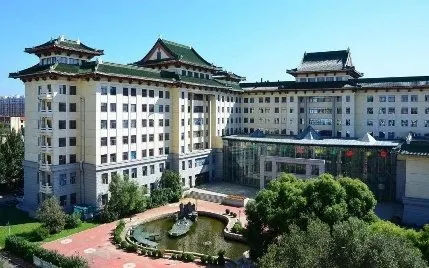
To begin with, here is the scale of the university in one table. The data are taken from the university's own information.
| Item | Data |
|---|---|
| Year founded | 1926: two schools merged, Wu Lien-teh's school and the medical school of the Chinese Red Army |
| Status | Since 2015 the university has been jointly developed by the Ministry of Education, the National Health Commission of the PRC and Heilongjiang Province |
| Project 211 and Double First-Class | Not a member |
| Campuses | 2: the main one in Nangang District (Harbin), the second in Daqing |
| Main campus area | 2.36 million m²; historic buildings |
| Bachelor's students | 16,507, including 8,564 at the Daqing campus |
| Master's and doctoral students | 8,915, of whom 1,605 are doctoral students |
| International students | 172 |
| Teaching and other staff | over 18,300 |
| Affiliated hospitals | 9; 5 of them are the university's direct clinical bases |
| Library holdings | 4,707 journals, 330,000 electronic publications and more than 1.5 million volumes |
| CSC agency number (campuschina.org) | 10226 |
| Main campus address | 157 Baojian Road, Nangang District, Harbin, postcode 150081 |
The university dates back to September 1926, when the Binjiang Special Medical School opened in Harbin. It was founded by the epidemiologist Wu Lien-teh, a Cambridge graduate who became world-famous for stopping the pneumonic plague epidemic in Manchuria in 1910 and 1911. From January 1928 the school was called the Harbin Special Medical School, and in January 1938 it became a university.
At the same time a military branch was taking shape. In 1931 the Health School of the Chinese Red Army opened in Ruijin (Jiangxi Province); later the first and second branches of China Medical University were established on its basis in Xingshan. After the founding of the PRC, Wu Lien-teh's civilian tradition and the military medical line gradually merged into a single Harbin Medical University. Few medical universities in China have such a dual history.
For international students 1997 is the key year: HMU was among the first 30 Chinese universities allowed by the Ministry of Education to teach clinical medicine to international students in English (MBBS). In May 2012 the HMU Institute of International Education was set up to work with international students. Finally, on 24 October 2015 the Ministry of Education, the National Health Commission of the PRC and the Heilongjiang provincial authorities officially took the university under joint development.
HMU's status is often confused. Some aggregators mistakenly list it under Project 211, but Chinese education directories do not confirm this: the university is in neither 211 nor Double First-Class (双一流). On the other hand, since 2015 it has been officially recognised as a high-level university of Heilongjiang Province in medicine. In other words, in terms of its actual standing HMU is more a strong specialised university than a large multidisciplinary one.
In 2026 HMU appears in several international rankings at once. The table shows positions that can be checked against the original source.
| Position and year | Ranking |
|---|---|
| No. 106 in China; 700 to 1000 worldwide; 2025 | CWUR World University Rankings |
| No. 101 in China, No. 1425 in the world, 2026 | EduRank, overall ranking |
| Medicine: No. 26 in China, No. 350 in the world, 2026 | EduRank, subject ranking |
| top 5 medical universities in China, 2023 | ShanghaiRanking Best Chinese Universities Ranking |
| No. 206 among research institutions in China, 2022 | Nature Index |
The takeaway for applicants: HMU is not among China's top fifty multidisciplinary universities, but it holds a steady place among the country's strong medical universities. In addition, the medical regulators of India, Bangladesh, Pakistan and Jordan recognise its degrees without additional validation, which sets HMU apart from most universities of the same level.
Before talking about schools, it helps to understand what makes HMU stand out among other medical universities in China.
The first reason is the legacy of its founder, one of the pioneers of epidemiology. During the Manchurian plague of 1910 and 1911 Wu Lien-teh became the first person in the world to use a respirator mask and introduced modern-style quarantine measures; his methods gave rise to the school from which HMU later grew. The pioneering spirit lived on: in 1997 HMU was among the first 30 universities in China entitled to teach clinical medicine to international students in English. Today it is one of 45 universities in the country accredited by the Ministry of Education for the MBBS programme.
The second reason is research into endemic diseases and transplantation. HMU hosts the Center for Endemic Disease Control of the Chinese CDC, which studies Kashin-Beck disease and Keshan disease, both typical of Northeast China. Another specialisation of the university is allogeneic organ transplantation. The university's scientists took part in China's human genome sequencing project and in developing a series of spleen-preserving operations.
The third reason is HMU's role in medical cooperation between China and Russia. The university hosts the secretariat of ASRMU, the Association of Sino-Russian Medical Universities; the campus also has a Russian Language Training Centre under the National Health Commission of the PRC. For Russian-speaking applicants, including those from CIS countries, this means the university has extensive experience of working with such students.
The university brings together 18 specialised schools and institutes plus 8 additional units. They include the School of Stomatology, School of Pharmacy, School of Basic Medical Sciences, School of Nursing, School of Public Health and School of Health Management, the departments of bioinformatics and of humanities and social sciences, the Graduate School and the School of Continuing Education. Outside the main campus, in the city of Daqing, lies the 114-hectare Daqing campus, with 10 teaching units and 16 bachelor's programmes.
Students do their clinical training at 9 affiliated hospitals, 5 of which are the university's direct clinical bases. The main one is the First Affiliated Hospital of HMU, with 4,800 operational beds and about 4.13 million outpatient visits a year. The Second Affiliated Hospital has 3,100 beds and sees more than 1.2 million outpatients annually. Even for a large Chinese medical university, this is a notable volume of clinical practice.
The library holds 330,000 electronic publications, 4,707 academic journals and more than 1.5 million volumes; students have access to databases for research work. In addition, the Heilongjiang branch of the Chinese Academy of Medical Sciences and the National Center for Clinical Trials of New Drugs operate at the university.
The range of tracks for international students depends on the level of study and the language the student plans to study in.
The main programme for international students is the six-year Clinical Medicine (MBBS) course in English. In Heilongjiang Province HMU remains the only medical university allowed to admit international students to an English-taught MBBS. You do not need to take the HSK for admission, but an HSK 4 certificate is required to graduate. For entry the university requires TOEFL 70 or higher or IELTS 6.0 or higher, as well as a passed CSCA exam. In addition, there is Chinese-taught clinical medicine and bachelor's programmes in other fields: stomatology, anaesthesiology, medical imaging, biotechnology, nursing, pharmacy, preventive medicine, medical law and public administration; 11 fields in total.
At master's and doctoral level there are 4 categories of first-level doctoral programmes: biology, clinical medicine, basic medicine, and public health and preventive medicine. In addition there are 41 second-level doctoral programmes and 49 second-level master's programmes, as well as 5 postdoctoral research fields. Those who need to improve their language before the main programme are offered long-term Chinese courses and the preparatory formats usual for Chinese universities.
Student dormitories are right on campus. Rooms are for two people and furnished, with central heating. The grounds are under video surveillance, with particular attention paid to the safety of female students. On the MBBS programme accommodation is already included in the overall package; for other programmes the conditions are confirmed for each intake.
Another option is to rent accommodation off campus in Nangang District. This is the part of Harbin where people study and do research: several of the city's major universities are concentrated here. This is usually what senior students do once they have settled into the city and the Chinese language.
| Type of payment | Frequency |
|---|---|
| Application fee | one-off |
| Registration fee | one-off |
| Visa extension | every year |
| Medical examination | every year |
| Medical insurance | every year |
For other Chinese-taught fields — pharmacy, biotechnology or nursing, for example — tuition varies by programme and is set individually. It is best to check the current fees and tuition amounts on the university's official website or during a consultation.
On campuschina.org the university is registered under agency number 10226. Through this system HMU collects applications for the Chinese Government Scholarship (CSC), mainly for master's and doctoral programmes. In total, more than 300 Chinese universities accept CSC scholarship holders.
The university also has its own scholarships: according to HMU, it offers international students up to 120 scholarship places a year across bachelor's, master's and doctoral programmes. The requirements are not holding Chinese citizenship, a valid visa and an HSK certificate. In practice, the amount of support depends on your school-leaving grade average, language level and chosen programme.
Harbin (哈尔滨) is the capital of Heilongjiang Province and home to around 10 million people. It is sometimes called the Ice City, and Russian architectural heritage is visible in its streets. The city's safety is rated 8 out of 10, and it has three metro lines. In winter the temperature drops to minus 21 degrees, but campuses and dormitories have central heating; in summer it can reach 27 degrees. Harbin's best-known sights include St Sophia Cathedral and the international ice sculpture festival, and in tourist areas signs are often duplicated in Russian.
Harbin Taiping International Airport connects the city with the rest of China, and direct trains run from here to Khabarovsk and Vladivostok. Immediately after arrival, international students at HMU must register their place of residence with the police and have a medical examination.
An international applicant's path to HMU consists of several stages.
Applications for bachelor's programmes usually close at the end of August, and the academic year starts in early September.
Harbin, and Heilongjiang Province as a whole, has several universities with similar names or a medical focus, and it is worth telling them apart before you apply.
| University and Chinese name | Type | Profile |
|---|---|---|
| Harbin Medical University (HMU), 哈尔滨医科大学 | Public medical university | Western medicine, clinical training, English-taught MBBS |
| Heilongjiang University of Chinese Medicine, 黑龙江中医药大学 | Public medical university | Traditional Chinese medicine and pharmacognosy |
| Harbin Institute of Technology (HIT), 哈尔滨工业大学 | Public, Project 985 and Project 211 | Engineering and exact sciences; Harbin's best-known university |
| Harbin Engineering University (HEU), 哈尔滨工程大学 | Public, Project 211 | Shipbuilding, nuclear power, engineering |
The closest to HMU in profile is Heilongjiang University of Chinese Medicine (黑龙江中医药大学). It focuses on traditional Chinese medicine, acupuncture and pharmacognosy and does not award a European-style MBBS degree, whereas HMU works only within Western clinical medicine. Nor should HMU be confused with its Daqing campus: this is not a separate university but a branch located some 300-plus kilometres from Harbin, and international students study there on the same terms as at the main university.
All these forms refer to the same public medical university in Harbin. The form meaning 'Harbin Medical University' is the standard Russian name: it is used by official reference works and Wikipedia. The form meaning 'Medical University Harbin' follows English word order; strictly speaking it is not quite standard, but it has caught on with education agency websites. Harbin Medical University is the official international name, under which the university appears in rankings and on diplomas. HMU is the official abbreviation for email correspondence and databases. 哈医大 (Ha Yi Da) is the short form used by Chinese students. The full Chinese name is 哈尔滨医科大学, in pinyin Hāěrbīn Yīkē Dàxué.
No. Some sources mistakenly say otherwise, but HMU is not part of Project 211 or the Double First-Class (双一流) programme. The university has high-level provincial specialist status, and since 2015 it has been jointly supervised by the Ministry of Education, the National Health Commission and the Heilongjiang provincial authorities.
Yes. The six-year MBBS (Clinical Medicine) programme, the main one for international students, is taught entirely in English; there are few such programmes in Heilongjiang Province. English requirements for admission are TOEFL 70 or above or IELTS 6.0 or above. Knowledge of Chinese (HSK 4) only has to be proven by the time you graduate.
No HSK certificate is needed to enter the English-taught MBBS, but HSK 4 is required to graduate. Chinese-taught bachelor's and master's programmes have the requirements usual for Chinese universities, as a rule HSK 4 or higher, with the exact level set by the programme. Check exam session dates against the official HSK schedule.
It depends on the programme: for MBBS students accommodation is already included in the overall package, while for other programmes the university publishes current terms on its official website. You should also budget for one-off fees (application and registration) and annual costs for insurance, a medical check-up and visa extension.
Yes. The university accepts CSC applications through campuschina.org (agency number 10226), primarily for master's and doctoral programmes. HMU also has its own scholarship programme for bachelor's, master's and doctoral students, with up to 120 places a year.
HMU focuses on Western clinical medicine and its English-taught MBBS programme. Heilongjiang University of Chinese Medicine (黑龙江中医药大学) specialises in something else — traditional Chinese medicine, acupuncture and pharmacognosy — and does not award a European-style MBBS degree. They are two separate public universities with different programmes for international students.
No. It is a branch of HMU located in the city of Daqing, more than 300 km from Harbin. Around 8,500 undergraduates study there across 16 programmes. For international students, the degree and admission rules in Daqing are the same as at the main university.
The main campus is at 157 Baojian Road, Nangang District, Harbin, postcode 150081. Harbin is connected to other Chinese cities by Taiping International Airport and the railway station; there are also direct trains from Harbin to Khabarovsk and Vladivostok.
The university is listed in WDOMS (the World Directory of Medical Schools) and IMED (the International Medical Education Directory), as well as in the official directories of the World Health Organization. The MD degree is recognised without further validation by the medical councils of India, Bangladesh and Jordan. Graduates can sit the USMLE, PLAB, AMC and other exams, provided they meet the requirements of the country concerned.
Usually you need a secondary school certificate (grades of at least 70%), a passport, an IELTS score of 6.0 or above or a TOEFL score of 70 or above, proof of financial means, a medical certificate, a motivation letter and a photo. If your grades are high (a GPA above 3.3 or 80% or more), you do not have to sit the entrance exam in physics, chemistry and biology.
Harbin (哈尔滨), the capital of Heilongjiang Province in northern China, is called the 'Ice City'. Its Russian architectural heritage has survived, including Saint Sophia Cathedral, and the city owes its worldwide fame to its international ice sculpture festival.
For students there are strong technical universities (Harbin Institute of Technology ranks in the country's top 10), low prices, an unusual blend of Chinese and Russian cultures and a developed urban infrastructure with a metro (3 lines). Winters are harsh, but all buildings are heated. For parents, it matters that the city is safe and its atmosphere feels familiar to Russian speakers — signs are often duplicated in Russian. There is also good healthcare, an international airport, well-organised heated campuses and support services for international students.
You work with Nihao Study specialists. They will help you put together a portfolio and a set of documents, draw up a study plan and choose a university or college and a specialty that genuinely interest you.
We take care of every stage of admission, from choosing to enrolment
We will gather, prepare, certify and send your documents to the institution
We will show the admissions committee your strengths
We run training sessions and courses so you can prepare with more confidence
We will help you settle in at the start of your studies and keep moving forward
Nihao Study specialists select universities and colleges that match the applicant's goals and means. We make sure the teachers are practitioners and that the knowledge will be useful in your profession.
We examine curricula, talk to students and teachers and look at which specialties employers need, and use this information to select options for the applicant.
Advisers guide the applicant from the first consultation to enrolment, help build a plan and spot mistakes in time that could get in the way.
The cost of our support depends on the programme and the partner university; you'll get an exact quote after a free consultation.
Get a quoteA free 15-minute consultation: together we will choose a university or college and a programme that suit your goals and budget.
Apply with peace of mind: we handle the documents, deadlines and correspondence with admissions committees, and you save time and energy.
Don't want to wait for a call? Message us in the chat.
Message us in chat