- Language courses
- English, Chinese
- Bachelor's Degree
- English, Chinese
- Master's Degree
- English, Chinese
- Doctoral (PhD) Programmes
- English, Chinese
- Accommodation from 2 600 ¥/month
HRBNU · 哈尔滨师范大学
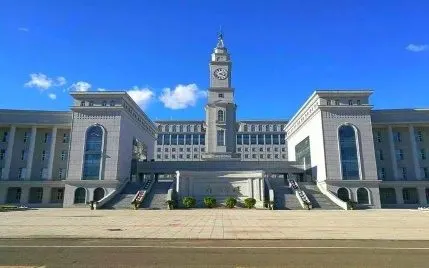
Harbin Normal University accepts international students on programmes in the following fields: engineering, education, law, arts, humanities, natural sciences. Choose the level and programme that suit your goals.
Chinese language study at the university — from a few weeks to a year or longer. Suitable for those starting from scratch or preparing for the HSK before entering a main programme.
self-funded · language programme
The first level of higher education: usually four years of study, specialised subjects, internships and a graduation thesis. It opens the way to working in your field and to a master's degree.
self-funded
Advanced study after a bachelor's degree: research, applied projects and internships. It helps you become an expert in your chosen field and broaden your career opportunities.
self-funded
Harbin Normal University is located in Harbin. Nihao Study consultants keep track of the deadlines and admission requirements of this university, and you can always check the most accurate and up-to-date information on its official website. In university rankings, it is ranked 273 in China and 1942 worldwide.
Come for a face-to-face meeting: together we will go through the requirements, deadlines, documents and study options that suit you.

At the meeting we will look at your situation, tell you which documents to prepare and by when, talk about possible programmes and help you decide on the next step.
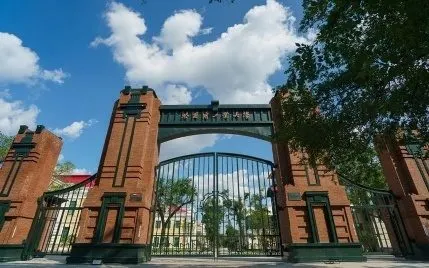
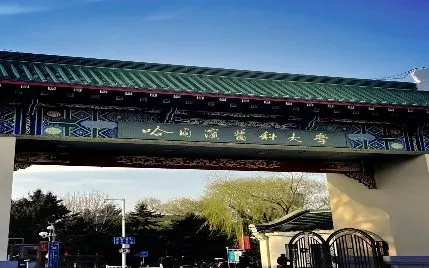
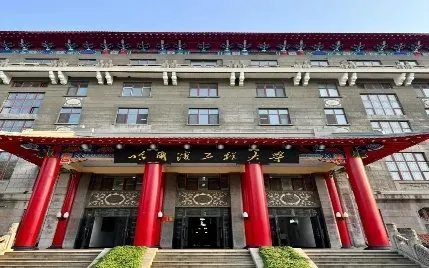
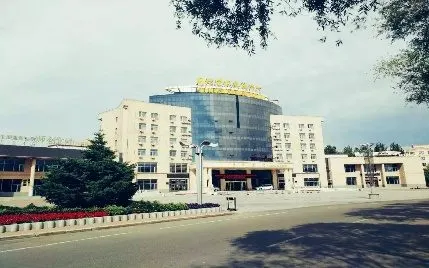
Harbin Normal University (HRBNU; 哈尔滨师范大学, pinyin Hā'ěrbīn Shīfàn Dàxué) is a provincial-level public university in Harbin. It comes under the Heilongjiang Provincial Department of Education; alongside teacher education, it develops programmes in the humanities, natural sciences and the arts. The university describes itself as an important regional base for education and research and a key high-level university in Heilongjiang.
In Russian-language searches the university appears under various names: HRBNU, HNU, a literal Russian rendering of "Harbin Normal University", and a name meaning "Pedagogical University of Harbin". In documents it is safest to use Harbin Normal University together with the standard Russian name meaning "Harbin Pedagogical University". The Chinese abbreviation 哈师大 (roughly "Hashida") is made up of the first characters of the full name; both forms — full and short — are confirmed by a Chinese reference page. The word Normal in the English name indicates a teacher-training profile, not an assessment of quality.
Below, Nihao Study has gathered what will be useful to a 2026 applicant: the university's provincial status, programmes and HSK requirements, dormitories, scholarships, rankings, documents and how HRBNU differs from other universities in Harbin.
| Indicator | Value | Notes |
|---|---|---|
| Year founded | 1951 | Today's university grew out of the region's teacher-training schools |
| Type and governing body | Public; under the Heilongjiang Provincial Department of Education | Provincial level rather than a central ministry |
| Student numbers | 36,062 students (according to its QS profile) | A large comprehensive university |
| Structure | 25 schools, 82 bachelor's programmes | Both teacher-training and non-teaching subjects |
| Teaching staff | Over 1,800 full-time teaching staff | Official university data |
| Campus area | 1.53 million sq m | Facilities are spread across several sites |
| Main campuses | Songbei and Jiangnan | The main campus is north of the city centre; the international office also operates in Nangang |
| International office | 50 Hexing Road, Nangang District, postcode 150080 | Use the address that applies to your procedure |
HRBNU's size should not be confused with the prestige of Harbin Institute of Technology: the two universities have different missions. HRBNU is of interest above all to those choosing education, Chinese language, philology, art, regional studies or the fundamental natural sciences.
The university's roots go deeper than its official founding date. Its predecessor was the Xingzhi Normal School, opened in 1946 and named after the Chinese educator Tao Xingzhi. In 1951 the system was split into provincial and municipal teacher-training schools, which were later merged again.
In 1956 the institution grew into Harbin Normal College, and in 1960 several teacher-training and art institutions were incorporated into it. In 1980 it took its current name, Harbin Normal University. A year later, in 1981, it became a key provincial teacher-training institution.
The next stage was a series of mergers in 2000–2001. HRBNU absorbed the Teachers' College of the Heilongjiang agricultural system, Hulan Teachers' College and an institution that trained material-supply workers. The main campus moved to the site of today's Songbei campus in 2001. As a result, different historical layers are clearly visible in the university's buildings and structure.
| Ranking | Position | What the result means |
|---|---|---|
| QS Asia 2026 | 951-1000 band | An Asian regional ranking, not the global QS WUR |
| CWUR 2026 | 1560 worldwide, 596 in Asia, 291 in China | The university is in the top 7.4% of the CWUR sample |
| ShanghaiRanking BCUR 2026 | 223 in China | The ranking compares Chinese universities with one another |
| EduRank 2026 | 2961 worldwide, 236 in China, 7 in Harbin | Bibliometric model: publications and reputation are taken into account |
| SCImago 2026 | 6873 in the global sample; overall 64th percentile | The methodology combines research, innovation and societal impact |
ShanghaiRanking also assesses subject strength: in its 2025 subject rankings, Chemical Engineering and Nanoscience & Nanotechnology were placed in the 301-400 band. According to EduRank, HRBNU accounts for 131,091 citations and 9,192 publications. These figures come from the aggregator's methodology, not from the university's internal statistics.
HRBNU has a profile on Times Higher Education, but it has no confirmed position in the main ranking. The situation with U.S. News is similar, so it would be incorrect to cite an exact position. When choosing, the strength of a specific programme matters more than the overall rank.
HRBNU is not part of the national Project 211. The Ministry of Education's official list names other universities from Heilongjiang: Northeast Forestry University, Harbin Engineering University, Northeast Agricultural University and Harbin Institute of Technology. HRBNU is also absent from the official Project 985 list and from the second national 双一流 list.
However, according to the university, in December 2022 HRBNU was included in Heilongjiang's new provincial project to build national-level universities. This is a separate regional programme, and it is wrong to call HRBNU a national Double First-Class university.
First, teacher training. The university states that teacher education remains its distinctive feature; it awards bachelor's, master's and doctoral degrees. It has 23 national first-class courses and 26 national first-class programmes. A future teacher should evaluate the specific programme and placements rather than the overall world ranking.
Second, art and links with the Russian art school. HRBNU's International Art Institute was established jointly with the Surikov Institute (Moscow State Academic Art Institute named after V. I. Surikov). The Ministry of Education register confirms that it operates at master's level with a 2-year programme. In 2025 the institute held two CSC schools attended by 50 students from 7 foreign universities.
Third, something you would not expect from a teacher-training university. According to the university, its materials science, chemistry and engineering are in the ESI top 1 per cent. The School of Physics has a Ministry of Education key laboratory, and since 2018 physics has had the right to award doctorates across the whole first-level discipline. The School of Life Sciences also has a doctoral programme and a postdoctoral research station in biology.
The official list of departments includes schools of education, languages, humanities, arts, technology and natural sciences. For a first overview, they can be grouped as follows:
The School of Physics trains specialists in physics, electronic information and new energy materials. At the School of Life Sciences, Biological Science has national status and Ecology provincial status. But whether a specific programme is open to international students must be checked separately: international admissions cover a narrower range than the university's domestic catalogue.
| Level | Typical duration | Language and main requirement |
|---|---|---|
| Bachelor's Degree | 4 years | Mostly in Chinese; the university's public page specifies HSK 4 (except for Chinese Language) |
| Master's Degree | 2 to 3 years | Most programmes are taught in Chinese |
| Doctoral (PhD) Programmes | 4 years | Requirements vary by school and scholarship track |
| Long-term Chinese | From one semester to 2 years | For HSK preparation and academic adjustment |
| Short-term Chinese | From 1 to 4 weeks | Intake and dates depend on the project and the specific group |
This is the typical admissions scheme. Request the latest prospectus, the list of available programmes and the language of instruction at the time of applying, and check academic requirements with the university itself.
Tuition fees for bachelor's, master's and doctoral programmes and Chinese courses are set per academic year; textbooks, insurance, registration and study materials are paid separately. It is best to check current fees on the university's official website or with its international office.
Dormitory fees are charged per day and depend on the room type; the total is determined by the actual length of stay and the semester rules. Current rates are published by the university's international school.
| Option | What is known about the room and facilities |
|---|---|
| Single | Bathroom, shower, fridge, internet, furniture |
| Double | Facilities are broadly the same |
| Refundable deposit | Terms are confirmed at check-in |
Shared facilities listed include a kitchen, laundry, gym, study room, multimedia room and multipurpose hall. Before booking, check the building number, whether heating is included, how electricity above the allowance is charged and whether the dormitory closes during the holidays.
HRBNU has published a separate scheme for the Chinese Government Scholarship. The scholarship covers tuition, on-campus dormitory accommodation and medical insurance, and also includes a monthly stipend, the amount of which differs for bachelor's, master's and doctoral students.
Age limits for CSC in the published version: up to 25 for bachelor's, up to 35 for master's and up to 40 for doctoral programmes. The same document requires HSK 3 for bachelor's and HSK 4 for master's and doctoral programmes. Bear in mind that these are the terms of a specific version of the scholarship, not a rule for all programmes.
HRBNU still operates as an official HSK test centre. The 2026 contact list of test sites names Harbin Normal University, the international building at 50 Hexing Road and the centre's phone number. Which levels can be taken in a given session is determined by the centre's schedule.
For standard self-funded bachelor's programmes, the university's public Russian-language page requires HSK 4; the exception is the Chinese Language programme. For master's and doctoral programmes, an older brochure lists HSK 5. If your certificate is in the old format or your score is close to the threshold, ask for written confirmation. Check exam dates against the official HSK schedule.
If information about dates or programmes differs between pages, check with the international office before applying.
| University | Type and status | Main focus |
|---|---|---|
| Harbin Normal University, 哈尔滨师范大学 | Public provincial university | Education, languages, art, natural sciences |
| Harbin Institute of Technology, 哈尔滨工业大学 | National research university | Engineering, aerospace, IT, architecture |
| Harbin Engineering University, 哈尔滨工程大学 | National technical university | Shipbuilding, ocean engineering, nuclear technology |
| Heilongjiang University, 黑龙江大学 | Comprehensive provincial university | Languages, humanities, law, regional studies |
| Harbin University, 哈尔滨学院 | Municipal university | Applied bachelor's degrees and programmes for the region |
In short: for engineering, people go to HIT and HEU; for a wide range of languages and social sciences, to Heilongjiang University; and HRBNU is chosen for education, the humanities and art.
The main Songbei campus is located at 1 Shida Road. The historic Jiangnan campus is in Nangang District, at 50 Hexing Road; this is where the International Art Institute is officially registered. So how you get there depends on your school, dormitory and the purpose of your trip.
Since 2009 the HRBNU library has been a national key unit for the preservation of ancient books. International students have access to canteens, a campus card, banking services and transport tips. In winter you will need proper clothing for the northern climate, and it is best to check the daily commute between sites before choosing accommodation.
The main Russian form translates as 'Harbin Pedagogical University'. The rendering 'Harbin Normal University', with the word Normal translated literally into Russian, is an awkward translation. 'Pedagogical University of Harbin' makes sense, but the word order is reversed. The official international name is Harbin Normal University. The main abbreviation is HRBNU, while HNU appears on older and third-party websites. The Chinese short form is 哈师大 (Hashida), and the full Chinese name is 哈尔滨师范大学, Hā'ěrbīn Shīfàn Dàxué.
Yes. It reports to the Heilongjiang Department of Education, specialises in teacher education and is authorised to award bachelor's, master's and doctoral degrees.
In most of the published programmes for international students, the main language is Chinese. A Russian-speaking contact helps at the admission stage, but the language of the programme itself has to be confirmed separately. Whether an English-taught option exists should also be checked for each specific programme.
For self-funded bachelor's programmes, the university's public page requires HSK 4, except for the Chinese Language programme. For master's and doctoral programmes, an older brochure states HSK 5. Go by the current prospectus.
No. HRBNU does not appear on any of the official national lists — neither 985, nor 211, nor the second round of 双一流. It does, however, have a separate provincial status in Heilongjiang.
The tuition fee depends on the programme level, and the dormitory is charged per day depending on the room type. Current rates and refund rules should be checked in advance on the university's official website or with its international office.
Yes. HRBNU publishes a CSC programme that covers tuition, accommodation and insurance and includes a monthly allowance. Selection is competitive, however: meeting the minimum requirements is only the first step.
Yes. The current list of test centres includes HRBNU and its international building at 50 Hexing Road. Check the exam date and format before registering.
The main Songbei site is at 1 Shida Road. The Jiangnan campus and the international office are linked to the address 50 Hexing Road (Nangang District). Go by the address stated in your invitation, not just the university's name.
HRBNU focuses on teacher education, languages, the arts and a broad range of disciplines of regional importance. HIT and HEU have a stronger national engineering specialism; both are on the 211 list, which HRBNU is not.
The basic set: passport, school certificate or a letter confirming expected graduation, the transcript of grades, a photo and — for most programmes — an HSK 4 certificate. Whether translations, notarisation and medical documents are needed depends on the track.
Harbin (哈尔滨), the capital of Heilongjiang Province in northern China, is called the 'Ice City'. Its Russian architectural heritage has survived, including Saint Sophia Cathedral, and the city owes its worldwide fame to its international ice sculpture festival.
For students there are strong technical universities (Harbin Institute of Technology ranks in the country's top 10), low prices, an unusual blend of Chinese and Russian cultures and a developed urban infrastructure with a metro (3 lines). Winters are harsh, but all buildings are heated. For parents, it matters that the city is safe and its atmosphere feels familiar to Russian speakers — signs are often duplicated in Russian. There is also good healthcare, an international airport, well-organised heated campuses and support services for international students.
You work with Nihao Study specialists. They will help you put together a portfolio and a set of documents, draw up a study plan and choose a university or college and a specialty that genuinely interest you.
We take care of every stage of admission, from choosing to enrolment
We will gather, prepare, certify and send your documents to the institution
We will show the admissions committee your strengths
We run training sessions and courses so you can prepare with more confidence
We will help you settle in at the start of your studies and keep moving forward
Nihao Study specialists select universities and colleges that match the applicant's goals and means. We make sure the teachers are practitioners and that the knowledge will be useful in your profession.
We examine curricula, talk to students and teachers and look at which specialties employers need, and use this information to select options for the applicant.
Advisers guide the applicant from the first consultation to enrolment, help build a plan and spot mistakes in time that could get in the way.
The cost of our support depends on the programme and the partner university; you'll get an exact quote after a free consultation.
Get a quoteA free 15-minute consultation: together we will choose a university or college and a programme that suit your goals and budget.
Apply with peace of mind: we handle the documents, deadlines and correspondence with admissions committees, and you save time and energy.
Don't want to wait for a call? Message us in the chat.
Message us in chat