- Language courses
- English, Chinese
- Bachelor's Degree
- English, Chinese
- Master's Degree
- English, Chinese
- Doctoral (PhD) Programmes
- English, Chinese
- Accommodation from 2 600 ¥/month
黑龙江三江美术职业学院
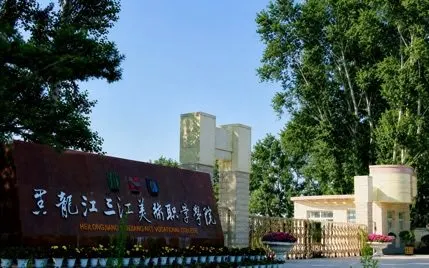
Heilongjiang Sanjiang Vocational College of Fine Arts accepts international students on programmes in the following fields: business, engineering, medicine, education, it. Choose the level and programme that suit your goals.
Secondary vocational education: practice-oriented programmes where you learn the language and a profession. Suitable for graduates of grades 9 and 11, and some programmes lead on to a bachelor's degree.
self-funded · Jiamusi campus
Cost: 19 800 ¥/year
self-funded · Harbin campus
Cost: 19 800 ¥/year
The first level of higher education: usually four years of study, specialised subjects, internships and a graduation thesis. It opens the way to working in your field and to a master's degree.
self-funded · Harbin campus
Cost: 19 800 ¥/year
The first level of higher education: usually four years of study, specialised subjects, internships and a graduation thesis. It opens the way to working in your field and to a master's degree.
self-funded · Harbin campus
Cost: 19 800 ¥/year
Heilongjiang Sanjiang Vocational College of Fine Arts is located in Heilongjiang. Nihao Study consultants keep track of the deadlines and admission requirements of this university, and you can always check the most accurate and up-to-date information on its official website.
Come for a face-to-face meeting: together we will go through the requirements, deadlines, documents and study options that suit you.

At the meeting we will look at your situation, tell you which documents to prepare and by when, talk about possible programmes and help you decide on the next step.
Heilongjiang Sanjiang Vocational College of Fine Arts (HSVCFA, 黑龙江三江美术职业学院) traces its history back to 2 October 1980. It is the only art college in Heilongjiang included in the PRC's national unified student admission plan. Russian-language texts also use other versions of the name, while in China itself the college is usually known by the short names 三江美院 (Sanjiang Meiyuan) or 龙美 (Longmei). Over more than 45 years it has trained over 35 000 specialists. Today the college has around 5 095 students, with classes held on three campuses – in Jiamusi, Harbin and Beijing. You can ask questions about admission at a Nihao Study consultation.
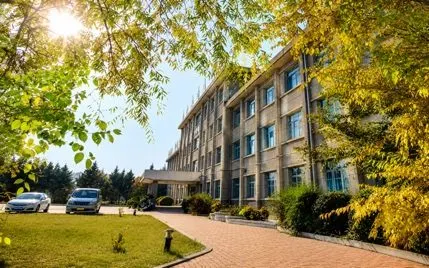
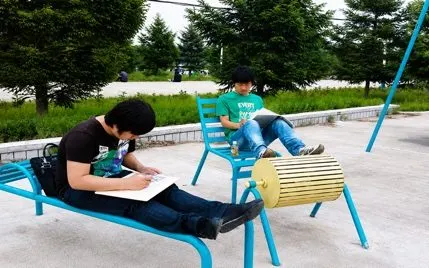
The college was founded on 2 October 1980 with the approval of the People's Government of Heilongjiang province. It is registered with the Chinese Ministry of Education and supervised by the provincial Education Department. As HSVCFA is the province's only arts college included in the national unified admissions plan, its diplomas are automatically recognised in China as state-standard diplomas.
What the college has achieved in 45+ years:
HSVCFA currently operates three sites, and a large new campus is under construction in Harbin's Acheng district, with its first phase opening in autumn 2026. The key facts are in the table:
| Campus / site | Address | Opened | Area | Functions |
|---|---|---|---|---|
| Jiamusi (main) | Jiamusi, Jiaoqu district, Dalai community | 1980 | 280,000 m² | The college's historic centre: dormitories and general education buildings |
| Harbin, Songbei (training base) | 19 Songpu Street, Songbei district, Harbin | 2006 | 4 faculties + 3 international divisions, 17 programmes | Production base; also home to the Sino-Russian Institute |
| Harbin-Acheng (new campus) | Acheng district, at the junction of Changjiang Street (southern section) and Longmei Street | under construction since 2024, phase 1 in autumn 2026 | 530,000 m² of land, 300,000 m² of buildings | International programmes, "digital campus-factory" concept |
| Beijing (training base) | Beijing, China | 2024 | Training base | Internships and project work |
The main site is in Jiamusi, in the Dalai community, next to the Aoqi Bay film base. Its park-like grounds of 280,000 m² lie between the Songhua (Sungari) River and the foothills of the Changbai Mountains. This is where students live and take general education subjects. The college reports that 98% of graduates from this campus find work. Jiamusi also runs a 3+2 "dual enrolment" model, a 5-year cycle leading from secondary education to a bachelor's degree that includes military and patriotic education.
The Harbin base opened in 2006. It is a separate campus at 19 Songpu Street in Songbei district; the city centre is easy to reach by public transport, for example bus No. 215. It houses 4 faculties (painting, digital media, film animation and environmental art engineering) and 3 international divisions (高升本, 专升本, 专升硕). In total the site offers 17 programmes, and almost 100 Chinese companies act as partners. This is where the first Russian-speaking students of the Sino-Russian Institute study.
HSVCFA has been building the new campus in Harbin's Acheng district since 2024. The site is where the southern section of Changjiang Street meets Longmei Street. Key features of the project:
The new campus is designed to combine teaching with production: it will include a real mini-factory, art therapy centres and a hotel block. HSVCFA's administration will also move there.
Today the college is focusing on design and technology, as its range of divisions shows:
The Digital Animation Factory (数字动画工厂) operates as a separate unit: it is the college's own animation studio, where students work on real commercial orders. The college also has 18 project workshops (including virtual reality, AI technologies, cloisonné enamel, 漫塑艺术 and 数字艺术) and 6 production platforms. During their studies every student completes at least 3 workshops and takes part in at least 10 real projects for companies.
The college has 357 full-time teachers, plus 140 part-time staff: practitioners, engineers and industry professors. "Dual-qualified" teachers, who both teach and work in industry, make up 70.32%. The college regularly invites dozens of well-known professionals as honorary professors and workshop leaders. In line with its drive for international status, leading teachers are sent to master's and doctoral programmes at universities abroad.
HSVCFA's positions in national subject rankings:
The college set up the Sino-Russian Joint Education Institute (中俄联合教育学院) together with Transbaikal State University (ZabGU). ZabGU is in Chita, dates back to 1938, teaches more than 12,000 students and trains around 85% of the specialists for its region's industries.
How the partnership developed:
Admission is based on an interview; there is no need to take the gaokao. An HSK certificate is not required either: in the first year classes are taught in Russian, while Chinese is studied alongside. Diplomas are recognised by the Center for International Educational Exchange of the Chinese Ministry of Education.
| Level, duration and study scheme | Features |
|---|---|
| Bachelor's after grade 11, 4 years: 1+3, 2+2 or 3+1 | Students decide for themselves how to split their years of study between China and Russia |
| Bachelor's and master's, 5 years: 2+3 (China 2 years, Russia 3 years) | Double degree throughout the course of study |
| Master's, 2 years: 1+1 or blended format | At least 6 months of full-time study in Russia |
| Postgraduate (PhD), 3 years: online plus summer and winter sessions in Russia | At least 6 months in Russia |
| International bachelor's after grade 9, from 5 years; no HSK or foundation course needed | Guaranteed progression: bachelor's, then master's and postgraduate study |
Throughout the first year, teaching is in Russian. This makes it easier for students to get used to their new surroundings while they pick up Chinese in a real language environment. Subject courses begin in the second year, and the language environment becomes mixed.
The college finished renovating its student dormitories in 2025. From autumn 2026 students will move into the dormitories of the new Harbin-Acheng campus.
Accommodation options:
| Room type | Facilities |
|---|---|
| Room for 4 people | Beds, desk, air conditioning; shared bathroom in the corridor |
| Room for 2 people | More comfortable conditions, including in blocks renovated in 2025 |
Meals are not included in the dormitory fee. In the student canteen you can buy a monthly meal plan with three meals a day (breakfast, lunch and dinner), seven days a week. It is best to check current accommodation and meal prices on the college's official website.
International students do not need to take China's gaokao entrance exam. Admission involves several steps:
The college aims for graduates to have a job by the time they receive their diploma. Over 3 years, students complete at least 10 real projects for companies and graduate with a ready-made portfolio. Key figures:
The college’s full Chinese name is 黑龙江三江美术职业学院 (Hēilóngjiāng Sānjiāng Měishù Zhíyè Xuéyuàn), its English name is Heilongjiang Sanjiang Vocational College of Fine Arts, abbreviated HSVCFA. There are three established ways of translating the name into Russian, and all three are used as synonyms on the Russian-language internet: ‘Sanjiang Vocational Art College’ is the most common variant, ‘Sanjiang Art College’ is a short informal form, and ‘Heilongjiang Sanjiang Vocational College’ is a literal translation from Chinese. In China the short names 龙美 (Longmei, ‘Dragon Art’) and 三江美院 (Sanjiang Meiyuan, ‘Sanjiang Academy’) are common. All these names refer to the same institution.
The historic main campus is in Jiamusi, in Dalai Township. A training and practice base operates in Harbin: 19 Songpu Street, Songbei District. From autumn 2026, most teaching is moving to the new Harbin-Acheng campus at the intersection of Changjiang Road and Longmei Road. Another training and practice base, opened in 2024, is located in Beijing.
The tuition fee depends on the speciality, accommodation depends on the room type (for 4 or for 2 people), and meals are paid for separately. Check the current rates on the college’s official website, sjmsxy.net.cn.
No. Admission to the Sino-Russian Joint Institute at HSVCFA is based on an interview, no HSK certificate is needed, and in the first year teaching is in Russian. The diplomas are recognised by the Chinese Service Center for Scholarly Exchange of the Ministry of Education of the PRC.
The partnership with Transbaikal State University (Chita) is set out in an inter-university agreement dated 19 February 2024. Students can choose bachelor’s programmes on 1+3, 2+2 and 3+1 schemes, a 2+3 programme (bachelor’s plus master’s), a 1+1 master’s and three-year postgraduate studies. The diplomas are recognised by both China and Russia.
Formally, the college is private (民办). At the same time, it is part of the PRC’s unified national admission plan and reports to the Heilongjiang Provincial Department of Education. In practice, this means HSVCFA diplomas are state-standard, and in terms of status the college is no different from public ones.
Yes. For grade 9 graduates there is an international ‘高升本’ programme (from grade 9 to a bachelor’s degree). It guarantees a sequential transition to a bachelor’s programme, then to master’s and postgraduate studies, with no HSK or pre-university foundation course required.
Of the province’s art colleges, only HSVCFA is included in the PRC’s national admission plan. It has its own Digital Animation Factory and 18 project studios, and there is a rule: 10 real corporate projects in your portfolio before graduation. In addition, the college was the first in the region to open a joint institute with a Russian state university, and in autumn 2026 it is launching the new international Harbin-Acheng campus.
Heilongjiang (黑龙江) is China's northernmost province and shares a border with Russia. It is a land of snow and ice, tigers and fertile black soil. Its capital is Harbin.
For a Russian-speaking student, the way of life here is perhaps more familiar than in the rest of China: Russian food is popular, there is snow in winter, and the people of the province are open and welcoming. In terms of tuition fees, the province is among the most affordable. For parents, it matters that buildings are heated (unlike in the southern provinces), the environment is safe, and settling into a new place is easy.
You work with Nihao Study specialists. They will help you put together a portfolio and a set of documents, draw up a study plan and choose a university or college and a specialty that genuinely interest you.
We take care of every stage of admission, from choosing to enrolment
We will gather, prepare, certify and send your documents to the institution
We will show the admissions committee your strengths
We run training sessions and courses so you can prepare with more confidence
We will help you settle in at the start of your studies and keep moving forward
Nihao Study specialists select universities and colleges that match the applicant's goals and means. We make sure the teachers are practitioners and that the knowledge will be useful in your profession.
We examine curricula, talk to students and teachers and look at which specialties employers need, and use this information to select options for the applicant.
Advisers guide the applicant from the first consultation to enrolment, help build a plan and spot mistakes in time that could get in the way.
The cost of our support depends on the programme and the partner university; you'll get an exact quote after a free consultation.
Get a quoteA free 15-minute consultation: together we will choose a university or college and a programme that suit your goals and budget.
Apply with peace of mind: we handle the documents, deadlines and correspondence with admissions committees, and you save time and energy.
Don't want to wait for a call? Message us in the chat.
Message us in chat