- Language courses
- English, Chinese
- Bachelor's Degree
- English, Chinese
- Master's Degree
- English, Chinese
- Doctoral (PhD) Programmes
- English, Chinese
- Accommodation from 2 000 ¥/year
中国政法大学
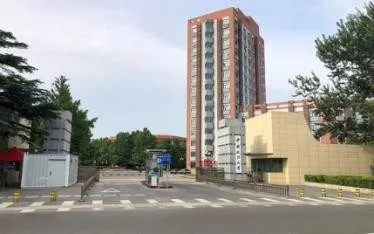
China University of Political Science and Law accepts international students on programmes in the following fields: business, engineering, medicine, education, economics. Choose the level and programme that suit your goals.
Chinese language study at the university — from a few weeks to a year or longer. Suitable for those starting from scratch or preparing for the HSK before entering a main programme.
self-funded · language programme
The first level of higher education: usually four years of study, specialised subjects, internships and a graduation thesis. It opens the way to working in your field and to a master's degree.
self-funded
Advanced study after a bachelor's degree: research, applied projects and internships. It helps you become an expert in your chosen field and broaden your career opportunities.
self-funded
China University of Political Science and Law is located in Beijing. Nihao Study consultants keep track of the deadlines and admission requirements of this university, and you can always check the most accurate and up-to-date information on its official website. In university rankings, it is ranked 94 in China and 861 worldwide.
Come for a face-to-face meeting: together we will go through the requirements, deadlines, documents and study options that suit you.

At the meeting we will look at your situation, tell you which documents to prepare and by when, talk about possible programmes and help you decide on the next step.
China University of Political Science and Law (CUPL, 中国政法大学) is a public university in Beijing under the Ministry of Education of the PRC; in our Russian text it is called the Chinese University of Political Sciences and Law. Russian-language sources also use other translations, such as 'Chinese University of Political Science and Law' or 'University of Political Sciences and Law of China'. The international abbreviation is CUPL. Chinese students call the university 'Fada' (法大) for short, and the full name 中国政法大学 is pronounced Zhōngguó Zhèngfǎ Dàxué.
The university is part of Project 211 and is included in the second list of the Double First-Class programme, where it holds the discipline of law. CUPL does not belong to Project 985 or the C9 League. The university's website mentions only a 985 innovation platform for priority disciplines, which is not the same as 985 university status. The C9 consists of nine other universities, including Peking University and Tsinghua University.
Below is information for those applying in 2026: key figures, history, rankings, schools and programmes, HSK and CSCA requirements, dormitories and scholarships, as well as tips on how not to confuse CUPL with other law universities. The conditions of each intake should be double-checked on the university's official website, and questions about admission can be discussed during a consultation with Nihao Study.
| Indicator | Value |
|---|---|
| Year founded | 1952 |
| Campuses | 2, Haidian and Changping |
| Total students | 18 246 |
| Bachelor's students | 9 992 |
| Master's students | 6 534 |
| Doctoral students | 1 720 |
| Full-time teaching staff | 1,028, including 336 professors |
| Academic units | 22 |
| Bachelor's programmes | 27 |
Bachelor's students mainly study on Changping Campus: 27 Fuxue Road, Changping District, Beijing, 102249. A large share of master's programmes and the English-taught international programmes are based in Haidian: 25 Xitucheng Road, Haidian District, Beijing, 100088.
The university's history dates back to 1952, when the law, political science and sociology departments of Peking University, Tsinghua University, Yenching University and the Catholic University of Fu Jen were merged into a single Beijing College of Political Science and Law. In 1954 the college moved to Xueyuan Road, and in 1960 it became one of the national key universities. During the Cultural Revolution, teaching was interrupted and resumed only in 1978.
The university received its current name in 1983 after merging with the Central Cadre School of Political Science and Law. Construction of the Changping campus began in 1985, the first 800 freshmen arrived there in 1987, and by 1991 the move was largely complete. That is why CUPL today has two campuses with different roles: Changping is the centre of student life for bachelor's students, while Haidian focuses on research and master's programmes.
Over its history, the university has produced more than 300,000 graduates, and since its founding it has taken part in almost every major law-making process in the PRC. Hence its strong professional reputation in law, although in terms of research output CUPL lags behind the comprehensive Project 985 universities.
For a law university, the overall ranking should be assessed together with subject rankings. In ShanghaiRanking 2026, CUPL is ranked 1st among Chinese universities specialising in political science and law. In the archived 2019 Global Ranking of Academic Subjects table, CUPL's law was in the 201–300 group.
| Ranking | Result | How to read it |
|---|---|---|
| ShanghaiRanking, specialised Chinese universities 2026 | 1st place | High national rating for its law profile |
| QS World University Rankings 2026 | 1201 to 1400 | Overall list comparing universities of every profile |
| EduRank 2026 | 2214 worldwide, 162 in China | Takes into account publications, citations and reputation |
| EduRank, international law 2026 | 213 worldwide, 7 in China | Position in a single subject |
| THE | University profile published | Assesses teaching and research |
For the 2027 edition, the QS page lists the 1401+ band.
In the Ministry of Education's discipline assessment, law at CUPL is rated A+; the university's own documents list it as a first-level national key discipline. Built around this field are the Law School and the schools of international law, comparative law, criminal justice, civil and commercial law, and law and technology; there are also research centres for evidence law, human rights and legal history.
CUPL does not limit itself to training lawyers. Its bachelor's programmes include economics, international business, political science and administration, international politics, psychology, sociology, mathematics, journalism and legal information management. This combination is useful for those who want to work in compliance, international trade, public policy, investigations or digital regulation.
The university maintains links with 308 universities, research centres and international organisations from 58 countries and regions. In 2008 the China-EU School of Law opened at CUPL, offering a master's in Chinese law taught in English. Programmes in comparative and international law are also taught in English.
The law group comprises the China-EU School of Law, the Law School and the schools of criminal justice, international law, comparative law, and civil, commercial and economic law, along with specialised law institutes. Applicants should know that the word School or 学院 in a name denotes a unit within CUPL, not an independent university.
The socio-political group brings together the schools of sociology, political science and public administration, humanities, national security and Marxism. The Business School combines economics and management with legal regulation. The School of Foreign Studies teaches legal English, German and French, as well as translation; the science and technology unit works on problems at the intersection of law and data.
In 2026, international bachelor's students are being admitted to 16 programmes, including law, political science, international politics, economics, international business, sociology, public administration, psychology, journalism, and Chinese, English and German. The standard bachelor's duration is 4 years. For those who simply want to improve their Chinese in Beijing, CUPL offers a separate non-degree language course lasting a semester or a year.
| Level | Fields of study | Language and duration |
|---|---|---|
| Bachelor's Degree | Law, politics, economics, languages | Chinese, 4 years |
| Master's Degree | Chinese, comparative and international law | In Chinese or English, usually 2 or 3 years |
| Doctoral (PhD) Programmes | Law, politics and related research | In Chinese or English, usually 3 years |
| Chinese Language | Beginner and intermediate levels, legal Chinese | A semester or a year, 20 hours a week |
Chinese-taught programmes require a good command of the language. For 2026, HSK 4 or higher is required for bachelor's programmes, with the exception of the Chinese language major. A CSCA entrance test result is also needed, and applicants to the Chinese language major may be exempted from the Chinese subject test if they hold an HSK 4 certificate with a score of 180 points or more.
The English-taught master's in comparative law lasts two years; the curriculum covers the Chinese legal system, private law, antitrust regulation, private international law and human rights. The English-taught Chinese Law programme at the China-EU School of Law also lasts 2 years, and its graduates receive a CUPL degree in civil and commercial law.
Changping is the main campus for bachelor's students, while international master's students and English-taught groups more often study in Haidian. The International School has offices on both sites: 27 Fuxue Road and 25 Xitucheng Road.
| Option | What to consider |
|---|---|
| Changping | Cost and conditions to be confirmed with the university |
| Haidian | Cost and conditions to be confirmed with the university |
| Off campus | Rental under a lease; residence registration at the address is required |
The dormitory fee depends on the terms of the agreement and the room type. Availability, the number of roommates, whether there is a bathroom, the deposit and the payment procedure should be confirmed with the university. It is best to work out a living budget for today's Beijing individually.
The university takes part in Chinese government scholarship programmes. The options include the Beijing Government Scholarship, the CSC bilateral programme, the High-Level Postgraduate Program, the Silk Road scholarship and the International Chinese Language Teachers Scholarship.
A strong application combines good grades, a language certificate, a well-thought-out study plan and a clear link between your previous education and the chosen programme.
The CUPL library operates on both campuses. In Changping, after modernisation, the reading rooms have around 2,000 seats: about 1,400 in Fayuange and 540 in Wenyuange. According to the university's handbook, the new library complex in Haidian has more than 2,000 reading seats.
Changping has sports facilities: the Qiyun gymnasium, a stadium and a football pitch. The International School organises language courses, cultural events and legal Chinese classes for students. The published Chinese language programme includes preparation for HSK levels 4–6, and a semester lasts at least 18 weeks of classes. Since at least 2014, Haidian Campus has served as an internet-based HSK test centre.
| University | Type | Key difference |
|---|---|---|
| China University of Political Science and Law, 中国政法大学 | Project 211 university in Beijing | The university this page is about; law is on the Double First-Class list |
| Renmin University of China, 中国人民大学 | Comprehensive university in Beijing | Has its own strong law school, but it is a different institution |
| Peking University, 北京大学 | Comprehensive university in Beijing | Member of C9 and Project 985; the law school is part of the university |
| 华东政法大学, East China University of Political Science and Law | Law university in Shanghai | The English name is similar, but it is in Shanghai, not Beijing, and it is not CUPL |
Unlike a law faculty within a comprehensive university, at CUPL the legal specialisation shapes almost the entire academic environment. When checking a university, pay attention to the city: matching words such as law or political science in a translated name do not prove that it is the same institution.
The Russian version of this text treats the form meaning 'Chinese University of Political Sciences and Law' as the main one. The name 'Chinese University of Political Science and Law' (with a single word for political science) appears in searches but is not the main form, while 'University of Political Sciences and Law of China' simply copies the English word order. The official international name is China University of Political Science and Law, and the generally accepted abbreviation is CUPL. 'Fada' (法大) is what Chinese students call the university for short, and the original name is 中国政法大学 (Zhōngguó Zhèngfǎ Dàxué).
It is the English abbreviation of China University of Political Science and Law — a public law university in Beijing under the Ministry of Education of the PRC.
CUPL is part of Project 211 and of the Double First-Class programme in law. It is not part of Project 985 or the C9 group. The mention of a '985 platform' on the university's website refers to a separate discipline initiative and does not mean 985 university status.
English is used mainly in master's and doctoral programmes in international, comparative, civil and commercial law. The published CSC list allows English for these fields, and the comparative law programme lasts 2 years. No degree programmes in Russian have been announced for the current intake.
The 2026 international bachelor's programme requires HSK 4 or higher (except for the Chinese language programme). The CSC competition for Chinese-taught master's and doctoral programmes also specified HSK 4. Some programmes may require a higher score.
Yes, the university accepts scholarship holders in several CSC categories. A full scholarship can cover tuition, accommodation, a monthly allowance and medical insurance, but it is awarded competitively.
The Haidian campus has long hosted the computer-based HSK, and the university's language programme prepares students for levels HSK 4 to HSK 6. Check the official HSK schedule for specific test dates.
Bachelor's programmes are concentrated in Changping, at Fuxue Road 27. The Haidian campus at Xitucheng Road 25 is used for master's programmes and some international programmes in English. The exact campus is stated in your admission letter — check it there.
CUPL is a specialised law environment with 211 status and Double First-Class status in law. Renmin University and Peking University are comprehensive universities, each with its own law school. Peking University is also a member of the C9, while CUPL is not.
As a rule, you need a passport, school-leaving certificate with transcript, HSK certificate, CSCA result, medical form, police clearance certificate, photo and a motivation letter or study plan. The final list is given in the announcement for the specific intake.
Beijing (北京) is the capital of China and a major centre of education: the city has more than 90 universities, among them Peking University and Tsinghua University, which rank in the country's top 2. Here you can see the Forbidden City and the Great Wall of China, as well as the modern tech district of Zhongguancun, known as China's Silicon Valley.
Studying in Beijing goes hand in hand with good career prospects: the city hosts the headquarters of major companies and research centres, getting around is easy (the metro has 22 lines), and cultural life is very rich. Parents should know that the capital's infrastructure is highly developed, there are international clinics with Russian-speaking staff, many direct flights leave the city, and students are supported by a well-established system: dormitories are located right on the guarded university campuses.
You work with Nihao Study specialists. They will help you put together a portfolio and a set of documents, draw up a study plan and choose a university or college and a specialty that genuinely interest you.
We take care of every stage of admission, from choosing to enrolment
We will gather, prepare, certify and send your documents to the institution
We will show the admissions committee your strengths
We run training sessions and courses so you can prepare with more confidence
We will help you settle in at the start of your studies and keep moving forward
Nihao Study specialists select universities and colleges that match the applicant's goals and means. We make sure the teachers are practitioners and that the knowledge will be useful in your profession.
We examine curricula, talk to students and teachers and look at which specialties employers need, and use this information to select options for the applicant.
Advisers guide the applicant from the first consultation to enrolment, help build a plan and spot mistakes in time that could get in the way.
The cost of our support depends on the programme and the partner university; you'll get an exact quote after a free consultation.
Get a quoteA free 15-minute consultation: together we will choose a university or college and a programme that suit your goals and budget.
Apply with peace of mind: we handle the documents, deadlines and correspondence with admissions committees, and you save time and energy.
Don't want to wait for a call? Message us in the chat.
Message us in chat