- Language courses
- English, Chinese
- Bachelor's Degree
- English, Chinese
- Master's Degree
- English, Chinese
- Doctoral (PhD) Programmes
- English, Chinese
- Accommodation from 2 000 ¥/year
CAU · 中国农业大学
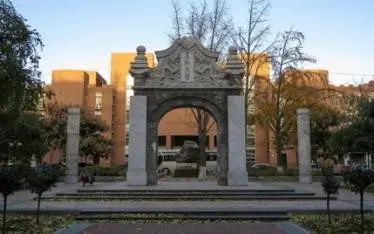
China Agricultural University accepts international students on programmes in the following fields: engineering, agriculture, natural sciences. Choose the level and programme that suit your goals.
Chinese language study at the university — from a few weeks to a year or longer. Suitable for those starting from scratch or preparing for the HSK before entering a main programme.
self-funded · language programme
The first level of higher education: usually four years of study, specialised subjects, internships and a graduation thesis. It opens the way to working in your field and to a master's degree.
self-funded
Advanced study after a bachelor's degree: research, applied projects and internships. It helps you become an expert in your chosen field and broaden your career opportunities.
self-funded
China Agricultural University is located in Beijing. Nihao Study consultants keep track of the deadlines and admission requirements of this university, and you can always check the most accurate and up-to-date information on its official website. In university rankings, it is ranked 40 in China and 494 worldwide.
Come for a face-to-face meeting: together we will go through the requirements, deadlines, documents and study options that suit you.

At the meeting we will look at your situation, tell you which documents to prepare and by when, talk about possible programmes and help you decide on the next step.
China Agricultural University (CAU; 中国农业大学, pinyin Zhōngguó Nóngyè Dàxué) is a public research university in Beijing, known in Russian as the Chinese Agricultural University. Official Chinese texts use the short form 中国农大 ('China Agricultural University' in brief), while students simply say 中农大. Another Russian variant, 'Agricultural University of China', also appears in searches, but our Russian pages use the main form. The English name and the abbreviation CAU are set out in the university's charter.
The university is under the Ministry of Education of the PRC. It is one of a small group of universities that hold all three national statuses: Project 211 (since 1995), Project 985 (since 2004) and the current Double First-Class (双一流) programme. Nine of CAU's disciplines were included in the second round of Double First-Class, among them biology, crop science, veterinary science, food science and agricultural engineering.
On this page Nihao Study has gathered the essentials about CAU for 2026 applicants: statuses and rankings, programmes and language requirements, scholarships, accommodation, the admission procedure and how it differs from other agricultural universities in Beijing.
According to the university's own latest data, CAU is a large university with a clear sector profile. About 29,000 people study here full-time. Its structure consists of 19 main colleges, plus one teaching unit and one directly administered department. Training covers all levels — bachelor's, master's, doctoral and postdoctoral.
| Item | Value |
|---|---|
| Year the history begins | 1905 |
| Status | public university under the Ministry of Education of China |
| Full-time students | about 29,000 |
| Structure | 19 colleges, 1 teaching unit, 1 department |
| Campuses | East and West (both in Haidian District) |
| National-level research platforms | 20, of which 11 are key laboratories |
| Double First-Class | 9 disciplines in the second round |
The university has two addresses in Beijing. East Campus: 17 Qinghua East Road, Haidian District, Beijing 100083. West Campus: 2 Yuanmingyuan West Road, Haidian District, Beijing. They are about 12 kilometres apart; without traffic jams the journey usually takes about 20 minutes.
Its history begins in October 1905, when an agricultural college opened as part of the Imperial University of Peking. CAU regards itself as the oldest institution of higher agricultural education in the country. After the People's Republic of China was founded in 1949, the agricultural faculties of three universities — Peking University, Tsinghua and North China University — were merged into a single Beijing Agricultural University.
In 1952 a second, engineering line grew out of the units working on agricultural mechanisation. From 1985 it was called Beijing Agricultural Engineering University. In 1995 the agricultural and engineering universities merged — creating today's China Agricultural University. Hence the breadth of its profile: plant breeding and veterinary science sit alongside food technology, robotics and agricultural systems management.
Its status came step by step: in 1995 a place in the first group of Project 211, and in 2004 inclusion in Project 985 as a research university. In 2017 CAU entered the first round of Double First-Class, and in 2022 its participation was confirmed in the second round. The university's motto roughly means: relieve the hardships of the people and nurture talent for the world. It clearly reflects CAU's applied focus: science here is meant to serve food security, rural development and people's health.
CAU ranks much higher in subject rankings than in overall world rankings. There is no contradiction here — this reflects its narrow specialisation. For example, in the QS World University Rankings 2027 the university is in 477th place, while in the QS Agriculture and Forestry 2026 subject ranking it is 5th in the world.
| Ranking | Position | Year |
|---|---|---|
| QS World University Rankings | 477th place | 2027 |
| QS Agriculture and Forestry | 5th | 2026 |
| ARWU | 151–200 band | 2025 |
| CWUR Global 2000 | 283rd place; 44th in China | 2026 |
| EduRank | 618th in the world; 40th in China | 2026 |
| Times Higher Education | 601–800 band | 2022 (latest data in the public profile) |
In the ARWU 2025 subject tables, CAU's agricultural sciences rank 1st, and food science and veterinary sciences rank 2nd. According to EduRank, the university is 1st in the world for agricultural engineering, 5th for agricultural science and 6th for horticulture. When choosing a programme, it helps to look not only at the university's overall position but also at the position of your chosen field.
According to CAU's current profile in the ESI database, 15 of the university's disciplines are in the world's top 1 per cent by citations. Agricultural sciences and plant and animal science are in the top 0.01 per cent, and ecology and environment in the top 0.1 per cent. ESI measures research by publications and citations, not teaching quality, but these data help master's and doctoral students choose a laboratory.
The first area is plants, soil and food security. From this field, crop science, plant protection, grassland science, and agricultural resources and environment are on the Double First-Class list. The area brings together crop genetics, seed production, plant nutrition, crop protection and agricultural landscape ecology.
The second area is animals, veterinary science and nutrition. Behind the veterinary and animal science disciplines stands a powerful research base, and food science is in 2nd place in the ARWU 2025 subject ranking. An international student can choose fundamental biology, clinical veterinary medicine, food safety or processing engineering here.
The third area is "smart" agriculture. The university has 20 national-level research platforms, 11 of which are national key laboratories. In English you can study agricultural engineering, electrification and automation, hydraulic engineering and agricultural management. This is a good choice for those planning to work with sensors, robotics, remote sensing, water systems and data analysis.
CAU has 19 main colleges. The range of disciplines is broad: besides agricultural and natural sciences and engineering, there are economics and management, law, literature and the arts, as well as interdisciplinary fields. To make choosing easier, they can be grouped into five clusters.
CAU's partners include more than 260 universities, research organisations and international bodies — from more than 50 countries and regions in total. Together with Cornell University, Wageningen University & Research, the University of California, Davis and the University of São Paulo, the university forms the A5 alliance. This is a plus for joint research, but exchange opportunities and credit transfer need to be checked for your specific programme.
In 2026 international students were admitted to Chinese-taught bachelor's programmes. The minimum level is HSK 4; veterinary medicine requires HSK 5 with a score of at least 250. In addition, from 2026 international bachelor's applicants take the CSCA entrance test. The university sets the final pass mark based on the results of the admission round and a second review.
| Level | Language of instruction and length | Main requirements |
|---|---|---|
| Bachelor's Degree | in Chinese, usually 4 years | HSK 4 (veterinary medicine — HSK 5 with at least 250 points), CSCA |
| Master's Degree | in Chinese or English, 2 or 3 years | bachelor's degree, GPA above 3.0, proof of proficiency in the programme language |
| Doctoral (PhD) Programmes | in Chinese or English, 3 or 4 years | master's degree, research plan, proof of proficiency in the programme language |
| Academic exchange | one semester or one year | the programme and dates depend on the type of visiting student status |
Chinese-taught master's and doctoral programmes require HSK 4. For English-taught programmes, IELTS 6.0 or above, TOEFL iBT 90 or above, or a document confirming that your previous education was in English are accepted. HSK is not required for admission to an English-taught programme, but before graduating the student must reach Chinese Language Level 3 — the university organises Chinese courses for this.
Tuition fees at CAU differ for bachelor's, master's and doctoral programmes; accommodation and medical insurance are paid separately. The current intake rates are published by the university itself — check them on the official website cau.edu.cn before applying.
There are few dormitory places on campus — the university makes a point of warning about this — and priority goes to holders of government and university scholarships. So it is worth securing all the details — room type, bathroom, kitchen, move-in date and deposit — in your offer letter or in a letter from the dormitory. The cost of a place is given in the university's official rates — check it on the university website.
Near the East Campus are the engineering buildings, the sports centre and Liudaokou metro station (Line 15). The West Campus, where the agricultural colleges are concentrated, is next to Nongda Nanlu station (Line 16). A university shuttle bus connects the campuses: on teaching days it runs regularly from morning to evening.
Find out in advance which campus your programme is on. Travelling between the East and West campuses every day is possible, but commuting like this for every class is inconvenient.
At CAU you can apply for several funding schemes. They differ in the list of eligible countries, level of study, deadlines and what exactly they cover. Check the conditions of each scheme in the university's specific announcement.
Applicants for the CSC High Level Postgraduate Program must be no older than 35 for master's and no older than 40 for doctoral programmes. A GPA above 3.0, two academic recommendations, a research plan of at least 1,000 words and a preliminary agreement with the relevant CAU department are required. The university accepts CSC scholarship holders, but scholarships are awarded competitively.
The library has two buildings — the East one covering 48,575 square metres and the West one covering 12,115 square metres. The reading rooms have about 4,100 seats. The print collection is close to 2.2 million books, and more than 90 databases are available by subscription. Researchers will find the collections on biology, agricultural sciences and agricultural engineering especially useful.
The West Campus is home to the university history museum. Its exhibition was updated for CAU's 120th anniversary: it covers the years 1905 to 2025 and includes more than 700 photographs, diagrams and multimedia materials. There is also a feed museum covering 3,280 square metres, with more than 1,500 raw material samples, equipment and interactive educational exhibits. CAU's sports complex, with a total area of 23,950 square metres, hosted the wrestling events during the 2008 Olympics.
The university has an official internet-based HSK test centre (code 8982800). The exam is taken in rooms 311 and 312 of Teaching Building No. 1 on the East Campus; the nearest metro station is Liudaokou, Line 15. Session dates change, so check the current schedule before registering. BCT is a separate business Chinese exam; CAU's 2026 admission rules do not allow it to replace HSK.
| Institution | Status | Main specialism |
|---|---|---|
| China Agricultural University, CAU, 中国农业大学 | national university, 985, 211 and Double First-Class | agricultural engineering, veterinary science, biology, food technology, agriculture |
| Beijing University of Agriculture, BUA, 北京农学院 | Beijing's applied university | practice-oriented training, urban agriculture and forestry |
| Beijing Forestry University, BFU, 北京林业大学 | national university, 211 and Double First-Class | landscape, ecology, forestry |
| Chinese Academy of Agricultural Sciences, CAAS, 中国农业科学院 | state research academy (not CAU) | a network of agricultural research institutes and its own graduate school |
It is easy to check: the university you want is called 中国农业大学 in Chinese, abbreviated as CAU. CAAS conducts research and trains its own master's and doctoral students, but it is a different organisation, not CAU. BUA and BFU are also independent universities with different status and focus.
All these variants are in use, but they play different roles. The main Russian name on this page is the one meaning ‘Chinese Agricultural University’. ‘Chinese Agrarian University’ is an understandable but shortened translation. ‘Agricultural University of China’ is a literal calque of the English that is often typed into search engines. The official international name is China Agricultural University, and the official English abbreviation is CAU. In Chinese, the official short form is 中国农大, while 中农大 is a colloquial short variant. The full original name is 中国农业大学 (Zhōngguó Nóngyè Dàxué).
Yes, all three. The university was included in Project 211 in 1995 and gained 985 status in 2004, and in the second round of Double First-Class it holds nine disciplines.
For bachelor's programmes, HSK 4; for veterinary medicine, HSK 5 with a score of 250 or more. For Chinese-taught master's and doctoral programmes, HSK 4 is stated.
Yes, many master's and doctoral fields are taught in English: hydraulic engineering, agricultural economics, food science, crop science, plant protection, agricultural engineering and others. Admission requires IELTS 6.0 or higher, TOEFL iBT 90 or higher, or proof that your previous education was in English.
Fees differ by level of study; the dormitory and medical insurance are paid separately. Exact rates are published in the admission announcement, so check them on the university's official website as of your application date.
Yes, the university takes part in the CSC High Level Postgraduate Program. The full package includes tuition, insurance, an allowance and a place in a double room; students pay for their international flights themselves. Scholarship selection is separate from regular admission.
Yes, the university has an official centre with the code 8982800. It is in the first teaching building of the East Campus, in rooms 311 and 312. Before registering, check this centre's session schedule.
No. CAU's 2026 admission requirements specifically name the HSK; the BCT is not listed in them as an equivalent. It is a separate standardised exam in business Chinese.
The East Campus is at 17 Qinghua East Road, near Liudaokou station (Line 15). The West Campus is at 2 Yuanmingyuan West Road, about 140 metres from exit B of Nongda Nanlu station (Line 16).
You will need a passport, a school-leaving certificate with a transcript, a valid HSK certificate, a CSCA result, two recommendations from school teachers, a medical form, information on previous visas and trips to China, a police clearance certificate and a financial guarantee. Documents drawn up in a language other than Chinese or English must be submitted together with a notarised translation.
CAU is a national research university that holds all three statuses: 985, 211 and Double First-Class. BUA focuses on applied agricultural education for the urban environment, BFU specialises in forestry and ecology, and CAAS is the national academy of agricultural sciences, which includes a network of research institutes.
Beijing (北京) is the capital of China and a major centre of education: the city has more than 90 universities, among them Peking University and Tsinghua University, which rank in the country's top 2. Here you can see the Forbidden City and the Great Wall of China, as well as the modern tech district of Zhongguancun, known as China's Silicon Valley.
Studying in Beijing goes hand in hand with good career prospects: the city hosts the headquarters of major companies and research centres, getting around is easy (the metro has 22 lines), and cultural life is very rich. Parents should know that the capital's infrastructure is highly developed, there are international clinics with Russian-speaking staff, many direct flights leave the city, and students are supported by a well-established system: dormitories are located right on the guarded university campuses.
You work with Nihao Study specialists. They will help you put together a portfolio and a set of documents, draw up a study plan and choose a university or college and a specialty that genuinely interest you.
We take care of every stage of admission, from choosing to enrolment
We will gather, prepare, certify and send your documents to the institution
We will show the admissions committee your strengths
We run training sessions and courses so you can prepare with more confidence
We will help you settle in at the start of your studies and keep moving forward
Nihao Study specialists select universities and colleges that match the applicant's goals and means. We make sure the teachers are practitioners and that the knowledge will be useful in your profession.
We examine curricula, talk to students and teachers and look at which specialties employers need, and use this information to select options for the applicant.
Advisers guide the applicant from the first consultation to enrolment, help build a plan and spot mistakes in time that could get in the way.
The cost of our support depends on the programme and the partner university; you'll get an exact quote after a free consultation.
Get a quoteA free 15-minute consultation: together we will choose a university or college and a programme that suit your goals and budget.
Apply with peace of mind: we handle the documents, deadlines and correspondence with admissions committees, and you save time and energy.
Don't want to wait for a call? Message us in the chat.
Message us in chat