- Language courses
- English, Chinese
- Bachelor's Degree
- English, Chinese
- Master's Degree
- English, Chinese
- Doctoral (PhD) Programmes
- English, Chinese
- Accommodation from 2 000 ¥/year
CUEB · 首都经济贸易大学
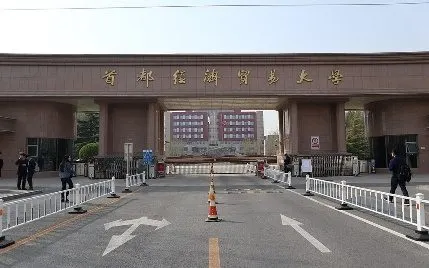
Capital University of Economics and Business accepts international students on programmes in the following fields: business, law, economics. Choose the level and programme that suit your goals.
Chinese language study at the university — from a few weeks to a year or longer. Suitable for those starting from scratch or preparing for the HSK before entering a main programme.
self-funded · language programme
The first level of higher education: usually four years of study, specialised subjects, internships and a graduation thesis. It opens the way to working in your field and to a master's degree.
self-funded
Advanced study after a bachelor's degree: research, applied projects and internships. It helps you become an expert in your chosen field and broaden your career opportunities.
self-funded
Capital University of Economics and Business is located in Beijing. Nihao Study consultants keep track of the deadlines and admission requirements of this university, and you can always check the most accurate and up-to-date information on its official website. In university rankings, it is ranked 105 in China and 1129 worldwide.
Come for a face-to-face meeting: together we will go through the requirements, deadlines, documents and study options that suit you.

At the meeting we will look at your situation, tell you which documents to prepare and by when, talk about possible programmes and help you decide on the next step.
Capital University of Economics and Business (CUEB, 首都经济贸易大学) is a public university in Beijing administered by the municipal government; in Russian it is known as the Capital University of Economics and Business. Searches also turn up the variant 'Capital University of Business and Economics' (a back-translation from English) and a phonetic Russian transliteration of the English name. The full Chinese name is read Shǒudū Jīngjì Màoyì Dàxué, and in China the university is usually shortened to 首经贸 (Shǒujīngmào).
Before comparing rankings, it is important to consider status: CUEB belongs to Beijing's municipal university system and is funded by the city government; it is not a university under a central ministry. It did not take part in the 211 and 985 projects, and it is not on the official list for the second round of Double First-Class either. On the other hand, CUEB has a national key discipline, high-priority disciplines at Beijing level and strong subject positions in economics and finance.
Below is what matters to a 2026 applicant: status and the latest figures, programmes, language requirements, scholarships, dormitories and the application procedure. Questions about admission can be discussed during a consultation with Nihao Study.

The data in the table is current as of 31 March 2026.
| Indicator | Value | Comment |
|---|---|---|
| Year founded | 1956 | dated from its two predecessors that existed before the merger |
| Students | 18,190 students: 12,468 bachelor's, 4,762 master's and 788 doctoral students, plus 172 international students on degree programmes | a large municipal research university |
| Staff | 1,482 staff members, including 999 teachers | solid staffing for teaching and research |
| Academic structure | 46 bachelor's programmes, 20 academic units | the university covers more than just economics and management |
| Research training | doctoral fields: 5 academic and 1 professional; master's fields: 12 academic and 18 professional | you can complete every level, from bachelor's to doctorate |
| Campuses | main campus: 293,245 sq m; Hongmiao: 58,378 sq m | classes take place in two districts, Fengtai and Chaoyang |
| International links | 189 agreements with partners from 38 countries and regions | exchanges and joint study programmes are available |
According to the official account, the university dates back to 1956, when two schools opened: an experimental workers' technical school and a Beijing school for labour cadres. In 1958 they formed the basis of the Beijing Institute of Labour, which in 1963 was renamed the Beijing Institute of Economics. Another line developed in parallel: in 1958 the Beijing School of Finance and Trade Cadres was founded, which grew into the Beijing Institute of Finance and Trade in 1978.
The merger of the two institutes into a single university under the present name CUEB was approved by the State Education Commission on 24 March 1995. The university has admitted international students since 1986 and by 2026 counts more than 20,000 graduates and students from over 90 countries and regions. So international education here is not handed off to a random language centre; it is part of a university that offers bachelor's, master's and doctoral programmes.
For a university focused on finance and economics, the overall ranking says little. In CUEB's case, it is more useful to look at its position in the national category and in individual disciplines.
| Ranking | Position | Year |
|---|---|---|
| ShanghaiRanking, Chinese finance and economics universities category | 9th | 2026 |
| ShanghaiRanking GRAS, finance | band 76–100 | 2025 |
| ShanghaiRanking GRAS, economics | band 201–300 | 2025 |
| EduRank, China | 233rd | 2026 |
| EduRank, world | 2,916th | 2026 |
CUEB's page on its disciplines provides further context. In the 2024 ShanghaiRanking of Chinese disciplines, applied economics ranked 13th out of 267 participants and business administration 30th out of 305. The university also reports that three of its fields are in the ESI top 1 per cent: economics and business, engineering, and social sciences, general.
These results do not give CUEB 211 or Double First-Class status. Their significance lies elsewhere: a municipal university can compete in individual subject areas. When choosing a programme, this matters more than a general status that the university does not have.
At CUEB, labour economics has the status of a national key discipline and is part of a special Ministry of Education project for key disciplines. Social security, human resource management, social work and labour relations are developed around it. It is a good choice for those interested in employment, demography, the labour market and social policy, not just corporate finance.
Beijing's list of high-priority disciplines includes statistics, business administration and applied economics; the last two are also being developed in a joint project with Renmin University of China. For research, the university has a central business district development centre, a taxation institute, urban economics centres, a financial risk institute and an institute of megacity economics. This environment suits work on public administration, taxation, urban markets and the development of Beijing.
The university has a School of Management Engineering, a School of Statistics and Data Science and its own School of Artificial Intelligence. Among its independent interdisciplinary fields, the university lists law and economics, urban economics and strategic management, and big data and business intelligence. This means CUEB is not only a classic business school but also a place where economics meets statistics and computational methods.
CUEB currently has schools of finance, economics, business, accounting, statistics and data, labour, law, taxation, public administration and urban economics, foreign languages, culture and communication, artificial intelligence, and international economic management. The university reports 25 national and 14 Beijing-level sites for first-class bachelor's programmes.
Academic doctoral programmes at CUEB are offered in statistics, theoretical and applied economics, business administration and management engineering, and a professional doctoral programme in auditing. The master's list is broader: finance, insurance, taxation, asset appraisal, applied statistics, international business, digital economy, law, translation, social work, electronic information, environmental resources, accounting, auditing, MBA and MPA.
Only part of the general catalogue is available to international students. Refer to the current International Student Admissions page, not the full list of programmes for Chinese applicants.
| Level | Language and duration | Example fields |
|---|---|---|
| Chinese Language | in Chinese, from one semester to 2 years | general Chinese course, intensive language training |
| Bachelor's Degree | in Chinese or English, usually 4 years | economics, business administration, business Chinese, international economics and trade |
| Master's Degree | in Chinese: 2 to 3 years; in English: 2 years | applied economics and other approved fields |
| Doctoral (PhD) Programmes | in Chinese or English, usually 3 years | economics and other fields in the current intake |
The bachelor's programme in business administration is taught in English, and there are also English-taught tracks at master's and doctoral level. There are no Russian-taught programmes in the intake for international students.
From 2026, CUEB's international admissions office particularly stresses that every bachelor's application must include a CSCA exam result, with the subjects determined by the programme. Before applying, check this requirement against the university's current brochure.
CUEB officially publishes its tuition fees and registration fee, while the International Student Office prepares the financial offer for each intake, so check the current amounts on the university's website. Besides tuition, your budget should cover dormitory accommodation, the visa, insurance, transport, food, textbooks and possibly a deposit.
The main campus address is 121 Zhangjialukou, Huaxiang, Fengtai District, Beijing (postcode 100070). Hongmiao campus is at 2 Jintaili, Chaoyang District (postcode 100026). Most bachelor's and master's students study in Fengtai, while international education is based at Hongmiao.
The international dormitories have several types of rooms; the price depends on the room type and the length of the contract, and the university publishes the current rates. Among the facilities, the university lists air conditioning, internet and Wi-Fi in the rooms, canteens, halal food, shared kitchens, laundries, a gym and a coffee area.
The number of rooms is limited, and the international office allocates them taking into account the order in which applications were received. It therefore makes sense to send your dormitory application together with your main documents and not to consider a room secured until you receive written confirmation.
CUEB is on the official list of universities that accept Chinese Government Scholarship recipients. The university also announced its CSC High-Level Postgraduate intake for the 2026/27 academic year; internal recommendations were issued until 20 March 2026. The number of places differs by level.
The 2026/27 announcement for Chinese-taught study under the CSC High-Level Postgraduate programme required a pre-admission letter from CUEB and at least HSK level 4. Other programmes may set a higher bar, so this minimum cannot be applied to bachelor's programmes or ordinary self-funded master's programmes.
Shoujingmao station on Beijing Metro Line 10 is near the main campus. To reach Hongmiao, the official directions are to take Line 1 to Dawanglu station, leave by exit A and walk about 500 metres north. The campuses are in different parts of the city, so before choosing accommodation, find out where your programme's classes take place.
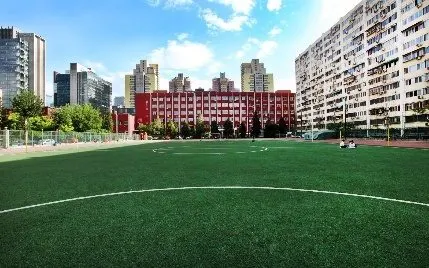
The campus infrastructure includes libraries, research centres, sports facilities, canteens and student clubs. The international side here is genuine: the university works with 189 organisations and has already taught more than 20,000 international students.
| University and Chinese name | Status | Main focus |
|---|---|---|
| Capital University of Economics and Business, CUEB, 首都经济贸易大学 | public municipal university (Beijing) | statistics, management, applied economics, labour economics |
| Central University of Finance and Economics, CUFE, 中央财经大学 | under central government, Project 211, Double First-Class | taxation, applied economics, public finance |
| University of International Business and Economics, UIBE, 对外经济贸易大学 | under central government, Project 211, Double First-Class | business, law, finance, international trade |
| Beijing Technology and Business University, BTBU, 北京工商大学 | public municipal university (Beijing) | light industry, food science, business |
The easiest way to identify CUEB is by the word 首都 in its name and the short form 首经贸. CUFE's name begins with 中央, and this university is associated with central finance; UIBE's begins with 对外, and it specialises in foreign trade; BTBU's name contains 北京工商, and the university combines business with technology disciplines. When comparing them, consider not only status but also the campus, cost, language of instruction and subject profile.
The main Russian form is the one meaning ‘Capital University of Economics and Business’. The misspellings of ‘economics’ and of ‘business’ (with a double ‘s’) are spelling errors. ‘Capital University of Business and Economics’ is understandable, but it is a back-translation from English that changes the word order of the Chinese name. The official English name is Capital University of Economics and Business, and the official abbreviation is CUEB. The short Chinese form 首经贸 (Shǒujīngmào) can be rendered as Shoujingmao, and the full name 首都经济贸易大学 is read as Shǒudū Jīngjì Màoyì Dàxué.
It is a Beijing municipal public research university whose main focus is economics and management. Besides these, the university also covers law, literature, engineering and natural sciences.
There are no programmes in Russian in the intake for international students. A bachelor's programme in business administration and certain master's and doctoral tracks are announced in English; whether they are open in a given year must be checked for each intake.
There is no common threshold for all programmes. The page for Chinese-taught master's programmes states HSK 5; in the CSC High-Level Postgraduate intake for 2026/27, the Chinese-taught track required HSK 4. Under the degree-awarding rules, students on Chinese-taught bachelor's programmes must submit HSK 5 by the end of the first year, and the Business Chinese programme will later require HSK 6. Check the brochure for your programme.
No. The university is not on the official 211 list, nor in the second round of Double First-Class. Beijing high-priority disciplines and subject rankings are different evaluation systems and should not be confused with these statuses.
Fees depend on the programme, language of instruction and dormitory room type. The university publishes the current rates, and CUEB issues the final invoice, so check the amounts on its official website.
Yes: the university is on the list of CSC host universities and has announced its own High-Level Postgraduate intake for 2026/27. Funding is allocated competitively, and levels and deadlines change from cycle to cycle.
The university requires an HSK certificate but does not operate as an open test centre. Choose an exam venue through Chinese Testing International and check exam dates in advance.
The main campus is at 121 Zhangjialukou, Fengtai District; the nearest metro station is Shoujingmao on Line 10. The Hongmiao international campus is at 2 Jintaili, Chaoyang District; according to the official map, you take Line 1 to Dawanglu station.
CUEB is a municipal economics and management university that is strong in labour economics. CUFE and UIBE are centrally administered Project 211 and Double First-Class universities: the former is more closely linked to public finance, the latter to foreign trade. BTBU is also a municipal university, combining business with light industry and food science.
The core set: application form with a photo, a copy of your passport, school-leaving certificate and transcript with a certified translation, medical form, guarantee letter, dormitory application and a language certificate if the programme requires one. In addition, bachelor's applicants need a CSCA result.
Beijing (北京) is the capital of China and a major centre of education: the city has more than 90 universities, among them Peking University and Tsinghua University, which rank in the country's top 2. Here you can see the Forbidden City and the Great Wall of China, as well as the modern tech district of Zhongguancun, known as China's Silicon Valley.
Studying in Beijing goes hand in hand with good career prospects: the city hosts the headquarters of major companies and research centres, getting around is easy (the metro has 22 lines), and cultural life is very rich. Parents should know that the capital's infrastructure is highly developed, there are international clinics with Russian-speaking staff, many direct flights leave the city, and students are supported by a well-established system: dormitories are located right on the guarded university campuses.
You work with Nihao Study specialists. They will help you put together a portfolio and a set of documents, draw up a study plan and choose a university or college and a specialty that genuinely interest you.
We take care of every stage of admission, from choosing to enrolment
We will gather, prepare, certify and send your documents to the institution
We will show the admissions committee your strengths
We run training sessions and courses so you can prepare with more confidence
We will help you settle in at the start of your studies and keep moving forward
Nihao Study specialists select universities and colleges that match the applicant's goals and means. We make sure the teachers are practitioners and that the knowledge will be useful in your profession.
We examine curricula, talk to students and teachers and look at which specialties employers need, and use this information to select options for the applicant.
Advisers guide the applicant from the first consultation to enrolment, help build a plan and spot mistakes in time that could get in the way.
The cost of our support depends on the programme and the partner university; you'll get an exact quote after a free consultation.
Get a quoteA free 15-minute consultation: together we will choose a university or college and a programme that suit your goals and budget.
Apply with peace of mind: we handle the documents, deadlines and correspondence with admissions committees, and you save time and energy.
Don't want to wait for a call? Message us in the chat.
Message us in chat