- Language courses
- English, Chinese
- Bachelor's Degree
- English, Chinese
- Master's Degree
- English, Chinese
- Doctoral (PhD) Programmes
- English, Chinese
- Accommodation from 2 000 ¥/year
CNU · 首都师范大学
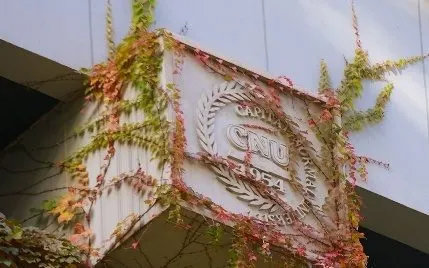
Capital Normal University accepts international students on programmes in the following fields: business, medicine, education, economics, humanities, natural sciences. Choose the level and programme that suit your goals.
Chinese language study at the university — from a few weeks to a year or longer. Suitable for those starting from scratch or preparing for the HSK before entering a main programme.
self-funded · language programme
The first level of higher education: usually four years of study, specialised subjects, internships and a graduation thesis. It opens the way to working in your field and to a master's degree.
self-funded
Advanced study after a bachelor's degree: research, applied projects and internships. It helps you become an expert in your chosen field and broaden your career opportunities.
self-funded
Capital Normal University is located in Beijing. Nihao Study consultants keep track of the deadlines and admission requirements of this university, and you can always check the most accurate and up-to-date information on its official website. In university rankings, it is ranked 107 in China and 1136 worldwide.
Come for a face-to-face meeting: together we will go through the requirements, deadlines, documents and study options that suit you.

At the meeting we will look at your situation, tell you which documents to prepare and by when, talk about possible programmes and help you decide on the next step.
Capital Normal University (CNU, 首都师范大学, Shǒudū Shīfàn Dàxué) is a public university under the authority of the Beijing Municipal Government; in Russian it is usually called the Capital Pedagogical University. Russian texts also contain other variants, translating as 'Pedagogical University of the Capital', 'Capital Normal University' (a literal rendering) or a transliteration of the English name, but our Russian pages use the main form. Chinese students call it simply 首师大 or 首师, while in rankings and business correspondence it appears as CNU.
The university reports to the city authorities and is jointly supported by the Beijing Municipal Government and the Ministry of Education of the PRC. Calling it a 'leading municipal university' is accurate only at city level, not nationally: the university itself describes its role as an important base for training talent for Beijing. CNU is included in Double First-Class with one discipline, mathematics. It did not take part in the historical 211 and 985 projects, so attributing those statuses to it is incorrect.
Below is what a 2026 applicant will find useful: status and rankings, programmes, HSK requirements, scholarships, dormitories and how CNU differs from Beijing universities with similar names. Questions about admission can be raised during a consultation with Nihao Study.
The figures in the table were recorded on 10 October 2025. This is a reliable snapshot, not a live counter, so the figures may be updated by the next intake.
| Indicator | Value | Comment |
|---|---|---|
| Year the present university was founded | 1954 | its teacher-training tradition goes back to 1905 |
| Students | 26,028 students: 12,824 bachelor's, 7,652 master's and 1,935 doctoral students | a large comprehensive university |
| International students | 1,801 students from 86 countries and regions | the campus already has an established international community |
| Structure | 30 schools and units, 60 bachelor's programmes | education is the main focus, but not the only one |
| Academic degrees | first-level disciplines: 19 doctoral and 26 master's; 15 postdoctoral research stations | you can go all the way to a research degree |
| Grounds and library | area of about 1.131 million sq m; collection of 17.437 million items | several sites and a large library collection |
| Main address | 105 Xisanhuan North Road, Haidian, Beijing, 100048 | an urban campus in Haidian |
CNU has 2,419 staff members, including 1,670 full-time teachers, 97.6 per cent of whom hold a master's degree or higher. These figures show the university's scale, but applicants will find it more useful to look at the specific department, the language of instruction and their future academic supervisor.
The present institution was founded in 1954 as the Beijing Normal College. CNU traces its educational lineage, however, to the Tongzhou teacher-training school, which opened in 1905. There is no contradiction between the two dates: 1954 marks the birth of today's university, while 1905 shows where its teacher-training tradition comes from.
The college then expanded several times. In 1960 it absorbed units of North China People's University; in 1962, the Beijing Institute of Physical Education and the Beijing Workers' and Peasants' Normal College; and in 1964, part of a teacher-training school and the Beijing Art Teachers' College joined it. It is thanks to these mergers that CNU is broader than a typical narrowly specialised teacher-training college.
The turning point came in 1992: Beijing Normal College merged with its branch campus and received its present name, 首都师范大学 (Capital Normal University). Later, the Beijing Preschool Education School, the Tongzhou Normal School, the Beijing No. 3 Normal School and the foreign languages school of Beijing Union University also joined the university. The university received Double First-Class support for mathematics in the programme's first round and retained it in the second.
| Ranking | Position | Year and notes |
|---|---|---|
| Double First-Class | one discipline: mathematics | second round of the national programme, 2022 |
| ARWU | 801–900 worldwide | overall ranking, 2025 |
| ShanghaiRanking by subject | mathematics: 201–300; remote sensing: 151–200 | subject ranking, 2025 |
| QS by subject | 301–350 | QS WUR by Subject 2026 |
| QS Asia | 579th; 279th in Eastern Asia | QS regional tables |
| CWUR | 921st out of 21,291 universities (top 4.4 per cent) | 2026 edition |
| EduRank | 1,484th worldwide, 106th in China | 2026 data |
The difference in positions is to be expected. ARWU and CWUR give more weight to research and bibliometrics; QS combines several metrics with subject reputation; EduRank has its own methodology based on publications, citations and alumni prominence. Times Higher Education does not list an overall position for CNU in its profile.
It refers to targeted support for mathematics: it does not mean that every programme at the university is automatically recognised as world-class. For applicants, the status indicates that researchers, postgraduate programmes and infrastructure are concentrated around mathematics. The Beijing National Center for Applied Mathematics is based here, and in total the university has 63 research units at ministerial and provincial level.
The fact that CNU was not part of Project 211 does not cancel out its Double First-Class status: these programmes belong to different stages of national policy. Hence a practical tip: when comparing CNU with another university, look not at a historical label but at the curriculum, the laboratory, the language of instruction, the discipline's profile and the availability of an academic supervisor.
Mathematics is CNU's official Double First-Class discipline. Artificial intelligence, statistics, computational methods and interdisciplinary projects are built around it. Remote sensing and earth sciences also stand out in the ShanghaiRanking subject rankings. That is why the university suits not only future maths teaching specialists but also those who want to combine mathematics with geodata or computational work.
The university trains teachers, psychologists, education researchers and administrators. It includes schools of psychology, education, primary and preschool education, and teacher education. CNU has affiliated schools and a kindergarten that serve as sites for educational reform and teaching practice. This is valuable for those who want not only to study theory but also to see a real school environment.
The university has schools of music, calligraphy, fine arts, history, Chinese literature, foreign languages and international culture. CNU admits international students to bachelor's, master's and doctoral programmes, and its partner network includes 319 universities from 54 countries and regions. This profile suits those choosing translation, area studies, art history, humanities research or international Chinese language education.
For a first look, CNU's catalogue can conveniently be divided into several large groups.
The official list includes 30 academic units. If a unit's name contains College, School or 学院, it is a faculty of CNU, not a separate university. Before applying, open the catalogue for the relevant intake and check whether the programme accepts international students, what language it is taught in and on which campus classes take place.
| Level | Format | What to check before applying |
|---|---|---|
| Chinese language courses | from one semester, starting in spring and autumn | timetable, group level, dormitory place |
| Bachelor's Degree | usually 4 years | language of instruction, HSK, exams, portfolio for creative programmes |
| Master's Degree | academic and professional tracks | academic supervisor, research plan, language |
| Doctoral (PhD) Programmes | education, humanities and exact sciences | research topic, publications, supervisor's consent |
| International Chinese Language Education | scholarship programmes for several levels | HSK, HSKK, recommendation from an organisation |
The university has 26 first-level disciplines at master's level and 19 at doctoral level. The table describes the levels in general; whether a particular programme is recruiting needs to be checked separately.
According to the university, language courses last at least half an academic year; teaching is in Chinese, and you can start in March or September. The final terms are set out in the admission letter and invoice from CNU.
The university itself publishes its tuition fees, application fee and insurance rates, and the final amount is stated in the invoice for the specific intake, so check it on CNU's official website. Besides tuition, your budget should include accommodation, food, transport, study materials, a medical check-up and a residence permit. Pay only using the bank details and payment channel from your current application, not details from old emails.
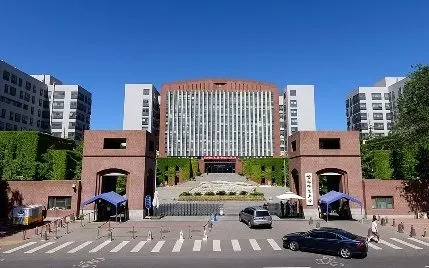
The main campus is in Haidian District, near the northern section of the West Third Ring Road. The university's other sites house the International Culture College and the information engineering and education units, and first-year foundation training also takes place there. Because there are several campuses, where you study depends on your programme, not on the building you saw in the photos.
The university library's collection exceeds 17 million items, and dozens of research centres and laboratories operate at CNU. Sports grounds, student clubs, arts groups and affiliated schools create an environment where study is combined with teaching and cultural practice.
The easiest way to reach the main campus is to take Metro Line 6 to Huayuanqiao station: the university's guide gives exit D2 and the address 105 Xisanhuan North Road. Before travelling, check the campus stated in your admission letter: Liangxiang and the northern sites are reached by a different route.
The university offers international students three accommodation options. The fee is charged per person per night and depends on the room type.
| Room type | Feature |
|---|---|
| Quadruple | the most affordable option |
| Double | payment is made each semester |
| Single | there are usually fewer of these places |
A deposit is also required, and fees paid after moving in are non-refundable. The terms of the current contract may differ, so check in advance the building, the length of stay, payment for utilities and internet, the rules during holidays and the refund procedure.
Rooms are furnished and have air conditioning, internet and a private bathroom; the exact facilities depend on the building. It is worth checking booking deadlines and whether you can live off campus in advance.
International students can enter CNU through several government scholarship channels, but admission itself does not guarantee funding through any of them.
The International Chinese Language Teachers Scholarship rules provide for coverage of tuition, accommodation and health insurance, as well as monthly allowances whose amount depends on the level of study. In the 2026 cycle, applications opened on 1 March, and deadlines depend on the programme's start month.
Selection is competitive, so it makes sense to prepare a strong academic package and a back-up funding plan at the same time.
| University | Status | Main focus |
|---|---|---|
| Capital Normal University, CNU, 首都师范大学 | municipal, Double First-Class | education, mathematics, humanities |
| Beijing Normal University, BNU, 北京师范大学 | national, 211, 985, Double First-Class | psychology, education, fundamental sciences |
| Capital University of Economics and Business, CUEB, 首都经济贸易大学 | municipal | business, economics, management |
| Capital Medical University, CMU, 首都医科大学 | municipal, medical | clinical sciences, medicine, healthcare |
| Beijing Language and Culture University, BLCU, 北京语言大学 | national, language-focused | linguistics, Chinese language, international education |
CNU is most often confused with BNU. Capital Normal University and Beijing Normal University are two different universities: they differ in status, campuses, application procedures and invoices. When filling in documents, check the Chinese name 首都师范大学 and the abbreviation CNU.
The main Russian form is the one meaning ‘Capital Pedagogical University’. ‘Pedagogical University of the Capital’ conveys the same meaning with a different word order but is not considered the main form. The Russian ‘Capital Normal University’ is a literal copy of the English word normal and reflects the teacher-training specialisation less well. Capital Normal University is the official international name, and CNU is the abbreviation used in rankings and correspondence. 首师大 and 首师 are short Chinese forms, and 首都师范大学 (Shǒudū Shīfàn Dàxué) is the full original name.
CNU is Capital Normal University, a public municipal university. It reports to the Beijing authorities and receives support from both the city government and the Ministry of Education of the PRC.
The university is in Double First-Class for mathematics. CNU did not take part in the historical 211 and 985 projects.
There is no common threshold for all programmes. For Chinese-taught degrees CNU requires an HSK certificate, and the required level is set by the school. For the targeted master's programme under the International Chinese Language Teachers Scholarship, the guideline is HSK 5 with at least 210 points and intermediate HSKK with at least 60 points. Check exam dates in advance.
English-taught programmes are found mainly among certain master's and doctoral tracks. The university does not promise a full English-taught catalogue in every intake, so the language of instruction must be confirmed for the specific programme and with your prospective supervisor.
The cost depends on the level and field: language courses, bachelor's, master's and doctoral programmes are charged at different rates. The university publishes current amounts, and CNU states the final amount on your invoice, so check them on the university's official website.
The price depends on the room type (four-person, double or single), and a deposit is also charged. Check current rates, availability and the building on the university's official website.
Yes, CNU is on the list of host universities for the Chinese Government Scholarship, but selection is competitive.
According to the university, CNU serves as an HSK test site. However, schedules and available formats change, so before registering check the current centre on the official Chinese Test website.
Main campus address: 105 Xisanhuan North Road, Haidian District, Beijing, 100048. The university recommends taking metro Line 6 to Huayuanqiao station, exit D2. Before travelling, check which campus your programme is on.
CNU (首都师范大学) is a Beijing municipal university with one Double First-Class discipline, mathematics. BNU (北京师范大学) reports directly to the Ministry of Education, was part of Projects 211 and 985, and has considerably more Double First-Class disciplines. They are two separate universities.
Beijing (北京) is the capital of China and a major centre of education: the city has more than 90 universities, among them Peking University and Tsinghua University, which rank in the country's top 2. Here you can see the Forbidden City and the Great Wall of China, as well as the modern tech district of Zhongguancun, known as China's Silicon Valley.
Studying in Beijing goes hand in hand with good career prospects: the city hosts the headquarters of major companies and research centres, getting around is easy (the metro has 22 lines), and cultural life is very rich. Parents should know that the capital's infrastructure is highly developed, there are international clinics with Russian-speaking staff, many direct flights leave the city, and students are supported by a well-established system: dormitories are located right on the guarded university campuses.
You work with Nihao Study specialists. They will help you put together a portfolio and a set of documents, draw up a study plan and choose a university or college and a specialty that genuinely interest you.
We take care of every stage of admission, from choosing to enrolment
We will gather, prepare, certify and send your documents to the institution
We will show the admissions committee your strengths
We run training sessions and courses so you can prepare with more confidence
We will help you settle in at the start of your studies and keep moving forward
Nihao Study specialists select universities and colleges that match the applicant's goals and means. We make sure the teachers are practitioners and that the knowledge will be useful in your profession.
We examine curricula, talk to students and teachers and look at which specialties employers need, and use this information to select options for the applicant.
Advisers guide the applicant from the first consultation to enrolment, help build a plan and spot mistakes in time that could get in the way.
The cost of our support depends on the programme and the partner university; you'll get an exact quote after a free consultation.
Get a quoteA free 15-minute consultation: together we will choose a university or college and a programme that suit your goals and budget.
Apply with peace of mind: we handle the documents, deadlines and correspondence with admissions committees, and you save time and energy.
Don't want to wait for a call? Message us in the chat.
Message us in chat