- Language courses
- English, Chinese
- Bachelor's Degree
- English, Chinese
- Master's Degree
- English, Chinese
- Doctoral (PhD) Programmes
- English, Chinese
- Accommodation from 2 000 ¥/year
CMU · 首都医科大学
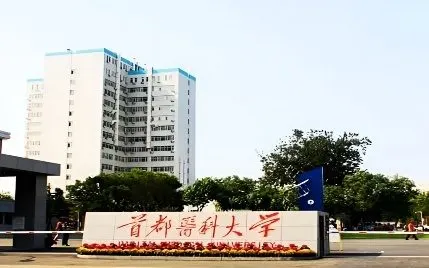
Capital Medical University accepts international students on programmes in the following fields: medicine. Choose the level and programme that suit your goals.
Chinese language study at the university — from a few weeks to a year or longer. Suitable for those starting from scratch or preparing for the HSK before entering a main programme.
self-funded · language programme
The first level of higher education: usually four years of study, specialised subjects, internships and a graduation thesis. It opens the way to working in your field and to a master's degree.
self-funded
Advanced study after a bachelor's degree: research, applied projects and internships. It helps you become an expert in your chosen field and broaden your career opportunities.
self-funded
Capital Medical University is located in Beijing. Nihao Study consultants keep track of the deadlines and admission requirements of this university, and you can always check the most accurate and up-to-date information on its official website. In university rankings, it is ranked 46 in China and 877 worldwide.
Come for a face-to-face meeting: together we will go through the requirements, deadlines, documents and study options that suit you.

At the meeting we will look at your situation, tell you which documents to prepare and by when, talk about possible programmes and help you decide on the next step.
Capital Medical University (official abbreviation CMU; Chinese 首都医科大学, pinyin Shǒudū Yīkē Dàxué) is a public medical university in Beijing, administered by the municipal government. Its charter also lists short Chinese names: 首医 (Shǒuyī) and 首医大 (Shǒuyīdà). Russian-language sources use several versions of the name, including a word-for-word translation along the lines of 'University of Capital Medicine' and a phonetic transliteration of the English name; our Russian pages use the standard form, which corresponds to 'Capital Medical University'. Beijing's CMU should not be confused with China Medical University (中国医科大学) in Shenyang.
The university was founded in 1960. It is jointly supported by the Beijing Municipal Government, the National Health Commission and the Ministry of Education of the PRC. CMU is one of Beijing's key municipal universities and has held Beijing's high-level research university status since 2020. However, it is not on the current national Double First-Class (双一流) list and did not take part in the former 985 and 211 projects. Its strengths lie elsewhere: in an extensive network of hospitals, clinical schools and medical research.
Below you will find information useful for a 2026 applicant: the university's status, programmes taught in Chinese and English, dormitories, HSK requirements, CSC scholarships and how CMU differs from medical universities with similar names. The main conditions are based on the official admission regulations for international students for 2026. For questions about admission, you can book a consultation with Nihao Study.
| Indicator | Data |
|---|---|
| Status | Public municipal medical university, Beijing |
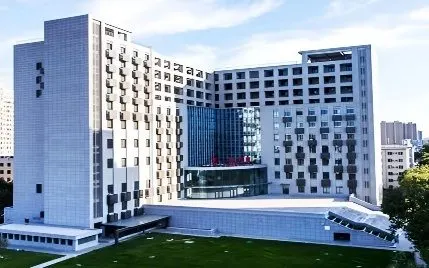
| Main campus | 10 Xitoutiao, Youanmenwai, Fengtai District, Beijing, 100069 |
| Number of students | 16,763 full-time students, including 395 international |
| Fields of study | 27 bachelor's programmes; first-level disciplines: 13 master's and 8 doctoral |
| Clinical base | 23 clinical schools, 22 of them affiliated hospitals |
| Teaching staff | 9,158 people including affiliated hospitals |
| ESI | 16 disciplines in the global top 1% (data as of March 2026) |
For an applicant used to judging a university by a single campus, CMU's structure may seem unusual: a significant part of clinical training takes place in hospitals spread across Beijing. So when choosing a programme, find out not only the address of the international college but also which clinical base you will be studying at.
The university opened on 12 September 1960, when it was called Beijing Second Medical College (北京第二医学院). Its first head was the urologist Wu Jieping, who was later elected an academician of two of China's national academies. The college was renamed Capital Medical College in 1985, and in 1986 the Beijing authorities confirmed its status as a key municipal institution.
The Ministry of Education approved the current name, Capital Medical University, on 5 February 1994. In 2001 Beijing Medical College, Beijing Workers Medical College and the College of Traditional Chinese Medicine of Beijing Union University became part of the university. That is why, in addition to clinical medicine, it now offers nursing, traditional Chinese medicine, medical technology and public health.
According to its 2021 charter, the university has five sites, including those in Shunyi, Dongcheng and Huaxiang, plus the main campus in Fengtai. In parallel, CMU is developing a new campus in Daxing District: the plans include teaching buildings, laboratories, a library, sports facilities and housing.
CMU is often called a leading medical university and is mistakenly credited with Double First-Class status. However, Capital Medical University is not on the official national 双一流 list for the second round (published in 2022 by three government bodies of the PRC). The list includes, for example, Peking Union Medical College and Beijing University of Chinese Medicine, but not CMU. So for an application form or an article, a more accurate wording is: a key municipal research medical university without confirmed national Double First-Class status.
| Ranking | Position |
|---|---|
| THE World University Rankings 2026 | 601–800 in the world |
| THE Medical and Health 2026 | 401–500 band |
| CWUR 2025 | 306th in the world, 45th in China |
| EduRank 2026 | 1072nd in the world, 75th in China |
| ShanghaiRanking, Chinese medical universities 2026 | 2nd place |
| QS by Subject 2026 | 151–225 (overall subject range) |
Each ranking measures something different. THE assesses the university as a whole, EduRank relies heavily on the number of publications and citations, and ShanghaiRanking shows subject positions separately. For a future doctor, what matters more than a line in an overall ranking is how the chosen programme, the clinical hospital and the language of clinical practice fit together.
CMU's main advantage is its place in Beijing's medical system. The university's network covers 22 affiliated hospitals and 23 clinical schools, as well as 41 specialist clinical colleges or departments and 40 diagnostic and research centres. Well-known bases include Xuanwu Hospital, Beijing Tiantan Hospital, Beijing Anzhen Hospital, Beijing Children's Hospital and Beijing Tongren Hospital. Through this network students gain access to cardiology, neurology, ophthalmology, paediatrics, psychiatry, rehabilitation and other clinical areas.
According to the university's profile as of March 2026, neuroscience and behaviour, clinical medicine, and pharmacology and toxicology are in the ESI top one-thousandth. Molecular biology and genetics, immunology, and biology and biochemistry are in the top three-thousandths. According to ShanghaiRanking subject data for 2025, CMU's pharmacy is in the global 51–75 band, biomedical engineering in the 76–100 band and public health in the 101–150 band.
CMU has 9 postdoctoral stations and first-level disciplines comprising 13 master's and 8 doctoral fields. According to the university, 1,554 supervisors guide doctoral students and 2,039 guide master's students. For a master's or doctoral applicant this scale is an advantage, but it is better to start from the list of supervisors and the clinical base rather than just the general name of a department.
The main site brings together 12 schools and 2 research centres. The fields of study can be grouped as follows:
In total CMU has 27 bachelor's programmes, but only some of them are open to international students in each intake. The full list of programmes does not match the list of places for international students, so the current intake should be checked before applying.
For the 2026 intake the university announced two separate routes into bachelor's programmes. Clinical Medicine is taught in English: the programme lasts 6 years and graduates receive a Bachelor of Medicine degree. In Chinese, you can choose Clinical Medicine, Stomatology or Traditional Chinese Medicine, lasting 5 years, or Nursing, lasting 4 years.
| Level and language of instruction | Programme and duration |
|---|---|
| Bachelor's, taught in English | Clinical Medicine, 6 years |
| Bachelor's, taught in Chinese | Clinical Medicine, Stomatology or TCM — 5 years |
| Bachelor's, taught in Chinese | Nursing — 4 years |
| Master's Degree | Medical and related programmes from the admissions catalogue |
| Doctoral (PhD) Programmes | Medical and related programmes from the admissions catalogue |
Applicants to Chinese-taught bachelor's programmes need HSK 5 or higher. For the English-taught Clinical Medicine programme, the 2026 rules require a TOEFL score of 80 or above or IELTS 6.0 or above; other proof of English proficiency or grounds for an exemption may be accepted instead. Chinese is still needed on the English track, because students talk to patients during the clinical stages. The requirements for obtaining a medical licence after graduation differ from country to country, so it is worth checking in advance with your national regulator whether the degree will be recognised.
The university sets fees for international students separately for each intake. Besides tuition, your budget should cover the visa, transport, accommodation, food, study materials, medical check-ups and health insurance. Current rates are published in the new admission guide on the official website ccmu.edu.cn.
The international dormitory is in Fengtai District, in the Youanmenwai area: Xitieying complex 331, Building 1, Beijing, 100069. The International School and student apartments are also located there, and this address is not the same as the main campus at 10 Xitoutiao. Students are offered double and triple rooms.
| Item | What is provided |
|---|---|
| Room facilities | Mattress, air conditioning, hot and cold water, WiFi |
| Shared areas | Kitchen, paid laundry, drying rooms on each floor |
Places are limited and allocated on a first-come, first-served basis: whoever applies first gets a room first. The university allows students to live off campus and even publishes rental guidelines, but the student signs the lease themselves. Do not transfer a deposit to a private landlord until the contract has been checked and the accommodation registered.
Since 2012, CMU has been authorised to admit Chinese Government Scholarship recipients. The university states clearly that international students can apply for the CSC scholarship, and that high-achieving students can also compete for the Beijing Government Scholarship after their first year of study. For the 2025/26 academic year, the university received 15 fully funded Silk Road places for master's and doctoral students in medical fields.
Scholarships are awarded competitively. If you are choosing between applying through the university and an intergovernmental channel, decide on your route before submitting your documents.
CMU's main library dates back to 1960 and has been housed in its current 13,980-square-metre building since 2002. Its collection exceeds 1.12 million items; readers have access to 1,367 seats, 7 meeting rooms and 80 databases. The libraries of the affiliated hospitals add clinical resources.
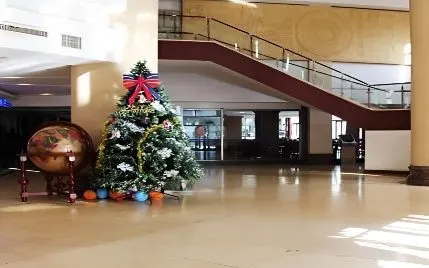
Student life takes place in several locations at once: at the clinical bases, at the International School and on the teaching campus. The dormitory has rooms with a private bathroom, air conditioning, a wardrobe, a desk and internet. Plan your route to classes in advance by checking the hospital and the site: if your admission letter names a campus, it is not necessarily the main address.
The verified admission rules do not specifically confirm that CMU operates as an open HSK or BCT test centre in the current cycle. For the Chinese-taught bachelor's programmes, you must already hold an HSK 5 certificate. Check test dates and available test centres in advance. Chinese language courses in Beijing are a separate matter, unrelated to admission to a medical degree.
| University | City and specialisation |
|---|---|
| Capital Medical University, 首都医科大学, CMU | Beijing; a municipal university that relies on the network of the capital's hospitals |
| China Medical University, 中国医科大学, CMU | Shenyang, Liaoning Province; a separate, independent university |
| Peking Union Medical College, 北京协和医学院, PUMC | Beijing; a medical university on the national Double First-Class list |
| Beijing University of Chinese Medicine, 北京中医药大学, BUCM | Beijing; specialises in traditional Chinese medicine, a Double First-Class university |
It is easy to check: the word Capital corresponds to the Chinese 首都 and points to Beijing, whereas China Medical University is located in Shenyang. More than one university uses the abbreviation CMU, so in correspondence write the full English name and include the domain ccmu.edu.cn.
The main form used on this page is the Russian one meaning ‘Capital Medical University’. The Russian phonetic spelling of the English name is a transliteration and is not needed in an official translation. ‘University of Capital Medicine’ results from a literal rearrangement of words and is not considered the main form. The official English name is Capital Medical University, and the official English abbreviation is CMU. The standard Chinese short forms are 首医 and 首医大, and the full Chinese name is 首都医科大学 (Shǒudū Yīkē Dàxué).
Here CMU means Capital Medical University in Beijing. Before sending your documents, check the Chinese name 首都医科大学 and the domain ccmu.edu.cn so that your application does not accidentally go to China Medical University (Shenyang).
No. CMU is not on the official 2022 second-round Double First-Class list, and it was not part of the earlier 985 and 211 projects either. Its exact status is a key municipal-level university and a Beijing high-level research university.
Yes: in the 2026 intake, a six-year bachelor's programme in Clinical Medicine taught in English was open. Check the language of instruction of a specific master's or doctoral programme in the catalogue and with your supervisor.
Under the 2026 rules, international Chinese-taught bachelor's programmes required HSK 5 or higher.
Tuition depends on the programme and language of instruction, and the price of a dormitory place depends on the room type. Current rates are published in the admission rules on the university's official website.
The university is entitled to accept Chinese Government Scholarship holders, but the availability of the programme you want and the extent of coverage are decided by competition. Check the CSC terms before applying.
There is no open centre on campus where you can take the HSK or BCT, so you will have to find an exam venue separately. At the same time, the university requires an HSK 5 certificate for Chinese-taught bachelor's programmes.
The main campus is in Beijing's Fengtai District: 10 Xitoutiao, You'anmenwai. The International School and the dormitory are in the same district but at a different address: Building 1, Xitieying 331.
No. Capital Medical University (首都医科大学) is in Beijing, while China Medical University (中国医科大学) is in Shenyang. Both are abbreviated as CMU, so always check the city, the Chinese name and the domain.
The standard set: application form, passport, education certificate with grades, medical form, language certificate, police clearance certificate and financial guarantee. For some candidates whose families have links to China, citizenship and actual place of residence are checked separately.
Beijing (北京) is the capital of China and a major centre of education: the city has more than 90 universities, among them Peking University and Tsinghua University, which rank in the country's top 2. Here you can see the Forbidden City and the Great Wall of China, as well as the modern tech district of Zhongguancun, known as China's Silicon Valley.
Studying in Beijing goes hand in hand with good career prospects: the city hosts the headquarters of major companies and research centres, getting around is easy (the metro has 22 lines), and cultural life is very rich. Parents should know that the capital's infrastructure is highly developed, there are international clinics with Russian-speaking staff, many direct flights leave the city, and students are supported by a well-established system: dormitories are located right on the guarded university campuses.
You work with Nihao Study specialists. They will help you put together a portfolio and a set of documents, draw up a study plan and choose a university or college and a specialty that genuinely interest you.
We take care of every stage of admission, from choosing to enrolment
We will gather, prepare, certify and send your documents to the institution
We will show the admissions committee your strengths
We run training sessions and courses so you can prepare with more confidence
We will help you settle in at the start of your studies and keep moving forward
Nihao Study specialists select universities and colleges that match the applicant's goals and means. We make sure the teachers are practitioners and that the knowledge will be useful in your profession.
We examine curricula, talk to students and teachers and look at which specialties employers need, and use this information to select options for the applicant.
Advisers guide the applicant from the first consultation to enrolment, help build a plan and spot mistakes in time that could get in the way.
The cost of our support depends on the programme and the partner university; you'll get an exact quote after a free consultation.
Get a quoteA free 15-minute consultation: together we will choose a university or college and a programme that suit your goals and budget.
Apply with peace of mind: we handle the documents, deadlines and correspondence with admissions committees, and you save time and energy.
Don't want to wait for a call? Message us in the chat.
Message us in chat