- Language courses
- English, Chinese
- Bachelor's Degree
- English, Chinese
- Master's Degree
- English, Chinese
- Doctoral (PhD) Programmes
- English, Chinese
- Accommodation from 2 000 ¥/year
北京青年政治学院
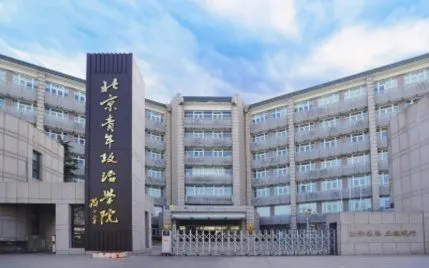
Beijing Youth Politics College accepts international students on programmes in the following fields: business, engineering, medicine, education, economics. Choose the level and programme that suit your goals.
Chinese language study at the university — from a few weeks to a year or longer. Suitable for those starting from scratch or preparing for the HSK before entering a main programme.
self-funded · language programme
Cost: 16 000 ¥/year
The first level of higher education: usually four years of study, specialised subjects, internships and a graduation thesis. It opens the way to working in your field and to a master's degree.
self-funded
Cost: 20 000 ¥/year
Beijing Youth Politics College is located in Beijing. Nihao Study consultants keep track of the deadlines and admission requirements of this university, and you can always check the most accurate and up-to-date information on its official website. In university rankings, it is ranked 780 in China and 7440 worldwide.
Come for a face-to-face meeting: together we will go through the requirements, deadlines, documents and study options that suit you.

At the meeting we will look at your situation, tell you which documents to prepare and by when, talk about possible programmes and help you decide on the next step.
Beijing Youth Politics College (BYPC, 北京青年政治学院, Běijīng Qīngnián Zhèngzhì Xuéyuàn) is a public vocational college in Beijing. Russian-language sources render its name in several ways, which translate as 'Beijing Institute of Youth Politics', 'Beijing College of Youth Politics' and 'Beijing Youth Political College'. Chinese sources sometimes use the abbreviation 北青政; in your admission documents, give the international name Beijing Youth Politics College together with the Chinese original 北京青年政治学院.
The college trains specialists in social services and administration, media, early childhood education, tourism and business, as well as digital professions. It is overseen by the Beijing Municipal Education Commission. Since 2025 BYPC has been part of the second round of the Double High Plan, a national programme for developing high-level vocational colleges; it should not be confused with the Double First-Class initiative for universities.
This Nihao Study overview covers the college's official status, programmes for international students, accommodation, campuses, HSK requirements and the admission procedure for 2026.
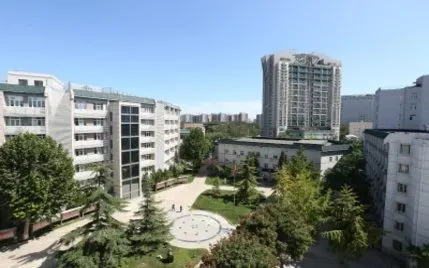
| Item | Current data |
|---|---|
| Name (official) | 北京青年政治学院 / Beijing Youth Politics College |
| Founded | 1986 (built on the Beijing Communist Youth League School of 1956) |
| Type | Public full-time higher vocational college |
| Diploma level | 专科 — higher vocational diploma |
| Students | About 3,000 full-time students, over 800 adult education students |
| Staff | 301 |
| Structure | 6 specialist schools, plus a humanities centre and a continuing education department |
| Campuses | Huajiadi in Chaoyang (main) and Pinggu |
| Main campus address | 北京市朝阳区花家地街9号, 9 Huajiadi Street, Chaoyang District, Beijing, 100102 |
BYPC's roots lie in the Beijing Municipal Communist Youth League School, opened in 1956. Beijing Youth Politics College was established on its basis in 1986, and the inscription of the college's name was written by Deng Xiaoping. The college began developing higher vocational education in 1995 and was named a model vocational college of Beijing in 2008. In 2022 it was separated from the municipal youth school and placed directly under the Beijing Municipal Education Commission.
Since 2025 the college has been part of the second round of the national Double High Plan, a programme that supports strong vocational colleges and groups of specialities. This is not the same as the Double First-Class initiative for universities. BYPC does not take part in Projects 211 or 985, and its standard 专科 programmes do not award a bachelor's degree.
BYPC currently has five vocational clusters: public and social services, digital creativity, childcare, education and elderly care, international tourism, and digital finance. Teaching centres on practice, work at industry sites and partnerships with Beijing organisations.
BYPC was among the first institutions in China to train professionals for youth work, social work and public services. Today BYPC's Youth College brings together programmes in law, office administration, psychological counselling, public services, social work, and youth work and management.
From 2023 to 2025, in the GDI assessment of vocational specialities, the Tourism English (Exit and Entry Services and Management) profile was the only one in its category to receive an A+. The college also develops a "Chinese language + vocational skills" model and the international Silk Road Craftsmen competitions, and cooperates with more than 30 countries and regions.
Graduates of Chinese 专科 programmes are entitled to take part in 专升本 selection, the transfer to bachelor's level. However, this transfer is a separate competition and is not granted automatically with the diploma. Conditions may differ for international students. BYPC's International College also reports agreements that allow students to continue their studies abroad, so any possible pathway should be confirmed for the specific programme you choose.
BYPC is a vocational college, and it is wrong to put it on a par with research universities from QS, THE or ARWU. General positions for the college without the name of the ranking also appear: 780th in China and 7440th in the world.
Industry indicators are far more informative. Here is what the college reported for 2024:
For an applicant, it is more useful to examine the programme itself, the placements, the type of diploma and the chances of further study than to go by a place in a global ranking.
The college offers several dozen programmes to Chinese applicants. The list is updated from year to year, and what is open to international students is set by a separate admissions plan. The key groups of fields are:
Youth work, law, public services: youth work and management, social work, public services, Party work, legal services, modern secretarial studies, and psychological counselling.
Social care and early childhood education: preschool education, early childhood development, infant care services and management, smart elderly care services and management, and health management.
Media, design, digital technology: news gathering and production, digital media art design, converged media technology and operations, computer applications, information security, plus new programmes in artificial intelligence.
Business and finance: big data and accounting, securities operations, business administration, international business.
Tourism and languages: Tourism English (specialising in exit and entry services), Tourism Management, Chinese, and the "Chinese + vocational skills" model.
According to the official 2026 admission rules, BYPC awards a 专科 diploma. Some first-year students — in accounting, securities, business management, health management and smart elderly care — begin their studies on the Pinggu campus. For an international student, the general Chinese admissions list gives only a rough idea; whether a specific programme is open to international students must be checked with the college.
International students have been offered rooms in an on-campus dormitory; each has its own bathroom, air conditioning, a fridge and furniture. The building has a shared kitchen and washing machines. A typical room is a compact space with bunk beds.
The specific building, number of roommates, heating, bed linen and arrangements for staying during the holidays should be checked with the college before moving in.
The main campus is in Chaoyang District, at 9 Huajiadi Street. It is an urban area not far from Wangjing and the 798 Art District; the campus is noticeably smaller than the suburban grounds of Beijing's large universities. It has teaching buildings, a library, a canteen, a sports ground and laboratories for practical classes.
The second campus is in Pinggu District: 北京市平谷区夏各庄北中环路36号. The college sends first-year students of some Chinese programmes there. An international student should find out in advance where their classes will be held and where they will live: commuting every day between Chaoyang and Pinggu is inconvenient.
The teaching facilities include a training kitchen or practical laboratory with workbenches, ovens and visual aids; it has nothing to do with the dormitory's household kitchen.
The long-term course is designed for steady progress in Chinese. The summer school offers speaking practice, a cultural programme and intensive HSK preparation. Bear in mind that exam preparation and the exam itself are different things; the test venue and date are chosen in the official Chinese Test system.
The four-year programme requires a Chinese or English language certificate. Check the required level, minimum score, certificate validity and whether you can start with a language year with the college before applying.
No scholarships have been announced for the international intake. According to the college itself, government and internal college scholarships are intended for Chinese students.
If you are nevertheless offered a scholarship, check its name, exactly what it covers, how long it is awarded for and the conditions for renewal.
| Institution | Name in Chinese | Key difference |
|---|---|---|
| Beijing Youth Politics College, BYPC | 北京青年政治学院 | Municipal (Beijing) vocational college, 专科 level |
| China Youth University of Political Studies, CYU | 中国青年政治学院 | A separate institution; historically linked to the Central Communist Youth League School |
Although the names sound similar, these institutions have different addresses, programmes and rules. When filling in an application, check the characters: BYPC's name begins with 北京, and CYU's with 中国.
The college suits those who plan to study Chinese in Beijing at a small vocational institution, are interested in tourism, social work, media, preschool education or applied business, and are ready to check carefully what diploma they will receive. BYPC can serve as a language and vocational stepping stone, especially for those who value practical training and life in the urban Chaoyang district.
It is less suitable for those looking for a research university, an English-taught bachelor's programme with a clearly confirmed degree, a university with a QS/THE position or a guaranteed government scholarship. In that case it makes sense to compare BYPC with Beijing's mainstream universities.
The main Russian form can be taken to be the one meaning ‘Beijing Institute of Youth Politics’. A close variant with a different word order means ‘Beijing College of Youth Politics’. A literal translation that keeps the word College means ‘Beijing Youth Political College’. The official international name is Beijing Youth Politics College, and a convenient Latin abbreviation is BYPC. In Chinese the college is called 北青政 for short, and the full original name is 北京青年政治学院 (Běijīng Qīngnián Zhèngzhì Xuéyuàn). In your application, the main thing is to give the English and Chinese forms correctly.
A college. Its official type is a public full-time higher vocational college. According to the college itself, its programmes are at the 专科 level: graduates receive a higher vocational diploma, not a bachelor's degree.
Standard BYPC programmes end with a 专科 diploma. There is also a four-year programme classed as a bachelor's-level programme; the type of final diploma it leads to should be confirmed before applying. Moving on to a bachelor's degree via 专升本 is possible only through a separate competitive selection.
International students can take a one-year Chinese language course or the four-year Business Chinese programme. In addition, the college reports a group summer school where students study Chinese, learn about the culture and prepare for the HSK.
The price depends on the programme and the room type; for example, at the summer school the rates for double and triple rooms differ. Check the current cost with the college when you apply.
No scholarships for international students are announced.
The summer school includes HSK preparation. The minimum level and certificate requirements depend on the programme and should be confirmed with the college.
The main campus is at 9 Huajiadi Street, Chaoyang District, Beijing, 100102. Another campus operates in Pinggu District. Find out where your classes and dormitory will be before you apply.
The basic set: passport, education certificate, a photo, a police clearance certificate, medical examination results and a language certificate. For a diploma programme you may also be asked for a study plan, a motivation letter and recommendations. The final list is set by the host institution.
The college's own figures say otherwise: in 2022 it had 33 international students and trainees, 8 of them on the Chinese language diploma programme. It is best to check the current figure with the college itself.
Beijing (北京) is the capital of China and a major centre of education: the city has more than 90 universities, among them Peking University and Tsinghua University, which rank in the country's top 2. Here you can see the Forbidden City and the Great Wall of China, as well as the modern tech district of Zhongguancun, known as China's Silicon Valley.
Studying in Beijing goes hand in hand with good career prospects: the city hosts the headquarters of major companies and research centres, getting around is easy (the metro has 22 lines), and cultural life is very rich. Parents should know that the capital's infrastructure is highly developed, there are international clinics with Russian-speaking staff, many direct flights leave the city, and students are supported by a well-established system: dormitories are located right on the guarded university campuses.
You work with Nihao Study specialists. They will help you put together a portfolio and a set of documents, draw up a study plan and choose a university or college and a specialty that genuinely interest you.
We take care of every stage of admission, from choosing to enrolment
We will gather, prepare, certify and send your documents to the institution
We will show the admissions committee your strengths
We run training sessions and courses so you can prepare with more confidence
We will help you settle in at the start of your studies and keep moving forward
Nihao Study specialists select universities and colleges that match the applicant's goals and means. We make sure the teachers are practitioners and that the knowledge will be useful in your profession.
We examine curricula, talk to students and teachers and look at which specialties employers need, and use this information to select options for the applicant.
Advisers guide the applicant from the first consultation to enrolment, help build a plan and spot mistakes in time that could get in the way.
The cost of our support depends on the programme and the partner university; you'll get an exact quote after a free consultation.
Get a quoteA free 15-minute consultation: together we will choose a university or college and a programme that suit your goals and budget.
Apply with peace of mind: we handle the documents, deadlines and correspondence with admissions committees, and you save time and energy.
Don't want to wait for a call? Message us in the chat.
Message us in chat