- Language courses
- English, Chinese
- Bachelor's Degree
- English, Chinese
- Master's Degree
- English, Chinese
- Doctoral (PhD) Programmes
- English, Chinese
- Accommodation from 2 000 ¥/year
BUCM · 北京中医药大学
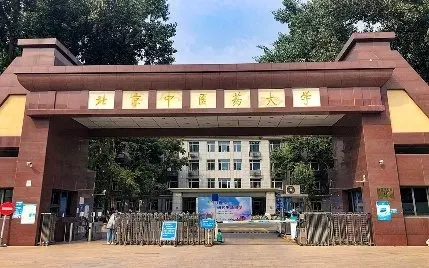
Beijing University of Chinese Medicine accepts international students on programmes in the following fields: medicine. Choose the level and programme that suit your goals.
Chinese language study at the university — from a few weeks to a year or longer. Suitable for those starting from scratch or preparing for the HSK before entering a main programme.
self-funded · language programme
The first level of higher education: usually four years of study, specialised subjects, internships and a graduation thesis. It opens the way to working in your field and to a master's degree.
self-funded
Advanced study after a bachelor's degree: research, applied projects and internships. It helps you become an expert in your chosen field and broaden your career opportunities.
self-funded
Beijing University of Chinese Medicine is located in Beijing. Nihao Study consultants keep track of the deadlines and admission requirements of this university, and you can always check the most accurate and up-to-date information on its official website. In university rankings, it is ranked 230 in China and 2112 worldwide.
Come for a face-to-face meeting: together we will go through the requirements, deadlines, documents and study options that suit you.

At the meeting we will look at your situation, tell you which documents to prepare and by when, talk about possible programmes and help you decide on the next step.
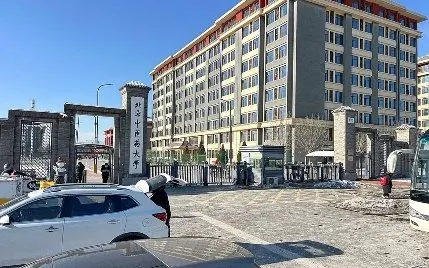
Beijing University of Chinese Medicine (BUCM, 北京中医药大学, Běijīng Zhōngyīyào Dàxué) is a public specialised university in Beijing under the Ministry of Education of the PRC. In Chinese academic circles it is known for short as 北中医 (Běizhōngyī).
This university is worth considering if your goal is not general clinical medicine but specifically Chinese medicine: acupuncture and tuina, Chinese pharmacology, pharmaceutical production technology, and combining Chinese and Western approaches to treatment. The university's history begins in 1956; in 1996 it was included in Project 211, and today it is one of the universities in the Double First-Class programme. BUCM is not a Project 985 university: in 2011 it only joined the 985 innovation platform for disciplines, which is a different status.
This Nihao Study overview brings together what a 2026 applicant needs to know: the university's status, programmes and language of instruction, accommodation, scholarships and the application procedure.
| Item | Data |
|---|---|
| Founded | 1956 |
| Number of campuses | 3: Liangxiang, Hepingjie, Wangjing |
| Full-time students | 15,474, of whom 508 are international |
| Teaching staff | 1,727 full-time teaching staff |
| Bachelor's majors | 16 across the whole university |
| International intake | 10 bachelor's programmes in the 2026 intake |
BUCM's strength lies less in student numbers than in the concentration of specialist resources. Postdoctoral training is offered in three of its own fields: Chinese medicine, Chinese pharmacology, and integrated Chinese and Western medicine. The university also has three first-level doctoral and seven first-level master's disciplines, plus several dozen narrower specialisations. BUCM is therefore a full-fledged research university, not a language school or a training centre attached to a clinic.
It all began in 1956 with the Beijing College of Traditional Chinese Medicine. The institute gained national key university status as early as 1960, its current name in 1993, and three years later joined Project 211. The university's present structure took shape after it merged with the Beijing Institute of Acupuncture, Orthopaedics and Traumatology in 2000.
Teaching international students developed here alongside the national school of Chinese medicine. According to the International Education School, more than 20,000 specialists from 94 countries and regions have graduated from the university; partnerships have been established with 118 universities and research organisations in 31 countries and regions. As early as 1996, BUCM and Middlesex University launched an overseas programme whose graduates received a Bachelor of Medicine degree. Later, a joint track in Chinese medicine and biology was created with Nanyang Technological University.
This history matters for more than status. Teaching at BUCM rests on three pillars: passing on the classical medical tradition, clinical practice and modern methods of testing medicines. The university's officially stated mission combines preserving Chinese medical culture, training professionals, advancing medical science and promoting Chinese medicine abroad.
Participation in Project 211 is confirmed by the university's official chronicle: BUCM joined it in 1996. The situation with Project 985 is more nuanced. In 2011 the university joined the 985 Innovation Platform for Priority Disciplines, but that did not make it a member of Project 985 itself.
In the second round of Double First-Class, BUCM has three disciplines: integrated Chinese and Western medicine, Chinese medicine and Chinese pharmacology. However, the Ministry of Education placed BUCM's Chinese pharmacology in an appendix listing disciplines that received a public warning. The most accurate description is this: the university and all three fields kept their place on the second-round list, but one of them has been officially told it needs to improve.
| Ranking | Position | What it shows |
|---|---|---|
| ShanghaiRanking, Chinese TCM universities 2026 | 1st place | Comparison of Chinese medicine universities with each other |
| ShanghaiRanking GRAS 2025 | Pharmacy, 101–150 | Visibility in an international subject ranking |
| CWUR 2026 | top 5.8 per cent, 1221st in the world | Overall assessment of research activity |
| ESI, 2022 data | 3 fields in the top 1 per cent | Citation index: clinical medicine, pharmacology and toxicology, chemistry |
BUCM has no numerical position in Times Higher Education. When choosing a programme, it is wiser to look at several things at once: the ShanghaiRanking subject ranking, the list of clinical bases, the language of instruction and your own career goals.
Chinese medicine and clinical practice. International bachelor's students can study Chinese medicine, acupuncture and tuina, and Chinese orthopaedics and traumatology. Students do their placements at three directly affiliated hospitals, eight indirectly affiliated clinical branches and 25 clinical teaching bases. For a future doctor this means more than a high place in an overall ranking: some classes take place in a real clinical setting.
Chinese pharmacology and pharmaceutical technology. Subjects taught here include Chinese pharmacology, pharmacy, bioengineering and pharmaceutical manufacturing. In the 2025 ShanghaiRanking subject ranking, BUCM's "pharmacy and pharmaceutical sciences" is in the 101–150 band. This path suits those interested not only in treatment but also in raw material analysis, safety control, standardisation and the development of dosage forms.
Integrated Chinese and Western medicine. This is a discipline in its own right on the Double First-Class list, not a marketing slogan. International master's and doctoral students can choose both research and clinical fields, but teaching is in Chinese. Decide in advance what you need more — a clinical qualification or research work: the requirements for prior medical education differ in each case.
For the 2026 intake, ten programmes are offered to international students. Five-year programmes are Chinese medicine, acupuncture and tuina, and Chinese orthopaedics and traumatology; their graduates receive a Bachelor of Medicine degree. Four-year programmes cover Chinese pharmacology, Chinese medicine manufacturing, pharmacy, bioengineering, health management, pharmaceutical administration and nursing.
| Programmes | Duration, language | Key requirement |
|---|---|---|
| Chinese medicine, orthopaedics, acupuncture and tuina | 5 years, Chinese | HSK 4, at least 180 points |
| Pharmacology, pharmacy, bioengineering | 4 years, Chinese | HSK 4 and subject-specific CSCA |
| Management, nursing | 4 years, Chinese | HSK 4 and CSCA |
From 2026, BUCM requires a CSCA result: depending on the programme, mathematics and Chinese in either the humanities or the science profile. This exam does not replace HSK. Check the test dates in the official CSCA system before registering.
Master's programmes for international students last three years and doctoral programmes four; in the 2026 intake all of them are taught in Chinese. The language bar is raised to HSK 5, and the certificate must be valid. Professional clinical programmes accept only applicants with prior education at the corresponding level in Chinese or Western clinical medicine.
BUCM has no programmes taught in Russian, and no fully English-taught bachelor's programme was announced for the 2026 intake. If you are offered an English-taught BUCM programme, check the offer against the official list for the current intake.
If you plan to treat patients, first work out in which country you will obtain the right to practise, and only then look at rankings. A medical degree and a professional licence are different documents. Before applying, find out from the relevant authority in your country how foreign qualifications are recognised there, how much clinical training is required, which exams must be passed and which treatment methods are permitted. This is especially relevant for acupuncture, manual techniques and prescribing Chinese medicines.
Those aiming for research, drug development or quality control should compare the pharmacology programmes, access to laboratories and a possible topic for a future master's thesis. For a career in management, health management or pharmaceutical administration are a better fit. In any case, be honest about whether your Chinese is good enough to study, read medical literature and talk to patients. Passing the HSK threshold is only an admission requirement, not a guarantee that studying will be easy.
Textbooks are bought separately, as they are needed for each course. Your budget should also cover food, transport, mobile phone service, paperwork and personal expenses. Check current terms on the university's official website.
The university offers international bachelor's students places in double rooms; accommodation is paid each semester, and the final amount depends on the move-in dates and the invoice issued by the university. Check the current rate on BUCM's official website. With the university's permission, students can live off campus, but they pay for such housing themselves.
The admissions office for international bachelor's students is on the Liangxiang campus (Fangshan District, postcode 102488). The historic Hepingjie campus is in Chaoyang District: 11 Beisanhuan East Road, Beijing, postcode 100029. Hepingjie is within walking distance of Guangximen station on Metro Line 13. To reach Liangxiang, the university recommends taking the Fangshan line to Liangxiang University Town station and then changing to a local bus.
The university's specialism is felt in the campus environment too. It has a museum of Chinese medicine with history and pharmacology sections: the exhibition area is about 1,500 sq m, the collection holds more than 1,000 medical artefacts and over 2,800 kinds of medicinal specimens. Bear in mind that Liangxiang and Hepingjie are at opposite ends of the city, which affects your choice of housing and daily commute.
In its 2026 admission rules, BUCM names three types of support: the Chinese Government Scholarship, the Beijing Government Scholarship and the university's own scholarship for international students. For bachelor's students, the university scholarship is paid as a one-off award. Any scholarship application for a bachelor's programme must be submitted together with a CSCA result.
International master's and doctoral students can apply for CSC Type A, Type B (the high-level postgraduate programme) and the Beijing Government Scholarship. For Type B, BUCM as the host institution has the code 10026.
Master's and doctoral applicants need to prepare more: a personal statement in Chinese of at least 1,000 characters, two recommendation letters from professors or associate professors, education documents, HSK 5 and, if available, a list of research publications. Postgraduate applications carry an application fee — check the amount in the rules for the current intake.
| University | Type | Main focus |
|---|---|---|
| Beijing University of Chinese Medicine, BUCM, 北京中医药大学 | Public specialist university | Chinese medicine and pharmacology, integrative medicine |
| Capital Medical University, CMU, 首都医科大学 | The capital's medical university | Clinical medicine, public health, a large network of hospitals |
| Peking Union Medical College, PUMC, 北京协和医学院 | National research-oriented medical university | Clinical medicine and biomedicine |
| Peking University Health Science Center, PKUHSC | Part of Peking University | Medicine, dentistry, pharmacy, public health |
BUCM is a good choice if your plans centre on Chinese medicine, acupuncture, Chinese medicinal products or integrative research. Those who want to study general clinical medicine in English should compare Capital Medical University and other medical universities in Beijing separately.
The main Russian form is the one meaning ‘Beijing University of Chinese Medicine’. The two common misspellings of the Russian word for ‘medicine’ are errors. ‘University of Chinese Medicine of Beijing’ carries over the English word order. The official English name is Beijing University of Chinese Medicine, and the official English abbreviation is BUCM. The Chinese short form 北中医 (Běizhōngyī) is rendered in Russian roughly as ‘Beizhongyi’. The full Chinese name is 北京中医药大学 (Běijīng Zhōngyīyào Dàxué).
It is a public specialised university in Beijing under the Ministry of Education of the PRC. The university has three campuses: Liangxiang, Hepingjie and Wangjing.
Yes. The university joined Project 211 in 1996, and in the second round of Double First-Class it holds three disciplines: integrated Chinese and Western medicine, Chinese pharmacology and Chinese medicine.
No. In 2011 the university joined the 985 innovation platform for disciplines, but that is a separate status and does not make it a member of Project 985.
Under the official 2026 admission rules, all ten bachelor's programmes for international students are taught in Chinese, and master's and doctoral programmes for international students are also announced in Chinese. There are no programmes in Russian.
For bachelor's programmes: HSK 4 with at least 180 points, and the certificate must have been obtained within the last two years. International master's and doctoral applicants in the 2026 intake need at least HSK 5. See the official HSK schedule for upcoming exam dates.
International bachelor's students are offered places in double rooms. The final fee depends on the length of stay, and the university publishes the current rate on its official website.
Yes, the university accepts applications for the Chinese Government Scholarship. For master's and doctoral programmes, categories A and B are officially described; under category B, BUCM's code is 10026. Selection for the scholarship is competitive.
The International School's website has a separate HSK section, but specific sessions and seat availability are shown only in the official exam registration system. You must register for the HSK separately from your study application.
The basic set: passport, education certificate with grades, HSK certificate, CSCA result, a study plan in Chinese, a medical form, a police clearance certificate, a financial guarantee and a short video in Chinese. Scholarship applicants also need two recommendations.
BUCM specialises in Chinese medicine, Chinese pharmacology and integrative approaches. Capital Medical University has a broader profile covering the whole of modern clinical medicine, with a large network of clinical colleges under its management. Peking Union Medical College is a separate national research-oriented medical university.
Beijing (北京) is the capital of China and a major centre of education: the city has more than 90 universities, among them Peking University and Tsinghua University, which rank in the country's top 2. Here you can see the Forbidden City and the Great Wall of China, as well as the modern tech district of Zhongguancun, known as China's Silicon Valley.
Studying in Beijing goes hand in hand with good career prospects: the city hosts the headquarters of major companies and research centres, getting around is easy (the metro has 22 lines), and cultural life is very rich. Parents should know that the capital's infrastructure is highly developed, there are international clinics with Russian-speaking staff, many direct flights leave the city, and students are supported by a well-established system: dormitories are located right on the guarded university campuses.
You work with Nihao Study specialists. They will help you put together a portfolio and a set of documents, draw up a study plan and choose a university or college and a specialty that genuinely interest you.
We take care of every stage of admission, from choosing to enrolment
We will gather, prepare, certify and send your documents to the institution
We will show the admissions committee your strengths
We run training sessions and courses so you can prepare with more confidence
We will help you settle in at the start of your studies and keep moving forward
Nihao Study specialists select universities and colleges that match the applicant's goals and means. We make sure the teachers are practitioners and that the knowledge will be useful in your profession.
We examine curricula, talk to students and teachers and look at which specialties employers need, and use this information to select options for the applicant.
Advisers guide the applicant from the first consultation to enrolment, help build a plan and spot mistakes in time that could get in the way.
The cost of our support depends on the programme and the partner university; you'll get an exact quote after a free consultation.
Get a quoteA free 15-minute consultation: together we will choose a university or college and a programme that suit your goals and budget.
Apply with peace of mind: we handle the documents, deadlines and correspondence with admissions committees, and you save time and energy.
Don't want to wait for a call? Message us in the chat.
Message us in chat