- Language courses
- English, Chinese
- Bachelor's Degree
- English, Chinese
- Master's Degree
- English, Chinese
- Doctoral (PhD) Programmes
- English, Chinese
- Accommodation from 2 000 ¥/year
BUCT · 北京化工大学
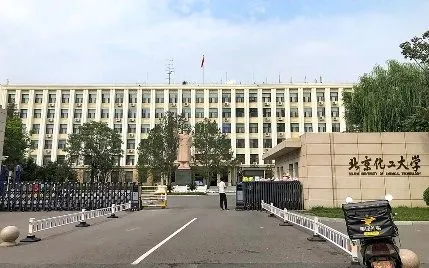
Beijing University of Chemical Technology accepts international students on programmes in the following fields: engineering, natural sciences. Choose the level and programme that suit your goals.
Chinese language study at the university — from a few weeks to a year or longer. Suitable for those starting from scratch or preparing for the HSK before entering a main programme.
self-funded · language programme
The first level of higher education: usually four years of study, specialised subjects, internships and a graduation thesis. It opens the way to working in your field and to a master's degree.
self-funded
Advanced study after a bachelor's degree: research, applied projects and internships. It helps you become an expert in your chosen field and broaden your career opportunities.
self-funded
Beijing University of Chemical Technology is located in Beijing. Nihao Study consultants keep track of the deadlines and admission requirements of this university, and you can always check the most accurate and up-to-date information on its official website. In university rankings, it is ranked 598 in China and 48 worldwide.
Come for a face-to-face meeting: together we will go through the requirements, deadlines, documents and study options that suit you.

At the meeting we will look at your situation, tell you which documents to prepare and by when, talk about possible programmes and help you decide on the next step.
Beijing University of Chemical Technology (BUCT, 北京化工大学, Běijīng Huàgōng Dàxué) is a public research university located in Beijing. Russian-language sources use several versions of its name, including a colloquial short form. In China itself the university is known for short as 北化 (Běihuà) or 化大 (Huàdà); the English abbreviation BUCT is officially set out in its charter.
The wording of its status matters here. BUCT is part of Project 211 and takes part in the national Double First-Class programme (双一流), with its discipline of chemical engineering and technology included in the second round of the programme. BUCT is not a Project 985 university – it is more accurate to say that it participated in the innovation platform for priority disciplines under Project 985.
The Nihao Study overview covers what matters to 2026 applicants: status, the latest rankings, programmes, HSK and CSCA requirements, dormitories, scholarships and the application procedure.
| Item | Data |
|---|---|
| Year founded | 1958; originally the Beijing Institute of Chemical Technology |
| Supervised by | National key university under the Ministry of Education of the PRC |
| Statuses | Double First-Class, Project 211, Project 985 priority discipline platform |
| Academic structure | 18 schools and faculties |
| Students | Over 16,000 undergraduates; over 10,000 master's and doctoral students, including more than 2,000 doctoral students |
| International students | Over 420 on degree programmes |
| Staff | Over 2,800 people, including 8 academicians of the Chinese academies and 5 foreign academicians |
| Campuses | Chaoyang, Haidian, Changping; 2,492 mu in total |
| Main 双一流 discipline | Chemical Engineering and Technology |
BUCT's main registered address is No. 15 Beisanhuan East Road, Chaoyang District, Beijing, 100029. Applicants should know this: the international office is in Chaoyang, but study and accommodation may be tied to another campus.
The university was founded in 1958 as the Beijing Institute of Chemical Technology. It describes its original mission as training high-level specialists for the most advanced branches of the chemical industry. As early as 1960 the institute was added to the list of 64 national key universities. These origins are still visible today: polymers, automation, process equipment, industrial safety and, of course, chemical engineering fit together into a single engineering system.
Its development was not a straight line. In 1971 the Beijing Institute of Chemical Fibres was merged into the institute, but in 1978 it became independent again. The current name dates from 1994. In 1996 BUCT joined Project 211, since 1998 it has reported directly to the Ministry of Education, and in 2008 it became part of the Innovation Platform for Priority Disciplines.
The Changping campus officially opened on 2 September 2017. With it, the compact industry institute became a university with several centres: junior-year students and some departments — administrative, mathematical and humanities units — moved to the spacious teaching and residential grounds, while the specialist laboratories and the international office are still largely concentrated in Chaoyang.
A place in an overall ranking should not be taken as the final verdict on a degree. In bibliometric and subject tables BUCT ranks noticeably higher than in systems where international reputation, the share of international students or the breadth of programmes carry a lot of weight.
| Ranking | Position, edition year | What it reflects |
|---|---|---|
| THE World University Rankings | 401–500, 2026 edition | Overall international ranking |
| THE Engineering | 201–250, 2026 edition | Higher than in the overall table |
| QS World University Rankings | =649, 2027 edition | Latest published QS edition |
| ARWU | 201–300, 2025 edition | Research output |
| CWUR | 345th in the world, 57th in China (2026 edition) | Research, teaching, employability |
| EduRank | 1,108th in the world, 79th in China (2026 edition) | Independent bibliometrics-based model |
BUCT's profile shows up more clearly in subject rankings. In ShanghaiRanking GRAS 2025 the university is 15th in the world for nanoscience and nanotechnology and 17th for chemical engineering; chemistry, materials science, instrumentation science and energy science are in the 51–75 band. In ESI, chemistry, materials science and engineering are in the global top 0.1%, and seven more fields are in the top 1%.
BUCT's official Double First-Class discipline is chemical engineering and technology. It includes programmes in chemical engineering and technology, energy chemical engineering, environmental engineering and hydrogen energy. The school trains specialists at every level, from bachelor's to postdoctoral, and offers doctoral fields in chemical engineering and environmental science. What makes it valuable for an applicant is the combination itself: laboratory chemistry and process calculations plus equipment design and scale-up to industrial level.
The second strength is polymer and functional materials, together with nanotechnology. This combination is what drives the high subject positions: 15th in the world for nanoscience in GRAS 2025, with materials science in the 51–75 band. The field suits those interested in membranes, composites, coatings, biocompatible polymers or energy materials, not just traditional fertiliser production and petrochemicals.
Alongside its traditional process disciplines, BUCT is developing big data, artificial intelligence, computer science, automation and measurement systems. The College of Information Science grew out of the programmes in industrial process automation and instrumentation that appeared when the university was founded. The biotechnology cluster includes bioengineering, pharmaceutical engineering and biomedical engineering. This mix works well for interdisciplinary paths where chemistry, data and the life sciences meet.
The academic core consists of the schools of chemical engineering, chemistry, materials science, life sciences, information science, mechanical and electrical engineering, and mathematics and physics. In 2026 international bachelor's students were offered chemical engineering and technology, hydrogen energy, environmental engineering, polymer materials, automation, robotics, artificial intelligence, computer science, bioengineering and applied chemistry.
The choice is not limited to science and engineering. The School of Economics and Management runs programmes in accounting, financial management, business administration, international economics and trade, and big data management. Other programmes include English, law, social sports and public administration. These fields broaden the choice, but BUCT's academic reputation rests mainly on chemistry, materials and engineering.
BUCT has a separate unit, the Paris Curie Engineer School of BUCT, where a joint chemistry and pharmaceutical programme is taught in English and French. It is not an independent university.
| Level | Format | Duration |
|---|---|---|
| Chinese Language | Beginner, intermediate and advanced levels; spring and autumn intake | 20 classes a week; a semester lasts 16–18 weeks |
| Bachelor's Degree | In Chinese; some programmes in English; a joint programme in English and French | 4 years |
| Master's Degree | In Chinese or English; research or professional track | Usually 3 years (scholarship coverage period) |
| Doctoral (PhD) Programmes | Mainly a research track; contact with a supervisor is required | Usually 4 years (scholarship coverage period) |
Bachelor's programmes taught in English include chemistry, bioengineering, computer science, polymer materials, and chemical engineering and technology. Final requirements are set by the terms of the current intake.
For Chinese-taught bachelor's programmes, the 2026 intake requires HSK 4 with a score of at least 180, plus a CSCA result in the specialised Chinese section. The English-taught track requires TOEFL 85 or IELTS 6.0 or above; native English speakers do not need a certificate. The joint programme in French requires proof of B2 level.
BUCT's language course programme includes free HSK preparation and culture classes; students are placed in groups based on an interview and a test. HSK and BCT exams are not held at BUCT itself — there is no active test centre — so students choose a test venue themselves in the Chinese Test system.
BUCT's fees for international students depend on the programme and the language of instruction; the application fee, insurance and residence permit are paid separately, while meals, flights, document translation and personal expenses are not included in university fees. Current amounts are published in the brochure for each specific intake — if it differs from older pages of the website, go by the brochure. You can check the cost on the university's official website or during a consultation.
| Campus | Room type |
|---|---|
| Chaoyang | Double |
| Changping | Double |
| Changping | Single |
Where a student is housed depends on the programme and available places. The Changping campus covers 1,964 mu; in the long term its teaching and residential buildings are meant to accommodate 18,300 students and 1,500 staff. Chaoyang is smaller and closer to the international office. The specific building is assigned after confirmation from the university.
Scholarships are awarded competitively. Before applying, make sure you understand the CSC rules and check the application channel and deadline for your country.
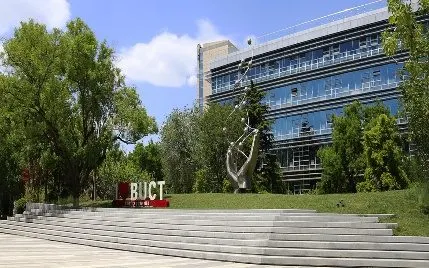
The historic main campus in Chaoyang dates from the university's founding in 1958. The Haidian campus focuses on research, technology transfer, professional master's programmes and international cooperation. Changping is the largest and most modern site, with teaching buildings, a library, dormitories, sports areas and spaces for student life.
The university's facilities include library and digital services, sports grounds and cultural events. Language course students are offered classes in calligraphy, tai chi and Peking opera. The campuses differ greatly in size and surroundings, so it is worth comparing them in advance.
BUCT is especially well suited to those who know clearly why they need chemistry or engineering. Choose here not by how impressive a name sounds but by the chain of skills: fundamental chemistry, process calculations, materials selection, work with equipment, automation and the path from a laboratory idea to production. For a future process engineer, this coherence offers more than a broad humanities catalogue. Those interested only in general business or international relations should know that other Beijing universities offer a stronger specialist environment for that.
Studying in Chinese suits those who are not afraid of technical terminology and are ready to work in mixed teams and take practical classes in Chinese. A formal minimum certificate may be enough for admission, but it does not guarantee comfortable study. It is useful to learn the vocabulary of mathematics, physics, chemistry and laboratory safety in advance. On the English track the language barrier in class is lower, but Chinese is still needed in the canteen, dormitory, clinic, bank and when looking for an internship, so even English-track students cannot do without basic Chinese.
If you are choosing between chemistry, chemical engineering and materials science, ask yourself a practical question. Chemistry focuses more on substances, their structure and reactions. Chemical engineering answers the question of how to turn a reaction into an industrial process safely and at reasonable cost. Materials science studies how a material's composition and structure determine its properties. BUCT's polymer field sits at the intersection of these areas and suits those interested in membranes, composites, functional materials and coatings.
Take a separate, careful look at your future supervisor, laboratory and project topic. This matters especially for master's and doctoral programmes: the quality of the experience depends not only on the university's name but on the specific research group. Compare what the supervisor publishes, how well equipped the laboratory is, what language working meetings are held in and what results are expected from the student. The programme, campus, cost and availability of dormitory places should be confirmed in writing in advance. Then your decision will rest on a verifiable path rather than a single line in a global ranking.
| University | Chinese name, type | Main focus |
|---|---|---|
| Beijing University of Chemical Technology, BUCT | 北京化工大学, Ministry of Education university | Chemical engineering, polymers, materials |
| Beijing University of Technology, BJUT | 北京工业大学, Beijing municipal university | General engineering, urban infrastructure |
| Beijing Institute of Technology, BIT | 北京理工大学, national university | Systems and defence engineering |
| University of Science and Technology Beijing, USTB | 北京科技大学, national university | Metallurgy, mining, materials |
It is easy to check: BUCT's Chinese name contains 化工 ("chemical industry"), and its official domain is buct.edu.cn. If a neighbouring university's English name contains technology, science or institute, that does not make it part of BUCT.
Compare three things: the domain the email came from, how the university is named in it, and which programme code appears in your applicant account. Official emails should lead to the BUCT system or a university domain. If an intermediary has sent only a screenshot, ask for the document with the terms and a link to the application itself. The offer should state the level of study, language, duration, campus, deposit amount and refund conditions. The dormitory name is sometimes given later, so the absence of a specific room is not necessarily a mistake. A promise of a guaranteed single room without confirmation from the university, however, should be double-checked.
Check the CSC type for a scholarship application separately: the embassy channel and the university channel follow different procedures, and funding is decided by the scholarship committee. Fees must never be transferred to personal accounts, and bank details from old files should be re-checked every time. If the official brochure, your applicant account and an email contradict each other, ask the university for a written clarification of which takes priority. A written request keeps a record of the correspondence and helps avoid disputes at registration.
The main Russian form is the one meaning ‘Beijing University of Chemical Technology’. A common search variant is ‘Beijing Chemical-Technological University’, while ‘University of Chemical Technology in Beijing’ repeats the English word order. The official international name is Beijing University of Chemical Technology, and the official abbreviation is BUCT. The Chinese short forms are 北化 (Běihuà, ‘Beihua’) and 化大 (Huàdà); the full name 北京化工大学 is read as Běijīng Huàgōng Dàxué.
A public research university under the Ministry of Education of the PRC. Founded in 1958, it specialises in chemical engineering, materials and related technologies.
Project 211 and Double First-Class: yes. BUCT was never a full member of Project 985, but it was part of that project's innovation platform for priority disciplines.
Yes. At bachelor's level in 2026, chemistry, bioengineering, computer science, polymer materials and chemical engineering could be studied in English.
The Chinese-taught track requires HSK 4 with a score of at least 180, plus a CSCA result in the relevant Chinese-language subject section.
The cost depends on the programme, language of instruction, campus and room type. Current intake fees are published in the official brochure, so check them on the university's website.
Yes, if you win the competition. A full scholarship can cover tuition, insurance, dormitory accommodation and monthly payments, but it is kept only if you pass the annual review.
No: BUCT currently has no HSK or BCT test centre, so you choose a test centre separately when registering. On the other hand, according to the university, HSK preparation is free.
BUCT has three sites in Beijing: Chaoyang, Haidian and Changping. The international office's address is 15 Beisanhuan East Road, Chaoyang District, Beijing, 100029.
BUCT's focus is chemical engineering and polymers. BJUT is a broad-based municipal engineering university, BIT is known for systems and defence engineering, and USTB is strong in metallurgy and materials. To avoid mistakes, always check the Chinese name and the domain.
You need a passport, a CSCA result, a language certificate, a school-leaving certificate with a transcript of grades (and their notarised translation into Chinese or English), a medical form and a police clearance certificate.
Beijing (北京) is the capital of China and a major centre of education: the city has more than 90 universities, among them Peking University and Tsinghua University, which rank in the country's top 2. Here you can see the Forbidden City and the Great Wall of China, as well as the modern tech district of Zhongguancun, known as China's Silicon Valley.
Studying in Beijing goes hand in hand with good career prospects: the city hosts the headquarters of major companies and research centres, getting around is easy (the metro has 22 lines), and cultural life is very rich. Parents should know that the capital's infrastructure is highly developed, there are international clinics with Russian-speaking staff, many direct flights leave the city, and students are supported by a well-established system: dormitories are located right on the guarded university campuses.
You work with Nihao Study specialists. They will help you put together a portfolio and a set of documents, draw up a study plan and choose a university or college and a specialty that genuinely interest you.
We take care of every stage of admission, from choosing to enrolment
We will gather, prepare, certify and send your documents to the institution
We will show the admissions committee your strengths
We run training sessions and courses so you can prepare with more confidence
We will help you settle in at the start of your studies and keep moving forward
Nihao Study specialists select universities and colleges that match the applicant's goals and means. We make sure the teachers are practitioners and that the knowledge will be useful in your profession.
We examine curricula, talk to students and teachers and look at which specialties employers need, and use this information to select options for the applicant.
Advisers guide the applicant from the first consultation to enrolment, help build a plan and spot mistakes in time that could get in the way.
The cost of our support depends on the programme and the partner university; you'll get an exact quote after a free consultation.
Get a quoteA free 15-minute consultation: together we will choose a university or college and a programme that suit your goals and budget.
Apply with peace of mind: we handle the documents, deadlines and correspondence with admissions committees, and you save time and energy.
Don't want to wait for a call? Message us in the chat.
Message us in chat