- Language courses
- English, Chinese
- Bachelor's Degree
- English, Chinese
- Master's Degree
- English, Chinese
- Doctoral (PhD) Programmes
- English, Chinese
- Accommodation from 2 000 ¥/year
BSU · 北京体育大学
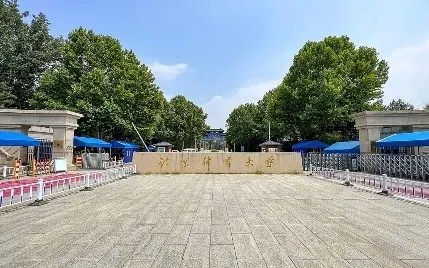
Beijing Sport University accepts international students on programmes in the following fields: business, engineering, medicine, education, economics. Choose the level and programme that suit your goals.
Chinese language study at the university — from a few weeks to a year or longer. Suitable for those starting from scratch or preparing for the HSK before entering a main programme.
self-funded · language programme
The first level of higher education: usually four years of study, specialised subjects, internships and a graduation thesis. It opens the way to working in your field and to a master's degree.
self-funded
Advanced study after a bachelor's degree: research, applied projects and internships. It helps you become an expert in your chosen field and broaden your career opportunities.
self-funded
Beijing Sport University is located in Beijing. Nihao Study consultants keep track of the deadlines and admission requirements of this university, and you can always check the most accurate and up-to-date information on its official website. In university rankings, it is ranked 437 in China and 7469 worldwide.
Come for a face-to-face meeting: together we will go through the requirements, deadlines, documents and study options that suit you.

At the meeting we will look at your situation, tell you which documents to prepare and by when, talk about possible programmes and help you decide on the next step.
Beijing Sport University (BSU, 北京体育大学, pinyin Běijīng Tǐyù Dàxué) is a public specialised university in Beijing directly under the General Administration of Sport of China. Its official charter sets out the English abbreviation BSU and the Chinese short form 北体大 (Běitǐdà). Russian-language sources also use a calque of the name and various search-query spellings; this page uses the official name, Beijing Sport University.
The university was founded in 1953. It is part of Project 211 and was included in both the first and the new wave of the Double First-Class programme (双一流). According to the university itself, the discipline included in the second wave of Double First-Class is 体育学 – sport science and physical education. This means the status does not apply to every field indiscriminately but primarily to the university's core academic speciality.
Here you will find information useful to 2026 applicants: statuses, programmes, rankings, HSK requirements, scholarships, dormitories, the admission procedure and universities with similar names. You can ask questions about admission at a Nihao Study consultation.
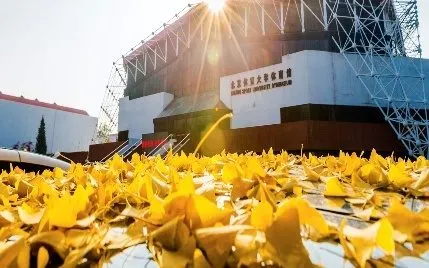
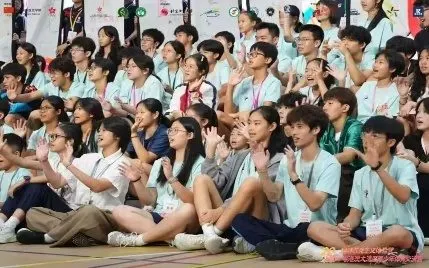
According to the university itself, BSU is developing on a three-campus model. The table summarises the key figures about the university and the 2026 admission conditions.
| Item | Data | What matters for applicants |
|---|---|---|
| Year founded | 1953 | A specialist university whose history is tied to new China |
| Campuses | Beijing, Hainan, plus a site under construction in Xiong'an | Where you study depends on the programme, so it needs checking |
| Main campus | about 80 hectares, almost 100 indoor and outdoor sports facilities | The sports facilities are part of the learning process |
| Fields of study | 34 bachelor's programmes, including 14 national first-class programmes | The choice goes beyond classic physical education |
| International admissions | in 2026: 20 bachelor's, 13 master's and 7 doctoral majors | You can go all the way from bachelor's to PhD |
| Students (2020 data) | 9,497 undergraduates, 3,108 master's and doctoral students, 297 international students | International students make up a small part of the student community |
| Library collection (2020 data) | 1,295,000 books | Extensive literature on sport |
The university began as the Central Institute of Physical Education. In 1956 it became the Beijing Institute of Physical Education, and it received its current name, Beijing Sport University, in 1993. Its mission was to train coaches, teachers and other specialists for the young national sports system.
From its earliest years, teaching was built on combining education, training and research. The university's motto is 追求卓越, meaning the pursuit of excellence. This approach continues today: BSU trains athletes and coaches while also developing sports medicine, psychology, management, journalism and engineering.
BSU now operates on a "one university, three campuses" principle. The main site is in the Haidian district, the Hainan International College runs some joint and international programmes, and the Xiong'an campus is intended to support interdisciplinary development. Applicants should bear in mind that the place of study is determined by the programme and major.
It makes more sense to judge BSU by its standing in sport science than by its overall university ranking. In the QS World University Rankings by Subject 2026, the university is in the 51–100 band, and in the 2026 edition of ShanghaiRanking it is 2nd among Chinese universities for sport science.
| Ranking | Position | What it means |
|---|---|---|
| QS by Subject 2026 | 51–100 | The university is visible internationally in its specialist subject ranking |
| ShanghaiRanking 2026 | 2nd among sports universities in China | A strong position within its national specialist group |
| EduRank 2026 | China: 211, world: 2706 | A scientometric assessment of the university as a whole; not an official status |
| EduRank, Sport and Exercise Science 2026 | 209th in the world | The subject result is much higher than the overall one |
| THE | A university profile exists, but the page shows no position in WUR 2026 | No confirmed position in this ranking |
If the current CWUR and U.S. News tables have no separate entry for BSU, they cannot be cited as a source for its position. ESI is an analytical citation system, but it gives no position or percentile for the university as a whole. More reliable reference points are the QS and ShanghaiRanking subject rankings, Double First-Class status in sport science and published information about the laboratories.
The first advantage is the close link between science and training. The university hosts a Ministry of Education key laboratory for sport and physical fitness, approved in 2009. Another laboratory reports to the General Administration of Sport; its focus areas are hypoxic training, functional rehabilitation and athlete support. Together they form an applied base for studying physiology, kinesiology, recovery and nutrition.
The second advantage is expertise in the Olympic movement and anti-doping. The Chinese Olympic Academy is part of BSU, and the work of the Beijing Anti-Doping Laboratory is recognised by the World Anti-Doping Agency. In addition, the university has 9 key laboratories at ministerial and provincial level.
The third advantage is technology and the sports industry. The AI Sports Engineering laboratory uses machine learning, the Internet of Things and virtual reality to analyse movement. The Sports Big Data Centre tackles problems in the industry, the economy, healthcare and competitive sport. That is why BSU suits not only future coaches but also those who want to work where sport, data, media and management meet.
The academic units are grouped into four large clusters: sports engineering, Olympic sports, humanities and social sciences, and sport and health. The China Football College, the School of Sports Engineering and the School of Psychology are part of the university: the word School or 学院 in the name does not mean a separate institution.
Here students study sports rehabilitation and physiotherapy, human movement science, applied psychology, physical education, sports training, and strength and conditioning. BSU has the right to award doctoral degrees in sport science and is developing postdoctoral training.
Journalism and new media, public administration, sports economics and management, and teaching Chinese are open to international students. According to the 2026 catalogue, the programmes include intercultural communication, sports marketing, sports journalism and business management.
The Intelligent Sports Engineering programme covers electronics, C programming, data structures, operating systems and digital signal processing. Data Science and Big Data Technology students work with databases and study mathematics, motion control and how big data is applied in sport.
The 2026 intake focuses on Chinese-taught study. Duration: 4 years for bachelor's and the same for doctoral programmes, 3 years for academic master's and 2 years for the professional master's in International Chinese Education. If you are looking for a fully English-taught degree, note that individual courses in English or foreign lecturers do not mean the whole programme is taught in English.
| Level | Fields (examples) | Language, duration |
|---|---|---|
| Bachelor's Degree | Physical education, sports training, football, winter sports, sports rehabilitation, intelligent sports engineering | Chinese, 4 years |
| Master's Degree | Sports humanities, public administration, education, sports journalism, international Chinese education | Chinese, usually 3 years |
| Doctoral (PhD) Programmes | Sport science, rehabilitation, sports psychology, physical education | Chinese, 4 years |
| Chinese language courses | Chinese at beginner, intermediate and advanced levels | 1 semester or 1 year |
Language courses in Beijing can be a stepping stone to a degree, but a course on its own does not replace the HSK or waive the other requirements of the next intake. The 2026 bachelor's intake requires HSK 4 or equivalent and a valid result in the new CSCA exam. Master's and doctoral applicants need HSK 5; the exception is graduates of Chinese-taught programmes at Chinese universities.
The annual fee is set separately for bachelor's, master's and doctoral programmes and, within each level, depends on the major: at bachelor's level, rehabilitation and physiotherapy programmes are nearer the top of the range, while at doctoral level medical rehabilitation topics may cost more. Language courses are paid per semester or per year. In addition, insurance, visa paperwork and the medical examination are paid separately, as are personal expenses, transport, food and study materials. Current fees are published on the university's official website, and your budget should be based on the invoice from BSU and the terms of your scholarship.
For international students, the dormitory fee is charged per day and differs between a bed in a double room and a single room. The total for the year depends on your move-in dates, availability and payment schedule, so check the current rates on the official website.
| Room type | Accommodation details |
|---|---|
| Double | roommate, bathroom, contract length |
| Single | quota and availability of rooms |
The campus has 16 residential buildings with more than 2,400 rooms, together housing more than 10,000 students at different levels. Rooms have air conditioning, beds, desks and wardrobes, and the buildings have a duty desk, laundries and vending machines, with cleaning of shared areas and repairs provided.
According to the university, in 2026 you can apply for support in four categories:
The scholarship decision is communicated in the admission letter; CSC candidates must also register in the China Scholarship Council system.
A strong application explains why the candidate chose BSU's particular profile and links their experience to a programme, laboratory or research question. The same package sent to both sports rehabilitation and journalism looks weaker than two separate personal statements written for each major.
The main campus address is No. 48 Xinxi Road, Haidian District, Beijing, 100084. This is north-west Beijing, home to many universities and technology companies. It is best to plan your route with an up-to-date Chinese map and give the driver the Chinese name 北京体育大学: entry arrangements and which gates are open may change.
More than 200,000 square metres are given over to sports facilities. There are halls for gymnastics, wushu, swimming, basketball, volleyball, tennis and table tennis, as well as for general conditioning, and outdoors there are football pitches and playing fields. The pool has 50- or 25-metre lanes, and the large halls can hold more than 1,000 people at once.
The canteen covers over 10,000 square metres and has about 3,000 seats; it has halal, Western, specialised and standard sections. The library holds over 1 million printed items and about 1.5 million e-books and journals, with access to more than 60 Chinese and international databases.
In Russian-language searches, the names of specialist institutions are easy to confuse. BSU is most often mixed up with Beijing Sport Vocational College and Capital University of Physical Education and Sports.
| Institution, Chinese name | Category | Main specialism |
|---|---|---|
| Beijing Sport University, BSU, 北京体育大学 | National university, member of Project 211 and Double First-Class | Sport science, Olympic sports, health, coach training |
| Capital University of Physical Education and Sports, 首都体育学院 | Beijing municipal university | Applied sport and physical education |
| Beijing Sport Vocational College, 北京体育职业学院 | Vocational college under the Beijing Municipal Sports Bureau | Training athletes and coaches through secondary and higher vocational programmes |
BSU's key distinguishing features are its national Project 211 status, a Double First-Class discipline and a full cycle of degrees up to doctoral level. Capital University of Physical Education and Sports is a separate municipal university, and the vocational college belongs to a different category of institution.
The standard Russian variant is the one meaning "Beijing Sports University". A phonetic transliteration of the English name and an ungrammatical word-for-word form are erroneous search forms or transliterations. The form meaning "Beijing University of Sport" is an understandable calque from English, but this page uses a different name. The official international name is Beijing Sport University, and the official English abbreviation is BSU. The Chinese abbreviation 北体大 (Běitǐdà) is rendered in Russian as Beitida, and the full Chinese name is 北京体育大学 (Běijīng Tǐyù Dàxué).
BSU is short for Beijing Sport University. It is a national specialised university under the General Administration of Sport of China; it is part of Project 211 and both rounds of Double First-Class.
Yes. In the second national Double First-Class list, 北京体育大学 is listed for the discipline 体育学, which covers sports science and physical education.
According to the official international admission rules for the current year, bachelor's, master's and doctoral programmes are taught in Chinese. No degree taught entirely in Russian is announced.
Bachelor's programmes require HSK 4 or an equivalent result; master's and doctoral programmes require HSK 5. According to the university, graduates of Chinese-taught programmes at Chinese universities may be exempted from this requirement.
Dormitory fees are charged per day and depend on the type of accommodation: a place in a double room or a single room. Current rates are published on the university's official website.
The university accepts applications for the Chinese Government Scholarship, but the extent of coverage depends on the type of programme and the sponsor's decision. In addition, the CSC application must also be submitted through the China Scholarship Council system.
As the university states, HSK is required for admission. Choose your test centre and date through the official Chinese Test service, checking against the HSK schedule. This is not the same as the BSU examination site for applicants to Chinese master's programmes.
The main campus is at No. 48 Xinxi Road, Haidian District, Beijing, postcode 100084. Check your public transport route on the day of travel, and show taxi drivers 北京体育大学 and the address 北京市海淀区信息路48号.
BSU is a national Project 211 university that offers doctoral programmes. Capital University of Physical Education and Sports is a separate Beijing municipal university, while 北京体育职业学院 is a vocational college under the city's sports administration.
You will need a passport, a school-leaving certificate and transcript, an HSK 4 certificate, a CSCA result, a police clearance certificate, a medical form and a signed pledge. Documents not issued in Chinese or English must be translated and notarised.
Beijing (北京) is the capital of China and a major centre of education: the city has more than 90 universities, among them Peking University and Tsinghua University, which rank in the country's top 2. Here you can see the Forbidden City and the Great Wall of China, as well as the modern tech district of Zhongguancun, known as China's Silicon Valley.
Studying in Beijing goes hand in hand with good career prospects: the city hosts the headquarters of major companies and research centres, getting around is easy (the metro has 22 lines), and cultural life is very rich. Parents should know that the capital's infrastructure is highly developed, there are international clinics with Russian-speaking staff, many direct flights leave the city, and students are supported by a well-established system: dormitories are located right on the guarded university campuses.
You work with Nihao Study specialists. They will help you put together a portfolio and a set of documents, draw up a study plan and choose a university or college and a specialty that genuinely interest you.
We take care of every stage of admission, from choosing to enrolment
We will gather, prepare, certify and send your documents to the institution
We will show the admissions committee your strengths
We run training sessions and courses so you can prepare with more confidence
We will help you settle in at the start of your studies and keep moving forward
Nihao Study specialists select universities and colleges that match the applicant's goals and means. We make sure the teachers are practitioners and that the knowledge will be useful in your profession.
We examine curricula, talk to students and teachers and look at which specialties employers need, and use this information to select options for the applicant.
Advisers guide the applicant from the first consultation to enrolment, help build a plan and spot mistakes in time that could get in the way.
The cost of our support depends on the programme and the partner university; you'll get an exact quote after a free consultation.
Get a quoteA free 15-minute consultation: together we will choose a university or college and a programme that suit your goals and budget.
Apply with peace of mind: we handle the documents, deadlines and correspondence with admissions committees, and you save time and energy.
Don't want to wait for a call? Message us in the chat.
Message us in chat