- Language courses
- English, Chinese
- Bachelor's Degree
- English, Chinese
- Master's Degree
- English, Chinese
- Doctoral (PhD) Programmes
- English, Chinese
- Accommodation from 2 000 ¥/year
北京求实职业学校
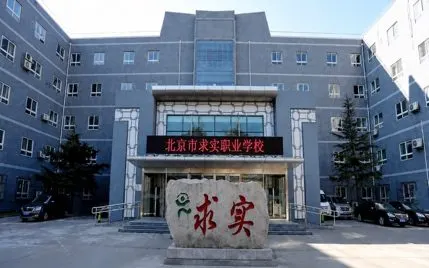
Beijing Qiushi Vocational School accepts international students on programmes in the following fields: business, engineering, medicine, education, economics. Choose the level and programme that suit your goals.
Secondary vocational education: practice-oriented programmes where you learn the language and a profession. Suitable for graduates of grades 9 and 11, and some programmes lead on to a bachelor's degree.
self-funded
Cost: 46 080 ¥/year
Beijing Qiushi Vocational School is located in Beijing. Nihao Study consultants keep track of the deadlines and admission requirements of this university, and you can always check the most accurate and up-to-date information on its official website. In the ranking of Chinese universities, it is ranked 150.
Come for a face-to-face meeting: together we will go through the requirements, deadlines, documents and study options that suit you.

At the meeting we will look at your situation, tell you which documents to prepare and by when, talk about possible programmes and help you decide on the next step.
Beijing Qiushi Vocational School (BQVS for short) goes by several different names in Russian. Its full official Chinese name is 北京市求实职业学校 (Běijīng Shì Qiúshí Zhíyè Xuéxiào), and Chinese texts may also use the short form 求实 (Qiúshí).
In terms of status, it is neither a university nor a higher education institution. The school is public, belongs to the secondary vocational education sector and reports to the Chaoyang District Education Commission. Students enter after completing basic school (9 grades); some programmes follow a 3+2 model, in which, after the secondary stage, the student moves on to a partner institution at a higher level. The word 'college' in its Russian name is simply a customary form: the qualification awarded here cannot automatically be regarded as a bachelor's degree.
Below, Nihao Study has gathered the essentials for 2026 applicants: the type of institution, the programme for international students, accommodation, HSK requirements, the rules of the closed campus and options for further study. Main address: 20 Wangjing North Road (Wangjing Beilu), Chaoyang District, Beijing, postcode 100102.
| Indicator | Data |
|---|---|
| Officially founded | 1999 |
| Type | public secondary vocational school |
| Sites (campuses) | Wangjing, Tuanjiehu, Anzhenli, Airport |
| Number of students | 1,923 (2025 data) |
| Admitted in 2025 | 763, including 70 in comprehensive upper secondary classes |
| Full-time teaching staff | 234; dual-qualified teachers: 97% |
| 3+2 programmes | 17, linking secondary and higher vocational education |
| International students | 57 (international education summary table, 2025) |
北京市求实职业学校 was officially established in 1999 with the approval of the Beijing Municipal Education Commission. Today the school is part of the Chaoyang District education system and occupies four sites: Wangjing, Tuanjiehu, Anzhenli and Airport. As a result, the dormitory, sports facilities, teaching buildings and aviation simulators may be in different buildings.
The initial range of programmes included finance and trade, modern office administration, information technology, aviation services and preschool education. The school itself counts secretarial work and financial operations among its Beijing-level specialist programmes, while computer networking, aviation services, finance and secretarial work have city- and district-level practical training bases. Big data and live-streaming e-commerce were added in 2022, and infant care and esports management were developed in 2023. The programmes were then regrouped into new lines: digital economy, aviation, information security and preschool education.
The first comprehensive upper secondary class was recruited in 2024. In 2025 the school announced 14 programmes for the autumn intake, grouped into five vocational clusters. That same year it was authorised to launch five-year pilot programmes in childcare and aviation equipment maintenance together with partner colleges in Beijing.
There is no point looking for Qiushi in Times Higher Education, CWUR, EduRank, U.S. News, ESI or ShanghaiRanking: these systems rank universities and research institutions. BQVS is a secondary vocational institution, so neither Double First-Class (双一流) nor Projects 211 and 985 apply to it. The situation is similar with the Chinese Government Scholarship (CSC), which is designed primarily for higher education programmes. No grants or scholarships are announced for the school's current offer.
Here, concrete measurable results take the place of a university ranking. For 2025 the school reported that 95.9% of 3+2 progressions were successful, 142 students took part in competitions in 18 fields, and they won 43 national and city-level awards. Of 367 graduates, 365 continued their studies at higher vocational colleges; among 3+2 students the progression rate was 100%.
| Indicator | Result | What it means |
|---|---|---|
| 3+2 progression | 95.9% (2025 results) | how well prepared students are for the next level |
| Continued their studies | 365 of 367 graduates | says more than an abstract position in a catalogue |
| Dual-qualified teachers | 97% | combine teaching with work in industry |
| International students | 57 students in 2025 | the programme for international students is genuinely running |
For international students, training follows the formula "Chinese language + vocational skill", and the specific profile is 中文+电子商务, Chinese plus e-commerce. The programme includes practical workshops, intercultural projects, e-commerce, and general and business Chinese, taught by a language teacher together with a subject teacher. International students here in 2025 included citizens of Russia, Kazakhstan and Tajikistan.
Besides the three-year secondary programme, the school is developing 3+2 pathways: after completing the basic vocational stage and the progression procedure set by the partners, the student studies for another two years. This progression is only possible within an agreed programme and when its conditions are met.
For example, in 2025 the school launched a five-year pilot in preschool education with Beijing Youth Politics College, and was preparing an aviation equipment maintenance programme with Beijing Science Technology University. Whether a particular pathway is open to an international applicant needs to be checked separately.
The IT cluster covers web development, databases, computer networks and network security. According to the school, the computer networking programme lasts 3 years and includes 3,240 hours and 180 credits, with 61.7% of study time devoted to practical training. Practical work takes place in the school's own labs and at external bases run by industry companies.
The aviation cluster has an aircraft maintenance base. The digital trade cluster links big data, accounting and live-streaming e-commerce to assignments from companies. Preschool education students do their placements in the Qiushi kindergarten network, which the school uses as a real learning environment.
For the autumn 2025 intake, the school listed 14 programmes grouped into five clusters. Only some of what is offered to Chinese citizens is open to international students.
| Cluster | Specialisations (examples) | Practical skills |
|---|---|---|
| Information technology | computer networks, network security, big data | servers, web development, databases, network protection |
| Digital finance and trade | e-commerce, live-streaming sales, finance, accounting | content work, trade operations, data analysis |
| Air transport | aviation services, aviation equipment maintenance | service procedures, technical training |
| Management and media | secretarial work, animation, gaming and media projects | business communication, content creation |
| Preschool Education | childcare and early childhood development | placements in Qiushi kindergartens |
International students are housed in hotel-style triple rooms. Each room has beds, bedside cabinets, a wardrobe, air conditioning, a shower and a toilet. The dormitory also has a shared lounge, a fridge, a water cooler and simple furniture. Facilities should be confirmed for the specific campus and room.
On weekdays minors stay on campus and may leave only for a good reason after informing their class teacher. At weekends leaving is also restricted, and students must be back in the dormitory by 19:30. This arrangement suits families who value supervision and support, but not a teenager expecting a free life in the city.
The canteen serves lunch and dinner from Monday to Thursday and only lunch on Fridays. Breakfast and meals on Saturdays and Sundays are not included in the published package. Before arrival it is useful to find out whether food delivery is allowed, how to store food, where to get drinking water and who accompanies students to the doctor.
The campuses have a dormitory and canteen, teaching buildings and computer rooms, an aviation training base, a sports ground, a gym and green areas. The school's main address is the Wangjing site, but classes for the international programme may take place on another campus.
Neither entrance exams nor an HSK certificate are required for admission after grade 9, but students must reach an official HSK 4 by the end of the first year. The workload is heavy: everyday Chinese, business vocabulary and e-commerce subjects all have to be learned at the same time.
The school describes its international programme as a combination of bilingual classes, teamwork between language and subject teachers, and practical assignments. It is best to master basic pronunciation, reading and the most common words before starting.
BQVS is above all for those who have finished lower secondary school, are ready to choose a practical profession and study in Chinese. This format is quite different from an international high school with a wide choice of subjects in English: the focus here is on professional vocabulary, practice, discipline and preparation for the next level of vocational education. If a family is aiming straight for an English-taught bachelor's degree, the Qiushi programme may be too narrow for that.
The programme is best suited to those interested in trade, content, Chinese online marketplaces and business communication. The language is learned alongside the future profession rather than separately from it, which helps a motivated teenager who finds it easier to remember words through practical tasks. But the workload should not be underestimated: both specialist subjects and everyday communication are in Chinese, so independent language study is a must.
The closed campus is a selection criterion in its own right. For the parents of a minor it can mean a clear daily routine, teacher supervision, checks on when the child is back, and a study-focused atmosphere on weekdays. For the teenager, this arrangement only works if they are willing to accept the restrictions. Before signing a contract, discuss not safety in general but specific everyday situations: how permission to leave is arranged, who goes with the student to a clinic, whether food delivery is allowed, where to store food, how contact with parents is maintained and who is responsible for students at night.
Do not choose the school on the basis of neat dormitory photos or a central address alone. BQVS has several sites, so classrooms, rooms, canteens and sports facilities may differ. Find out the name of the campus, ask for a recent photo of a room in the right category and a written description of the facilities. It is also worth asking whether your accommodation might change during your studies and how long it takes to get from the dormitory to the specialist classrooms.
Finally, decide in advance what educational outcome you need. The programme name in Russian and Chinese, its length, the language of instruction, the type of final qualification, the partner at the next level and the progression conditions must all match in the contract documents. A single phrase like "you can continue your studies" is not enough: the family needs a concrete pathway with requirements for grades, HSK, attendance and internal assessment. This makes it easier to compare Qiushi with other vocational schools in Beijing without relying on university rankings, which do not apply to it.
| Institution | Type | How it differs |
|---|---|---|
| Beijing Qiushi Vocational School, 北京市求实职业学校 | secondary vocational school | for international students: Chinese combined with e-commerce |
| Beijing Fengtai Vocational High School | secondary vocational school | a school in another district with its own range of programmes |
| Beijing Jinsong Vocational High School | vocational school | a separate institution in Chaoyang District |
| Beijing Vocational College of Agriculture | a higher-level institution | agricultural specialisation and programmes at a different level |
The word "college" in an English name is not enough to tell the school's level. What matters more is the Chinese institution type, the level students are admitted from, the final qualification and the pathway with partners.
Video and photos of the campus help you compare the formal terms of the programme with how things actually look. When viewing such material, look at the teaching and sports facilities, the closed grounds, the dormitory and the standard room layout. Note the three-person rooms, simple furniture, water cooler, fridge, canteen, gym and outdoor sports areas. Check separately which campus your programme is based on.
‘Beijing Qiushi Vocational College’ is a common Russian form of the name and convenient for searching. The type of institution is more accurately reflected by the variant ‘Beijing Qiushi Vocational School’. ‘Beijing Qiushi College’ with a different Russian transcription of the word Qiushi is not considered the main form. Beijing Qiushi Vocational School is the international name, and BQVS is its abbreviation. 求实 (Qiúshí) is the short Chinese form, and 北京市求实职业学校 (Běijīng Shì Qiúshí Zhíyè Xuéxiào) is the full official name in Chinese.
It is a state secondary vocational school in Chaoyang District. It does not award bachelor’s, master’s or doctoral degrees. ‘College’ in the Russian name is simply the form customary in catalogues.
Yes, admission is on the basis of 9 years of schooling. The school’s official curriculum also names completed lower secondary education or its equivalent as the entry level.
No HSK certificate is needed at the start, but HSK 4 is the stated level by the end of the first year. Check the written programme terms for how assessment works and how many attempts are allowed.
No grants or scholarships are announced for the current offer. CSC is mainly linked to higher education, so for this secondary vocational programme you should expect to pay tuition.
The publicly listed field for international students is e-business and trade, taught in Chinese. The internal list for Chinese citizens is broader, but the option to study another speciality must be confirmed separately.
Rooms are for three people: beds, bedside cabinets, a wardrobe, air conditioning, a shower and a bathroom. Facilities may vary depending on the campus and the room.
The campus is closed for minors. On weekdays leaving is restricted, and at weekends students must keep to the set hours and the written permission procedure.
The school is developing five-year pilot pathways and 3+2 programmes with partners, but they do not allow you to transfer freely to any university. First find out exactly who the partner is, on what terms the transfer takes place and what document is issued.
Beijing (北京) is the capital of China and a major centre of education: the city has more than 90 universities, among them Peking University and Tsinghua University, which rank in the country's top 2. Here you can see the Forbidden City and the Great Wall of China, as well as the modern tech district of Zhongguancun, known as China's Silicon Valley.
Studying in Beijing goes hand in hand with good career prospects: the city hosts the headquarters of major companies and research centres, getting around is easy (the metro has 22 lines), and cultural life is very rich. Parents should know that the capital's infrastructure is highly developed, there are international clinics with Russian-speaking staff, many direct flights leave the city, and students are supported by a well-established system: dormitories are located right on the guarded university campuses.
You work with Nihao Study specialists. They will help you put together a portfolio and a set of documents, draw up a study plan and choose a university or college and a specialty that genuinely interest you.
We take care of every stage of admission, from choosing to enrolment
We will gather, prepare, certify and send your documents to the institution
We will show the admissions committee your strengths
We run training sessions and courses so you can prepare with more confidence
We will help you settle in at the start of your studies and keep moving forward
Nihao Study specialists select universities and colleges that match the applicant's goals and means. We make sure the teachers are practitioners and that the knowledge will be useful in your profession.
We examine curricula, talk to students and teachers and look at which specialties employers need, and use this information to select options for the applicant.
Advisers guide the applicant from the first consultation to enrolment, help build a plan and spot mistakes in time that could get in the way.
The cost of our support depends on the programme and the partner university; you'll get an exact quote after a free consultation.
Get a quoteA free 15-minute consultation: together we will choose a university or college and a programme that suit your goals and budget.
Apply with peace of mind: we handle the documents, deadlines and correspondence with admissions committees, and you save time and energy.
Don't want to wait for a call? Message us in the chat.
Message us in chat