- Language courses
- English, Chinese
- Bachelor's Degree
- English, Chinese
- Master's Degree
- English, Chinese
- Doctoral (PhD) Programmes
- English, Chinese
- Accommodation from 2 000 ¥/year
BUPT · 北京邮电大学
Beijing University of Posts and Telecommunications accepts international students on programmes in the following fields: engineering, natural sciences. Choose the level and programme that suit your goals.
Chinese language study at the university — from a few weeks to a year or longer. Suitable for those starting from scratch or preparing for the HSK before entering a main programme.
self-funded · language programme
The first level of higher education: usually four years of study, specialised subjects, internships and a graduation thesis. It opens the way to working in your field and to a master's degree.
self-funded
Advanced study after a bachelor's degree: research, applied projects and internships. It helps you become an expert in your chosen field and broaden your career opportunities.
self-funded
Beijing University of Posts and Telecommunications is located in Beijing. Nihao Study consultants keep track of the deadlines and admission requirements of this university, and you can always check the most accurate and up-to-date information on its official website. In university rankings, it is ranked 48 in China and 1038 worldwide.
Come for a face-to-face meeting: together we will go through the requirements, deadlines, documents and study options that suit you.

At the meeting we will look at your situation, tell you which documents to prepare and by when, talk about possible programmes and help you decide on the next step.
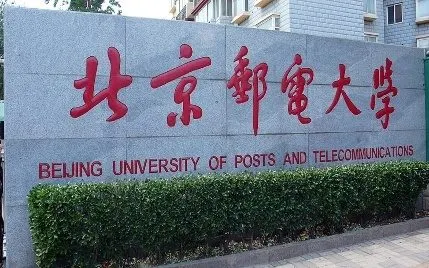
Beijing University of Posts and Telecommunications (BUPT for short; Chinese: 北京邮电大学) is a public research university located in Beijing. The full Chinese name is pronounced Běijīng Yóudiàn Dàxué, and the short name 北邮 (Beiyou) is officially set out in the university's charter. Russian-language sources use several variants of the name, including an incorrect form. This page uses the official English name.
The university is under the Ministry of Education of the PRC and is jointly supported by the Ministry of Industry and Information Technology. BUPT is on the official list of Project 211 and was included in the second wave of the Double First-Class programme (双一流). Despite the word 'posts' in its name, the university's strength is not postal logistics in the everyday sense: its main fields are telecommunications, networks, computing, cybersecurity, electronics and artificial intelligence.
This page gathers information that will be useful to 2026 applicants: confirmation of the 211 and 双一流 statuses, programmes and requirements for international students, accommodation, scholarships, rankings and the application procedure. You can ask questions about admission at a Nihao Study consultation.
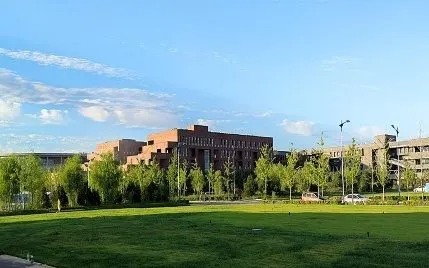
The figures below help gauge the size of the university, but they come from different reporting periods, so do not assume all the statistics were updated at the same time.
| Item | Data |
|---|---|
| Year founded | 1955 |
| Number of students | over 28,000 (as of November 2024) |
| Staff | over 2,600, of whom more than 1,700 are teaching staff |
| Academic units | 19 |
| Bachelor's majors | 53, including 21 national first-class programmes |
| Campuses where international students study | Xitucheng, Shahe, Hongfu and Xiaoxitian |
The International Education Centre can be contacted at No. 10 Xitucheng Road, Haidian District, Beijing, 100876. Classes may take place in either Haidian or Changping, so before choosing accommodation, find out which campus your programme is on.
The university traces its history to 1955, when the Beijing Institute of Posts and Telecommunications was founded on the basis of the telecommunications departments of Tianjin University and Chongqing University. The official chronicle describes it as the first post and telecommunications institution established in new China. In 1960 the institute was added to the list of 64 national key universities.
In 1971 the institution was renamed the Beijing Institute of Telecommunications Engineering, but in 1973 its former organisational form was restored. Its current name, Beijing University of Posts and Telecommunications, dates from 1993. In 1998 BUPT was among the first universities in Project 211. In 2000 it was placed under the direct authority of the Ministry of Education.
The specialised institute then gradually grew into a multidisciplinary research university. In 2004 BUPT opened its International School together with Queen Mary University of London. In 2017 and 2022 the university was included in successive rounds of Double First-Class. As a result, its historical telegraph profile has evolved into a modern ecosystem spanning communications, networks, software and digital platforms.
Membership of Project 211 is not a marketing ploy: Beijing University of Posts and Telecommunications appears in the list of project universities published by the Ministry of Education of the PRC. BUPT is not part of the classic Project 985, but it did take part in the 985 innovation platform for priority disciplines.
Wording about 双一流 calls for caution. The English-language prospectus for international applicants lists Information and Communication Engineering and Computer Science and Technology. The university's main Chinese website describes its current strategy in terms of two large clusters: information networks, and computer science together with cybersecurity. The takeaway for applicants: the 211 and Double First-Class labels in telecommunications and IT are accurate, but it is more reliable to describe them by naming the disciplines as they are officially recorded rather than with a vague "IT".
| Ranking | Position | Year or edition |
|---|---|---|
| QS World University Rankings | in the 1001–1200 band | 2027 edition |
| ARWU | in the 701–800 band | 2025 |
| CWUR Global 2000 | 567th in the world, 94th in China | 2025 |
| EduRank | 946th in the world, 63rd in China | 2026 |
| SCImago Institutions | 355th in the world | 2026 edition |
Times Higher Education also has a BUPT profile, but the public page does not show a position in the current edition, so it would be wrong to attribute an exact THE score to the university. Overall rankings are useful for comparing research volume, but they reflect sector specialisation less well.
In individual subjects the picture is much stronger. In EduRank 2026, BUPT ranks 8th in the world for blockchain and cryptography, 11th for computer networking and 15th for telecommunications. According to the March 2026 ESI bulletin, six BUPT fields are in the top 1 per cent of the global list: computer science, engineering, physics, materials science, social sciences and chemistry. The university is therefore of most interest to candidates with a clear technology focus.
This is the university's leading area. The focus is on signal processing, mobile and optical networks, network systems and communication theory. The Information and Communication Engineering discipline received an A+ in the national discipline evaluation. The profile is designed for those who want not to maintain existing networks but to design protocols, work with radio communications and data transmission, and build next-generation infrastructure.
The university has separate schools for computer science, cybersecurity and artificial intelligence. In 2026, computer science and technology, cybersecurity, artificial intelligence and information engineering are open to international students at various levels of study. The Ministry of Education, for its part, highlights the development of the schools of cybersecurity, artificial intelligence, integrated circuits and intelligent automation.
The third area covers Electronic Science and Technology, Optical Engineering and Integrated Circuit Science and Engineering, taught at master's or doctoral level. Candidates get the chance to link hardware systems, sensors, photonics and microelectronics with software.
According to the university, it has 19 academic units. They include schools of mathematics, physics, economics and management, humanities and digital media, as well as specialist schools of communications, electronics, integrated circuits, computer science, artificial intelligence, cybersecurity, intelligent engineering and automation. Not all units admit international students, and not every year, so the list of faculties is not the same as the list of programmes you can apply to.
For Chinese-taught bachelor's programmes for international students in 2026, the following majors have been announced: communication engineering, computer science and technology, cybersecurity, information engineering, artificial intelligence, mechanical engineering, robotics, automation, e-commerce, mathematics and applied mathematics, information and computing science, applied physics, law, English, Chinese, and network and new media. The exact name, language of instruction, campus, required HSK level and availability of places must be checked separately for each programme.
Another route to an international education is the partnership with Queen Mary University of London. The joint model has run since 2004: classes are taught by staff from both universities, and graduates receive degrees from each partner. However, International School programmes that recruit through China's national planned admissions have their own fee scale, and their terms cannot be applied to general international admissions.
| Level, language | Fields (examples) | Duration |
|---|---|---|
| Bachelor's in Chinese | robotics, cybersecurity, AI, computer science, communications | 4 years |
| Bachelor's in English | Computer Science and Technology | 4 years |
| Master's in English | Computer Technology, International Business | 2 years |
| PhD in English | optics, electronics, communications, computer science | 4 years |
| Chinese language courses | language study: HSK, business and technical Chinese | one semester or academic year |
An important new feature of the 2026 prospectus is English-taught bachelor's programmes. Admission requires TOEFL 80 or above or IELTS 6 or above, plus a CSCA certificate. Chinese-taught programmes require HSK 5; the exception is the Chinese Language major, for which HSK 4 is enough. Check the final list of CSCA subjects in the current admission rules.
Tuition fees depend on the level of the programme and do not include flights, visa, food or personal expenses. In addition, a non-refundable application fee is charged, medical insurance is compulsory, and the joint BUPT and Queen Mary programmes have a separate fee scale. Check the current amounts for this intake on the university's official website.
For international students, the bed fee is charged per day, so the total annual amount depends on your move-in dates, holidays and whether your place has been confirmed. It is best to check the current rate in the university's official materials.
| Item | Known | Worth checking |
|---|---|---|
| Facilities | air conditioning, Wi-Fi, 24-hour hot water | room type and bathroom type |
| Payment | usually per semester, according to dormitory rules | deposit terms and refund conditions |
| Placement | BUPT dormitories for international students | campus and vacancies |
Under the international dormitory rules, students must register a valid residence permit, and moving to another room without permission is not allowed. Do not book accommodation from photos alone without a letter from the university. Before moving in, check with the university which building, room category, payment period and services are included.
BUPT publishes a guide to the Chinese Government Scholarship for strong master's and doctoral candidates. According to the university, the CSC scholarship covers tuition and insurance, provides a free dormitory place or a housing allowance, and includes a monthly stipend. The amount differs for bachelor's, master's and doctoral students; the specific terms are set by the rules of each round.
It makes sense to prepare your academic application and scholarship documents in parallel. The final CSC decision is not made by the university alone, and the outcome is decided afresh in each cycle.
Long-term language programmes at BUPT are run by the International Chinese Language Centre; the minimum duration is one semester. The curriculum includes comprehensive Chinese, speaking practice, listening, reading and writing, and the electives include an HSK preparation course and business and technical Chinese. This is especially useful for future engineers, who will need professional terminology.
However, preparing students for the HSK and being an official test centre are not the same thing. BUPT's preparation courses are confirmed, but you should find a test venue through the official Chinese Test Service search and check the dates there. The same applies to the BCT: you can only register at a centre that the official system shows for your chosen date.
The university has the Xitucheng, Shahe, Hongfu and Xiaoxitian campuses; its research units also operate in Wuxi and Shenzhen. The main address is Xitucheng Road in the tech-heavy Haidian district. Shahe lies further north, in Changping, so commuting time and your day-to-day budget depend on your school's timetable.
The library system covers about 52,200 square metres, and its collection holds almost 6.33 million items, both print and electronic. The library provides access to more than 200 databases and runs interlibrary exchange with 80 institutions. The campus has sports facilities and dedicated spaces for teamwork. Even so, BUPT remains a strongly specialised university: study and lab work matter more here than the tourist image of Beijing.
According to the university, BUPT works with more than 200 overseas universities, as well as research organisations and companies. The Queen Mary partnership shows that the university's international dimension is linked above all to its engineering programmes.
| University | Status | Main specialism |
|---|---|---|
| Beijing University of Posts and Telecommunications, 北京邮电大学 | national, MOE | networks, telecommunications, computer science |
| Beijing Jiaotong University, 北京交通大学 | national, MOE | transport and railways, systems science |
| Beijing University of Technology, 北京工业大学 | municipal | broad-based engineering, materials, environmental science |
| Beijing Information Science and Technology University, 北京信息科技大学 | municipal | applied information and instrumentation technologies |
Confusion most often arises from the English names. The words Posts and Telecommunications in the name refer specifically to BUPT (Chinese abbreviation 北邮). Beijing University of Technology is abbreviated BJUT, Beijing Jiaotong University BJTU, and Beijing Information Science and Technology University BISTU. There is also a university with a very similar name, Chongqing University of Posts and Telecommunications, but it is in Chongqing, not Beijing.
The standard form is the Russian one meaning "Beijing University of Posts and Telecommunications", and it is used on this page. Two other Russian variants are unstable or contain a typo, and a third is a calque of the English word order. The official international name is Beijing University of Posts and Telecommunications, and the official abbreviation is BUPT. Beiyou renders the Chinese abbreviation 北邮 (Běiyóu), and the original full name is 北京邮电大学 (Běijīng Yóudiàn Dàxué).
It is a public research university under the Ministry of Education of China, part of Project 211 and the Double First-Class programme. Its main fields are networks, communications, cybersecurity and computer science.
Yes. The 2026 prospectus lists an English-taught bachelor's programme in Computer Science and Technology and two master's programmes — Computer Technology and International Business. In addition, a number of doctoral programmes are taught in English: in communications, computer science, electronics and optics.
Most Chinese-taught programmes require HSK 5, while HSK 4 is enough for the Chinese Language bachelor's major. Check the requirements for your year of intake.
Yes, according to the 2026 prospectus, a CSCA certificate is mandatory for international bachelor's applicants. It is specifically stressed that mathematics and physics scores are important assessment criteria.
Yes: the university is on the official Project 211 list and in the second round of 双一流. Its profile is best described by the disciplines Information and Communication Engineering and Computer Science and Technology.
Tuition depends on the level of the programme, and the dormitory is charged at a daily rate per bed; joint programmes may have a different rate. Current terms are published on the university's official website.
Yes, the university accepts Chinese Government Scholarship applications from candidates in eligible categories, but the scholarship is awarded competitively. It may include tuition, accommodation or a housing allowance, insurance and a monthly stipend. The terms of each cycle need to be checked separately.
BUPT's HSK preparation courses are confirmed, but preparing students for the exam and being a test centre are different things. Choose a test centre and date through the official Chinese Test service.
The International Education Centre is at No. 10 Xitucheng Road, Haidian District, Beijing (postcode 100876). Before renting accommodation, find out which campus your programme is on.
The main set includes an application form, a school leaving certificate, a transcript of grades with translation, a medical form, proof of language proficiency and a CSCA certificate. Originals are presented after arrival at the university.
Beijing (北京) is the capital of China and a major centre of education: the city has more than 90 universities, among them Peking University and Tsinghua University, which rank in the country's top 2. Here you can see the Forbidden City and the Great Wall of China, as well as the modern tech district of Zhongguancun, known as China's Silicon Valley.
Studying in Beijing goes hand in hand with good career prospects: the city hosts the headquarters of major companies and research centres, getting around is easy (the metro has 22 lines), and cultural life is very rich. Parents should know that the capital's infrastructure is highly developed, there are international clinics with Russian-speaking staff, many direct flights leave the city, and students are supported by a well-established system: dormitories are located right on the guarded university campuses.
You work with Nihao Study specialists. They will help you put together a portfolio and a set of documents, draw up a study plan and choose a university or college and a specialty that genuinely interest you.
We take care of every stage of admission, from choosing to enrolment
We will gather, prepare, certify and send your documents to the institution
We will show the admissions committee your strengths
We run training sessions and courses so you can prepare with more confidence
We will help you settle in at the start of your studies and keep moving forward
Nihao Study specialists select universities and colleges that match the applicant's goals and means. We make sure the teachers are practitioners and that the knowledge will be useful in your profession.
We examine curricula, talk to students and teachers and look at which specialties employers need, and use this information to select options for the applicant.
Advisers guide the applicant from the first consultation to enrolment, help build a plan and spot mistakes in time that could get in the way.
The cost of our support depends on the programme and the partner university; you'll get an exact quote after a free consultation.
Get a quoteA free 15-minute consultation: together we will choose a university or college and a programme that suit your goals and budget.
Apply with peace of mind: we handle the documents, deadlines and correspondence with admissions committees, and you save time and energy.
Don't want to wait for a call? Message us in the chat.
Message us in chat