- Language courses
- English, Chinese
- Bachelor's Degree
- English, Chinese
- Master's Degree
- English, Chinese
- Doctoral (PhD) Programmes
- English, Chinese
- Accommodation from 2 000 ¥/year
BNU · 北京师范大学
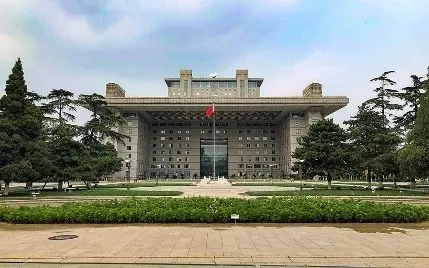
Beijing Normal University accepts international students on programmes in the following fields: education, humanities, natural sciences. Choose the level and programme that suit your goals.
Chinese language study at the university — from a few weeks to a year or longer. Suitable for those starting from scratch or preparing for the HSK before entering a main programme.
self-funded · language programme
The first level of higher education: usually four years of study, specialised subjects, internships and a graduation thesis. It opens the way to working in your field and to a master's degree.
self-funded
Advanced study after a bachelor's degree: research, applied projects and internships. It helps you become an expert in your chosen field and broaden your career opportunities.
self-funded
Beijing Normal University is located in Beijing. Nihao Study consultants keep track of the deadlines and admission requirements of this university, and you can always check the most accurate and up-to-date information on its official website. In university rankings, it is ranked 20 in China and 289 worldwide.
Come for a face-to-face meeting: together we will go through the requirements, deadlines, documents and study options that suit you.

At the meeting we will look at your situation, tell you which documents to prepare and by when, talk about possible programmes and help you decide on the next step.
Beijing Normal University (BNU, 北京师范大学, Běijīng Shīfàn Dàxué) is a public research university in Beijing under the Ministry of Education of the PRC. Chinese students call it 北师大 (Běishīdà) for short. On the Russian-language internet you can also find literal calques of the English name, such as 'Beijing Normal' rendered word for word.
BNU belongs to the group of universities recognised by major national programmes: in 1996 it was included in Project 211, and in 2002 in Project 985. Under Double First-Class (the second round of this national initiative), 12 of its disciplines have been confirmed. The phrase 'leading in teacher education' is not an advertising claim to first place but the university's official self-description: BNU calls itself a comprehensive research university that leads in teacher education.
Below you will find information for 2026 applicants: statuses and rankings, programmes, dormitories, scholarships, HSK requirements and what is worth double-checking before you apply. Questions about admission can be discussed at a Nihao Study consultation.
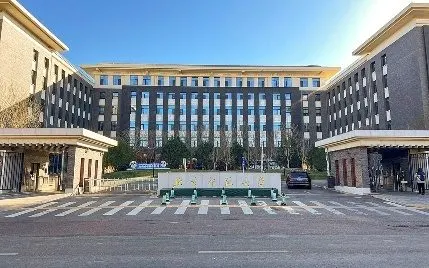
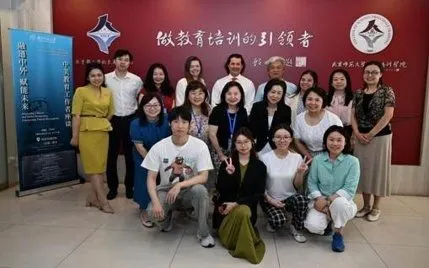
Figures on the size of the university are as of March 2026.
| Indicator | Value | What it means for applicants |
|---|---|---|
| Year founded | 1902 | One of China's oldest centres of teacher education |
| Campuses | 2 campuses: Beijing and Zhuhai | Where you study depends on the programme |
| Students | Over 34,000 full-time students | A large comprehensive university |
| Teaching staff | 2,762 full-time teaching staff, 2,175 of them in senior professional posts | A strong base for research and academic supervision |
| Academic structure | 29 schools, 3 faculties, 9 institutes and 5 academies | Far more fields than education alone |
| Library resources | Over 7.7 million printed books and over 9.3 million e-books | A good foundation for humanities and research programmes |
| International links | Around 160 partner universities and organisations in more than 40 countries and regions | Exchange programmes and joint academic projects available |
| Address in Beijing | No. 19 Xinjiekouwai Street, Haidian District, Beijing, 100875 | Home to the admissions office and the Beijing campus |
BNU dates its history from 1902, when a teacher-training department was opened at the Imperial University of Peking. The official chronicle calls it the first university unit in China set up primarily to train teachers and specialists. It became an independent school in 1908, and in 1923 it was named National Beijing Normal University; according to the university, this was the first use of the title Normal University in Chinese history.
In 1949 the university took its current name, Beijing Normal University. In 1952 Fu Jen Catholic University was merged into it. Later, the national programmes 211 and 985 confirmed the university's national importance. Education remains the core of BNU, but alongside it psychology, mathematics, geography and ecology, the humanities and social sciences, the arts, artificial intelligence and other fields are developing.
The word Normal in the name often confuses international students. In the Chinese context, 师范大学 means a university historically founded to train teachers, not an "ordinary" or "standard" university. So BNU should not be seen as a narrow teacher-training college: it comprises dozens of schools and research units.
Different rankings measure different things. An overall world list reflects a university's reputation more than anything, whereas a subject ranking shows the level of a particular school more accurately. For BNU this gap matters especially: psychology, education, ecology, water resources and remote sensing are rated higher than the university as a whole.
| Ranking | Position and edition | How to read it |
|---|---|---|
| THE World University Rankings | 134th, 2026 edition | A high overall research position |
| THE Education Studies | 20th, 2026 edition | Directly confirms the international standing of its education profile |
| THE Psychology | 30th, 2026 edition | A strong position in psychology and cognitive science |
| QS World University Rankings | 247th, 2026 edition | Different methodology from THE |
| ARWU | Band 101–150, 2025 edition | Based mainly on research indicators |
| CWUR | 272nd out of 21,462, 2025 edition | BNU is in the top 1.3 per cent of the list |
| EduRank | 381st in the world, 20th in China; 2026 edition | An independent bibliometric assessment, with separate subject lists |
In the 2025 ShanghaiRanking subject rankings, BNU is 5th in water resources, 6th in environmental engineering, 8th in remote sensing and 21st in education. So the university is of interest not only to future teachers: under the BNU brand, teacher education is combined with the study of cognitive processes, climate and the environment, geodata and public policy.
Projects 985 and 211 are historical government programmes, not rankings updated every year. According to the Ministry of Education of China, BNU joined Project 211 in 1996 as part of its first group and was included in Project 985 in 2002. BNU also takes part in the second round of the current Double First-Class programme.
This status is confirmed for 12 disciplines: education, psychology and philosophy; Chinese history, foreign languages and literatures, Chinese language and literature; mathematics, geography and systems science; ecology; environmental science and engineering; theatre, film and television arts. The set of disciplines says more than the general status label: it shows which fields are a systematic priority.
The claim that BNU leads in education can also be checked against the facts. BNU's Faculty of Education calls itself the national leader and states that it was here that China first began awarding master's and doctoral degrees in education and set up the first postdoctoral research station in the field. External international confirmation is its 20th place in THE Education Studies 2026.
The Faculty of Psychology combines psychology with neuroscience, mathematics, computer science and engineering. It is home to national experimental centres and the State Key Laboratory of Cognitive Neuroscience and Learning. Applicants can choose between fundamental psychology, developmental psychology, educational psychology and applied research, but it is best to pick a specific track based on the current year's intake.
The Faculty of Geographical Science includes an institute of remote sensing, schools of geography and natural resources, and units working on geodata and risk management. The School of Environment draws on laboratories for pollution modelling, water and sediment research and the restoration of river basin ecosystems. This structure matches BNU's subject results in ShanghaiRanking well.
The School of Foreign Languages has English, Russian and Japanese departments and is also home to the Ministry of Education of China's Centre for Russian Studies. In 2014 BNU and Moscow Pedagogical State University initiated the founding of the Sino-Russian Alliance of Pedagogical Universities. This points to strong academic ties with Russian universities, but a joint degree is awarded only on certain joint programmes. The exchange format, credit transfer and funding are set by the agreement for each specific programme.
The official list of units includes the faculties of education, psychology and geographical science, as well as schools of mathematics, history, journalism, law, business, philosophy, sociology, foreign languages, Chinese language and literature, arts, government, artificial intelligence, environment and systems science. Astronomy, physics and chemistry, statistics, life sciences, water sciences, nuclear science and emergency management are also represented.
International applicants should not confuse the academic structure with the list of programmes open for admission. Admission to a particular school for the degree, language and campus you need does not open every year. For the 2026 bachelor's intake, international students were offered 40 majors. The Teaching Chinese to Speakers of Other Languages programme is taught on the Zhuhai campus, which the catalogue notes separately.
| Format | Language and duration | Who it is for |
|---|---|---|
| Bachelor's Degree | Chinese, 4 years | School leavers with an HSK certificate and a CSCA result |
| Academic master's | Chinese, usually 3 years | Bachelor's graduates with a relevant portfolio |
| English-taught master's | English, usually 2 years | Candidates with proven English proficiency |
| Doctoral (PhD) Programmes | Usually 3 years; international Chinese language teaching programme 4 years | Master's graduates with a research project |
| Chinese language courses in Beijing | 1 semester or 1 academic year | Levels from beginner to advanced |
| English-taught credit courses | 1 semester or 1 academic year | Students from other universities who need academic mobility or an exchange |
The language programme accepts students with no knowledge of Chinese. After a placement test they are assigned to one of 7 levels; according to the university, groups are small, 15 to 20 people. The compulsory part covers listening, speaking, reading and writing, and among possible electives the university lists reading classical poetry, calligraphy, wushu and tourism geography.
The English-taught master's programmes include an MBA and MPA, communication, Chinese philosophy and Chinese law, the world economy and China, contemporary China's development, comparative education, higher education and student services, and environmental protection. There are no full programmes in Russian. Russian may be useful in Russia-related projects, but you will have to apply for a Chinese- or English-taught programme.
The Beijing campus offers single, double and other room types; you book a place after receiving the admission email. The official list of dormitories includes Liyun Apartment No. 1, Liyun Apartment No. 3, Xinsong, Lanhui and No. 2 International Students Dorm.
| Cost item | What to bear in mind |
|---|---|
| Long-term dormitory in Beijing | Charged per bed per day, depending on the building and room type |
| Zhuhai campus dormitory | A separate campus with its own allocation system; fees are charged per year |
| Everyday expenses | Food, transport and household needs, not counting major rent |
Places are allocated by advance booking. If you have not booked in advance, BNU suggests looking for accommodation off campus; after moving in, you must register your address with the police within 24 hours.
The registration fee differs for bachelor's students, for master's and doctoral students, and for language and other non-degree programmes; check the current fee on BNU's official website. The fee is non-refundable, so before paying, check the campus, language of instruction, HSK requirements, passport validity and that your document package is complete.
BNU accepts applications for the Chinese Government Scholarship (CSC), as well as the International Chinese Language Teachers Scholarship, Beijing Government Scholarship, BNU New International Student Scholarship, Silk Road Muduo Scholarship and the Belt and Road School scholarship.
A scholarship is not an automatic discount: the candidate must first meet the academic and language requirements and then succeed in the competition. For the 2026 intake, BNU accepted regular master's and doctoral applications until 10 March 2026, while the Chinese Government Scholarship required documents to be submitted by 25 January 2026. Do not assume these deadlines carry over to the next intake without checking again.
The main campus is on Xinjiekouwai Street in Haidian, a district home to many of Beijing's universities and technology companies. The library system holds over 7.7 million printed books and over 9.3 million e-books. For everyday meals, the university lists the Xin Le Qun, Fifth Student Canteen and Sixth Student Canteen; many dining outlets accept payment by campus card.
The atmosphere at BNU is both academic and urban: rather than being cut off from the city like suburban campuses, it is woven into the dense streets of Haidian. When choosing a programme, be sure to check where it is taught: in Beijing or in Zhuhai. Both campuses belong to a single university system, but they differ in climate, transport, dormitory costs and the range of majors.
Notarisation, translations and sitting the HSK and CSCA take longer than filling in the online form, so it is best to prepare your documents well in advance.
For Chinese-taught programmes, each school sets its own requirements. The School of International Chinese Language Education expects master's applicants to have HSK 6 with a score of 220 or above, plus HSKK Advanced with 65 or above; the School of Chinese Language and Literature requires HSK 5 with 210 or above; other schools usually ask for HSK 5 with 195 or above. For English-taught programmes, English proficiency is proven according to the rules of the specific major; graduates whose previous studies were entirely in English may submit a medium-of-instruction certificate.
| University | Type | Main focus |
|---|---|---|
| Beijing Normal University, BNU, 北京师范大学 | Research university; 985, 211, Double First-Class | Education and psychology, humanities, ecology, geography |
| Capital Normal University, CNU, 首都师范大学 | Beijing teacher-training university | Education, humanities and natural sciences |
| Beijing Language and Culture University, BLCU, 北京语言大学 | Language university | Chinese for foreigners, linguistics, international communication |
The quickest way to tell these universities apart is by their English names and abbreviations. BNU stands for Beijing Normal University, which holds 985 and 211 status. CNU is Capital Normal University, a separate, independent institution. BLCU specialises in languages and teaching foreign students. When applying, go by the Chinese name, the campus and the website domain rather than a Russian-language name alone.
The standard Russian form is the one meaning "Beijing Pedagogical University", and a spelling with a vowel error is a typo. Literal calques from English mean "Beijing Normal University", either transliterated or translated word for word: search engines understand them, but such variants are best avoided in documents. The official international name is Beijing Normal University, and the official English abbreviation is BNU. In Chinese, the university is called 北师大 (Běishīdà) for short, and the full original name is 北京师范大学 (Běijīng Shīfàn Dàxué); the official abbreviations are set out in BNU's charter.
Yes. Participation in Projects 211 and 985 is confirmed by the Ministry of Education of China, and in the second round of Double First-Class, 12 disciplines are assigned to BNU.
Some master's and credit programmes are taught in English; the current list of English-taught master's programmes includes 9 fields. The university does not announce a full catalogue of degree programmes taught in Russian. Bachelor's programmes for international students are in most cases taught in Chinese.
HSK 4 with 180 points or more is required for two majors — Chinese as a second language and teaching Chinese. All other majors require HSK 5 with 180 points or more.
The 2026 admission rules for degree programmes name only the HSK; the BCT is not mentioned as a substitute. The HSK calendar is published separately, and the campus is not a permanent centre for external candidates. Choose a test venue from those confirmed in the official system, and check dates against the HSK calendar.
The price depends on the building and room type, and is charged per bed per day. Check the current terms for the new intake on the university's official website before applying.
Yes, BNU takes part in the Chinese Government Scholarship programme. The agency code for Type B is 10027; the standard scholarship covers tuition, a stipend, insurance and accommodation or a housing allowance. Funding is awarded competitively.
Main address: No. 19 Xinjiekouwai Street, Haidian District, Beijing, 100875. In addition to its Beijing campus, BNU has a campus in Zhuhai, so check where your chosen major is taught.
BNU is a separate research university with 985 and 211 status, as well as Double First-Class. Capital Normal University is a different teacher-training university in Beijing. BLCU specialises primarily in languages and teaching Chinese to international students.
In the current year's intake, the requirements were a passport, the BNU application form, a certified school leaving certificate with school transcripts, CSCA and HSK results, a recommendation letter, a handwritten personal statement in Chinese and a police clearance certificate. Documents that are not in Chinese or English must be accompanied by a notarised translation.
Yes. The language programme lasts 1 semester or 1 academic year and accepts complete beginners. Check the course fee for the current intake on the university's official website. There is no automatic transfer to a bachelor's programme after the language courses.
Beijing (北京) is the capital of China and a major centre of education: the city has more than 90 universities, among them Peking University and Tsinghua University, which rank in the country's top 2. Here you can see the Forbidden City and the Great Wall of China, as well as the modern tech district of Zhongguancun, known as China's Silicon Valley.
Studying in Beijing goes hand in hand with good career prospects: the city hosts the headquarters of major companies and research centres, getting around is easy (the metro has 22 lines), and cultural life is very rich. Parents should know that the capital's infrastructure is highly developed, there are international clinics with Russian-speaking staff, many direct flights leave the city, and students are supported by a well-established system: dormitories are located right on the guarded university campuses.
You work with Nihao Study specialists. They will help you put together a portfolio and a set of documents, draw up a study plan and choose a university or college and a specialty that genuinely interest you.
We take care of every stage of admission, from choosing to enrolment
We will gather, prepare, certify and send your documents to the institution
We will show the admissions committee your strengths
We run training sessions and courses so you can prepare with more confidence
We will help you settle in at the start of your studies and keep moving forward
Nihao Study specialists select universities and colleges that match the applicant's goals and means. We make sure the teachers are practitioners and that the knowledge will be useful in your profession.
We examine curricula, talk to students and teachers and look at which specialties employers need, and use this information to select options for the applicant.
Advisers guide the applicant from the first consultation to enrolment, help build a plan and spot mistakes in time that could get in the way.
The cost of our support depends on the programme and the partner university; you'll get an exact quote after a free consultation.
Get a quoteA free 15-minute consultation: together we will choose a university or college and a programme that suit your goals and budget.
Apply with peace of mind: we handle the documents, deadlines and correspondence with admissions committees, and you save time and energy.
Don't want to wait for a call? Message us in the chat.
Message us in chat