- Language courses
- English, Chinese
- Bachelor's Degree
- English, Chinese
- Master's Degree
- English, Chinese
- Doctoral (PhD) Programmes
- English, Chinese
- Accommodation from 2 000 ¥/year
BLCU · 北京语言大学
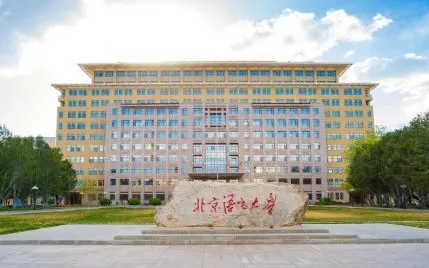
Beijing Language and Culture University accepts international students on programmes in the following fields: education, humanities. Choose the level and programme that suit your goals.
Chinese language study at the university — from a few weeks to a year or longer. Suitable for those starting from scratch or preparing for the HSK before entering a main programme.
self-funded · language programme
The first level of higher education: usually four years of study, specialised subjects, internships and a graduation thesis. It opens the way to working in your field and to a master's degree.
self-funded
Advanced study after a bachelor's degree: research, applied projects and internships. It helps you become an expert in your chosen field and broaden your career opportunities.
self-funded
Beijing Language and Culture University is located in Beijing. Nihao Study consultants keep track of the deadlines and admission requirements of this university, and you can always check the most accurate and up-to-date information on its official website. In university rankings, it is ranked 393 in China and 3027 worldwide.
Come for a face-to-face meeting: together we will go through the requirements, deadlines, documents and study options that suit you.

At the meeting we will look at your situation, tell you which documents to prepare and by when, talk about possible programmes and help you decide on the next step.
Beijing Language and Culture University (official English name; BLCU for short; Chinese: 北京语言大学, pinyin Běijīng Yǔyán Dàxué) is a public university directly under the Ministry of Education of the PRC. Russian-language sources also use other variants of the name, as well as a Russian abbreviation. In China itself the university is known for short as 北语 (Beiyu), and it likes to compare itself to a 'Little United Nations' (小联合国) – that is how international its student body is.
BLCU's profile is not limited to teaching foreign languages. It was this university that built the academic system for teaching Chinese to foreigners; today it trains translators, linguists and teachers and works in language technology, area studies and international communication. According to the university's own figures, international students from 189 countries and regions – more than 300 000 people in total – have gone through its programmes. At the same time, BLCU is not part of Projects 985 or 211 and was not included in the second 双一流 list, so it is worth choosing for its specialisation and environment rather than for formal status.
Below you will find information that will be useful to 2026 applicants: key figures and history, status and rankings, programmes, HSK requirements, scholarships, dormitories, life in Wudaokou and the universities that are easily confused with BLCU. You can ask questions about admission at a Nihao Study consultation.
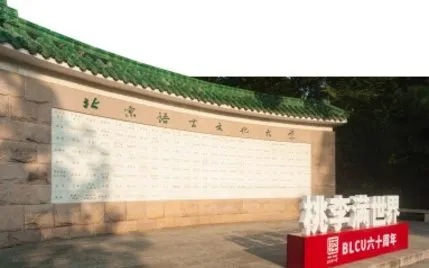
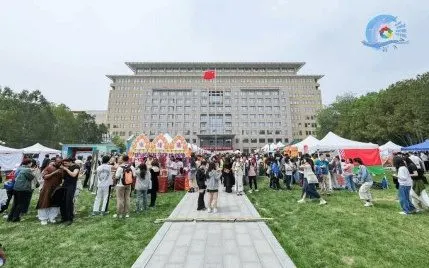
BLCU's statistics include full-time students, online learning and continuing education, so different pages show different figures. When comparing programmes, it is more useful to understand what the data is made up of than to add up figures from different periods.
| Indicator | Value |
|---|---|
| Degree students | 22,340 including online and continuing education |
| International degree students | 2 504 |
| International non-degree students | 3,985 a year |
| Staff and teachers | 1,674 staff, including 780 full-time teachers |
| Campus | 330,288.73 m²; buildings 427,441.83 m² |
| Academic structure | First-level disciplines: 4 doctoral and 12 master's; plus 1 professional doctorate |
| Address | 15 Xueyuan Road, Haidian, Beijing 100083 |
The university has two historical lines. One goes back to preparing Chinese students for study in the USSR and to the Russian language seminar held in Yan'an in 1938. The other dates from 1950, when Tsinghua University opened a Chinese course for exchange students from Eastern Europe.
In 1962 the Higher Preparatory School for Foreign Students was established under the Ministry of Higher Education, this time as a stand-alone institution, and in 1964 it was reorganised into the Beijing Language Institute. In 1996 the university received the Chinese name 北京语言文化大学, shortened in 2002 to 北京语言大学, while the English name Beijing Language and Culture University stayed the same.
The university stresses that Zhou Enlai was personally involved in founding it and that Mao Zedong wrote its name. This is why BLCU is still seen as part of China's cultural diplomacy infrastructure. But the university's current mission is broader: it combines linguistics and translation, area studies and communications, international Chinese language teaching and digital methods of working with language.
The phrase "national key university" does not in itself mean membership of 985, 211 or Double First-Class. BLCU is on the list of universities directly under the Ministry of Education, but it is not in the official 985 and 211 lists or in the second-round 双一流 (Double First-Class) list. Nor is it part of the C9 group.
| Ranking | Position | What the result means |
|---|---|---|
| ShanghaiRanking, Chinese language universities 2026 | 5th | A comparison of specialist language universities |
| ShanghaiRanking, Chinese Language and Literature 2025 | 4th, top 3 per cent | A strong subject result |
| ShanghaiRanking, Area Studies 2025 | 5th, top 12 per cent | Shows the development of country and area studies |
| Global Ranking of Academic Subjects, Education 2024 | Band 301–400 | A global subject ranking, not an overall one |
| QS WUR by Subject 2026 | 101–150 (band shown on the university's profile) | Check the specific subject on the QS page |
| EduRank 2026 | 2,684 in the world, 208 in China | A bibliometric assessment, not an official Chinese ranking |
THE has an institutional profile of BLCU, but the university's strengths are better reflected in its international Chinese profile and results in individual subjects than in its overall position in the world list.
BLCU reports several "firsts" for China: it launched the first bachelor's programme in Chinese for international students, the first programmes in teaching Chinese as a foreign language and a specialised doctoral programme in applied linguistics. For students this means multi-level groups, work with teaching methodologists, HSK preparation and an environment where international learners are the main audience rather than a modest add-on to the main intake.
The long-term practical Chinese course has 20 class hours a week. It covers speaking and listening, reading and writing, language practice and Chinese for professional purposes. At advanced levels, Chinese for business, medicine, tourism and science and technology is added.
The university's official academic model covers 11 fields of study, with priority given to Chinese philology, foreign languages, area studies, sinology, linguistics and international Chinese education. The university is developing centres for the study of individual countries and regions, translation, fields related to international organisations, journalism and global communication. This combination suits those who want to link language with diplomacy, media or the study of a particular country.
Students of Russian will be interested in BLCU's inter-university agreements. Its partners in this area are Saint Petersburg State University, Lomonosov Moscow State University and the Pushkin State Russian Language Institute. In 2026 BLCU discussed continuing cooperation in staff training and research with the Pushkin Institute, which confirms that the university has a Russia-focused track.
BLCU's fields include speech technology and speech rehabilitation, language data, digital media, artificial intelligence and computer science. Together with 5 engineering universities, it has launched 8 bachelor's tracks in a "language plus engineering" format. International students can take, for example, Chinese combined with artificial intelligence, a programme BLCU runs jointly with University of Science and Technology Beijing.
A long list of institutes tells an applicant little, so it is easier to group the programmes by subject area.
According to the university, the number of bachelor's majors ranges from 54 to 64.
| Format | Duration and language of instruction | Who it is for |
|---|---|---|
| Long-term Chinese course | Full-time, 1 to 2 years; levels from beginner to advanced | For those who want to improve their Chinese without a degree |
| Bachelor's programmes for international students | Usually 4 years; taught in Chinese | Chinese language, translation, international communication |
| Joint bachelor's programmes | Chinese combined with AI, arts or management; conditions depend on the partner university | For those choosing an interdisciplinary path |
| Master's Degree | Usually 2 to 3 years, mostly in Chinese | Linguistics, translation, area studies, communication |
| Doctoral (PhD) Programmes | Specialist fields: language, literature, area studies, arts | For those building a research career |
From autumn 2026 every international applicant to a bachelor's programme must submit a CSCA result. For the Chinese Language major and a number of programmes for international students, the basic requirement is HSK 4 with a score of 180 or more. Where international students study in mixed groups with Chinese students, HSK 5 with a score of 200 or more and at least 60 points in each section is often required. Check the requirements of the specific major: translation, international politics, arts and English-taught programmes hold their own exams.
| Room type | Facilities |
|---|---|
| Single room | Furniture, fridge, air conditioning, shower and bathroom |
| Twin room | Facilities vary by building |
| Triple or quadruple room | Building 16 or 17, shared service areas |
| Conference centre | Hotel-style accommodation on campus; single rooms and beds in double rooms available |
Prices depend on the length of stay and availability and may change; long-term students usually sign a contract for one semester. Check the current cost of accommodation on the university's official website. Some new international students may start their studies at BLCU's site in Hainan.
None of these scholarships is awarded automatically on admission: the committee assesses the candidate's academic record, language level, recommendations and study plan.
The main campus is in Haidian District, surrounded by the Wudaokou universities and the Zhongguancun science and technology cluster. According to the university itself, the campus has a swimming pool, a football pitch, sports grounds, shops, a bank and a medical centre, and for classes there are multimedia classrooms, language labs and simultaneous interpreting booths. Metro lines 13 and 15 run nearby.
BLCU has an HSK test centre. According to the university, its office is on the 5th floor, in room 508, and exam rules apply on campus. The university also runs preparation courses for HSK 3, HSK 4 and HSK 5. Check the dates of upcoming sessions in the official HSK calendar.
| University | Type | Main focus |
|---|---|---|
| Beijing Language and Culture University, BLCU, 北京语言大学 | Public university under the Ministry of Education | Chinese for international students, linguistics, translation and area studies |
| Beijing Foreign Studies University, BFSU, 北京外国语大学 | Part of 211 and Double First-Class | Foreign languages, diplomacy, area studies |
| Beijing International Studies University, BISU, 北京第二外国语学院 | Specialist municipal university | Foreign languages, translation, tourism |
| Beijing Normal University, BNU, 北京师范大学 | Research-led normal (teacher-training) university | Education, psychology, sciences and humanities |
BLCU is the right choice above all for those for whom Chinese is at the centre of academic life. BFSU puts more emphasis on foreign languages and diplomacy, BISU is largely oriented towards tourism, and BNU is a comprehensive research university with strong education programmes.
The official campus map and description of its facilities help you get a picture of the grounds. When preparing to apply, it is also useful to understand the general procedure for applying to Chinese universities, the terms of the CSC scholarship and the HSK exam schedule, and to check tuition fees on the university's official website.
The main variant used in this text is the Russian form meaning "Beijing University of Language and Culture". A form with "languages" in the plural often appears in searches but is not considered the main one. A form meaning "University of Language and Culture of Beijing" is a calque from English. The official international name is Beijing Language and Culture University, and the abbreviation BLCU is used in rankings and correspondence. 北语 (Beiyu) is the university's short Chinese name, and the full original name is 北京语言大学, pinyin Běijīng Yǔyán Dàxué.
It is a key public university directly under the Ministry of Education of China. Main address: Xueyuan Road 15, Haidian District, Beijing, postcode 100083.
No. The university does not appear in the official 985 and 211 lists or in the list for the second round of Double First-Class; it is not part of the C9 either.
Yes, if you start with a beginner-level language course. In the long-term programme, students are placed by level, from beginner to advanced, and the workload is 20 hours of classes per week. Degree study has separate HSK requirements.
For the Chinese Language major and some programmes for international students, the minimum threshold is HSK 4 with 180 points. If you study alongside Chinese students, some programmes require HSK 5 (200 points or more), with at least 60 points in each section. The requirements of the specific major take priority.
Yes, there is an HSK test centre on the university grounds. Check current registration dates in the official personal account and the HSK calendar.
Yes. BLCU accepts Chinese Government Scholarship holders through several tracks, including the Bilateral Program and the High Level Postgraduate Program. A full scholarship can include tuition, accommodation, insurance and a monthly stipend, but the competition and the list of programmes differ between tracks.
Yes: some programmes, including certain specialised master's tracks, are taught in English. However, in most language, translation and area studies programmes the main language remains Chinese. Check the language of instruction in the description of the major you are interested in — the name of the faculty does not tell you this.
No. Availability and price depend on the building, the length of stay and which campus the student is assigned to. According to the university, rates may change, and the contract with a long-term student is usually concluded for a semester. Booking off-campus housing before your study campus is confirmed is risky.
The basic set: a passport, an educational certificate with a full transcript and certified translation, a language certificate and any materials required by the specific programme. A CSCA result is now mandatory for bachelor's programmes, and applicants to master's and doctoral programmes also need a study plan and recommendation letters.
Beijing (北京) is the capital of China and a major centre of education: the city has more than 90 universities, among them Peking University and Tsinghua University, which rank in the country's top 2. Here you can see the Forbidden City and the Great Wall of China, as well as the modern tech district of Zhongguancun, known as China's Silicon Valley.
Studying in Beijing goes hand in hand with good career prospects: the city hosts the headquarters of major companies and research centres, getting around is easy (the metro has 22 lines), and cultural life is very rich. Parents should know that the capital's infrastructure is highly developed, there are international clinics with Russian-speaking staff, many direct flights leave the city, and students are supported by a well-established system: dormitories are located right on the guarded university campuses.
You work with Nihao Study specialists. They will help you put together a portfolio and a set of documents, draw up a study plan and choose a university or college and a specialty that genuinely interest you.
We take care of every stage of admission, from choosing to enrolment
We will gather, prepare, certify and send your documents to the institution
We will show the admissions committee your strengths
We run training sessions and courses so you can prepare with more confidence
We will help you settle in at the start of your studies and keep moving forward
Nihao Study specialists select universities and colleges that match the applicant's goals and means. We make sure the teachers are practitioners and that the knowledge will be useful in your profession.
We examine curricula, talk to students and teachers and look at which specialties employers need, and use this information to select options for the applicant.
Advisers guide the applicant from the first consultation to enrolment, help build a plan and spot mistakes in time that could get in the way.
The cost of our support depends on the programme and the partner university; you'll get an exact quote after a free consultation.
Get a quoteA free 15-minute consultation: together we will choose a university or college and a programme that suit your goals and budget.
Apply with peace of mind: we handle the documents, deadlines and correspondence with admissions committees, and you save time and energy.
Don't want to wait for a call? Message us in the chat.
Message us in chat