- Language courses
- English, Chinese
- Bachelor's Degree
- English, Chinese
- Master's Degree
- English, Chinese
- Doctoral (PhD) Programmes
- English, Chinese
- Accommodation from 2 000 ¥/year
北京市劲松职业高中
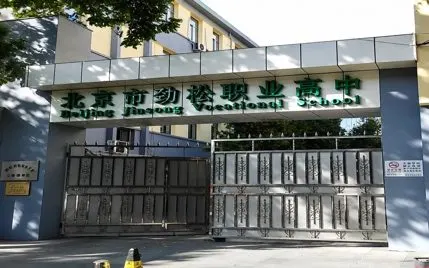
Beijing Jinsong Vocational High School accepts international students on programmes in the following fields: business, engineering, medicine, education, economics. Choose the level and programme that suit your goals.
Secondary vocational education: practice-oriented programmes where you learn the language and a profession. Suitable for graduates of grades 9 and 11, and some programmes lead on to a bachelor's degree.
self-funded
Cost: 46 080 ¥/year
Beijing Jinsong Vocational High School is located in Beijing. Nihao Study consultants keep track of the deadlines and admission requirements of this university, and you can always check the most accurate and up-to-date information on its official website.
Come for a face-to-face meeting: together we will go through the requirements, deadlines, documents and study options that suit you.

At the meeting we will look at your situation, tell you which documents to prepare and by when, talk about possible programmes and help you decide on the next step.
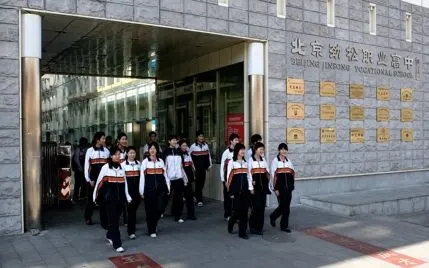
Beijing Jinsong Vocational High School (BJVHS, 北京市劲松职业高中) is located in Beijing's Chaoyang District. Russian-language sources also refer to it by several other names. The institution's own materials use the short Chinese form 劲职 (Jìngzhí). It is a public vocational upper secondary school providing secondary vocational education.
On this page Nihao Study has gathered information on the official level of education at BJVHS, its programmes and 3+2 pathways, the language of instruction, conditions for international students, its campuses and the admission procedure.
| Item | Confirmed data |
|---|---|
| Year founded | 1983 |
| Type | public vocational upper secondary school |
| Structure | general education department, 4 campuses, 5 vocational clusters, 16 programmes |
| Student body | 2008 students in 2025 |
| New intake | 724 students in 2025 |
| Graduates | 394 graduates in 2025 |
| International students | 25 students in 2025 |
| Teaching staff | 150 full-time and 23 part-time from industry |
These figures cover the whole institution, not just one international cohort. In 2025, according to the school, there were 11.6 students per teacher. Among vocational teachers, 94 per cent held dual qualifications. For vocational education this says more than an abstract ranking position: training here is built around workshops, practical work and links with industry.
The school has been operating since 1983 and describes itself as the first public vocational upper secondary school in Beijing to be founded as an independent institution. It reports to the Chaoyang District Education Commission and has also been given the status of a national demonstration site for secondary vocational education reform.
In the current official register, 北京市劲松职业高中 is classed as a 职业高中, a vocational upper secondary school. This means BJVHS does not award university bachelor's, master's or doctoral degrees. In some fields students can continue at a separate higher vocational college, but the next-level diploma is then awarded by that partner.
Project 211 and Double First-Class belong to the higher education system. BJVHS is at the secondary vocational level, so its absence from THE, QS, ARWU or the 双一流 list says nothing about the quality of its applied programmes. In the official Beijing database the school is listed among other vocational upper secondary schools, not among universities.
Employment and further study data are far more informative. According to the 2025 report, initial graduate employment reached 99.12 per cent, 65.7 per cent continued their education and 88.63 per cent found work in their field. These figures refer to the whole graduating class and do not reflect the outcome for any individual international student.
BJVHS focuses on the modern urban service sector. The school's English-language presentation highlights Chinese and Western cuisine, hospitality, the beauty industry, digital photography, animation, elderly care and e-commerce. In the annual report the fields are grouped into public administration and services, tourism and hospitality, trade and finance, culture and arts, and leisure and health.
Chinese and Western cooking have traditionally been the school's strengths. In 2025 it launched a separate coffee programme in cooperation with an industry association, and 35 students obtained a professional barista certificate. The culinary programmes cover not only recipes but also hygiene standards, kitchen organisation, service and work placements.
The digital cluster includes digital imaging, interface design, and photo and video production. According to the school, in 2025 it had 41 online courses of its own, and its city- and national-level courses attracted 5408 learners. Its Illustrator course was included in a national selection of high-quality online courses.
Applied pathways include sports services, beauty care, image design and hairdressing, smart care technologies and elderly care services. The school has more than 60 partner companies, including the Marriott hotel group in Beijing, beauty industry associations and elderly care organisations.
The core level at BJVHS is secondary vocational education. Alongside it there are 3+2 programmes: the first stage is at the vocational upper secondary school and the second at a partner higher vocational college. In 2025 there were 10 such fields, plus 3 pilot projects for 专科 (higher vocational diploma) level training.
| Field | Where studies continue | What to check |
|---|---|---|
| Chinese and Western cuisine | Beijing Vocational College of Agriculture and Beijing Beida Jade Bird Vocational College | whether the scheme is open to international students |
| Sports services | Beijing Vocational College of Sports | progression rules |
| Image design | Beijing College of Finance and Commerce | language of instruction and vocational test |
| Digital Media | Beijing Information Technology College | which diploma is awarded at the end |
| Smart care | Beijing Youth Politics College | this year's quota |
Of the 2022 students on 3+2 programmes, 100 per cent progressed to the next level, but this is the historical result of one particular cohort. An international applicant should get written confirmation that the scheme is open to citizens of their country and that the next-level college will recognise the stage already completed.
For the first time, reasonably clear data on the school's international programme has become available. In 2025 the school admitted 25 students from countries taking part in the Silk Road initiatives. The training combined Chinese language classes, vocational training and cultural projects.
All students in this cohort reached HSK 2 by the end of their studies, and one student passed HSK 3. This is a learning outcome, not an entry requirement: there is no general HSK requirement for all international programmes. It is best to find out the required starting level of Chinese and the interview format before applying.
The school's international links go beyond language classes. In 2025, 22 representatives of BJVHS visited France, and the school hosted a group of 16 in return. Joint programmes were also run with industry organisations in Spain and Australia and with an Italian school of culinary management.
Grants and scholarships are listed as unavailable for BJVHS. The national CSC university scholarship is designed for a different level of education, so it would be wrong to speak of a full CSC scholarship in connection with BJVHS.
The school also runs social and industry projects. For example, Hope Chef is a targeted admissions programme that supports certain groups of Chinese students; it has nothing to do with a general scholarship for international students. For an international applicant the default option is self-funded study, and a concession is possible only with a personal letter.
BJVHS has four teaching sites. The main administrative campus, Changying, is located at Courtyard 102, Changying Zhuxin Jiayuan, Chaoyang District. The official map lists postcode 100024, telephone 010 57913826 and limited accommodation.
Jinsong campus: Block 811, Jinsong 8th District, postcode 100021; there is no dormitory at this site. The general education department is at Building 14, Xinyuanli Street, postcode 100027, also without accommodation. The Shuanglong site was historically listed at Building 135, Shuanglong Community, but the current allocation of programmes between campuses should be checked before arrival.
In 2025, 427 final-year students completed work placements, with placement stability above 85 per cent. Teachers visited 41 companies, more than 58 per cent of placement partners. The report also gives graduates' average starting salary, but an international student should not automatically apply it to their own job prospects and visa status.
The school has sports and creative clubs. International students played football, tried paper cutting and calligraphy, and went on cultural tours along Beijing's Central Axis. In a 2025 survey, overall satisfaction was 96.81 per cent among students and 98.5 per cent among parents.
‘Beijing Jinsong Vocational College’ is the name under which the institution is listed in catalogues. Jinsong College is an unofficial short form. The legal type is better conveyed by the variant ‘Beijing Jinsong Vocational School’. The confirmed English name is Beijing Jinsong Vocational High School, and BJVHS is a convenient abbreviation for catalogues. The short Chinese form is 劲职 (Jìngzhí), and the full Chinese name is 北京市劲松职业高中 (Běijīng Shì Jìngsōng Zhíyè Gāozhōng).
No. It is a state secondary vocational institution, officially listed among Beijing’s vocational high schools.
This level is designed for admission after lower secondary school, but a foreign candidate will need to confirm their age, the equivalence of their school certificate and compliance with guardianship rules. Do not rely solely on the word ‘college’ in the Russian name.
No. BJVHS does not offer bachelor’s, master’s or postgraduate programmes. The 3+2 schemes involve continuing studies at separate higher vocational colleges.
There is no general entry threshold. The 2025 international cohort reached HSK 2 by the end of their studies, and one student passed HSK 3. It is best to get the requirement for a specific programme in writing.
You should not count on CSC: BJVHS is not a university, and the college’s own scholarships are marked as unavailable. Only an official letter can confirm targeted financial support.
According to the government map, there is some accommodation on the Changying campus, while the Jinsong campus and the general education department have no dormitory. Availability of a place and room type are confirmed separately for each intake.
The strongest areas are elderly care, sport, hotel services, the beauty industry, digital media, coffee, and Chinese and Western cuisine.
For one of the places, the application deadline is 19 October 2026; in addition, there is a separate intake for 2027. Before sending your documents, make sure this deadline applies to your chosen speciality and your citizenship.
All four sites are in Beijing’s Chaoyang District. The Changying campus, which houses the administration, is at Courtyard 102, Zhuxin Jiayuan; the historic Jinsong campus is at Block 811 in Jinsong 8th District.
Beijing (北京) is the capital of China and a major centre of education: the city has more than 90 universities, among them Peking University and Tsinghua University, which rank in the country's top 2. Here you can see the Forbidden City and the Great Wall of China, as well as the modern tech district of Zhongguancun, known as China's Silicon Valley.
Studying in Beijing goes hand in hand with good career prospects: the city hosts the headquarters of major companies and research centres, getting around is easy (the metro has 22 lines), and cultural life is very rich. Parents should know that the capital's infrastructure is highly developed, there are international clinics with Russian-speaking staff, many direct flights leave the city, and students are supported by a well-established system: dormitories are located right on the guarded university campuses.
You work with Nihao Study specialists. They will help you put together a portfolio and a set of documents, draw up a study plan and choose a university or college and a specialty that genuinely interest you.
We take care of every stage of admission, from choosing to enrolment
We will gather, prepare, certify and send your documents to the institution
We will show the admissions committee your strengths
We run training sessions and courses so you can prepare with more confidence
We will help you settle in at the start of your studies and keep moving forward
Nihao Study specialists select universities and colleges that match the applicant's goals and means. We make sure the teachers are practitioners and that the knowledge will be useful in your profession.
We examine curricula, talk to students and teachers and look at which specialties employers need, and use this information to select options for the applicant.
Advisers guide the applicant from the first consultation to enrolment, help build a plan and spot mistakes in time that could get in the way.
The cost of our support depends on the programme and the partner university; you'll get an exact quote after a free consultation.
Get a quoteA free 15-minute consultation: together we will choose a university or college and a programme that suit your goals and budget.
Apply with peace of mind: we handle the documents, deadlines and correspondence with admissions committees, and you save time and energy.
Don't want to wait for a call? Message us in the chat.
Message us in chat