- Language courses
- English, Chinese
- Bachelor's Degree
- English, Chinese
- Master's Degree
- English, Chinese
- Doctoral (PhD) Programmes
- English, Chinese
- Accommodation from 2 000 ¥/year
BJTU · 北京交通大学
Beijing Jiaotong University accepts international students on programmes in the following fields: engineering. Choose the level and programme that suit your goals.
Chinese language study at the university — from a few weeks to a year or longer. Suitable for those starting from scratch or preparing for the HSK before entering a main programme.
self-funded · language programme
The first level of higher education: usually four years of study, specialised subjects, internships and a graduation thesis. It opens the way to working in your field and to a master's degree.
self-funded
Advanced study after a bachelor's degree: research, applied projects and internships. It helps you become an expert in your chosen field and broaden your career opportunities.
self-funded
Beijing Jiaotong University is located in Beijing. Nihao Study consultants keep track of the deadlines and admission requirements of this university, and you can always check the most accurate and up-to-date information on its official website. In university rankings, it is ranked 51 in China and 581 worldwide.
Come for a face-to-face meeting: together we will go through the requirements, deadlines, documents and study options that suit you.

At the meeting we will look at your situation, tell you which documents to prepare and by when, talk about possible programmes and help you decide on the next step.
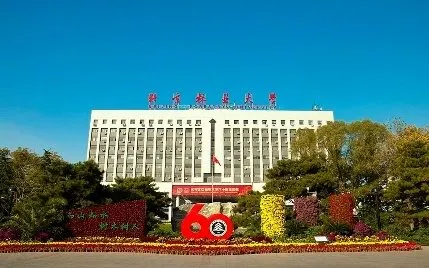
Beijing Jiaotong University (BJTU, 北京交通大学, Běijīng Jiāotōng Dàxué) is a public research university in Beijing under the Ministry of Education of the PRC. Its name is translated into Russian in various ways, from transliterations of 'Jiaotong' to versions meaning 'Beijing Transport University'. The Chinese themselves use shorter forms – 北京交大 or 北交大 (Běijiāo Dà). The English name Beijing Jiaotong University and the abbreviation BJTU are set out in the university's charter, while the Russian-language portal of the Beijing government uses a version meaning 'Beijing University of Transport'.
The university takes part in Project 211, the Double First-Class programme (双一流) and the Project 985 innovation platform for disciplines. An important detail: in the second round of Double First-Class, the discipline listed for BJTU on the official list is systems science. Transport engineering and information and communication fields form a broader 'smart transport' profile. So the claim that BJTU has two separate Double First-Class fields – transport and communications – would be inaccurate.
Below you will find information for 2026 applicants: key figures, history, statuses and rankings, schools and programmes, HSK and CSCA requirements, dormitories, scholarships, as well as tips on how not to confuse BJTU with similarly named universities. The conditions of each new intake should be checked against the university's official announcements, and you can ask questions about admission at a Nihao Study consultation.
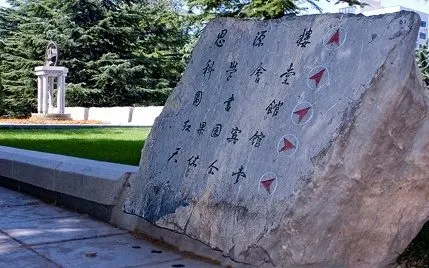
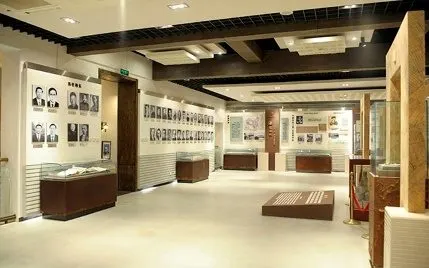
The figures in the table are as of 31 December 2025. Older sources may mention 14 schools and fewer than 30 thousand students; those figures are now out of date.
| Indicator | Value | Notes |
|---|---|---|
| Founded | 1896 | The university grew out of a school of railway management |
| Academic structure | 23 schools and institutes | Engineering, natural sciences, management and humanities |
| Bachelor's students | 17,278 students | A major national research university |
| Master's and doctoral programmes | 12,002 master's students, 3,947 doctoral students | A well-developed base for postgraduate study and research |
| International students | Over 2,000 | International students make up only a small share of the total |
| Teaching staff | 2,145 full-time teaching staff | Solid staffing for the schools and laboratories |
| Degree programmes | Over 170 programmes for international students | The actual list changes from intake to intake |
| International partnerships | 320 universities and organisations; 57 countries and regions | Exchanges, joint research and dual-degree programmes |
| Main address | Shangyuancun 3, Haidian, Beijing, 100044 | Both campuses, East and West, are in Haidian District |
BJTU traces its history back to 1896 and describes itself as one of the three historical roots of the "family" of Jiaotong universities. Its direct predecessor was the Railway Management Institute, set up by the Qing dynasty government to train administrators. According to the university, it was the first higher education institution of its kind in China and one of the origins of modern training in railway management and telecommunications.
In 1917 the institute was split into two schools: railway management, and posts and telegraphs. In 1921 these two schools, together with units in Shanghai and Tangshan, were merged to form Jiaotong University. After a reorganisation in 1923, the Beijing branch became known as Beijing Jiaotong University, which is where the word Jiaotong in the university's English name comes from. It is a historical name, not a city or a separate campus.
From 1950 the university was called Northern Jiaotong University and was headed at the time by the renowned bridge engineer Mao Yisheng. In 1952 it was renamed Beijing Railway Institute, and in 1970 the name Northern Jiaotong University was restored. After merging with Beijing Electric Power College and moving in 2000 from the Ministry of Railways to the Ministry of Education, the university finally took back its current name in 2003.
Besides its two sites in Haidian, the university has an international campus in Weihai, home since 2016 to an institute run jointly with Lancaster University. Another campus, covering 2,600 mu, is under construction in Xiong'an. In addition, in 2015 BJTU and Emperor Alexander I St. Petersburg State Transport University founded a joint institute of transport.
BJTU's membership of Project 211 is confirmed: it was included in this programme for leading universities in the 1990s, and the university openly states this status. BJTU is not a full member of Project 985. It is more accurate to say that it takes part in the Project 985 Innovation Platform for disciplines, which is a separate support scheme.
BJTU also has Double First-Class status, but in the second round of the programme the officially recognised discipline is systems science (系统科学). It was included in the national list again in 2022. As the university's relevant school explains, systems science studies how complex transport systems are structured, how they evolve and how they are managed.
This does not make transport engineering and ICT secondary. The university builds its "smart transport" cluster on three pillars: systems science, transport engineering and information and communication engineering, and the last two hold the status of national first-level key disciplines. Hence a practical tip: when choosing a programme, look not only at the general Double First-Class label but also at the specific school, laboratory, language of instruction and curriculum.
| Ranking | Position | Comment |
|---|---|---|
| QS World University Rankings 2027 | Band 771–780 | 851–900 in the 2026 edition |
| ARWU 2025 | Band 501–600 | Overall research ranking |
| ShanghaiRanking, Transportation Science and Technology 2025 | 2nd in the world | One of the main external confirmations of the university's profile |
| ShanghaiRanking, Telecommunication Engineering 2025 | 28th in the world | Shows the strength of its communications and information systems fields |
| ShanghaiRanking, Civil Engineering 2025 | 37th in the world | A key field for railway infrastructure |
| CWUR 2025 | 471st out of 21,462, the top 2.2% | Research results are stronger than teaching results |
| EduRank 2026 | 762nd in the world, 50th in China | 2nd in the world for transport engineering |
| THE World University Rankings 2023 | Band 1001–1200 | A result from previous years; do not confuse it with the current edition |
In the Chinese edition of ShanghaiRanking 2025, BJTU's transport engineering topped the national list for the eighth year running and systems science led for the seventh year in a row, while information and communication engineering came ninth. This explains why the university's overall position and its strength in individual subjects differ so much.
As of March 2026, nine BJTU fields were in the ESI top 1 per cent: engineering and computer science, physics, chemistry, mathematics, materials science, ecology, earth sciences and social sciences. Engineering and computer science were in the top one per mille. In addition, the university lists 94 research platforms at provincial or ministerial level or higher; nine of them are national.
The university was involved in speeding up China's railways, building the Qinghai–Tibet Railway and the high-speed lines, and developing heavy-haul freight, maglev and urban rail transit. As a result, transport is studied here as a single system, from infrastructure and rolling stock to timetables, safety, signalling, logistics and economics.
The university has several specialised facilities: the National Engineering Research Centre for Traffic Control Systems, the National Key Laboratory for Autonomous Operation of Advanced Rail Transit and a centre that assesses rail transport safety. For students this opens access to real problems in the field, but whether you can join a particular project depends on the school, your supervisor and your level of study.
BJTU's School of Electronic and Information Engineering works on optical networks, wireless and mobile communications, information processing and network security. Its research links 5G and 6G networks directly with intelligent transport, dedicated mobile communications and high-speed railways.
The field draws on national centres for dedicated mobile networks and for rail traffic control, as well as laboratories for electromagnetic compatibility and optical networks. It is a logical choice for those interested not in telecommunications in general but in communications for mission-critical systems moving at high speed.
Systems science at BJTU deals with complex networks, optimisation and traffic flow management. In the national discipline evaluations it has ranked first or received an A+ for five rounds in a row, and it was included in Double First-Class in 2017 and 2022. It brings together mathematics, operations research, data analysis, transport planning and management.
The profile is rounded out by the School of Economics and Management, as well as logistics, finance, e-commerce and applied economics. The School of Economics and Management holds AACSB, EQUIS and AMBA accreditation. So BJTU may appeal not only to future railway engineers but also to those who want to work in supply chains, network modelling or infrastructure management.
The university's partnerships span 57 countries and regions, and BJTU is also a member of several railway research alliances. Lancaster University College has been operating in Weihai since 2016. The format of each particular partnership, exchange or dual degree, needs to be checked separately.
So BJTU's strength lies not in a single railway specialism but in the combination of transport, communications, computing and management. The list of programmes for international students for 2026 included, among others, transport, railway engineering, signalling, communications, software engineering, computer science, systems science, electrical engineering, management and logistics.
BJTU has schools of transport, civil engineering, electrical engineering, automation and intelligence, electronic information, computer science, software engineering, cybersecurity, mechanical engineering and control, economics and management, mathematics and statistics, physics, systems science, environment and law, as well as other units. Interdisciplinary tracks in smart transport are developed by the Jeme Tienyow Honors College.
Typical groups of bachelor's fields:
The university has 21 first-level doctoral programmes, 34 master's programmes at the same level and 17 postdoctoral research stations. However, admission of international students to a particular field is not announced every year, and the language of instruction depends on the programme.
According to the university's official data, 47 bachelor's programmes are designated national first-class programmes, and 14 engineering majors have national engineering accreditation. Even so, if your degree will need to be recognised outside China, it is best to check the requirements of the local regulator and professional association in advance.
The 2026 admissions prospectus listed over 170 programmes: bachelor's, master's, doctoral and visiting. Most Chinese-taught bachelor's programmes are in Beijing, while the joint English-taught bachelor's programmes are concentrated in Weihai.
| Level | Language and fields (examples) | Duration |
|---|---|---|
| Bachelor's Degree | In Chinese: transport, communications, IT, engineering, management; in English: 7 joint programmes in Weihai | Usually 4 years |
| Master's Degree | In Chinese and English: civil engineering, computing, electrical engineering, transport, logistics, systems science | Depends on the programme |
| Doctoral (PhD) Programmes | In Chinese and English: transport planning, rail engineering, systems science, civil engineering, management | Set by the school and the curriculum |
| Chinese language courses | 6 levels; one semester or one academic year | As preparation for a degree or as a stand-alone course |
For the 2026 intake, Chinese-taught degree programmes required an HSK 5 certificate with a score of at least 180, issued no more than two years before applying. Applicants whose previous education was not fully in English could qualify for English-taught programmes with IELTS 6.0 or higher or TOEFL 80 or higher. The university has no Russian-taught degree programmes.
From the 2026/27 academic year, every international applicant to a bachelor's programme must submit a CSCA result. Applications for Chinese-taught programmes require mathematics and Chinese, with physics added for engineering and science fields. English-taught programmes in Weihai require mathematics, or mathematics and physics.
The university has taught Chinese language courses since 1982, in groups of fewer than 20 students. Since March 2012 BJTU has been an authorised HSK test centre. Check the dates of a specific exam session in your official HSK online account.
Tuition fees at BJTU depend on the level of study, the language of the programme and the campus: the joint English-taught programmes in Weihai have their own rates. Besides tuition, budget for the registration fee, insurance, visa, medical check-up, translation and certification of documents, food and transport. The university publishes current fees for the ongoing intake on its official website, so check them before applying.
| Campus, room | Facilities and notes |
|---|---|
| Beijing, 3-bed room | Air conditioning, internet, bathrooms, laundry and shared kitchen |
| Beijing, 4-bed room | Allocated subject to availability |
| Weihai, 2-bed room | Accommodation on the international campus |
International student housing comprises four buildings, 352 rooms and about 675 beds. Some sources say all rooms are doubles, but this contradicts more recent information. Rely on your current offer and your dormitory accommodation confirmation.
The dormitories have shared common areas and a duty desk staffed around the clock; the room type is allocated according to which beds are actually available.
The main campus address is 3 Shangyuancun, Haidian District. You can reach the south gate from Xizhimen station by city bus; the university mentions, for example, routes 16, 26 and 305. Before you arrive, check the right entrance, building and route on an up-to-date map: the main campus and the East campus have different gates.
The 2026 admissions announcement lists seven types of financial support: BJTU's own scholarship, the Beijing Government Scholarship, bilateral CSC Type A, the CSC Type B programmes High Level Graduate and Silk Road, the Ministry of Commerce scholarship, and the ASEAN China Young Leaders Scholarship and International Chinese Language Teachers Scholarship.
Full scholarships are awarded competitively. The outcome depends on citizenship, age, chosen field, quota, language level and the academic strength of the application. Make sure BJTU is on the list of universities that accept CSC scholarship holders. If the programme requires both forms, applying directly to BJTU does not replace filling in the application in the CSC system.
Scholarship application windows are usually shorter than those for self-funded study. In 2026 general applications ran from 1 November 2025 to 30 June 2026, while the High Level Graduate programme closed as early as 28 February. Do not assume these dates carry over to the next intake; wait for the new announcement.
The East and West campuses in Beijing together cover almost 1,000 mu, with a total floor area of over 1 million square metres. The university is in the city, near Xizhimen and Beijing North Railway Station, not somewhere in the suburbs. This is convenient for internships and city life, but renting off campus here can be expensive.
The library system holds 18.7332 million items, of which 3.0414 million are printed publications; there are also specialised transport databases. Among its facilities the university lists a sports complex and a medical centre. Students can use the stadium at times when there are no classes or training sessions.
The main campus has 10 student canteens and the East campus three more; halal food is available. International students have access to a one-stop service hall, online ordering of certificates, psychological support, the International Student Union, and festivals and academic events.
| University | Status and Chinese name | Main fields |
|---|---|---|
| Beijing Jiaotong University, BJTU | Under the Ministry of Education, 北京交通大学 | Transport, communications, logistics, systems science |
| Beijing University of Technology, BJUT | Municipal university, 北京工业大学 | Broad-based engineering; civil engineering in Double First-Class |
| Beijing Institute of Technology, BIT | National research university, 北京理工大学 | Science and technology, information technology, defence-related fields |
Three markers help tell these universities apart: the abbreviation, the Chinese name and the website domain. Beijing Jiaotong University is BJTU, 北京交通大学 and bjtu.edu.cn. Beijing University of Technology is BJUT, 北京工业大学 and bjut.edu.cn; it was founded in 1960 and is located in Chaoyang District, whereas BJTU's main campus is in Haidian. Check all three markers before applying.
The official international name is Beijing Jiaotong University, and the official abbreviation is BJTU. The full Chinese name is 北京交通大学 (Běijīng Jiāotōng Dàxué), and in everyday speech Chinese people shorten it to 北交大 or 北京交大 (Běijiāo Dà). In Russian, this page uses the form meaning "Beijing Transport University". The form meaning "Beijing University of Transport" is an alternative translation that appears officially on Beijing's Russian-language portal. The variant meaning "University of Transport of Beijing" is understandable, but it is merely a calque with reversed word order, not an established name. A form that keeps "Jiaotong" preserves the historical Jiaotong brand, although it sounds less clear in Russian. Two other spellings are simply typos.
BJTU is the abbreviation of Beijing Jiaotong University. The university's main campuses, East and West, are in Beijing's Haidian District; the main postal address is Shangyuancun 3, postcode 100044. There is also an international joint campus in Weihai.
Yes, the university is part of both Project 211 and Double First-Class. In the programme's second round, systems science is officially assigned to it. Information and communication engineering and transport engineering are regarded as strong fields with national key status; the smart transport cluster is built on them.
You can study in English on some master's and doctoral programmes, as well as on the joint bachelor's programme in Weihai. There were no degree programmes taught in Russian in the 2026 intake. For English-taught programmes, the benchmark was IELTS 6.0 or TOEFL 80.
For a Chinese-taught degree in 2026, HSK 5 with a score of 180 or higher was required, and the certificate had to have been obtained within the last two years. Scholarship programmes or individual schools may have stricter requirements.
The cost depends on the level, language of the programme, campus and dormitory room type; the English-taught joint bachelor's programme in Weihai is noticeably more expensive than the Chinese-taught programmes. Current tuition and accommodation rates are published on the university's official website — check them before applying.
Yes: the university accepts CSC Type A scholarship holders and those from several Type B programmes. Funding is awarded competitively, and the decision may depend on the country, level, field and the specific quota. It is worth checking the terms against BJTU's announcement for the current year.
Yes. From the 2026/27 academic year, international applicants to bachelor's programmes must submit a CSCA result — this applies to both self-funded and scholarship applicants. The subjects depend on the programme: for engineering fields, applicants usually take mathematics and physics, and applying to a Chinese-taught programme adds subject-specific Chinese.
Yes, the university is an HSK test centre. But not every session takes place at this venue, so check the specific date in the exam registration system.
They are two different universities. BJTU (北京交通大学) specialises in transport, communications and systems science, and its main campus is in Haidian. Beijing University of Technology is abbreviated BJUT and its Chinese name is 北京工业大学; it is a municipal university whose main campus is in Chaoyang.
As a rule, you need a passport, a school leaving certificate, a transcript, certified translations of the documents, a language certificate, a CSCA result, a medical form and a police clearance certificate, as well as any materials the school requests. If the applicant is under 18, documents from a guardian in Beijing are required. Before sending, it is worth checking the list against the university's current requirements.
Beijing (北京) is the capital of China and a major centre of education: the city has more than 90 universities, among them Peking University and Tsinghua University, which rank in the country's top 2. Here you can see the Forbidden City and the Great Wall of China, as well as the modern tech district of Zhongguancun, known as China's Silicon Valley.
Studying in Beijing goes hand in hand with good career prospects: the city hosts the headquarters of major companies and research centres, getting around is easy (the metro has 22 lines), and cultural life is very rich. Parents should know that the capital's infrastructure is highly developed, there are international clinics with Russian-speaking staff, many direct flights leave the city, and students are supported by a well-established system: dormitories are located right on the guarded university campuses.
You work with Nihao Study specialists. They will help you put together a portfolio and a set of documents, draw up a study plan and choose a university or college and a specialty that genuinely interest you.
We take care of every stage of admission, from choosing to enrolment
We will gather, prepare, certify and send your documents to the institution
We will show the admissions committee your strengths
We run training sessions and courses so you can prepare with more confidence
We will help you settle in at the start of your studies and keep moving forward
Nihao Study specialists select universities and colleges that match the applicant's goals and means. We make sure the teachers are practitioners and that the knowledge will be useful in your profession.
We examine curricula, talk to students and teachers and look at which specialties employers need, and use this information to select options for the applicant.
Advisers guide the applicant from the first consultation to enrolment, help build a plan and spot mistakes in time that could get in the way.
The cost of our support depends on the programme and the partner university; you'll get an exact quote after a free consultation.
Get a quoteA free 15-minute consultation: together we will choose a university or college and a programme that suit your goals and budget.
Apply with peace of mind: we handle the documents, deadlines and correspondence with admissions committees, and you save time and energy.
Don't want to wait for a call? Message us in the chat.
Message us in chat