- Language courses
- English, Chinese
- Bachelor's Degree
- English, Chinese
- Master's Degree
- English, Chinese
- Doctoral (PhD) Programmes
- English, Chinese
- Accommodation from 2 000 ¥/year
BIT · 北京理工大学
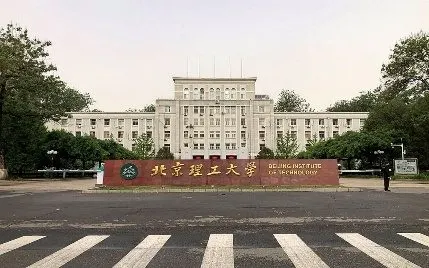
Beijing Institute of Technology accepts international students on programmes in the following fields: business, engineering, economics. Choose the level and programme that suit your goals.
Chinese language study at the university — from a few weeks to a year or longer. Suitable for those starting from scratch or preparing for the HSK before entering a main programme.
self-funded · language programme
The first level of higher education: usually four years of study, specialised subjects, internships and a graduation thesis. It opens the way to working in your field and to a master's degree.
self-funded
Advanced study after a bachelor's degree: research, applied projects and internships. It helps you become an expert in your chosen field and broaden your career opportunities.
self-funded
Beijing Institute of Technology is located in Beijing. Nihao Study consultants keep track of the deadlines and admission requirements of this university, and you can always check the most accurate and up-to-date information on its official website. In university rankings, it is ranked 21 in China and 464 worldwide.
Come for a face-to-face meeting: together we will go through the requirements, deadlines, documents and study options that suit you.

At the meeting we will look at your situation, tell you which documents to prepare and by when, talk about possible programmes and help you decide on the next step.
Beijing Institute of Technology (BIT for short; Chinese: 北京理工大学, pinyin Běijīng Lǐgōng Dàxué) is a public research university located in Beijing. The university's charter officially sets out the English name, the abbreviation BIT and the short Chinese form 北理工 (Běilǐgōng). Russian-language sources also use a few other variants of the name; on this page we use the official English name.
The university was founded in 1940 in Yan'an; historically it trained engineers for industry and national defence. BIT was among the first participants in the national Projects 211 and 985 – both now a thing of the past – and today it takes part in the Double First-Class initiative. In the second round of this programme, the university's listed disciplines are physics, materials science, management and weapons science. Its reputation as a leading engineering and defence university is well deserved, but not all of its programmes are defence-related: it also teaches natural sciences, economics, management, law, languages, design and medical technology.
Below you will find what 2026 applicants need to know: the university's statuses and rankings, programmes taught in Chinese and English, scholarships, HSK requirements, dormitories and how BIT differs from Beijing universities with similar names. You can ask questions about admission at a Nihao Study consultation.
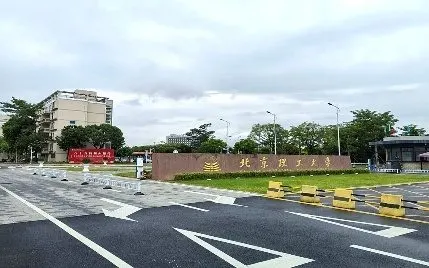

Information about the university itself is current as of September 2025, while the admission conditions for international students described below relate to the published 2026 intake. The difference matters: a university's infrastructure and size change slowly, but application deadlines and fees should be rechecked before every application.
| Indicator | Value | What it means for applicants |
|---|---|---|
| Year founded and status | 1940; formerly Projects 211 and 985; now Double First-Class | a major national research university |
| Main campus address | 5 Zhongguancun South Street, Haidian District, Beijing, postcode 100081 | central site near Weigongcun metro station |
| Students and programmes | over 38,000 full-time students; 74 bachelor's programmes | many levels of study and majors to choose from |
| University structure | 23 specialist schools; 38 first-level disciplines authorised to award doctorates; 28 postdoctoral stations | you can go all the way from a bachelor's degree to research |
| Staff | 6,041 staff, of whom 2,508 are full-time teaching staff | a large body of teachers and researchers |
| International students | more than 4,000 students from 152 countries; studying in Beijing and Zhuhai | BIT does not focus solely on recruiting Chinese students |
| Double First-Class disciplines | 4 disciplines | including physics, materials, control and weapons science |
Older reference cards in Russian sometimes give 1960, but the university's history begins earlier. The decision to found a natural sciences institution in Yan'an was taken in 1939, and in spring 1940 it was named the Yan'an Academy of Natural Sciences. The university describes it as the first specialist institution created by the Communist Party of China for teaching and research in the natural sciences.
During the war years the academy moved and changed its name several times. From 1946 it operated as the Industrial School of the Jin-Cha-Ji Border Region; in 1948 it was merged with the engineering institute of North China University, and a year later, in 1949, it moved to Beijing. In 1950 it absorbed the main part of Sino-French University, together with its mathematics, physics and chemistry departments, which strengthened its basic science teaching.
In 1952 the institution was named Beijing Institute of Industry and became the first defence industry university in New China. In 1988 the engineering institute became a comprehensive university, and its current names date from then: 北京理工大学 in Chinese and Beijing Institute of Technology in English. This history explains why defence technology, fundamental sciences, digital majors and civil engineering sit side by side at BIT today.
Each ranking measures something different, so it is best to look at them together. QS gives great weight to international reputation, THE gives an overall band, ARWU is based on research indicators, and CWUR and EduRank use their own bibliometric methods.
| Ranking | BIT's position | Edition and notes |
|---|---|---|
| QS World University Rankings | 243rd | 2027 edition; a year earlier, in the 2026 edition, 259th |
| Times Higher Education | 201–250 band | World University Rankings 2026 |
| ARWU | 101–150 band | Academic Ranking of World Universities 2025 |
| U.S. News Best Global Universities | 156th | 2025-2026 edition; figure quoted by BIT itself in its admission rules |
| CWUR | 207th worldwide, 32nd in China | 2026 edition |
| EduRank | 501st worldwide, 31st in China | data updated on 15 March 2026 |
Subject rankings say more than a single overall position. In the 2025 ShanghaiRanking subject edition, BIT's aerospace engineering is 4th in the world, energy 11th, remote sensing 13th, and control, telecommunications and nanotechnology 17th. The university also reports that engineering is in the ESI top 0.01%, four fields in the top 0.1% and twelve in the top 1%. All this points to a strong research base, but the curriculum of a specific programme needs to be checked separately.
Of the four disciplines with which BIT is represented in the second round of Double First-Class, two are control science and engineering, and weapons science and technology. According to the university, it has 10 fields with a defence specialisation, 5 priority defence programmes and 24 programmes with a defence focus. For an international student this means strong engineering training, but not all laboratories are open: the course content, research topic and any restrictions are determined by the programme and university rules.
Bachelor's programmes in Beijing cover aerospace engineering, mechatronics, mechanics, transport, energy and automation. According to the ShanghaiRanking subject ranking, BIT's aerospace engineering is 4th in the world and its transport science is in the top twenty. BIT's strength lies not in any single faculty but in the combination of structures, sensors, control systems, energy and testing.
BIT's current list of Double First-Class disciplines includes physics and materials science. Besides these, the university is developing artificial intelligence, cybersecurity, computer science, communications, integrated circuits and photonics, as well as chemistry, biomedical engineering and medical technology. Its research infrastructure comprises 26 national-level platforms and 89 provincial or ministerial ones. BIT therefore suits interdisciplinary research well, provided you find a supervisor in advance and agree on the working language.
Bachelor's programmes are grouped into several broad categories. After the first year, students can choose a specific major within their group based on their interests and academic requirements.
The general list for 2026 includes 74 bachelor's programmes, but there are fewer English-taught programmes for international students than majors in the Chinese catalogue. A school appearing on the website does not mean it recruits international students for English-taught study.
In the 2026 intake, English-taught programmes in Beijing included international economics and trade, as well as mechatronics, mechanical engineering, electronic science, computer science, automation and aerospace engineering. In Zhuhai you can study artificial intelligence in English; in addition, some engineering majors there are taught in Chinese and Russian in the senior years.
| Format | Duration and language of instruction | What to check before applying |
|---|---|---|
| Bachelor's Degree | 4 years, Chinese or English | language, campus and CSCA subjects |
| Master's Degree | 2 years, Chinese or English | supervisor's consent and chosen field |
| Doctoral (PhD) Programmes | 4 years | supervisor, topic, scholarship, laboratory access |
| Chinese Language | a semester or an academic year, Zhuhai campus | the actual place of study and minimum class size |
| Foundation programme | a semester or an academic year, Chinese or English | the required HSK level, English requirements and conditions for progressing to a degree programme |
BIT has notable links with Russian universities. In 2021 the joint institute of BIT and Bauman Moscow State Technical University was authorised to run bachelor's and master's programmes in aerospace, automation, optics and energy. There is also another project, Shenzhen MSU-BIT University, founded by the Shenzhen government, BIT and Lomonosov Moscow State University. It is a separate joint university in Shenzhen, not a unit of BIT in Beijing, so it has its own degrees, fees and admission rules.
Tuition at BIT depends on the programme level and language of instruction; current fees and charges are published in the international admission rules on the university's official website, so check them before applying. Bear in mind that tuition does not cover your whole annual budget: you will need to plan separately for flights, study materials, healthcare, phone and internet, transport, food and the dormitory. A scholarship may cover different items, so look not at the discount percentage but at the specific items in the award letter. BIT's official invoice and scholarship letter always take precedence over any third-party estimates.
Whether an international student is housed on the Zhongguancun or the Liangxiang campus is decided by the international office according to the programme. The university specifically warns exchange students that their accommodation depends on their major and must be paid for by semester.
| Campus and room type | What you need to know |
|---|---|
| Zhongguancun, 2 beds | centre of Haidian District, higher price |
| Zhongguancun, 3 beds | a middle option for price and number of roommates |
| Zhongguancun, 4 beds | the cheapest option on this campus |
| Liangxiang, 2 beds | further from central Beijing |
| Liangxiang, 3 or 4 beds | the lowest published price |
Building No. 14 on the Zhongguancun campus has a laundry and a lounge with Wi-Fi, and shared kitchens on several floors. According to the university, each room gets 60 kWh of electricity free each month; usage above the limit is paid separately. Students who decide to live off campus must register at their temporary address and arrange to move out of the dormitory.
The Zhongguancun campus is in Haidian, near Weigongcun station on metro Line 4. The Liangxiang campus is in Fangshan District, connected to the city by the Fangshan metro line. Before renting a flat, find out which building your classes will be in: commuting between districts every day takes a noticeable toll on both your budget and your schedule.
BIT accepts applications for several scholarship competitions. Candidates are assessed on their entire application, not just their school certificate.
It makes sense to calculate your budget in two versions: without a scholarship and with confirmed coverage. You can only count on a scholarship once the official award letter has arrived.
According to university statistics, the library system holds 4.31 million print and 3.42 million electronic books, as well as a large collection of electronic dissertations. The campuses cover a total of 6.45 million sq m, with teaching and administrative buildings of about 2.97 million sq m. This refers to all BIT sites combined, not one compact block.
The university history museum on the Zhongguancun campus has seven themed halls; another exhibition is devoted to BIT's contribution to defence technology. The university's sports arena hosted preliminary volleyball matches at the 2008 Olympics, as well as goalball events at the Paralympic Games. For students this is not just a page of history: the campus has major sports facilities and active student teams.
In 2026 BIT held computer-based HSK exams at levels 3 to 6 and HSKK from beginner to advanced; they were taken by 104 international students from 34 countries. This confirms that the university operates as a standardised HSK test centre. However, the sources reviewed contain no official information that BCT is also offered here, so do not count on taking BCT at BIT. Check the dates of upcoming sessions on the official exam website.
Requirements for bachelor's applicants in 2026: foreign citizenship, completed secondary education, aged 18 to 25. Applicants under 18 need a guardian in Beijing.
When you receive the admission notice, check your name, programme, language of instruction, campus, scholarship details and payment details. You will normally need an X1 or X2 student visa to enter China for study. And never send money to payment details sent in unofficial chats.
The names of many Beijing universities are made up of the same words, Beijing, Technology, Science, University, hence the confusion. Go by the Chinese name and the abbreviation.
| University and Chinese name | Status | Main focus |
|---|---|---|
| Beijing Institute of Technology, BIT, 北京理工大学 | national university; formerly in Projects 985 and 211 | aerospace, materials, control, defence engineering |
| Beijing University of Technology, BJUT, 北京工业大学 | municipal university, founded in 1960 | environment, civil engineering, urban engineering |
| University of Science and Technology Beijing, USTB, 北京科技大学 | national technological university | mining, metallurgy, materials |
| Beijing Technology and Business University, BTBU, 北京工商大学 | comprehensive municipal university | economics, business, food technology |
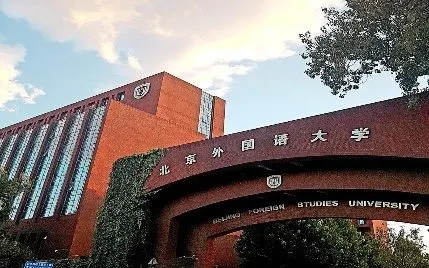
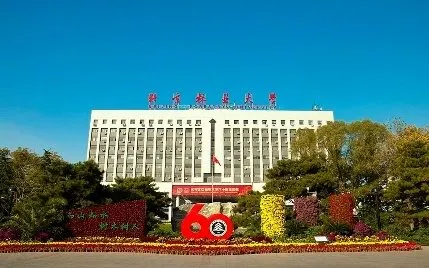
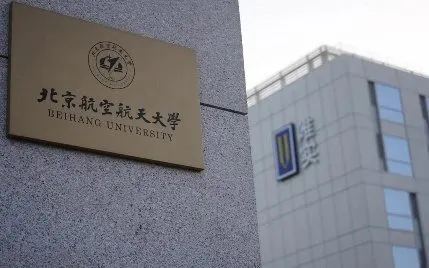
BIT and BJUT are confused most often. BJUT (北京工业大学) is in Chaoyang and is run by the Beijing government. BIT (北京理工大学) has its main campus in Haidian and is historically linked to defence engineering. If you are mainly interested in aerospace, you can also compare BIT with Beihang University.
The Russian name used on this page is the one meaning "Beijing Technological Institute". A literal variant meaning "Beijing Institute of Technologies" makes it less clear that this is a university rather than a field of study. Another, meaning "Technological Institute of Beijing", is a calque that copies the word order of the English name. The official international name is Beijing Institute of Technology, and the official English abbreviation is BIT. 北理工 (Běilǐgōng) is the official short Chinese form, and the full Chinese name is 北京理工大学 (Běijīng Lǐgōng Dàxué).
It is a fully fledged public university, not an institute in the narrow sense: its Chinese name ends in 大学, and it teaches at bachelor's, master's and doctoral levels. The word Institute became part of the English name for historical reasons and does not mean that the university is at college level.
Yes. According to BIT's official information, the university was among the first participants in Projects 211 and 985; the Ministry of Education included it in the second round of Double First-Class, where BIT has four disciplines. That said, 211 and 985 are historical statuses; the current national initiative is called Double First-Class.
The Beijing bachelor's programmes include engineering and economics programmes taught in English. In Zhuhai, a number of majors are taught in Chinese and Russian in the later years, and students are taught Russian additionally after enrolment. Apart from these, there is no teaching in Russian.
Under the 2026 international admission rules, Chinese-taught bachelor's programmes require HSK 5 with a score of 180 or higher. For the foundation programme the bar is lower and depends on its length, but completing the foundation course does not mean automatic admission to a degree programme.
The cost depends on the level of the programme and the language of instruction. Current rates are published in the international admission rules on BIT's official website — check them as of your application date.
There is a chance if you win the competition, but nobody gives guarantees. For master's and doctoral students, a full CSC Type B scholarship covers tuition, accommodation or an allowance in lieu of it, medical insurance and a monthly stipend — according to the rules of the specific intake.
Yes. The university has confirmed that in 2026 it hosted computer-based HSK exams for levels 3 to 6 and the oral HSKK. Dates and available levels vary from session to session, so check the current HSK schedule.
The main address is 5 Zhongguancun South Street, Haidian, near Weigongcun metro station. The Liangxiang campus is in Fangshan, and the Xishan site is used for research. You cannot choose a campus based on dormitory cost: it is determined by your programme.
BIT's Chinese name is 北京理工大学, and it has a pronounced defence-engineering profile. BJUT (北京工业大学) is a Beijing municipal engineering university; USTB (北京科技大学) focuses on metallurgy and materials; BTBU (北京工商大学) is more oriented towards business and food technology. Compare all four Chinese names, not just the English words.
Usually you need a passport, a language certificate, a CSCA result, a certified school leaving certificate and transcript of grades, a motivation letter, a medical form, a police clearance certificate and a financial guarantee. Design programmes also require a portfolio.
Beijing (北京) is the capital of China and a major centre of education: the city has more than 90 universities, among them Peking University and Tsinghua University, which rank in the country's top 2. Here you can see the Forbidden City and the Great Wall of China, as well as the modern tech district of Zhongguancun, known as China's Silicon Valley.
Studying in Beijing goes hand in hand with good career prospects: the city hosts the headquarters of major companies and research centres, getting around is easy (the metro has 22 lines), and cultural life is very rich. Parents should know that the capital's infrastructure is highly developed, there are international clinics with Russian-speaking staff, many direct flights leave the city, and students are supported by a well-established system: dormitories are located right on the guarded university campuses.
You work with Nihao Study specialists. They will help you put together a portfolio and a set of documents, draw up a study plan and choose a university or college and a specialty that genuinely interest you.
We take care of every stage of admission, from choosing to enrolment
We will gather, prepare, certify and send your documents to the institution
We will show the admissions committee your strengths
We run training sessions and courses so you can prepare with more confidence
We will help you settle in at the start of your studies and keep moving forward
Nihao Study specialists select universities and colleges that match the applicant's goals and means. We make sure the teachers are practitioners and that the knowledge will be useful in your profession.
We examine curricula, talk to students and teachers and look at which specialties employers need, and use this information to select options for the applicant.
Advisers guide the applicant from the first consultation to enrolment, help build a plan and spot mistakes in time that could get in the way.
The cost of our support depends on the programme and the partner university; you'll get an exact quote after a free consultation.
Get a quoteA free 15-minute consultation: together we will choose a university or college and a programme that suit your goals and budget.
Apply with peace of mind: we handle the documents, deadlines and correspondence with admissions committees, and you save time and energy.
Don't want to wait for a call? Message us in the chat.
Message us in chat