China Academy of Art
University · Hangzhou
Language courses · Bachelor's Degree · Master's Degree
浙江工业大学
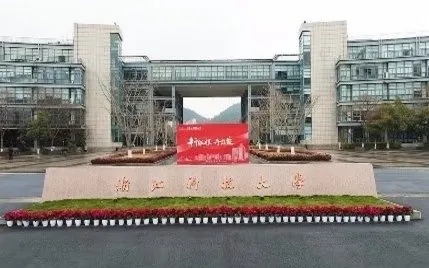
Zhejiang University of Technology accepts international students on programmes in the following fields: business, engineering, medicine, education, economics. Choose the level and programme that suit your goals.
Chinese language study at the university — from a few weeks to a year or longer. Suitable for those starting from scratch or preparing for the HSK before entering a main programme.
self-funded · language programme
Cost: 9 000 ¥/semester
self-funded · language programme
Cost: 18 000 ¥/year
The first level of higher education: usually four years of study, specialised subjects, internships and a graduation thesis. It opens the way to working in your field and to a master's degree.
scholarship-funded
Cost: up to 18 800 ¥/year
self-funded
Cost: 16 200–18 800 ¥/year
Advanced study after a bachelor's degree: research, applied projects and internships. It helps you become an expert in your chosen field and broaden your career opportunities.
scholarship-funded
Cost: up to 24 800 ¥/year
self-funded
Cost: 22 600–24 800 ¥/year
Zhejiang University of Technology is located in Hangzhou. Nihao Study consultants keep track of the deadlines and admission requirements of this university, and you can always check the most accurate and up-to-date information on its official website. In university rankings, it is ranked 85 in China and 2204 worldwide.
Come for a face-to-face meeting: together we will go through the requirements, deadlines, documents and study options that suit you.

At the meeting we will look at your situation, tell you which documents to prepare and by when, talk about possible programmes and help you decide on the next step.
Zhejiang University of Technology (ZJUT, 浙江工业大学, Zhèjiāng Gōngyè Dàxué), known in Russian as the "Zhejiang Technological University", is located in Hangzhou, the capital of Zhejiang Province. Russian-language queries contain variant spellings of "Zhejiang" as well as the calque "University of Technology of Zhejiang"; this page uses the form meaning "Zhejiang Technological University". In China the name is usually shortened to 浙工大 (Zhègōngdà), while ZJUT is used in international correspondence.
ZJUT is a public comprehensive university under provincial administration. It has existed in its current form since 1953, but traces its history back to the Zhejiang Secondary Industrial School of 1910. Applicants should know that ZJUT belongs neither to Projects 985 and 211 nor to the national Double First-Class list (双一流). Its official status is expressed differently. It is the first university in the eastern coastal provinces to be jointly developed by the province and the ministry. Under the 2011 Plan it was included in the first national group as a lead institution, and it was also among the first key universities to receive support from Zhejiang Province.
Below you will find ZJUT's history, rankings, strongest fields, programmes for international students, HSK and CSCA requirements, dormitories, scholarships and the admission procedure, as well as how ZJUT differs from Zhejiang University. Before applying, check the programme you want against the university's official admissions portal; help with choosing is available in a consultation with Nihao Study.
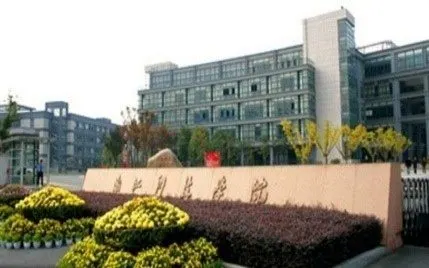
More recent data than older English-language fact sheets is given on the current Chinese homepage of the university's website: about 39,900 students, 3,600 staff and 3 campuses with a combined area of 3,334 mu. According to the 2026 guide for international applicants, bachelor's admission covers 65 programmes in 12 fields of study.
| Item | Figures | What it means |
|---|---|---|
| Students | About 39,900, of whom 1,390 are international | A large research university |
| Campuses | 3 sites: Zhaohui, Pingfeng and Moganshan | Faculties and dormitories are located on different sites |
| Staff | Over 3,600, of whom over 2,400 are teaching staff | Well-developed facilities for study and research |
| Bachelor's Degree | 65 programmes open to international students in 2026 | Studying in Chinese and in English |
| Postgraduate programmes | Doctoral programmes: 16 discipline groups; 13 postdoctoral stations | After a bachelor's degree, you can continue your academic path |
| International College address | Hangzhou, Zhaohui campus, Jixie Building, room A603, postcode 310014 | Handles admission of international students |
International rankings have their own counts. For example, THE data for the World University Rankings 2026 gives ZJUT 31,557 students, 9% of them international. This differs from the university's figures because of different data collection dates and different student categories.
ZJUT's origins lie in the Zhejiang Intermediate School of Technology, opened in 1910. The present institution emerged in 1953, when a chemical technology school was founded in Hangzhou. It later changed its name several times, each name being related to chemistry and engineering. The institution gained university status and its current English name, Zhejiang University of Technology, in 1993.
In 2009 the Ministry of Education and the Zhejiang provincial government agreed to develop ZJUT jointly. In 2013 the Collaborative Innovation Center of Yangtze River Delta Region Green Pharmaceuticals, led by the university, was included in the first national group of the 2011 Plan. In 2015 the province placed ZJUT in the first group of universities in its key development programme. It is these facts that describe ZJUT's administrative standing, not the Double First-Class label that is mistakenly attributed to it.
In the second round of the national 双一流 list, the Zhejiang universities listed are Zhejiang University, China Academy of Art and Ningbo University; ZJUT is not among them. The university itself speaks of joining Double First-Class as a goal rather than an achieved status. This is worth bearing in mind when comparing degrees and scholarships.
| Ranking | Position | Year |
|---|---|---|
| THE World University Rankings | 501–600 worldwide | 2026 |
| QS World University Rankings | 560th | 2027 |
| ARWU | 301–400 worldwide | 2025 |
| CWUR | 452nd out of 21,462 institutions | 2025 |
| EduRank | 1,399th worldwide, 99th in China | 2026 |
| ShanghaiRanking BCUR | 68th in China | 2026 |
Subject rankings say more about ZJUT's profile than its overall position. In THE 2026, life sciences are in the 201–250 band, engineering in 301–400 and computer science in 401–500. In ShanghaiRanking 2025, 23 of the university's subjects were ranked: instrument science, chemical engineering and food science were in the 51–75 band, and automation and environmental engineering in the 76–100 band.
When choosing a programme, it is wiser to look at THE, ARWU, QS, CWUR and EduRank together with the curriculum than to treat a single ranking position as a guarantee of quality.
Historically, the university's profile has been linked to the chemical industry. In ShanghaiRanking 2025, ZJUT's chemical engineering is in the 51–75 band worldwide. In addition, the university hosts national laboratory platforms in green chemical synthesis and advanced membrane materials. For international students, the 2026 catalogue offers Chemical Engineering and Technology, Applied Chemistry and Pharmaceutical Science in English.
You can study mechanical engineering, electrical engineering and automation, computer science and technology, and software engineering in English. In 2026, engineering programmes require the CSCA in mathematics and, depending on the programme, in physics or chemistry. So school mathematics genuinely affects selection here rather than remaining a formality on the application form.
Environmental Engineering is taught in English, while Environmental Science, Food Science and Engineering and Food Quality and Safety are taught in Chinese. The university reports that, as of the official data cut-off date, 9 of its subject areas were in the ESI top 1%, and chemistry and engineering were even in the top 1 per mille. However, ESI measures citations of research papers, so the curriculum, language of instruction and laboratory access for an individual student need to be checked separately.
The 2026 catalogue includes natural sciences, engineering, economics, management, humanities, design and interdisciplinary programmes. The choice in English is noticeably wider than at many provincial universities. However, a class only opens if a minimum number of students enrol, so the university asks applicants to list two programmes in the application — a main choice and a back-up.
| Level or format | What you can study | Main requirement |
|---|---|---|
| Bachelor's in English | Chemical engineering and pharmaceuticals; mechanical, electrical, IT; ecology; civil engineering; business and international trade | IELTS 5.5, TOEFL 60 or a recognised equivalent |
| Bachelor's in Chinese | Architecture, robotics, materials, finance, management, journalism and more | HSK 4 with at least 180 points; for some programmes HSK 5 with at least 180 |
| Master's Degree | Chinese- and English-taught programmes in the departments' fields | Bachelor's degree, proof of language, academic assessment or interview |
| Chinese language courses | A 16-week semester with 20 contact hours per week | Age 16–55, medical clearance |
Bachelor's programmes always last 4 years, and classes start in the autumn. Applicants to Chinese-taught programmes take the CSCA subject tests in Chinese, and applicants to English-taught programmes take the English version of these tests.
ZJUT publishes its 2026 rates in official admissions documents, and current tuition and accommodation costs are best checked on the university's website. The final interpretation of the terms rests with the International College, so before making any payment, check your personal offer and applicant account: the official procedure explicitly asks you not to pay the fee until ZJUT has made a preliminary decision. Besides tuition, your budget should include accommodation, food, transport, the visa, a medical check-up, notarised translations and the flight.
The International College houses degree students on the Pingfeng campus, in rooms for two or four. Chinese language course students are offered three-person rooms at Zhaohui; places are allocated while available. Check accommodation costs on the official accommodation page.
| Campus and room | Comment |
|---|---|
| Pingfeng, 2 people | For degree students |
| Pingfeng, 4 people | Cheaper, but less personal space |
| Zhaohui, 3 people | Intended for the language programme |
| Bedding (set) | You can bring your own |
Older room rates for Pingfeng can still be found on an old rules page. It is better to rely on the more recent accommodation page and treat the old figures as archival until they are confirmed in writing. Water and electricity may be charged separately at local rates.
The Pingfeng campus is next to the green Xiaoheshan area and hosts most bachelor's degree programmes. Zhaohui is closer to the city centre, and the International College is based there. Moganshan focuses on chemistry, pharmaceuticals and interdisciplinary research. Before booking accommodation, check your admission letter to see which campus you belong to.
There are libraries on the Pingfeng and Moganshan sites — their buildings opened in 2006 and 2020. The university has 111 registered student clubs and 669 general-use classrooms, so the campus infrastructure is extensive.
Scholarships are awarded competitively. First compare the conditions of the different schemes and the list of universities that accept CSC scholarship holders, then check the deadline for your category.
| University | Status | Known for |
|---|---|---|
| Zhejiang University of Technology, ZJUT, 浙江工业大学 | Comprehensive provincial-level research university | Engineering, chemical technology, pharmaceuticals |
| Zhejiang University, ZJU, 浙江大学 | National-level research university, part of Double First-Class | Many research fields, 7 campuses |
| Zhejiang University of Science and Technology, ZUST, 浙江科技大学 | Provincial applied-sciences university | Applied engineering training on the German model |
| Zhejiang Sci-Tech University, ZSTU, 浙江理工大学 | Provincial-level engineering university | Historically, textiles and sericulture |
ZJUT and ZJU are the pair most often confused, even though the single word Technology in the name means an entirely different university. ZJU is part of the national Double First-Class programme and ranks 39th in THE 2026; ZJUT has provincial status and sits in the 501–600 band of the same ranking. Check the abbreviation, the Chinese name and the institution code on every form.
This text uses one standard Russian form of the name. Other Russian spellings that turn up in searches simply render the province name differently, and a literal Russian translation along the lines of "University of Technologies of Zhejiang" is understandable but is a calque, not the main form. The official English name is Zhejiang University of Technology, and the international abbreviation is ZJUT. The full Chinese name is 浙江工业大学 (Zhèjiāng Gōngyè Dàxué), and the short Chinese form is 浙工大 (Zhègōngdà).
No. ZJUT is not in the second round of the national Double First-Class list, nor in the 211 and 985 lists. Its official status is a key provincial university developed jointly by the province and the ministry; it also takes part in the 2011 Plan.
Yes. In 2026 English-taught intake was open for chemical technology and pharmaceuticals, mechanical and electrical engineering, computer science and software engineering, as well as environmental science, civil engineering, business and international trade. A group opens if enough students enrol.
For Chinese-taught programmes in general, HSK 4 with at least 180 points. Computer science, software engineering, and food science and food quality require HSK 5, also with at least 180 points. Check exam dates in the official HSK schedule.
Yes: international applicants to bachelor's programmes in 2026 must present a valid CSCA result. The subjects depend on the programme; for engineering fields you usually take maths plus physics or chemistry.
The cost depends on the level (bachelor's, master's or language courses) and on the language of instruction. The university publishes current fees in its official admission documents, so check the university's official website and your personal offer.
Yes, applications are accepted under the Type A and Type B schemes; the university's CSC code is 10337. What exactly the scholarship covers and which levels it is available for depend on the specific call: first study the general CSC conditions, then ZJUT's own announcement.
The price depends on the campus and the number of beds per room: at Pingfeng, degree students are housed two or four to a room, while language course students at Chaohui are housed three to a room. Current rates are on the accommodation page of the university's official website.
The International College is on the Chaohui campus (Hangzhou, postcode 310014): Jixie Building, room A603, email iec@zjut.edu.cn. Which campus you will study on needs to be confirmed separately.
Application form, passport, school certificate or a letter confirming upcoming graduation, school transcript, CSCA result, language certificate, medical form and a police clearance certificate. Documents in Russian, Uzbek or any language other than Chinese and English must be translated into Chinese or English and notarised.
In Chinese, ZJUT is 浙江工业大学, and its main fields are chemistry and engineering. Zhejiang University (ZJU) is 浙江大学, a national-level university on the Double First-Class list. Zhejiang Sci-Tech University (ZSTU) is 浙江理工大学 in Chinese; historically this university is linked to the textile industry.
Hangzhou (杭州) is the capital of Zhejiang Province and home to Alibaba's headquarters. The city is famous for West Lake and renowned for its beauty, and here a long history sits alongside modern technology.
Hangzhou has strong universities — Zhejiang University ranks in the country's top 5 — and its developed IT industry offers internship opportunities. Students can look forward to a good environment, picturesque nature for relaxing, 10 metro lines and a modern 'smart' city where cashless payment is the norm. Parents should bear in mind the high level of safety and quality of life, modern healthcare, the international airport and the proximity of Shanghai — 45 minutes by train. The campuses are well organised, with security and support services for international students.
You work with Nihao Study specialists. They will help you put together a portfolio and a set of documents, draw up a study plan and choose a university or college and a specialty that genuinely interest you.
We take care of every stage of admission, from choosing to enrolment
We will gather, prepare, certify and send your documents to the institution
We will show the admissions committee your strengths
We run training sessions and courses so you can prepare with more confidence
We will help you settle in at the start of your studies and keep moving forward
Nihao Study specialists select universities and colleges that match the applicant's goals and means. We make sure the teachers are practitioners and that the knowledge will be useful in your profession.
We examine curricula, talk to students and teachers and look at which specialties employers need, and use this information to select options for the applicant.
Advisers guide the applicant from the first consultation to enrolment, help build a plan and spot mistakes in time that could get in the way.
The cost of our support depends on the programme and the partner university; you'll get an exact quote after a free consultation.
Get a quoteA free 15-minute consultation: together we will choose a university or college and a programme that suit your goals and budget.
Apply with peace of mind: we handle the documents, deadlines and correspondence with admissions committees, and you save time and energy.
Don't want to wait for a call? Message us in the chat.
Message us in chat University · Hangzhou
Language courses · Bachelor's Degree · Master's Degree